The Georgia Gold Rush
America's first gold rush began in the mountains near Helen in 1828
Long before prospectors rushed to California in 1849, the mountains of northeast Georgia were the scene of America's first significant gold rush. In 1828, gold was discovered at Duke's Creek, just a few miles from what is now downtown Helen, setting off a frenzy of prospecting and mining that would transform the region, reshape Georgia's economy, and set in motion the tragic displacement of the Cherokee people from their ancestral homeland. The Georgia Historical Society considers the Georgia Gold Rush one of the most consequential and least widely known chapters in American history, and its legacy remains visible across the Helen area today.
The exact circumstances of the initial discovery are debated by historians. Several accounts exist, each crediting a different individual with the first find. What is not debated is the impact: within months of the discovery, thousands of prospectors flooded into the mountains of northeast Georgia, setting up camps along every creek and stream in the region. The gold deposits at Duke's Creek and throughout the surrounding area proved substantial enough to sustain mining operations for decades and to establish Georgia as the first state in the union to experience a full-scale gold rush.
The Rush
Thousands pour into the Georgia mountains
The Georgia Gold Rush attracted prospectors from across the eastern United States and beyond. By 1830, an estimated 10,000 miners were working claims in the gold belt that stretched across northeast Georgia. Towns sprang up almost overnight: Dahlonega, approximately 20 miles southwest of Helen, became the center of the gold mining region, and in 1838 the federal government established a branch of the U.S. Mint in Dahlonega to process the gold being extracted from the surrounding mountains.
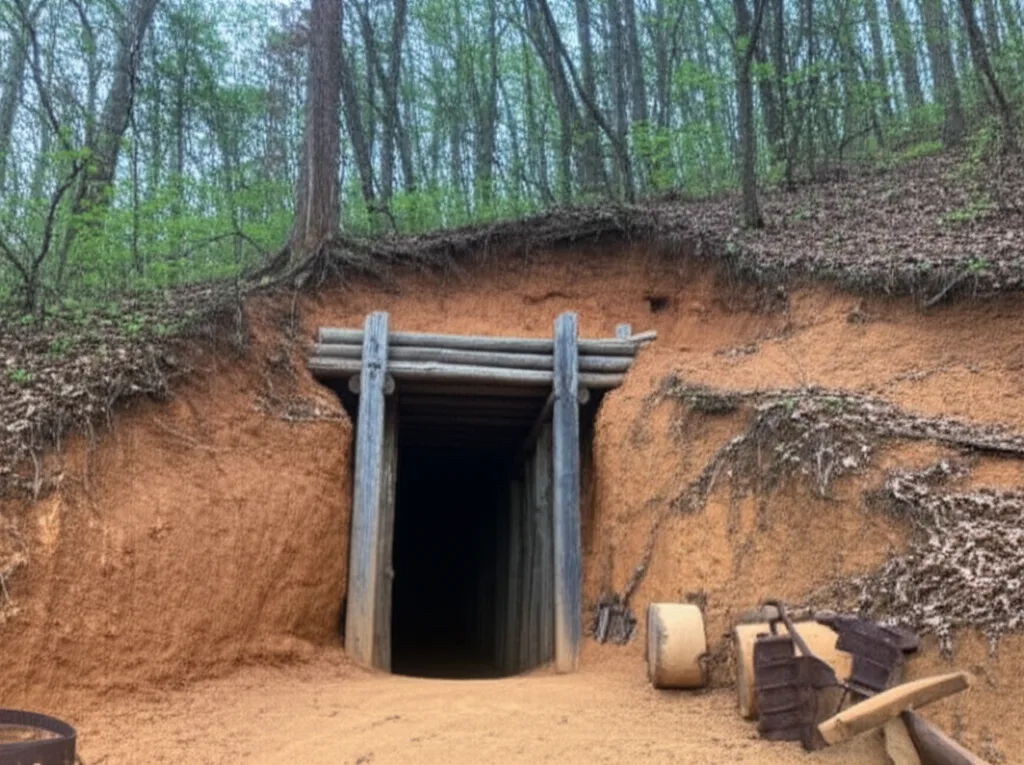
The mining techniques ranged from simple panning in creek beds to more elaborate operations involving sluice boxes, hydraulic mining, and underground shaft mines. The landscape bore the scars of this intensive extraction: creek beds were turned inside out, hillsides were washed away, and the forest was cleared to provide timber for mine structures and fuel for processing operations. Some of these disturbances are still visible today, nearly two centuries later, as subtle alterations in the terrain that a knowledgeable observer can identify.
The economic impact of the gold rush on Georgia was enormous. Gold mining became one of the state's largest industries, and the wealth generated funded construction, commerce, and westward expansion. The Dahlonega Mint coined over $6 million in gold coins before closing at the outbreak of the Civil War in 1861, a staggering sum for the era that speaks to the richness of the Georgia deposits.
Cherokee Displacement
The devastating cost of gold fever
The Georgia Gold Rush cannot be told honestly without confronting its most devastating consequence: the forced removal of the Cherokee people from their ancestral lands. The gold deposits lay within Cherokee territory, land that was guaranteed to the Cherokee Nation by treaties with the federal government. When gold was discovered, those treaties proved worthless in the face of white settlers' demand for access to the gold-bearing lands.
The state of Georgia, emboldened by the discovery and eager to claim the mineral wealth, passed laws stripping the Cherokee of their legal rights, nullifying their government, and seizing their lands for redistribution to white settlers through a lottery system. The Cherokee fought these actions through the federal courts, winning a landmark Supreme Court case in Worcester v. Georgia (1832) in which Chief Justice John Marshall ruled that the Cherokee Nation was a sovereign entity and that Georgia's laws had no force on Cherokee territory. President Andrew Jackson, however, refused to enforce the ruling, and the state of Georgia continued its campaign of dispossession.
The culmination of this injustice was the Trail of Tears, the forced march of approximately 16,000 Cherokee from their homeland in the Southeast to Indian Territory in present-day Oklahoma during 1838 and 1839. An estimated 4,000 Cherokee died during the removal from exposure, disease, and starvation. The gold rush that began at Duke's Creek near Helen was a direct catalyst for this tragedy, one of the darkest chapters in American history. The Nacoochee Valley, today a pastoral landscape of farms and vineyards, was once the heart of Cherokee civilization in the Georgia mountains.
Auraria: The Ghost Town That Died So Dahlonega Could Live
The forgotten boomtown of the Georgia Gold Rush
While Dahlonega became the permanent center of the Georgia gold mining region, it was not the first boomtown. That distinction belongs to Auraria, a settlement that sprang up almost overnight in 1828 when gold was first discovered. Within months of the initial find, thousands of miners, merchants, speculators, and fortune-seekers flooded into the area, and Auraria became a roaring frontier town. At its peak, the settlement had saloons, boarding houses, general stores, and all the chaotic energy of a classic American boomtown.
But Auraria's glory was short-lived. When Lumpkin County was organized and Dahlonega was selected as the county seat in 1833, the center of gravity shifted. Businesses relocated, miners followed, and Auraria began its slow decline. Today, little remains of the once-booming settlement beyond a handful of crumbling structures, including the shell of Woody's General Store, and a small cemetery where some of the original miners and settlers are buried. The saying in the region is that Auraria "died so Dahlonega could live" -- a fitting epitaph for a town consumed by the very gold fever that created it.
Mining Heritage Sites Today
Where to connect with gold rush history
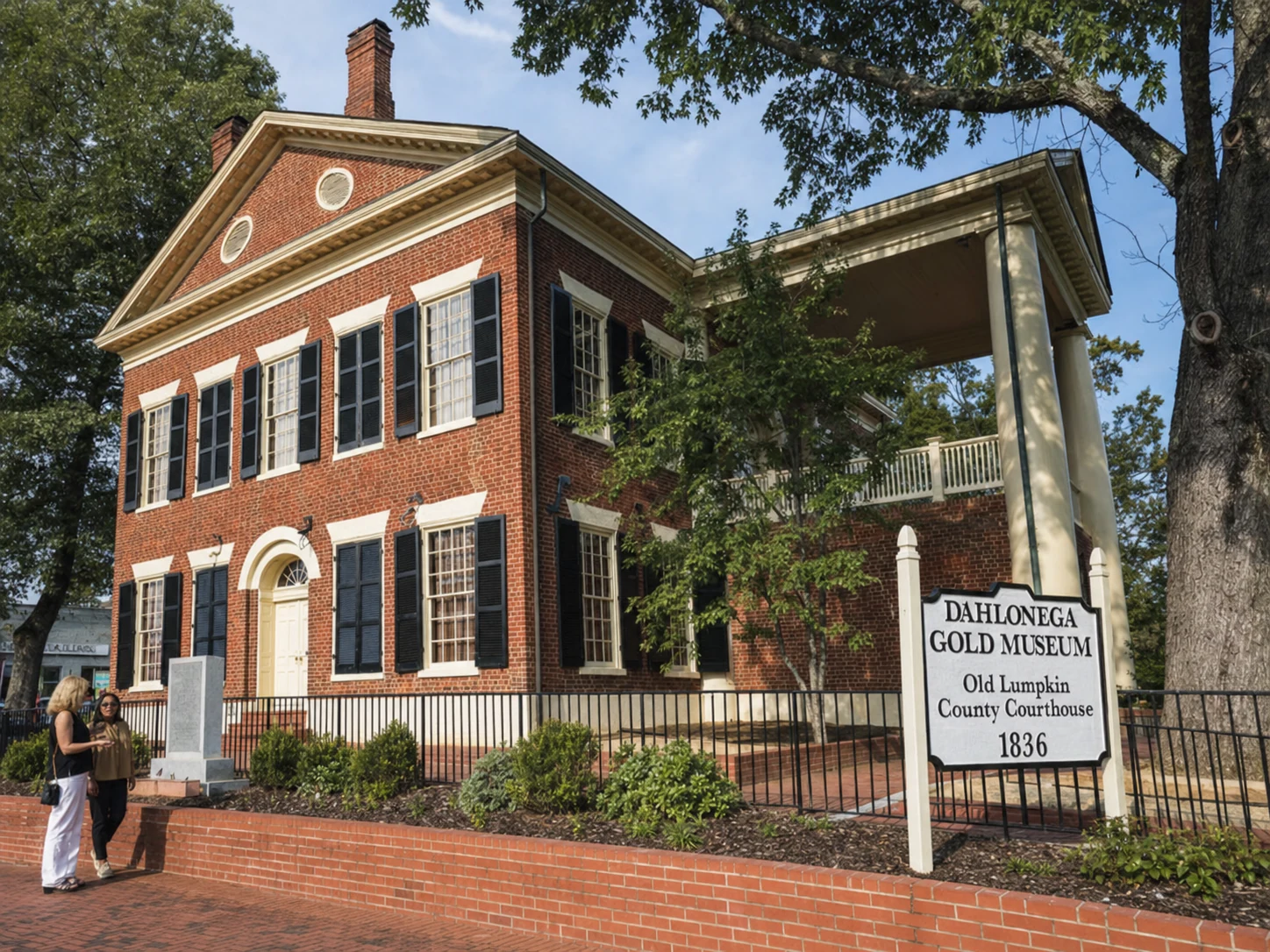
Visitors to the Helen area can explore the legacy of the Georgia Gold Rush at several heritage sites. The Dahlonega Gold Museum, housed in the original Lumpkin County Courthouse on the Dahlonega town square, offers exhibits on the gold rush era, including original mining equipment, gold coins minted in Dahlonega, and accounts of the miners and communities that shaped the region. The museum provides essential historical context for understanding how profoundly gold shaped northeast Georgia.
Recreational gold panning is available at several sites near Helen, including operations along Duke's Creek itself. These experiences allow visitors to try their hand at the same activity that drew thousands of prospectors to the mountains nearly two centuries ago. While you are unlikely to find a nugget that will change your life, the experience of swirling creek water in a gold pan and seeing tiny flakes of genuine Georgia gold glinting in the sunlight provides a tangible connection to the rush that started it all.
Key Gold Rush Sites to Visit
Where to experience the history firsthand
Dahlonega Gold Museum
Housed in the original 1836 Lumpkin County Courthouse - one of the oldest courthouses in Georgia - this state historic site sits on the Dahlonega town square. The museum displays gold coins minted at the Dahlonega Branch Mint between 1838 and 1861, original mining equipment, and detailed accounts of the rush era. Open daily 9:00 AM – 5:00 PM. Admission: Adults $8.00, Seniors (62+) $6.00, Youth (6–17) $6.00. Phone: (706) 864-2257. Address: 1 Public Square, Dahlonega, GA 30533. The museum is approximately 20 miles (35 minutes) southwest of Helen.
Consolidated Gold Mine
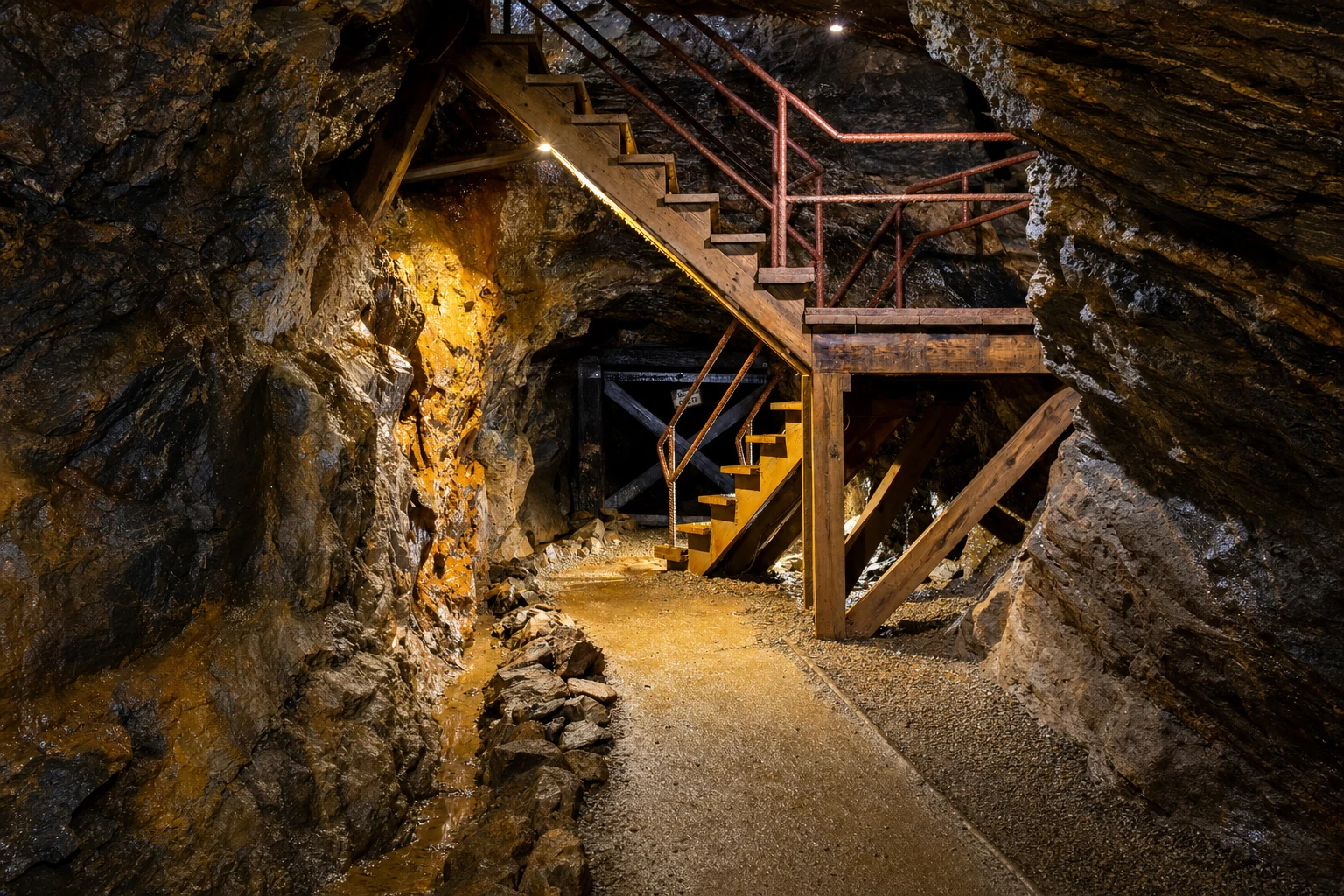
This underground gold mine in Dahlonega offers guided tours that take visitors 250 feet below ground through tunnels carved during the original gold rush era. The tour explains 19th-century hard-rock mining techniques and the geology that created Georgia's gold deposits. After the underground tour, visitors can pan for gold, gems, and minerals. The mine is open year-round; hours vary seasonally. Address: 185 Consolidated Gold Mine Road, Dahlonega, GA 30533. Phone: (706) 864-8473.
Crisson Gold Mine
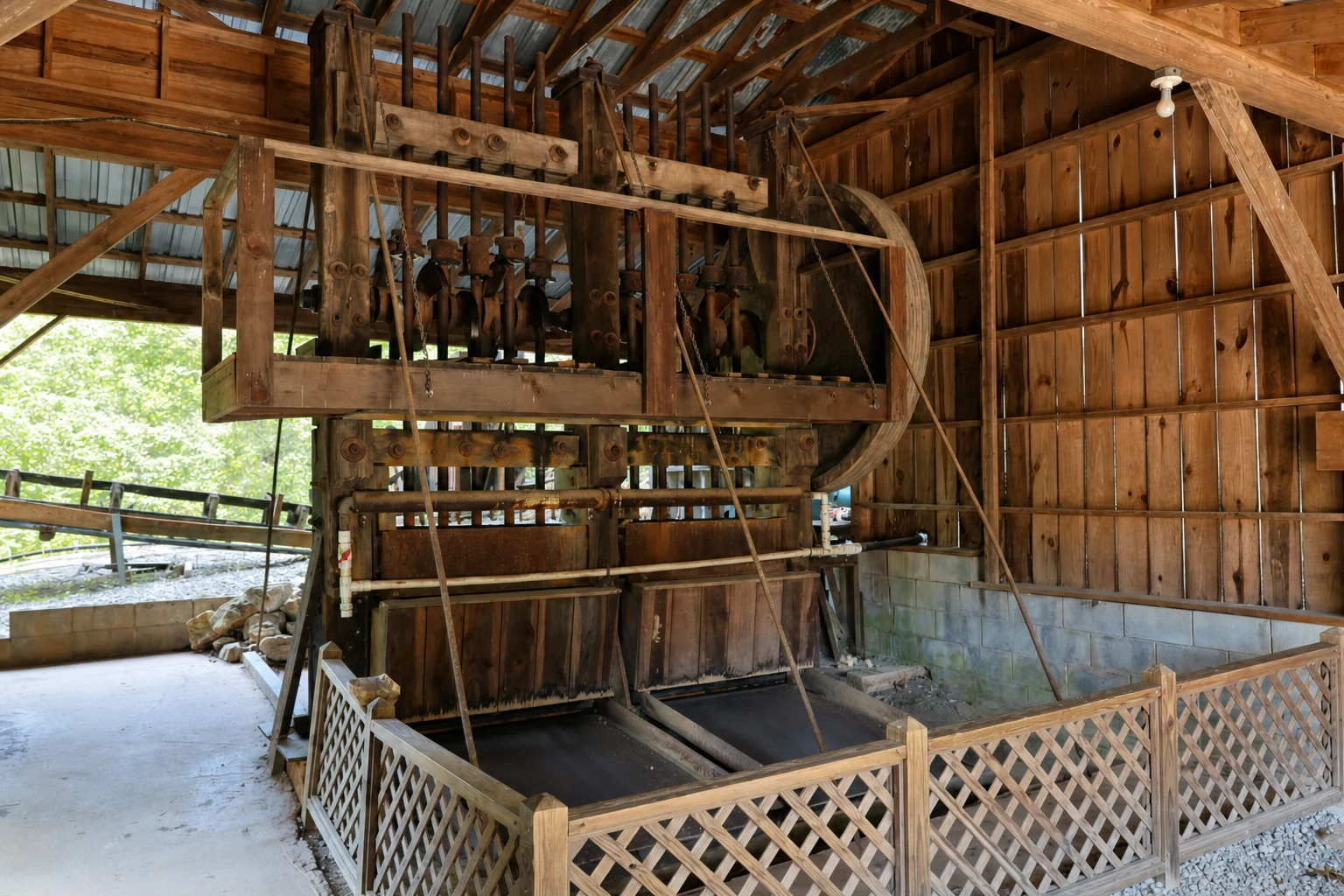
An open-pit gold mine that has been in continuous operation since 1847 - making it one of the longest-running gold mining operations in the country. Visitors can pan for gold using authentic methods in the same creek beds where miners struck gold nearly two centuries ago. The site also features a rock and gem shop and a stamp mill demonstration. Open daily; hours vary seasonally. Address: 2736 Morrison Moore Parkway East, Dahlonega, GA 30533. Phone: (706) 864-6363.
Visiting Gold Country Today
Practical tips for exploring the heritage sites
Plan a Full Day
The Dahlonega Gold Museum, Consolidated Gold Mine, and Crisson Gold Mine can all be visited in a single day trip from Helen. The drive to Dahlonega takes about 35 minutes via US-19 South. Allow 1–2 hours per site, plus time for lunch on the charming Dahlonega square, which is lined with independent restaurants, shops, and wine tasting rooms.
Gold Panning near Helen
For visitors who want a gold panning experience closer to Helen, recreational panning is available at several sites along Duke's Creek - the very creek where the Georgia Gold Rush began in 1828. Duke's Creek runs through Smithgall Woods State Park, approximately 3 miles west of downtown Helen, and remains a popular destination for amateur prospectors.
Connect to Cherokee History
The gold rush story is inseparable from the Cherokee story. Visitors interested in the full history should combine gold rush sites with Cherokee heritage landmarks. The Nacoochee Mound at Hardman Farm (143 Hwy 17, Sautee Nacoochee) is just minutes from Helen, while New Echota - the former Cherokee capital - is about 70 miles northwest near Calhoun.
The Capitol Connection
The dome of the Georgia State Capitol in Atlanta is covered in gold leaf from Dahlonega mines - 43 ounces of native gold applied during a 1958 re-gilding project. This gleaming reminder of the state's gold heritage literally shines over the capital city and connects the story of these mountains to every Georgian who passes beneath it.
Continue Exploring
More history and stories from the region
Related Imagery from Around Helen