Mark of the Potter: The Mill, the River, the Craft
North Georgia's pottery studio perched above the Soque River, making handmade stoneware since 1969.
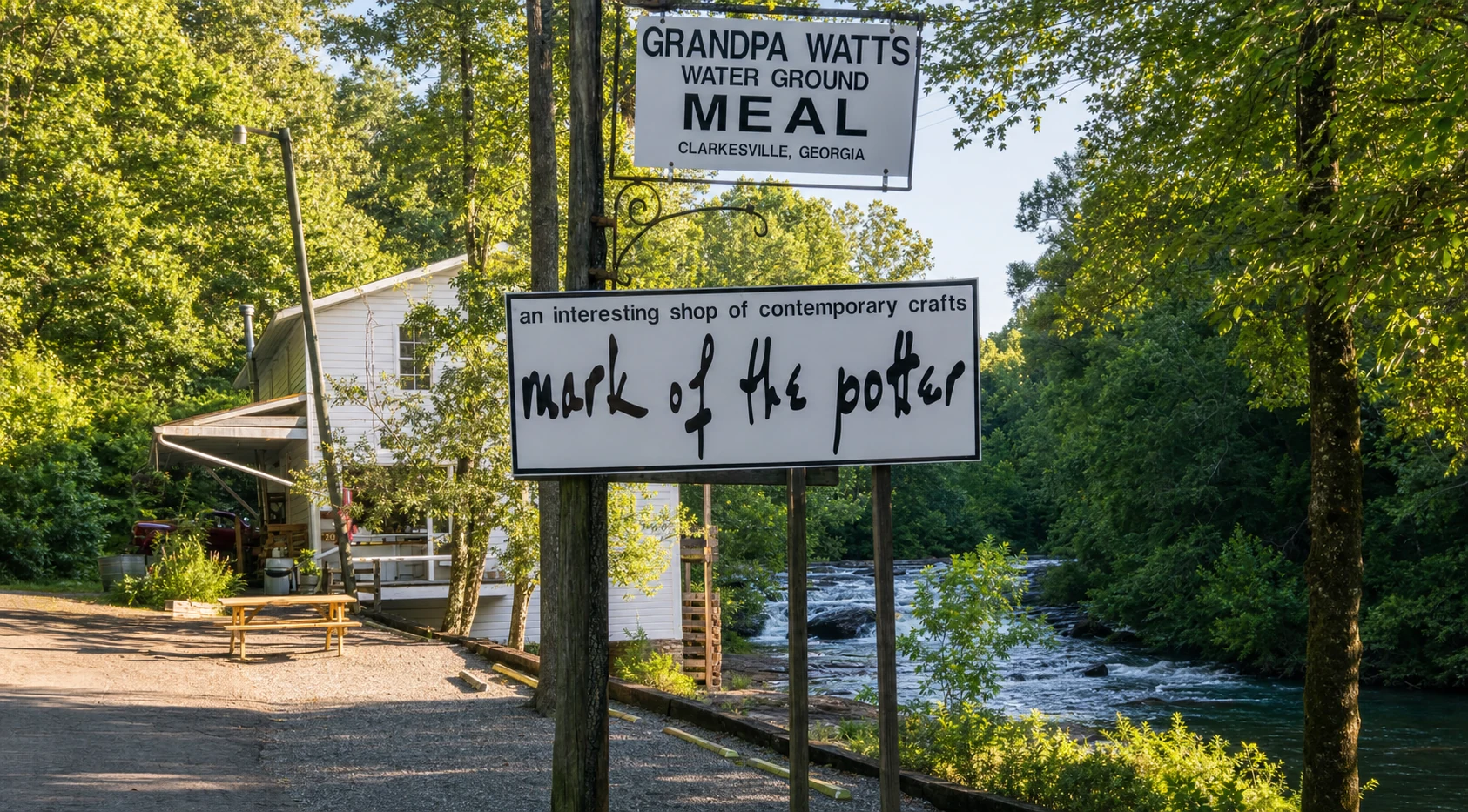
Mark of the Potter is the oldest continually operating craft shop and pottery gallery in Georgia, open since 1969. It sits in the historic Grandpa Watts' Grist Mill, built in 1931, right on the Soque River in Clarkesville.
A Pottery Studio in an Old Mill
Mark of the Potter sits inside a converted 1931 grist mill on the banks of the Soque River in Clarkesville, Georgia, about 15 minutes east of Helen. It has been operating as a craft shop and pottery gallery since 1969, making it the oldest continually running craft shop in the state. Walk in and you will find walls of handcrafted stoneware, the sound of the river rushing beneath the floorboards, and the bones of a Depression-era mill holding the whole thing together. What follows covers the history of the building, the pottery operation, and what to expect when you visit.
A Mill Site With Deep Roots
Early milling history, 1820s to 1920s
The site currently occupied by Mark of the Potter has a hydrological industrial history dating back to the early 19th century. The Soque River (pronounced "sew-quee") has long provided the kinetic energy necessary for milling timber and grain. The first recorded mill on this specific site was established in 1821 (some sources suggest the 1820s generally) by Joseph Hill. Known as "Hills Mill," this operation utilized the shoals of the river to process cornmeal, a staple of the agrarian economy of Northeast Georgia. The Hill family operated the site for a century until production ceased in the 1920s due to declining business.
The Grandpa Watts Era (1928–1960s)
In 1928, the dormant property was purchased by Allen "Grandpa" Watts and his son, Robert Watts. Leveraging the existing foundation of the Hills Mill to support a generator house, the Watts family constructed a new facility, which was completed in 1931. This structure, which stands today, served dual purposes: grinding corn for local farmers and selling meal to travelers en route from Atlanta to the mountain lakes.
The mill operates within the cultural context of the Prohibition era. Historical records and local lore indicate that the mill played a clandestine role in the region's moonshine industry. The facility reportedly sprouted corn upstairs to create mash for corn liquor, and the location on Highway 197 - often referred to as the "Old Moonshine Highway" - facilitated the transport of illicit spirits.
The Flood and Closure
The mid-1960s marked a catastrophic turning point for the industrial utility of the site. A severe flood crested the banks of the Soque River, causing irreparable damage to the mill's machinery. Specifically, sources indicate the mill closed in the mid-1960s following this event, which ruined the mechanical apparatuses required for grinding. The building was subsequently abandoned, leaving the structure vulnerable to decay until its rediscovery by artists later in the decade.
The LaRowe Transformation (1969)
In 1968, Glen and John LaRowe, seeking a retirement project and a location for a pottery studio, purchased the dilapidated mill from Letie Watts (Robert Watts' widow). Following a massive renovation to stabilize the structure and convert the industrial space into a gallery and residence, the LaRowes opened "Mark of the Potter" in the spring of 1969. This transition from grist mill to art gallery preserved the building's exterior integrity while repurposing its interior for the display of fine crafts, effectively saving a piece of Habersham County history.
Current Ownership
The property remained in the LaRowe lineage and subsequent owners committed to the same vision. As of 2018, the property is owned by Chadwick and Maria Peck, who inherited the site. The Pecks have continued the tradition of the gallery while modernizing aspects of the property, including the renovation of the upstairs living quarters into a vacation rental.
Where It Is and What Surrounds It
Location and elevation
Mark of the Potter is situated in Habersham County, within the community of Batesville (though the mailing address is Clarkesville).
Address: 9982 Highway 197 North, Clarkesville, GA 30523.
GPS Coordinates (Approximate): 34.69° N, 83.58° W.
Elevation: While the average elevation of Clarkesville is approximately 1,371 feet, the mill sits in a river valley, placing its specific elevation slightly lower, likely between 1,280 and 1,350 feet, surrounded by higher ridges typical of the Blue Ridge foothills.
The Soque River and Its Giant Trout
The building is constructed directly adjacent to, and partially cantilevered over, the Soque River, a tributary of the Chattahoochee River flowing through the Chattahoochee National Forest region. The river at this location features a series of shoals and small waterfalls that originally powered the mill’s turbine.
The thing everyone remembers is the fish. A population of giant rainbow and brown trout lives in the pool directly beneath the mill's balcony. Fishing has been banned on this stretch of river for more than 50 years, so the trout have grown huge, and some regulars swear they're as big around as a human leg.
You can buy fish food from the porch, usually 25 cents, and feed them yourself. It's a practice that goes back generations and is half the reason people stop here.
A dam of logs and wood upstream once funneled water into a penstock to drive the turbine. The turbine no longer powers the building, but you can still see remnants of the raceway and old industrial equipment on the lower level.
The Pottery and the People Who Make It
What they make and how
The gallery’s name, "Mark of the Potter," signifies that every piece of stoneware carries the individual signature or seal of the artist who created it. The gallery specializes in functional stoneware - items designed for daily use such as mugs, bowls, pitchers, and baking dishes - that are lead-free, microwave-safe, and dishwasher-safe.
Resident and Regional Artists
The shop runs as a mix of a working studio and a consignment gallery. Four to six in-house potters work on site, including current owner Chadwick Peck and lead potter Rachel Staggers. Long-timers like Matt Henderson, who put in 38 years, have kept the place going.
On top of the in-house work, the gallery carries roughly 25 to 30 other potters, mostly from the Southeast and Northeast Georgia. That mix gives you a broad look at the "North Georgia style" of folk and contemporary pottery, a tradition also documented by the Sautee Nacoochee Center and its Folk Pottery Museum.
Related Imagery from Around Helen