
Foxfire Museum & Heritage Center
A 106-acre living museum preserving the crafts, stories, and spirit of Southern Appalachian culture
Tucked into the mountains of Rabun County at an elevation between 2,100 and 2,500 feet, the Foxfire Museum and Heritage Center is one of the most remarkable cultural preservation projects in the American South. What began in 1966 as a modest classroom exercise at Rabun Gap-Nacoochee School - where a young English teacher named Eliot Wigginton asked his students to interview their grandparents about vanishing mountain traditions - grew into a publishing phenomenon, a national movement, and eventually this sprawling 106-acre outdoor museum. The resulting Foxfire Book series, published beginning in 1972, sold millions of copies and introduced the world to the self-sufficient lifeways of Southern Appalachian people.
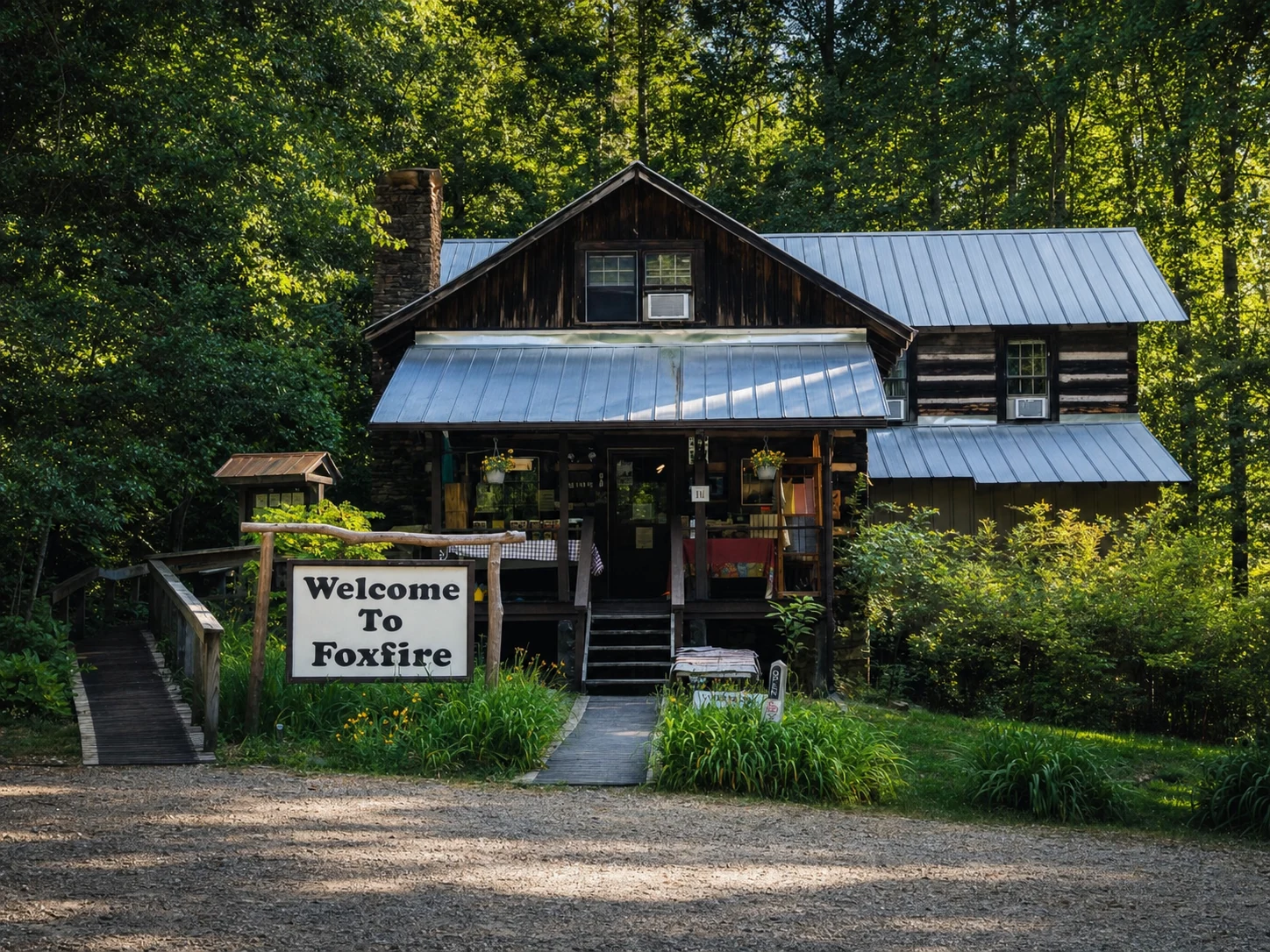
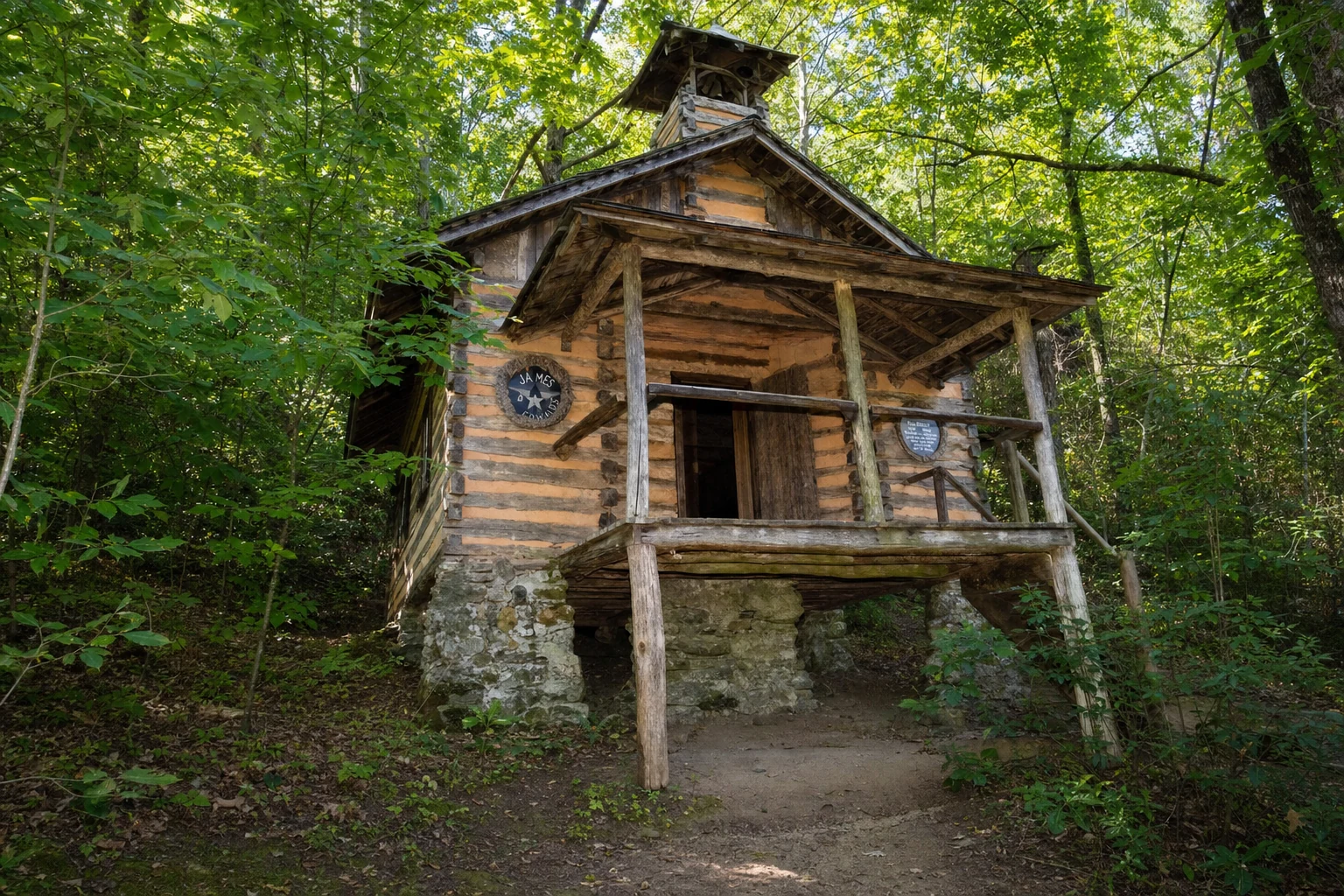
Today, the museum preserves more than twenty historic log structures that have been relocated to this wooded hillside and painstakingly restored. Walking the grounds feels less like visiting a museum and more like stepping into a mountain community from a century or two ago - complete with cabins, barns, a blacksmith shop, a grist mill, and a chapel, all set among towering hardwoods and wildflower-dotted clearings. The site was purchased in 1974 with royalties from the Foxfire books, which says something about just how well they sold.
The Historic Structures
Twenty buildings that tell the story of mountain life
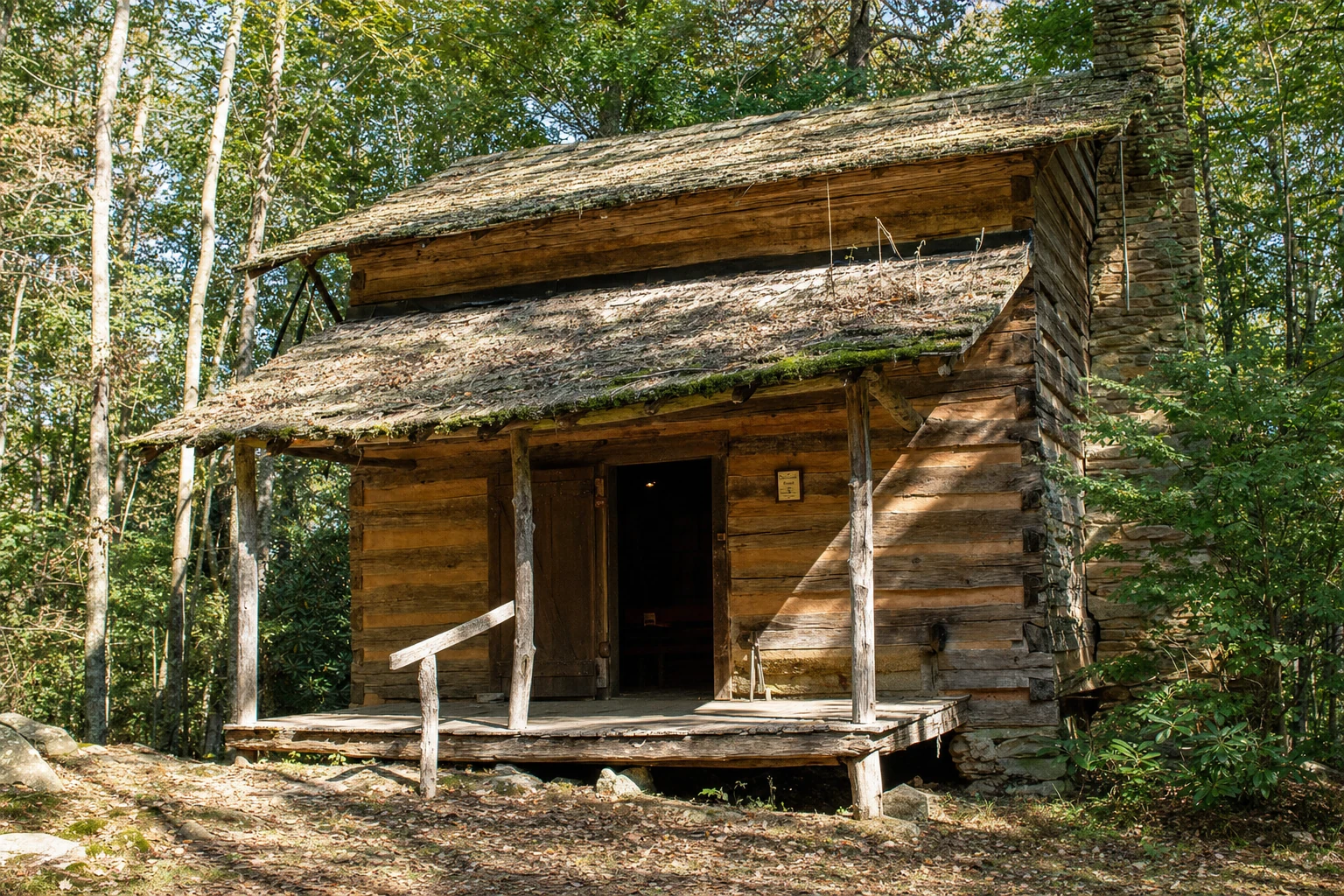
Each structure on the Foxfire grounds has its own story and provenance. The Savannah House, dating to the 1820s, is a compact 21-by-21-foot cabin that represents the earliest style of frontier building in these mountains - a single-pen log structure where an entire family would have lived, cooked, and slept. Its hand-hewn logs and mud-chinked walls have survived two centuries of mountain weather, and standing inside it gives you a visceral sense of the simplicity and hardship of early settlement life in northeast Georgia.
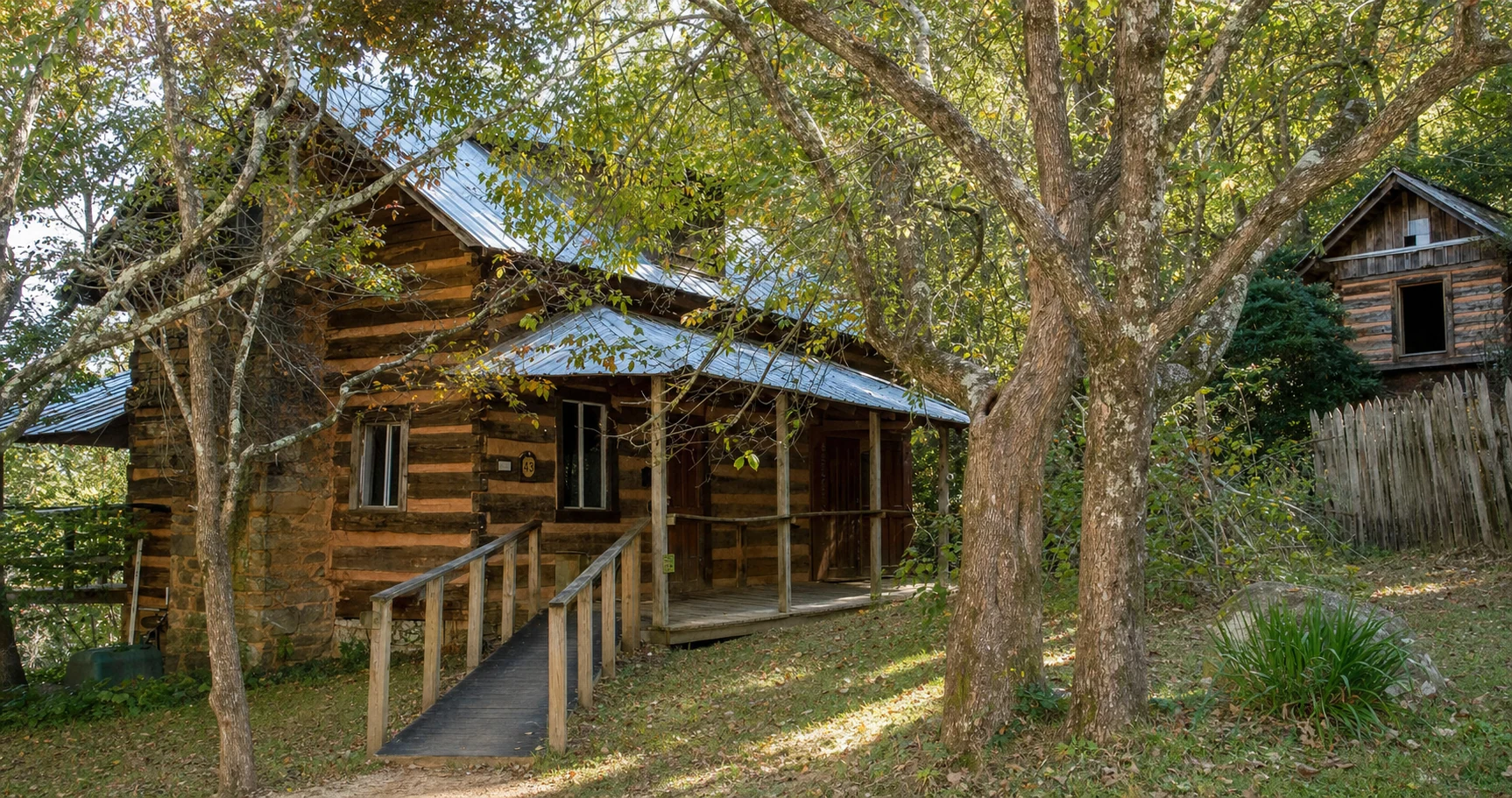
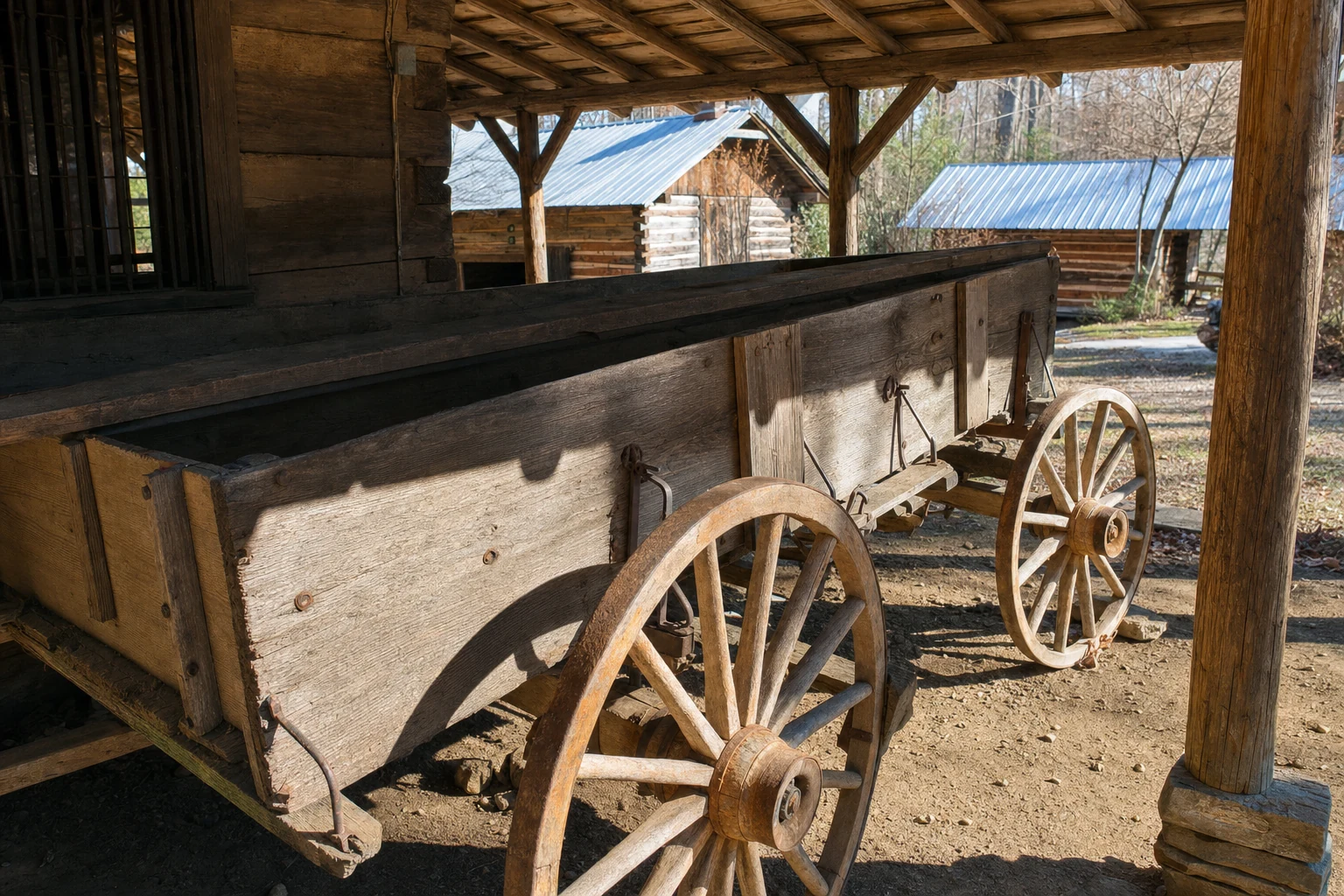
The Carnesville House, built in the 1850s by William Terrell Millican, is a larger and more refined structure that reflects the growing prosperity of mountain communities in the decades before the Civil War. The Tiger House served as a pre-Civil War weaver's studio, where hand-loomed textiles were produced for local use and trade. Across the grounds you will find a working blacksmith forge, a wagon shed, corn cribs, and other outbuildings that illustrate the full range of skills required to sustain a mountain homestead. Every building has been documented, disassembled at its original site, transported to Foxfire, and carefully reassembled using traditional methods.
The Zuraw Wagon & Cherokee Heritage
A one-of-a-kind artifact from the Trail of Tears
Among the museum's most significant artifacts is the Zuraw Wagon - the only documented wagon known to have been used during the Trail of Tears, the forced removal of Cherokee people from their ancestral homelands in the late 1830s. This wagon is a sobering and powerful artifact, connecting visitors directly to one of the most tragic chapters in American history. The Cherokee people had inhabited these very mountains for thousands of years before removal, and the Cherokee Heritage of this region is felt throughout the landscape and place names of northeast Georgia.
The Foxfire Museum treats this artifact and the broader story of indigenous heritage with the gravity it deserves. Interpretive materials provide historical context about the Cherokee Nation's sophisticated civilization, the political forces that led to removal, and the devastating human cost of the journey westward. Standing before the Zuraw Wagon, the abstraction of history becomes deeply personal.
Living Demonstrations & Festivals
Heritage crafts kept alive by skilled artisans
The Foxfire Museum goes beyond static displays. Throughout the year, skilled artisans and volunteers demonstrate traditional Appalachian crafts on the museum grounds - blacksmithing, pottery, weaving, soap making, woodworking, and other skills that were once essential to daily survival in these mountains. These demonstrations bring the historic structures to life and offer visitors a chance to ask questions, watch techniques passed down through generations, and sometimes try their hand at a craft themselves.
The museum's signature annual event is the Mountaineer Festival, held each October when the surrounding mountains are ablaze with fall color. The festival features live mountain music, traditional food, craft demonstrations, storytelling, and activities for children - a celebration of the culture that the Foxfire project has worked for decades to preserve. October is also prime fall foliage season in northeast Georgia, making a day trip to Foxfire an ideal pairing with a scenic drive through the mountains.
Visitor's Perspective
Tips from the trail
Plan to spend at least two to three hours at Foxfire - the grounds are extensive and you will want to take your time exploring each structure. Wear comfortable walking shoes, as the paths between buildings are unpaved and follow the natural terrain of the hillside. The museum is mostly outdoors and shaded, but summer visits can be warm, so bring water. In fall, the surrounding forest is spectacular.
Arriving early on a weekday morning is the best way to experience Foxfire without crowds. The last admission is at 3:00 PM, so do not plan to arrive late in the afternoon. Families with children will find plenty to engage young visitors - the hands-on nature of the demonstrations and the novelty of walking through genuine historic cabins tends to captivate kids in a way that traditional museums often do not. The gift shop carries Foxfire books, handmade crafts, and locally sourced goods. If you are traveling with children, the family guide has more tips for planning day trips with young ones.
Getting There from Helen
A scenic drive through the heart of Rabun County
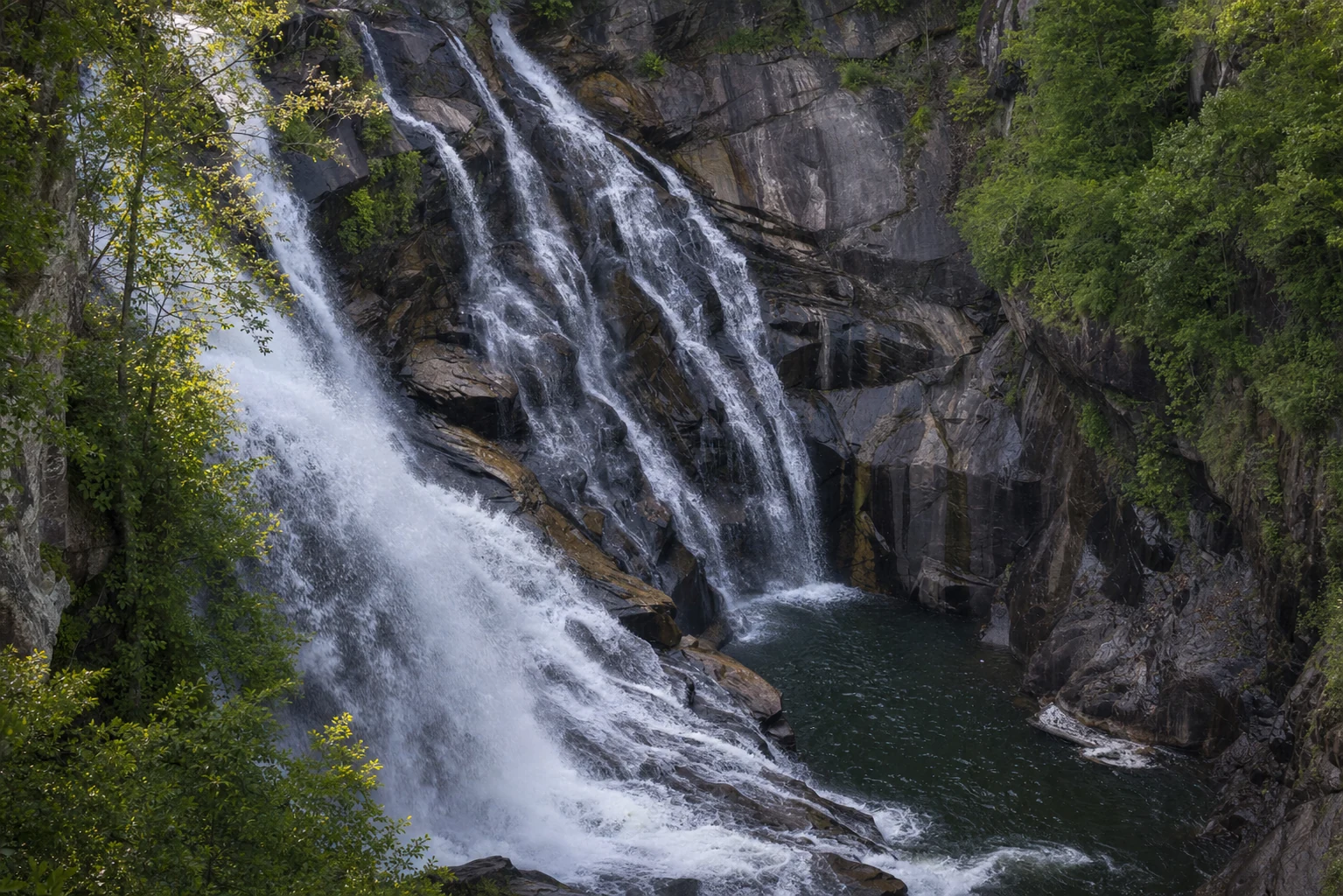
Foxfire Museum is approximately 55 miles from Helen, a drive of about one hour and fifteen minutes. Head north from Helen on GA-75 to GA-17, then take US-76 West through Clayton - the county seat of Rabun County and a charming small town worth a stop in its own right. From Clayton, continue west on US-76 before turning north toward Mountain City. The drive takes you through some of the most scenic mountain terrain in Georgia, passing near Tallulah Gorge and Black Rock Mountain State Park along the way. Consider combining your Foxfire visit with a stop at either destination for a full day of exploration.
More to Explore
Related history, heritage, and mountain culture