America's First Gold Rush
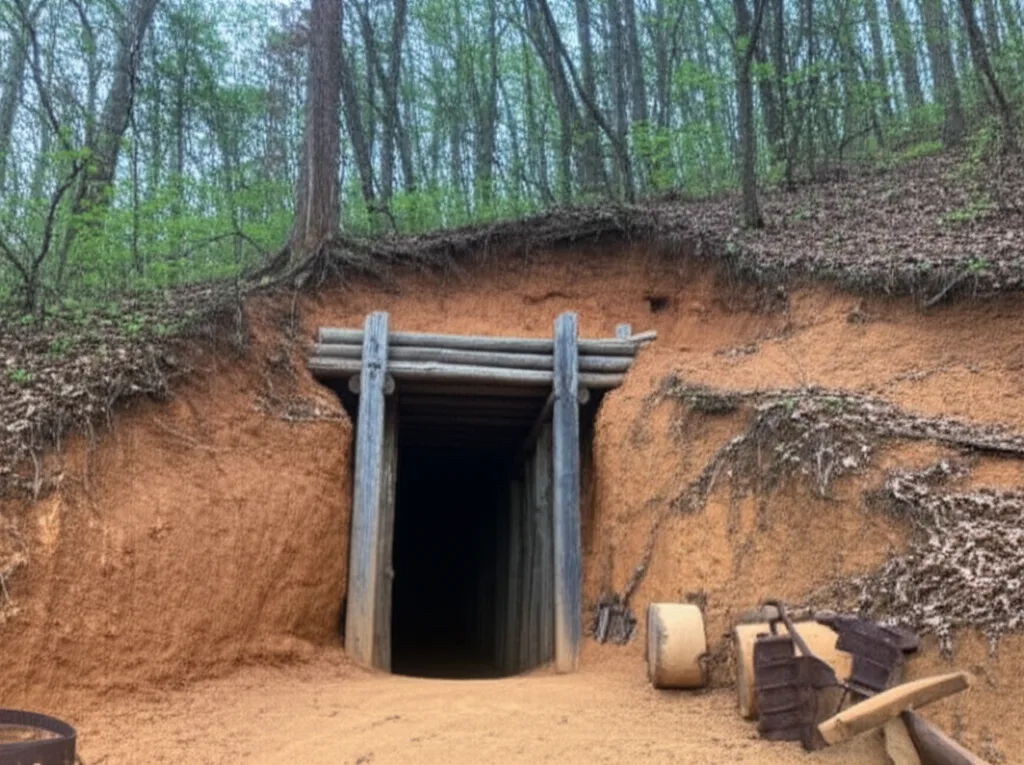
Gold was discovered in the North Georgia mountains in 1828, though the exact circumstances are debated. The most popular account credits a deer hunter named Benjamin Parks, who reportedly kicked a rock while hunting near present-day Dahlonega and found it glittering with gold. Other accounts credit a slave named Jess, working at a Nacoochee Valley plantation, with finding the first nugget. Whatever the truth, by the spring of 1829, word had spread, and prospectors were pouring into the mountains from across the eastern United States. The Dahlonega area became the epicenter of the rush.
Auraria sprang up at the confluence of two creeks rich in alluvial gold, about three miles south of present-day Dahlonega. Within months, the town had dozens of businesses: general stores, blacksmith shops, saloons, boarding houses, a newspaper, and the various other enterprises that follow wherever desperate men congregate around the prospect of sudden wealth. By 1832, estimates put the population at 10,000 or more, making Auraria one of the largest towns in Georgia.
The Cherokee Price
There is an aspect of the Auraria gold rush that tourism brochures often minimize: the gold was found on Cherokee land. The Cherokee Nation had inhabited the mountains of North Georgia for centuries, and by the 1820s, they had developed a sophisticated civilization with a written language, a newspaper, schools, and a constitutional government. Under federal treaties, the land was theirs.
The discovery of gold changed everything. Georgia's state legislature passed laws stripping the Cherokee of their legal rights and forbidding them from mining gold on their own land. The federal government, under President Andrew Jackson, refused to enforce the treaties that guaranteed Cherokee sovereignty. The result was the Indian Removal Act of 1830 and, ultimately, the Trail of Tears in 1838, when approximately 17,000 Cherokee were forcibly marched from their homeland to Indian Territory in present-day Oklahoma. An estimated 4,000 died during the journey.
"The gold of Auraria was literally mined from Cherokee land, by men who had no legal right to be there, under laws designed to steal a nation's homeland. The Trail of Tears did not happen in a vacuum. It happened because there was gold in the hills."
The Rise and Fall
Auraria's decline was almost as rapid as its rise. In 1833, Lumpkin County was created and the county seat was established not at Auraria but at Dahlonega, three miles to the north. The United States Mint opened a branch in Dahlonega in 1838, further consolidating the town's importance and drawing population away from Auraria. Then, in 1849, gold was discovered at Sutter's Mill in California, and the trickle of departures became a flood. Georgia's gold deposits, while significant, could not compete with the bonanza of the Sierra Nevada.
By the Civil War, Auraria was essentially dead. The remaining buildings were abandoned or dismantled. The population evaporated. The creeks that had drawn ten thousand prospectors were panned out and quiet. What had been one of the largest towns in Georgia vanished so thoroughly that by the early twentieth century, few people remembered it had existed at all.
Visiting Auraria Today
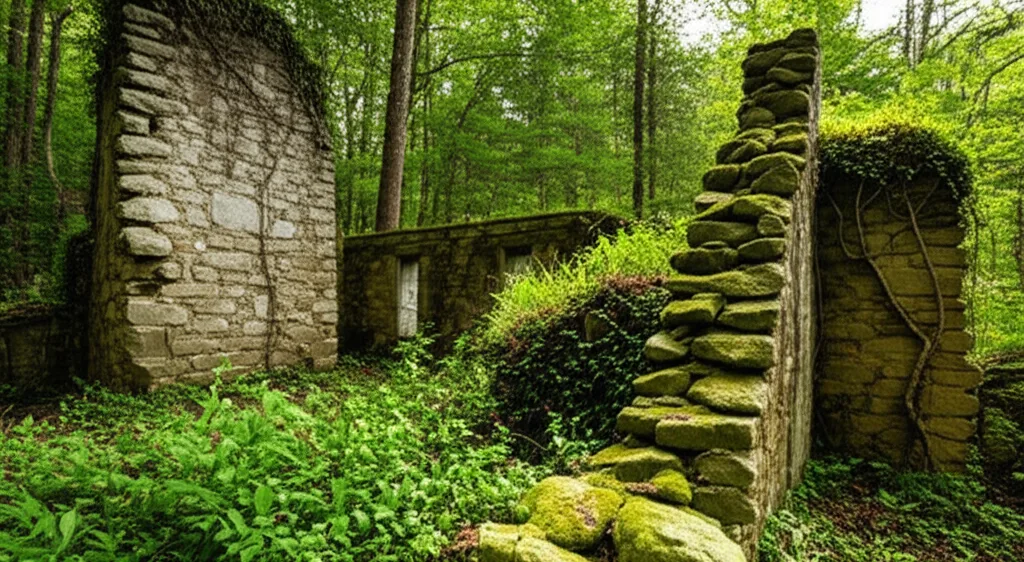
Auraria today is a wide spot on Parks Road (named for Benjamin Parks) in Lumpkin County. A few historical markers identify the site of the town, and a handful of surviving structures, including an 1832-era house, give some sense of scale. But mostly, what you find is absence: an empty landscape where a bustling town once stood, the creeks still flowing through as though nothing ever happened there.
The Dahlonega Gold Museum, housed in the old Lumpkin County Courthouse just a few miles north, provides excellent context for the gold rush era. The museum contains gold coins from the Dahlonega Mint, mining tools, and exhibits explaining the geology, history, and human cost of the Georgia Gold Rush. Combined with a visit to the Auraria site, it makes for a powerful day trip that illuminates one of the most consequential events in Georgia history.
Visiting Information
- Location: Parks Road, Lumpkin County, about 3 miles south of Dahlonega and 45 minutes from Helen.
- Dahlonega Gold Museum: 1 Public Square, Dahlonega. Open Wed-Sun. Small admission fee.
- Gold Panning: Several operations near Dahlonega offer recreational gold panning for visitors.
- Combine With: A visit to the Dahlonega town square, which has excellent shops, restaurants, and the gold museum.
The Historical Context: Georgia's Gold Rush
The Georgia Gold Rush was not a minor footnote -- it was America's first significant gold rush, predating California by two full decades. When gold was discovered near Duke's Creek in 1828, just a few miles from today's Helen, the deposits lay squarely within Cherokee territory guaranteed by federal treaties. The rush drew an estimated 10,000 prospectors to the region by the early 1830s and directly fueled the political pressure that led to the Indian Removal Act of 1830 and the Trail of Tears of 1838-1839, during which approximately 4,000 Cherokee died on the forced march to Oklahoma.
Today, the Dahlonega Gold Museum at 1 Public Square in Dahlonega (housed in the 1836 Lumpkin County Courthouse, one of the oldest courthouses in Georgia) preserves this history with gold coins minted at the Dahlonega Branch Mint between 1838 and 1861, mining tools, and exhibits on the human cost of the rush. The museum is open Wednesday through Sunday and charges a small admission fee. The U.S. Mint operated in Dahlonega for 23 years, producing over $6 million in gold coins before the building was seized by Confederate forces in 1861. The famous phrase "There's gold in them thar hills" is attributed to Dahlonega Mint assayer Dr. Matthew F. Stephenson, who reportedly used it to discourage miners from leaving for California in 1849.
The Cherokee fought their dispossession through every legal channel available, culminating in the landmark Supreme Court case Worcester v. Georgia (1832), in which Chief Justice John Marshall ruled decisively in the Cherokee's favor. President Andrew Jackson refused to enforce the ruling. The connection between Auraria's gold and Cherokee removal is direct and undeniable: the wealth that flowed from these hills came at the cost of an entire civilization's homeland.
Local writers sharing the hidden stories and trails of North Georgia's mountain country.
Related Stories
More lost towns and hidden history from the mountains