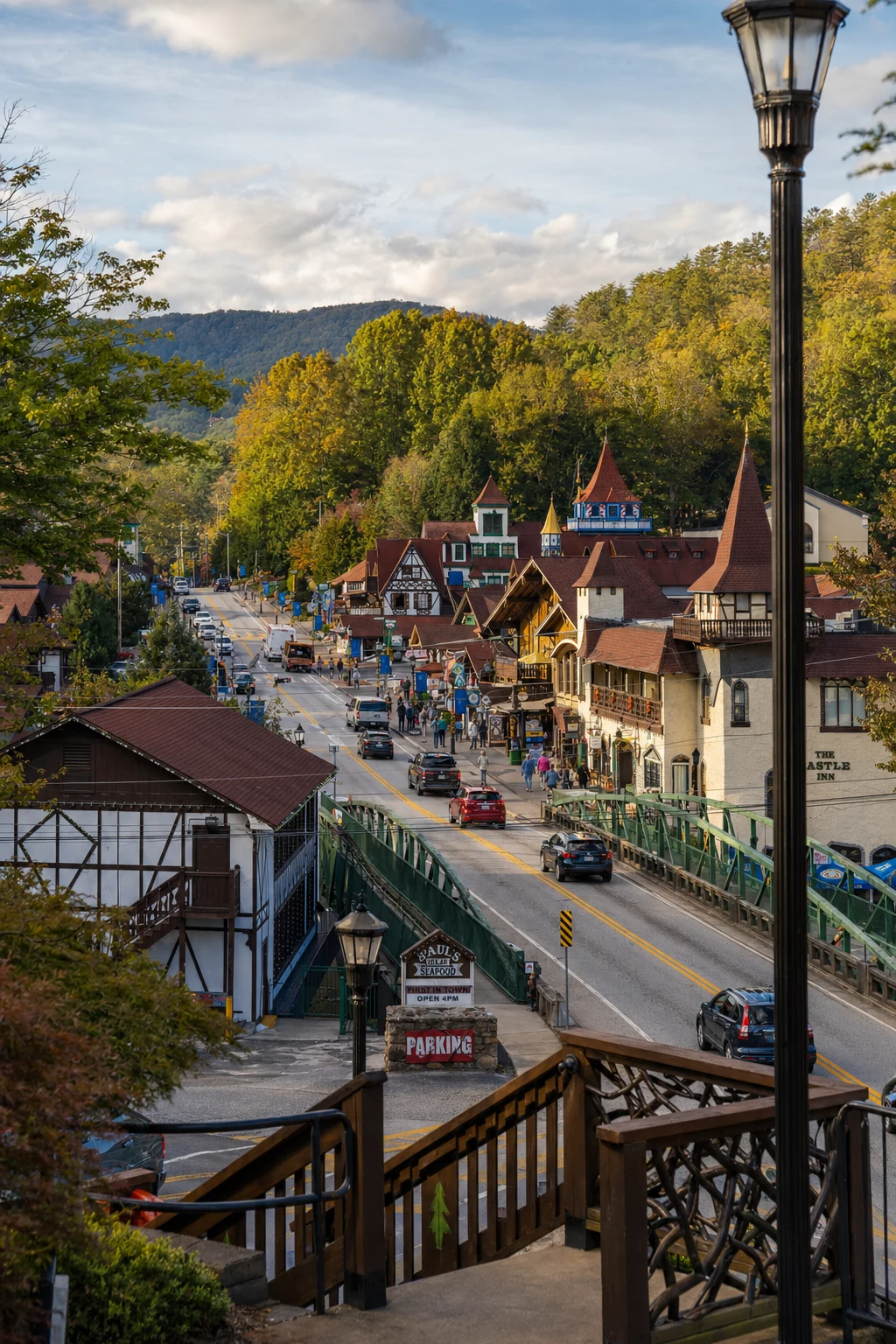
Stargazing in the Helen, Georgia Mountains
Dark sky locations, meteor shower calendars, and astrophotography tips for the North Georgia highlands
The mountains around Helen, Georgia are among the best places in the Southeast for stargazing. Here are two things to know before you plan a trip.
Best Location: Brasstown Bald, Georgia's highest point at 4,784 feet, has the darkest skies near Helen. The elevation puts you above the haze, and the 360-degree view means no mountain is blocking your horizon.
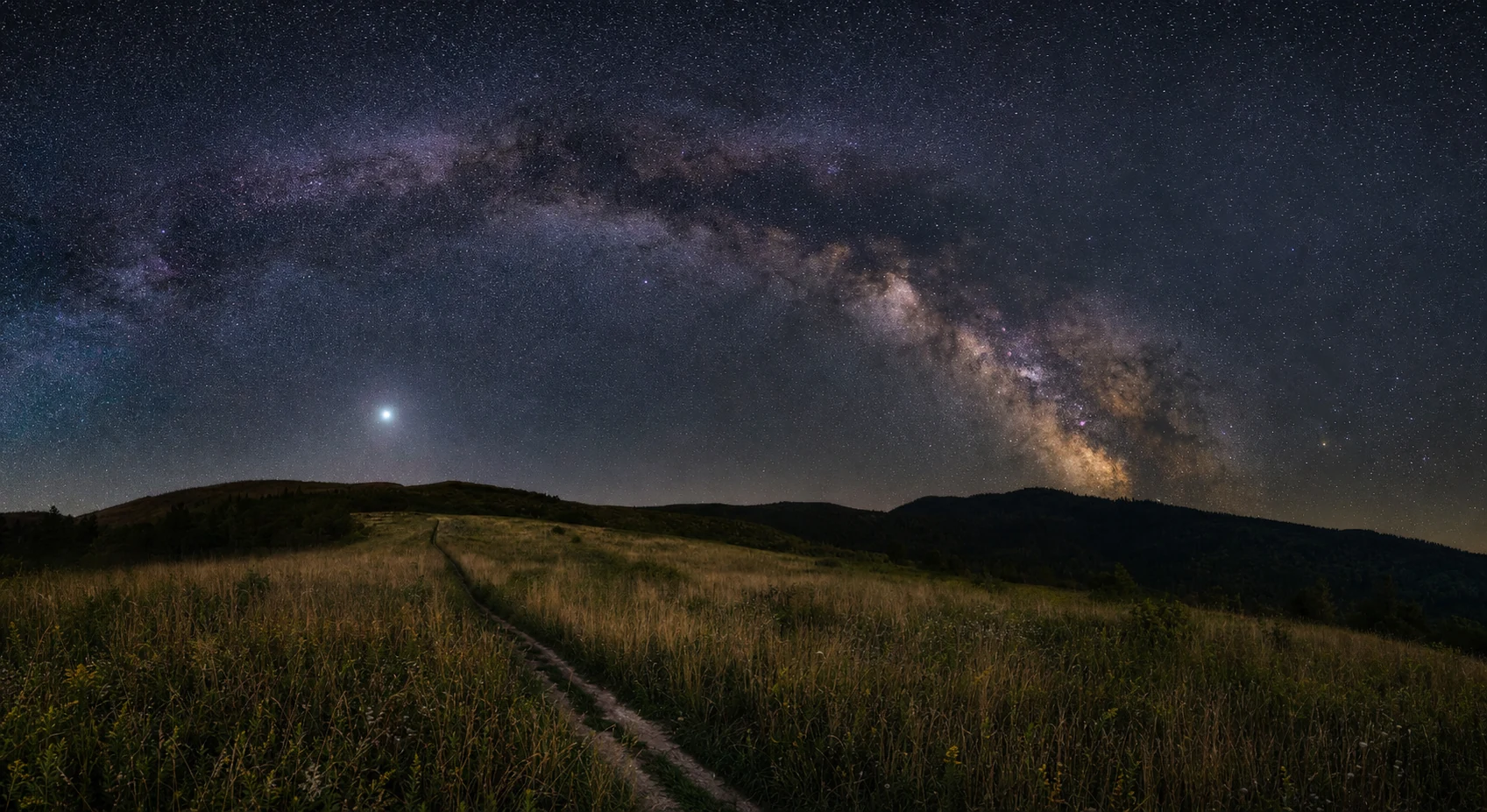
Milky Way Season: The Galactic Core is best seen from June to August in the middle of the night, then shifts to evening visibility in September and October.
Why the Skies Here Are So Good
The mountains around Helen are one of the best places in the Southeast for stargazing. What makes a good observing site comes down to three things: darkness (how little artificial light there is), transparency (how clear the air is), and seeing (how steady the atmosphere is). The Helen area, sitting in the Blue Ridge Mountains, scores well on all three.
Helen itself puts out some light pollution, but the Chattahoochee-Oconee National Forest is right there, and a short drive gets you into genuinely dark sky. The elevation helps a lot too. Peaks like Brasstown Bald at nearly 4,800 feet put you above the thickest layer of moisture and haze that hangs over lowland Georgia.
This guide covers the specific dark-sky locations near Helen, what you can see from our latitude (approximately 34°N), and what you need for astrophotography in these mountains.
Dark Skies and Why Elevation Helps
To understand why certain spots near Helen are good for stargazing, you need to know about the Bortle Scale and how altitude affects what you can see.
The Bortle Dark-Sky Scale in North Georgia
The Bortle Scale quantifies the night sky's brightness on a level of 1 (excellent dark-sky site) to 9 (inner-city sky).
Atlanta: Class 8/9. The Milky Way is invisible; the limiting magnitude is often below 4.0.
Helen (Town Center): Likely Class 5. Artificial light domes are visible; the Milky Way is washed out near the horizon.
Brasstown Bald & Surrounding Wilderness: Class 3 (Rural Sky).
Characteristics: The Milky Way appears complex and structured. Zodiacal light is visible in spring and autumn. Light domes from Atlanta and Greenville, SC, may be visible on the horizon, but the zenith (directly overhead) remains dark.
Limiting Magnitude: Observers can expect to see stars down to magnitude 6.5 to 7.0 with the naked eye under optimal conditions.
Why Getting Up High Matters
Brasstown Bald stands at 4,784 feet. In astronomy, elevation provides two distinct advantages:
Climbing nearly a mile puts you above the thickest layer of the lower atmosphere, which holds the most water vapor, dust, and pollution. That is the stuff that scatters light and hazes the sky.
In the humid Southeast, low valleys like Helen fog up and collect heavy dew at night. The peaks usually sit above that inversion layer, so the air stays drier, which is better for your gear and your photos.
Where to Go: The Best Dark-Sky Spots
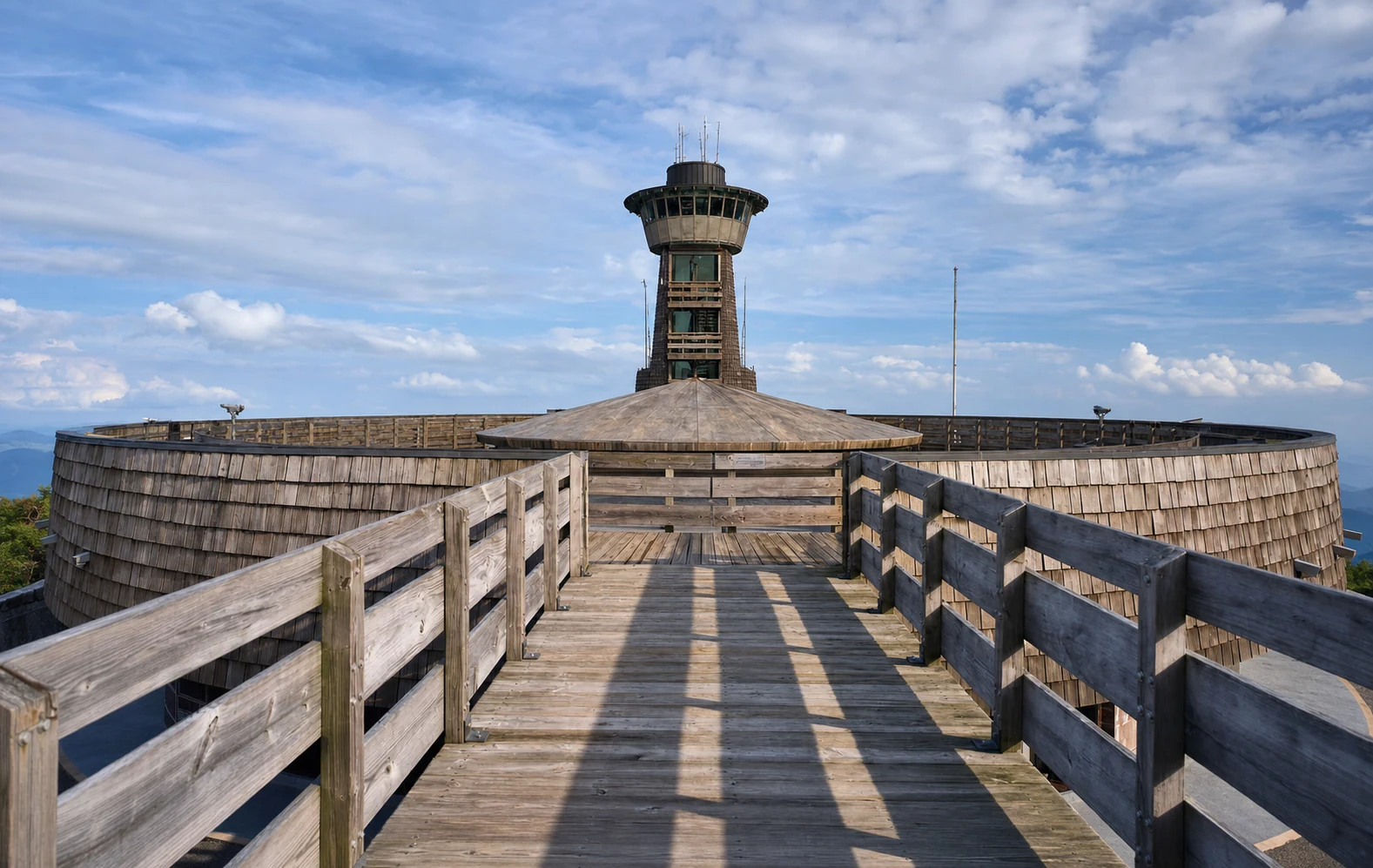
Brasstown Bald
As Georgia's highest peak, this is the premier destination for serious observation.
Location: Approximately 20 miles northwest of Helen via GA-75 and GA-180.
Visual Access: The summit offers a 360-degree observation deck. However, night access to the summit requires hiking. The large parking lot below the summit also offers excellent views, though the horizon is framed by trees.
Logistics & Rules:
Access: The road and parking lot are open 24/7 year-round (except in severe weather/ice).
Fees: There is a $5 per person fee (adults 16+). After hours (when the gate booth is unmanned), this must be paid via honor system envelopes at the fee tube.
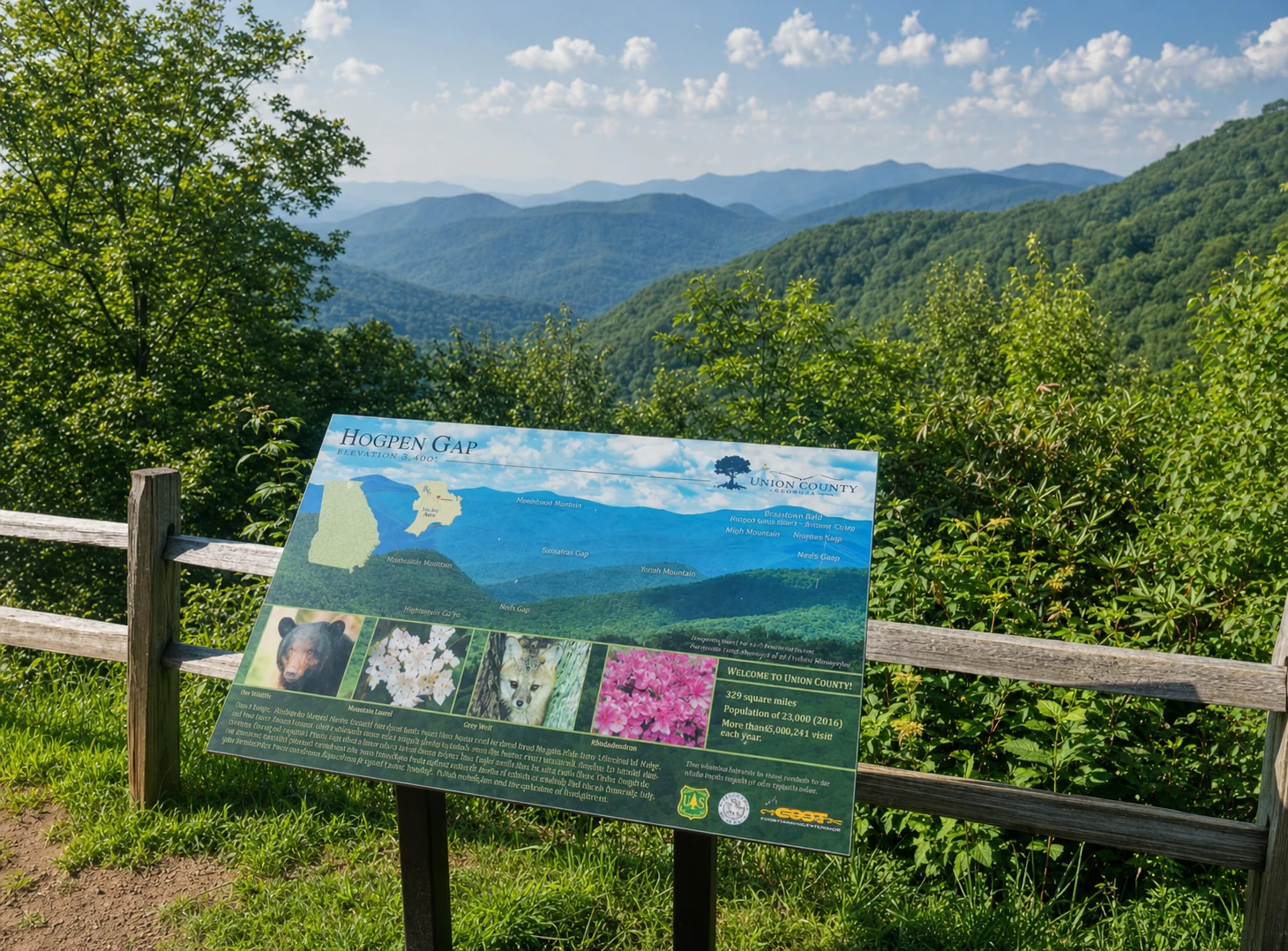
Hogpen Gap
Located along the Richard B. Russell Scenic Highway, this is a convenient, roadside option.
Location: 15 minutes from Helen. It is a scenic overlook and a crossing point for the Appalachian Trail.
Visual Access: Excellent views of the sky, particularly facing North.
Pros: Very accessible; requires no hiking (viewing is possible feet from the car).
Cons: Because it is a roadside pull-off, headlights from passing traffic can ruin night vision and long-exposure photographs. It suffers from slightly more light pollution than Brasstown Bald due to its proximity to Helen.
Popcorn Overlook
A designated dark sky location maintained by the U.S. Forest Service.
Location: 15 miles west of Clayton on Highway 76.
Orientation: This overlook faces North/Northwest.
Observing Notes: Because it faces north, the Galactic Core of the Milky Way (which rises in the Southeast/South) is obscured by the mountains behind the viewer. However, this orientation makes it an exceptional site for viewing objects in the northern celestial hemisphere (e.g., Cassiopeia, Ursa Major) and for photographing star trails around Polaris. It is noted for being free of light pollution from Atlanta.
Moccasin Creek State Park
Located on the shores of Lake Burton, offering a different perspective than the mountain peaks.
Location: Between Clarkesville and Hiawassee.
Visual Access: The park is relatively flat. The boat ramp area provides a wide, open view of the sky over the water, which allows for reflections of the stars in photography.
Light Quality: Rated as Bortle Class 3. The park closes at 10 PM, but the public boat ramps are accessible for stargazing.
A Few More Spots Worth Knowing
Unicoi State Park: Close to Helen, suitable for casual viewing, though less dark than Brasstown.
Cohutta Wilderness: For those willing to travel further west (near Ellijay), this 37,000-acre wilderness offers some of the darkest skies in the state (true dark zones).
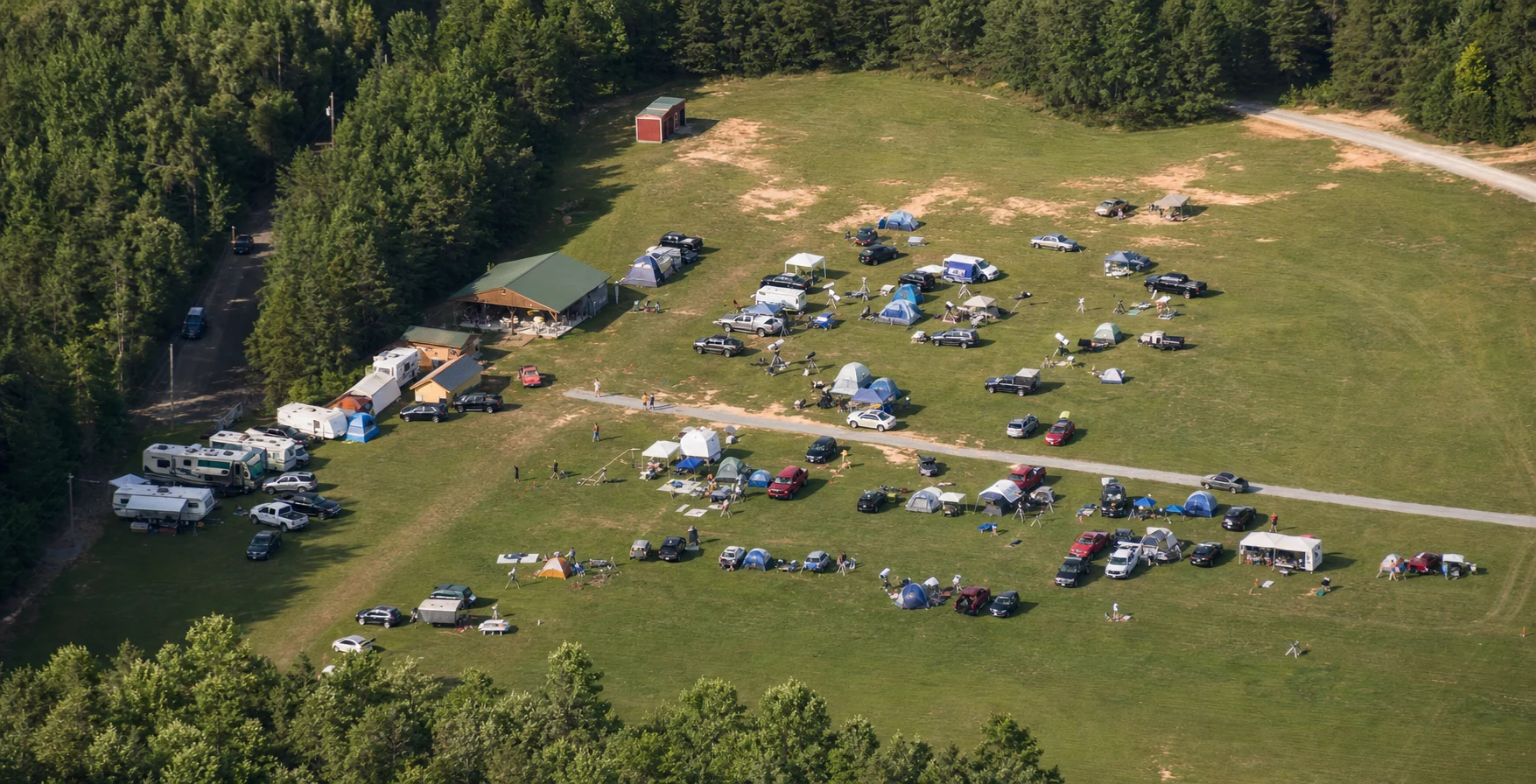
Deerlick Astronomy Village: Located in Sharon, GA (further south/east), this is a dedicated community for astronomers with strictly controlled light rules, often used for major star parties.
When to See the Milky Way
The visibility of the Milky Way is determined by Earth's position in its orbit. The "Milky Way" is visible year-round, but the Galactic Core - the bright, photogenic center containing the supermassive black hole Sagittarius A* - is only visible seasonally.
Related Imagery from Around Helen