Mountain Views and Overlooks Near Helen
Panoramic overlooks, sunrise pulloffs, and the best vantage points for photographing the Blue Ridge
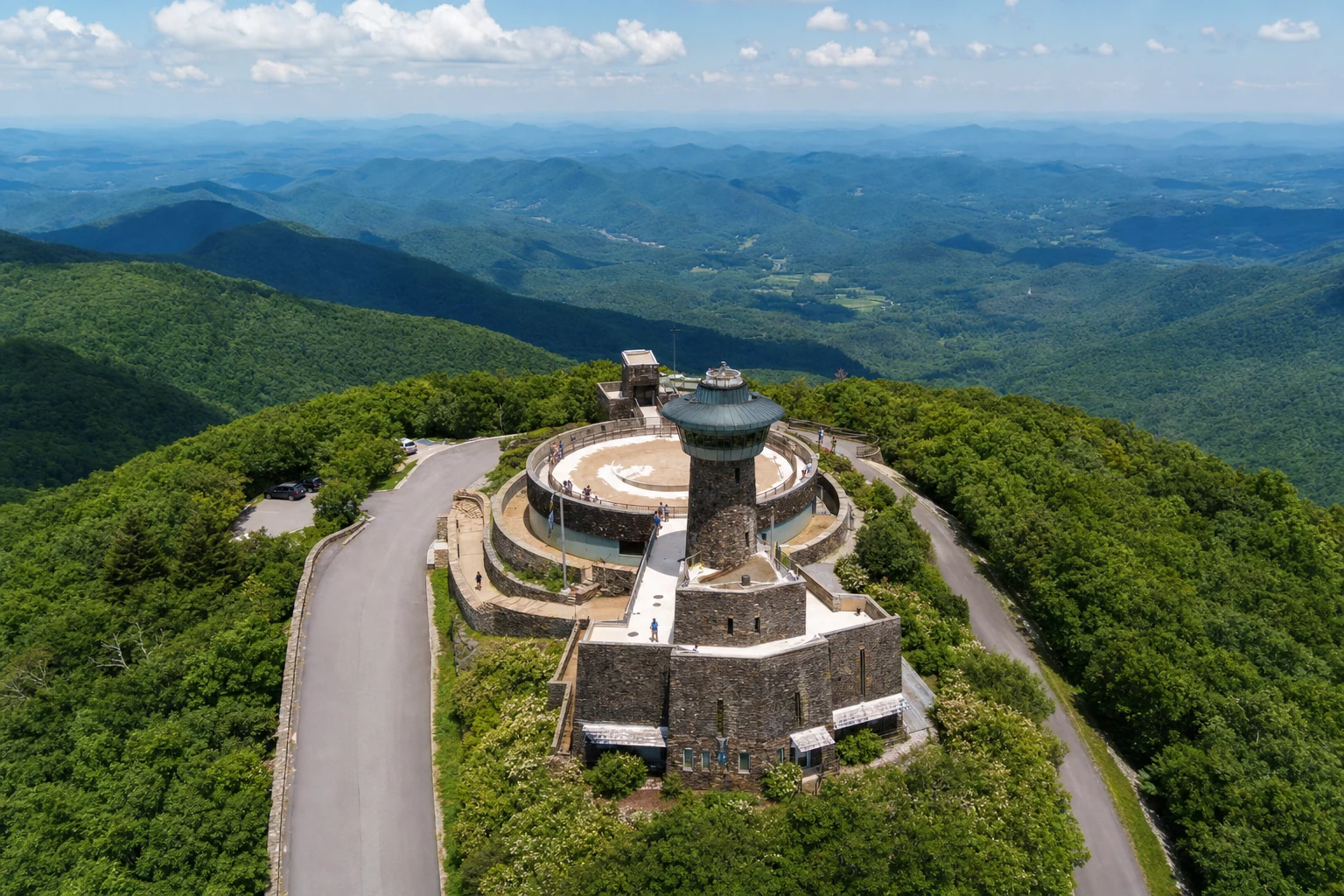
Brasstown Bald is Georgia's highest point, with 360-degree views from the top. You can reach it via a steep paved trail or take the shuttle up.
The Richard B. Russell Scenic Highway provides the highest concentration of accessible roadside overlooks, including Hogpen Gap and Dodd Creek Vista, which are easy to reach and offer dramatic sweeping mountain views.
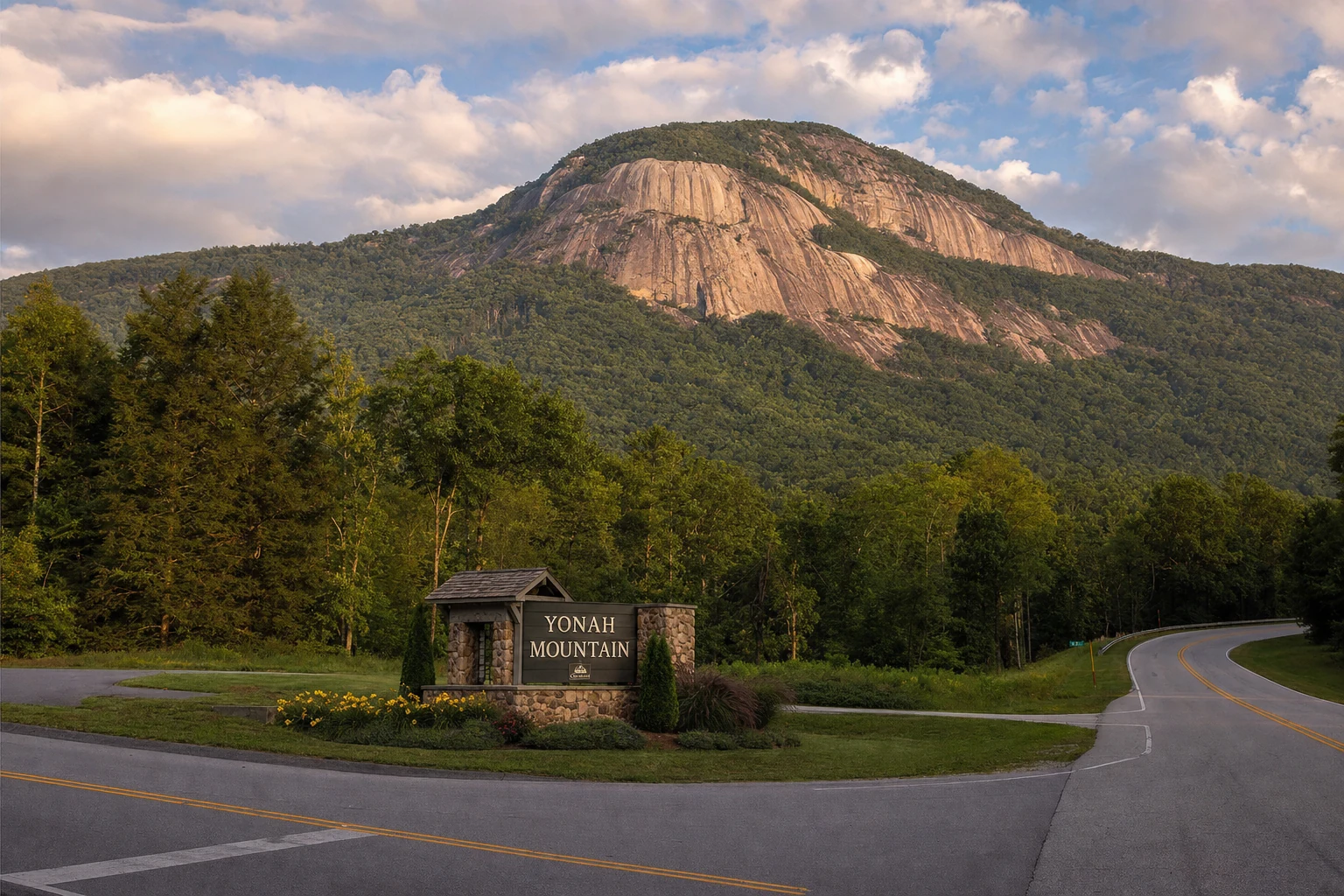
Yonah Mountain requires a strenuous hike but rewards photographers with unique geological features, including massive granite rock faces ("Pink Cliffs") and a distinct, isolated summit view of the Piedmont.
About These Mountain Views
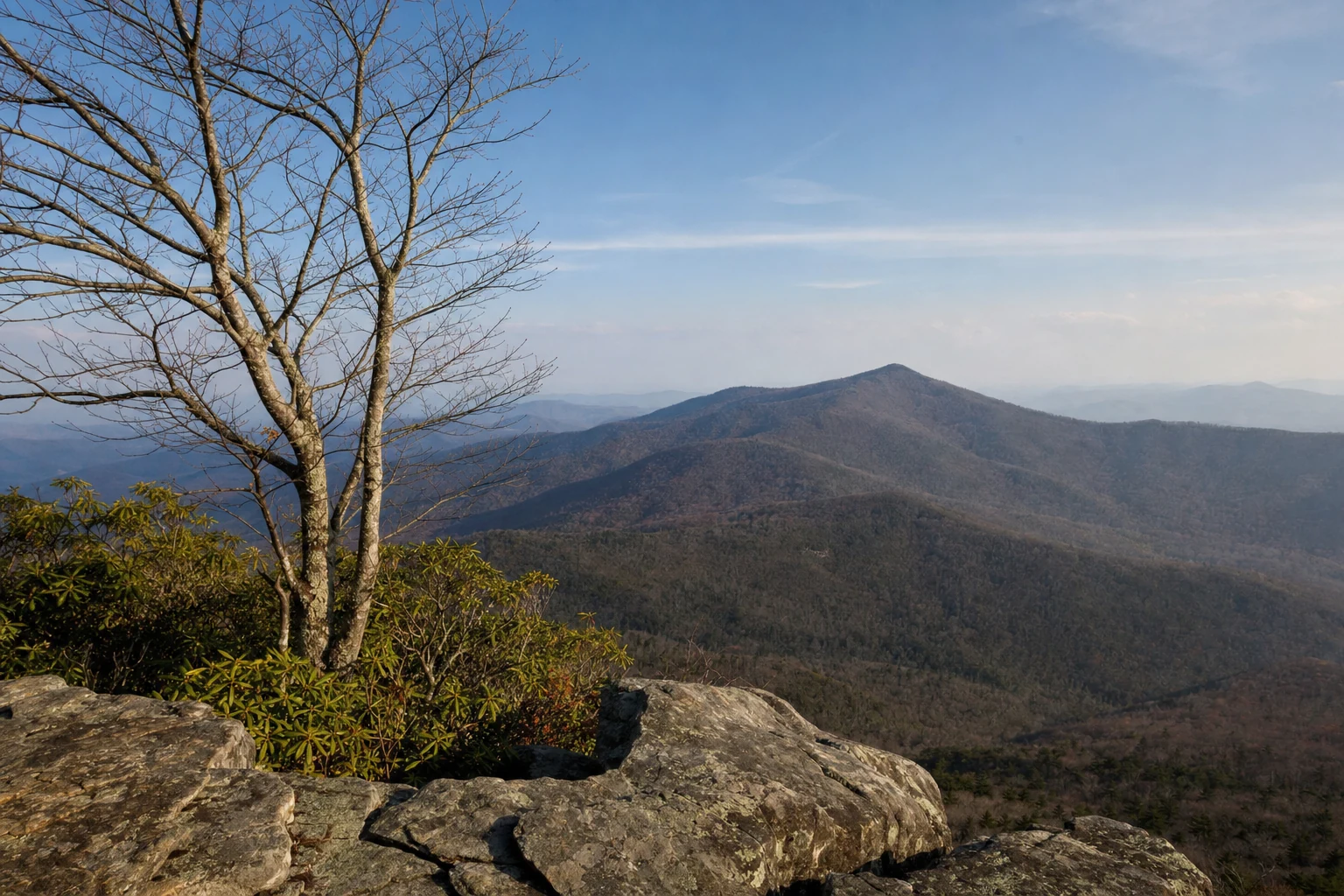
Blood Mountain and Cowrock Mountain (accessible from Tesnatee Gap) offer rugged, textured foregrounds along the Appalachian Trail, with rock outcrops that look especially good in sunrise light.
Raven Cliff Falls is a different kind of view entirely -- instead of wide-open mountain panoramas, you are looking at water flowing through a crack in a granite cliff face.
The Blue Ridge Mountains around Helen are geologically ancient, with rolling peaks, deep deciduous forests, and exposed granite domes. Whether you are a photographer or just someone who likes to pull over at a good overlook, there are viewpoints for every level of effort, from roadside pulloffs on the Russell Scenic Highway to rugged summit hikes. One thing that defines the look of this area is the "blue haze" -- caused by isoprene released by the trees -- which gives the distant ridges that layered, painterly quality. Below is a guide to the best viewpoints near Helen, with the access details, what the views actually look like, and tips for getting good photos.
The Richard B. Russell Scenic Highway Corridor
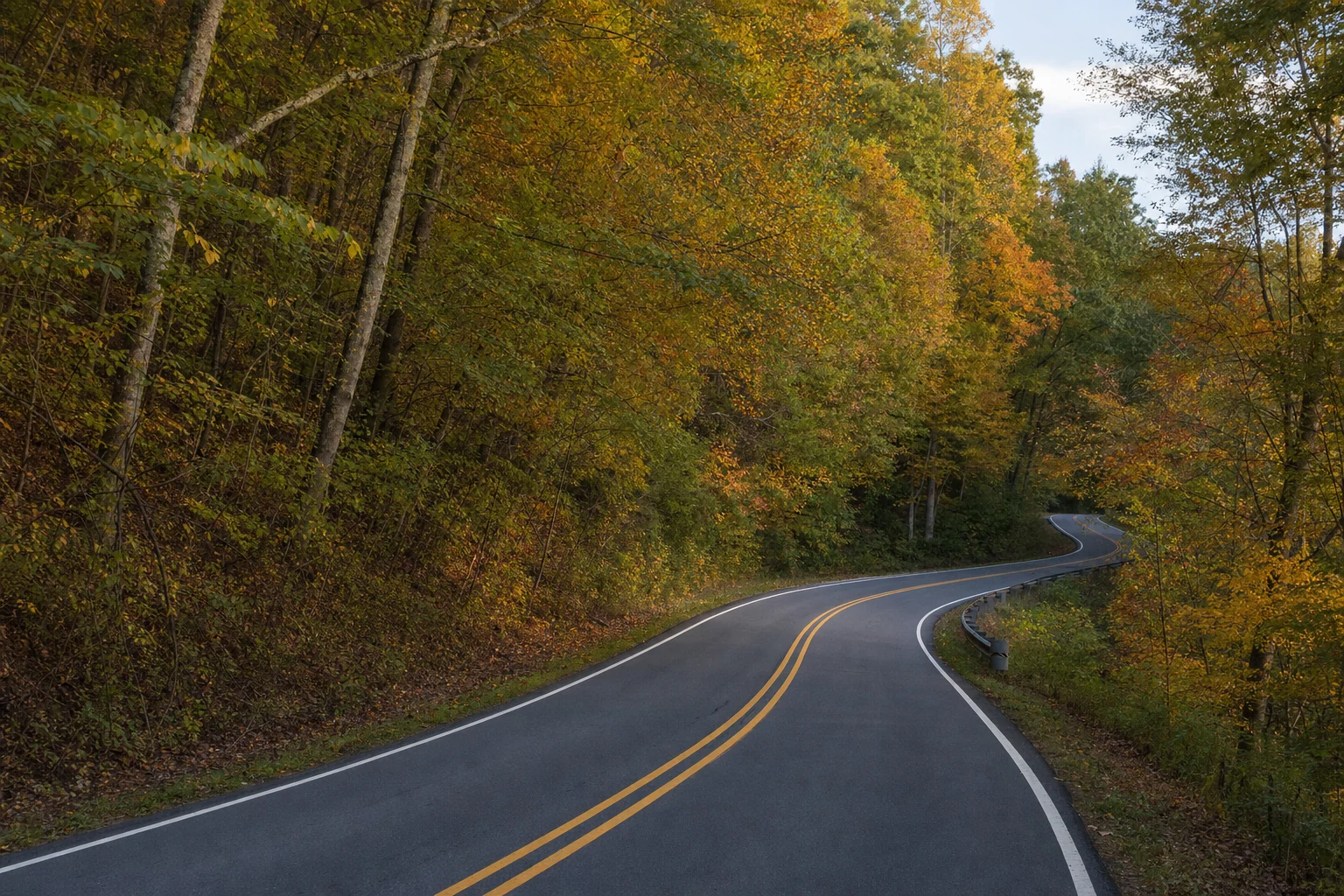
The Richard B. Russell Scenic Highway (GA-348) is a 23-mile stretch of road that bisects the Raven Cliffs Wilderness and is the best road in North Georgia for high-elevation photography. It connects Helen to the Blairsville area, winding through the Chattahoochee National Forest and crossing the Appalachian Trail.
Hogpen Gap
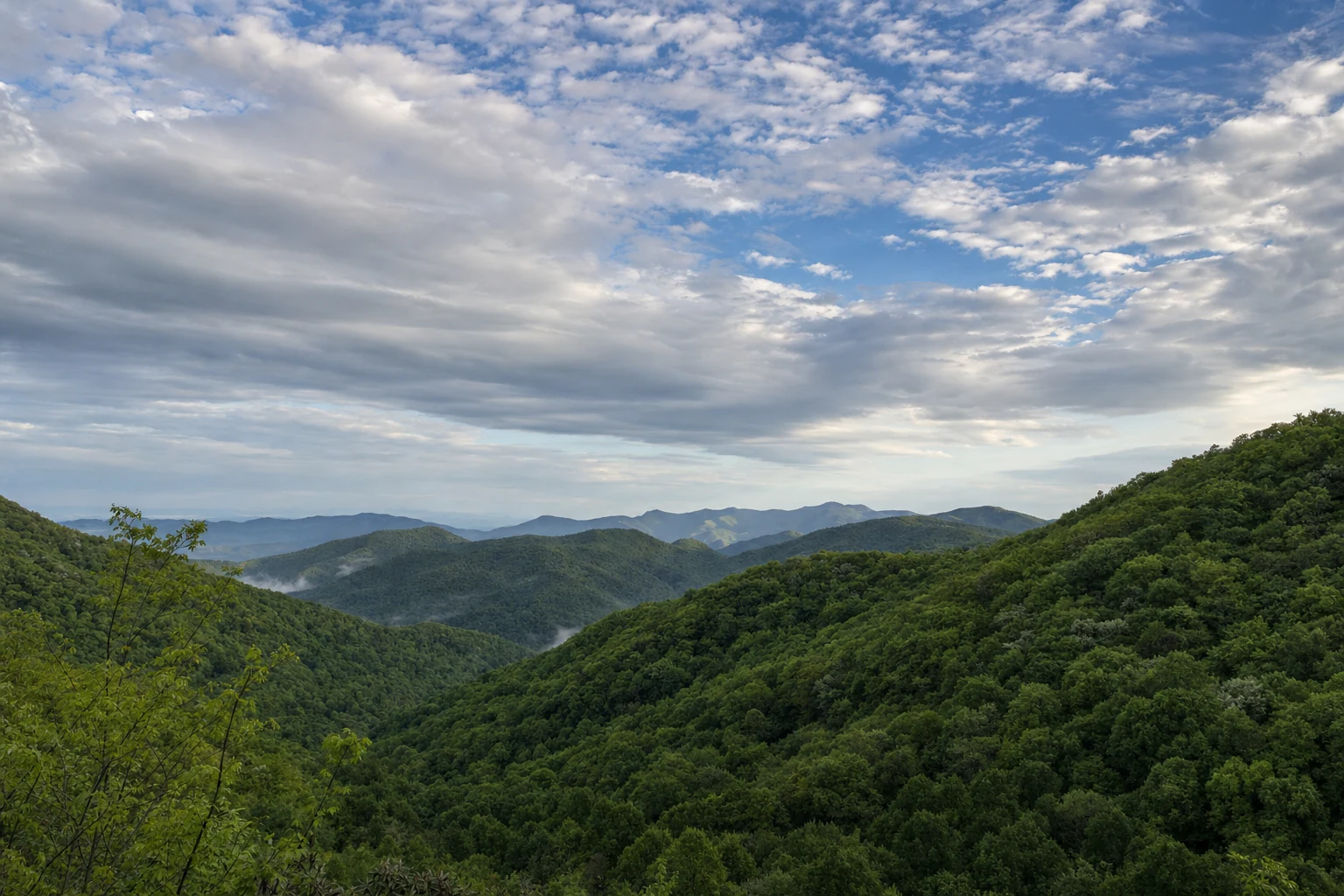
Hogpen Gap is one of the best roadside overlooks in the state. Sitting at about 3,480 feet, it is a crossing point for the Appalachian Trail. The overlook opens onto the rolling Blue Ridge Mountains, with ridge after ridge receding into the horizon. Where a lot of overlooks are hemmed in by trees, Hogpen Gap gives you a fairly open window on the Chattahoochee National Forest.
It is best known for sunrise. The way it faces, you can catch the sun cresting the layered ridges, which silhouettes the nearer mountains while lighting up the mist down in the valleys. In winter, the rock walls (the "cuts") along the highway near the gap often freeze into massive icicles and ice sheets, a rare sight this far south and a dramatic foreground for wide-angle shots.
Tesnatee Gap and Cowrock Mountain
Tesnatee Gap is mostly a trailhead and parking area. The scenic payoff is the hike to Cowrock Mountain that starts here. The gap sits at 3,137 feet, just west of Hogpen Gap on GA-348, and while the parking area itself has limited views, it is the jumping-off point for a short, steep hike (about 0.85 to 1 mile one way) southbound on the Appalachian Trail.
The summit of Cowrock Mountain (about 3,850 feet) has open rock outcrops with some of the best unobstructed views on the Georgia AT. The main vista looks south and east, with a commanding view of Mount Yonah's distinct profile and the Wildcat Mountain range. The exposed rock slabs open up close to 270 degrees, a big step up from the enclosed feeling of the gap below.
Dodd Creek Vista and Highway Pulloffs
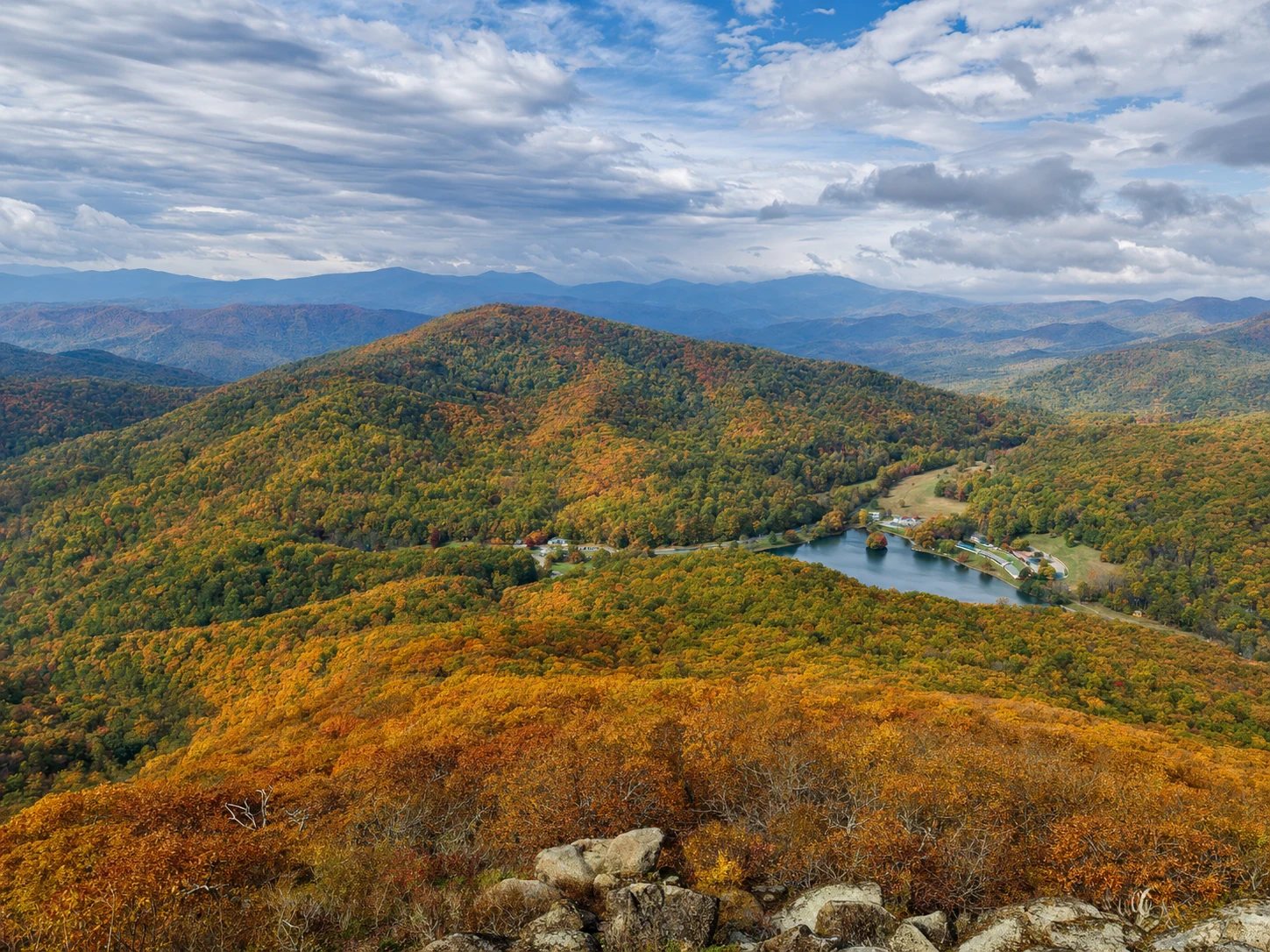
Several smaller, often unnamed pulloffs are scattered along the Richard B. Russell Scenic Highway, and Dodd Creek Vista is a notable designated stop. It sits south of Hogpen Gap as the road descends toward Helen, looking down into the Raven Cliffs Wilderness and the headwaters of the Nottely River. It is a great spot for taking in the forest canopy, which turns brilliant reds, oranges, and golds during peak leaf season (usually late October to early November).
These pulloffs let you make quick stops, so you can chase changing light without committing to a hike. Use the overhanging branches of roadside trees to frame the distant valleys. It adds depth and keeps the sky from taking over the shot, especially on cloudless days.
Summit Views: The Highest Peaks
Brasstown Bald
At 4,784 feet, Brasstown Bald is the highest point in Georgia, and the panorama is hard to beat. The summit has a visitor center and an observation deck with 360-degree views. On exceptionally clear days you can see four states: Georgia, Tennessee, North Carolina, and South Carolina. Atlanta's skyline, about 90 miles away, sometimes shows up on the southern horizon.
Access to the summit is via GA-180 Spur. You park at a lower lot and have two options: a steep, paved 0.6-mile hike or a seasonal shuttle bus (business hours only).
Worth knowing: The shuttle does not run at sunrise or sunset, so if you are after golden hour, you will have to hike the trail.
Yonah Mountain
Mount Yonah is known for its views, but also for its shape. An asymmetric granite monolith, it is a favorite among climbers and hikers. The hike to the summit is moderately strenuous, about 4.2 to 4.4 miles round trip with roughly 1,500 feet of elevation gain, and the trail passes through a US Army training area, which adds an interesting wrinkle to the day.
The Pink Cliffs: The main face of Yonah, often called the "Pink Cliffs," consists of sheer granite drops. Photographers should exercise extreme caution here, as the drop-offs are sudden and dangerous.
The Grassy Clearing: About halfway up (approx. 1.2 miles in), a grassy meadow provides the first major views of the valley and the summit cliffs above. This is an excellent spot for mid-hike photography.
Blood Mountain
Blood Mountain, the highest peak on the Appalachian Trail in Georgia (4,458 feet), has a rugged, backcountry feel. The summit is home to a historic stone shelter built by the Civilian Conservation Corps (CCC) in the 1930s. The shelter itself is enclosed, but the massive rock outcrops nearby open onto sweeping views to the south and east.
The CCC Shelter: The stone structure offers a textural contrast to the natural landscape. Photographing the shelter in mist or fog can create a moody, atmospheric image that conveys the history of the AT.
Rock Outcrops: The outcrops near the summit (and at Freeman Trail junction) serve as natural balconies. These are ideal for "hero shots" of hikers looking out over the wilderness.
A Different Kind of View: Raven Cliff Falls
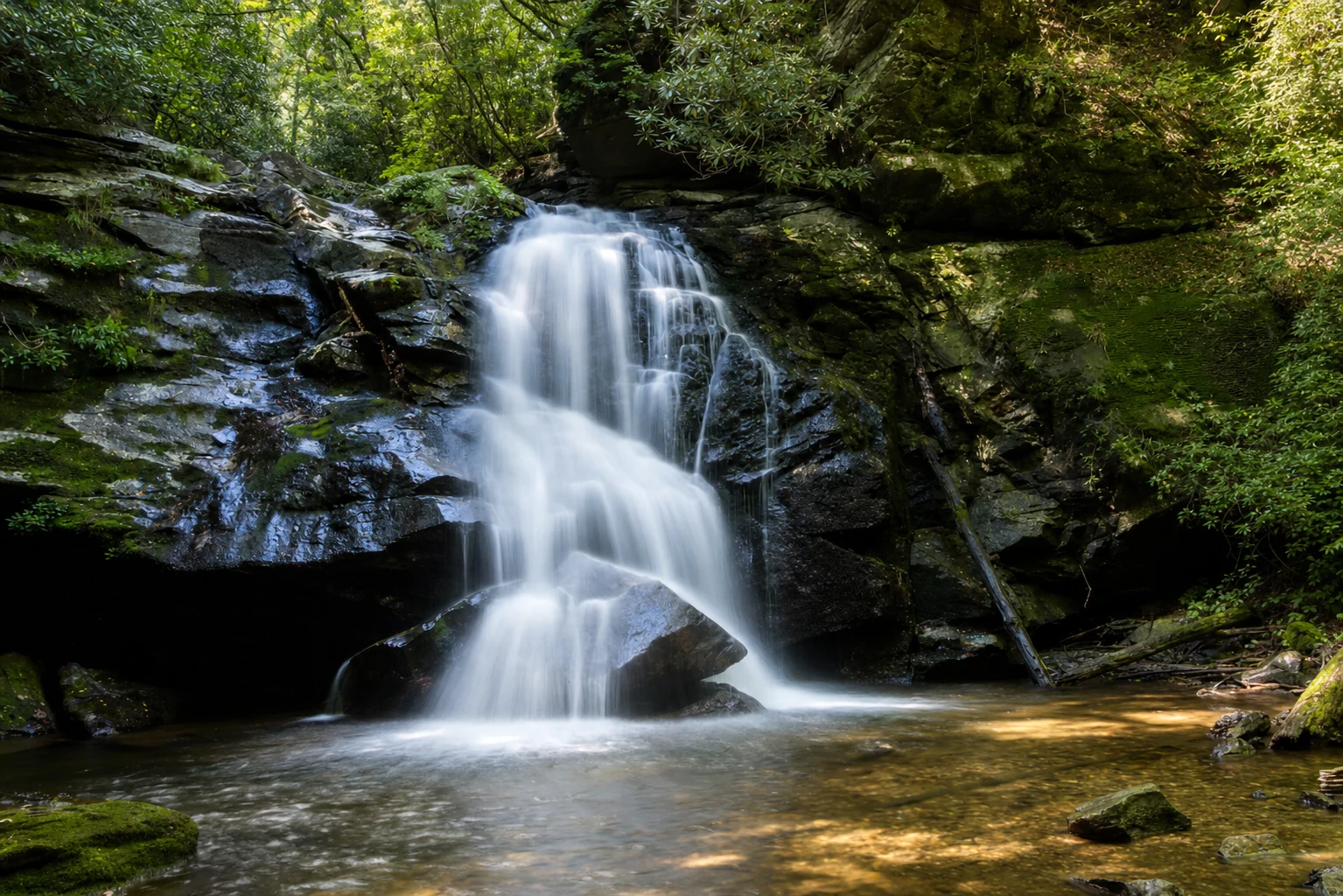
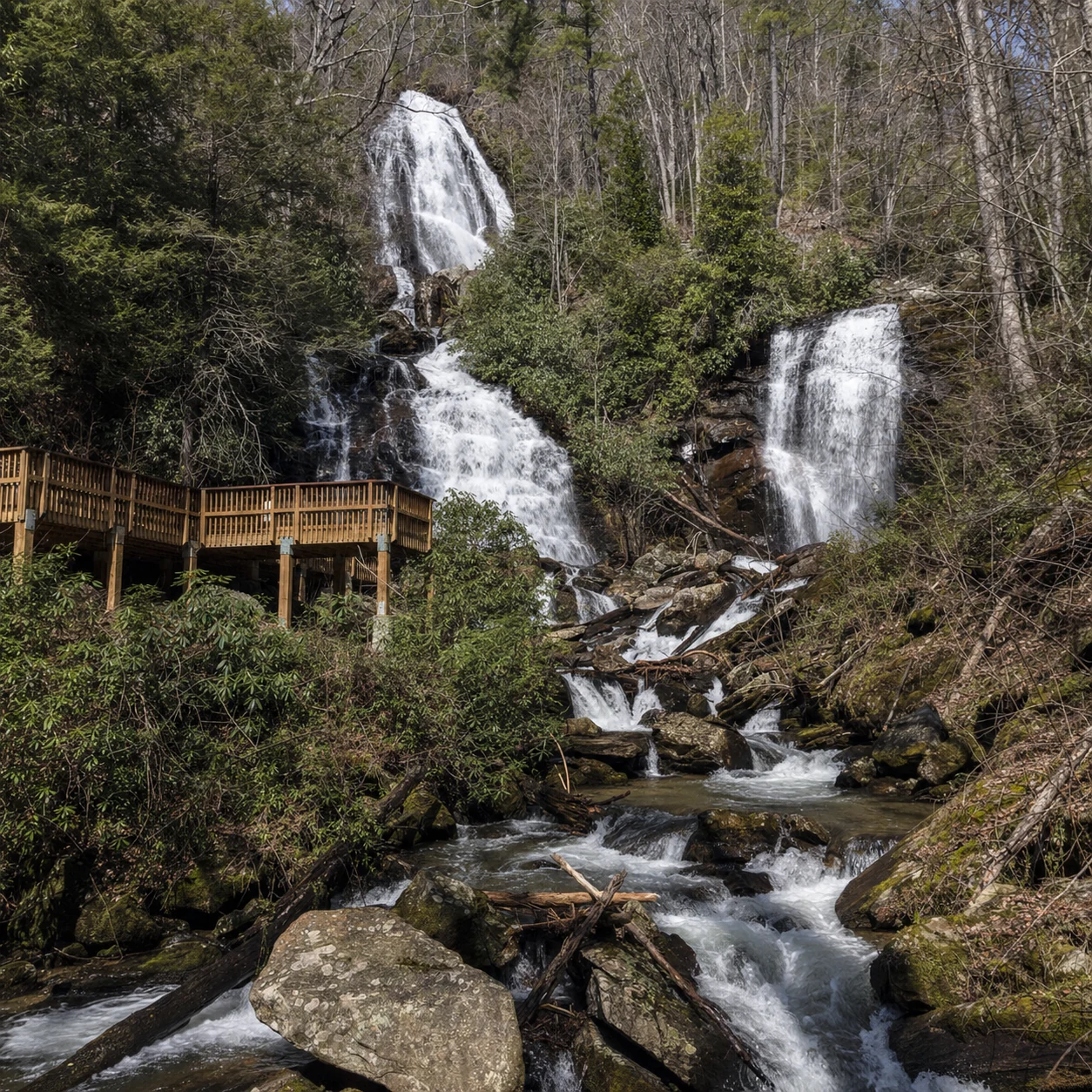
Raven Cliff Falls is not a mountain overlook in the usual sense, but it is one of the most striking viewpoints in the Helen area. Instead of pouring over a ledge, the water runs through a massive fracture in a granite cliff face, dropping about 40 feet inside the rock before cascading further.
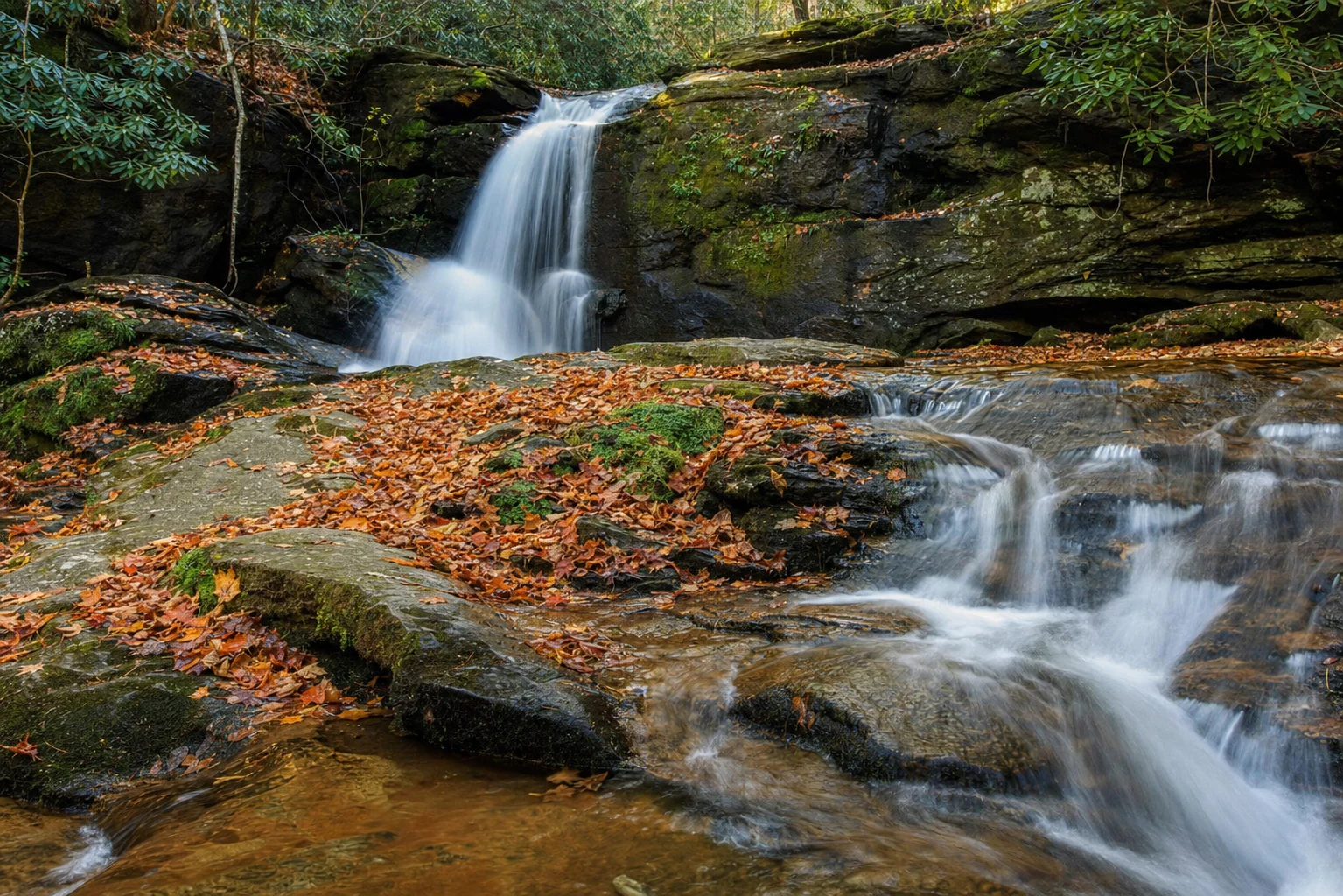
The trail is about 5 miles round-trip and follows Dodd Creek. Along the way you pass smaller waterfalls, including Dodd Creek Falls, which a lot of photographers actually prefer to the main falls thanks to the better angles and easier access.
Tips for Photographing the Blue Ridge
A few practical pointers help when you are trying to capture these North Georgia views. Shoot the ridgelines early or late, when the low sun brings out the layered blue haze, and give the foreground something to anchor the eye, whether that is a rock outcrop, a tree branch, or a hiker on the edge.