
Panning for Real Gold on Dukes Creek
Where to pan real placer gold and dig for gems near Helen, on the creek where Georgia's gold rush began back in 1828.
What to Know Before You Go
The Helen area has a real claim to gold rush history -- a bigger one than most people realize. While Dahlonega gets most of the credit, the actual first discovery of gold in the Georgia Gold Rush happened along Dukes Creek in 1828, right here in what is now White County. That is 20 years before the California Gold Rush. Today you can pan for gold yourself through outfitters like Dukes Creek Gold & Ruby Mines and Outpost Gold & Gem Panning, both run by the same family that has been working these deposits for decades.
One thing to know upfront: there is a real difference between gold panning and gem mining here. Gold panning usually uses actual local paydirt with real placer gold from the Dukes Creek area. Gem mining, on the other hand, typically uses "enriched" or "seeded" buckets with semi-precious stones (rubies, sapphires, emeralds) that may be brought in from elsewhere so every visitor finds something. While historically significant mines like Gold 'n Gem Grubbin' have transitioned to online-only models, the active outfitters in Helen provide educational and recreational access to the region's mineral wealth. Public panning is permitted within the Chattahoochee National Forest under strict recreational guidelines, whereas conservation areas like Smithgall Woods State Park prohibit mineral extraction to protect the trout habitat rehabilitated from 19th-century hydraulic mining damage.
The Georgia Gold Rush Started Right Here
Helen's history is tied directly to the Georgia Gold Rush, which started two full decades before anyone found gold at Sutter's Mill in California. The Georgia Gold Belt runs right through this area, and the placer gold deposits here changed the course of the entire state's economy and politics.
The Discovery of 1828
The precise origin of the Georgia Gold Rush is a subject of historical debate, but the most substantiated accounts place the discovery in present-day White County (formerly Habersham County) along Dukes Creek.
Frank Logan and John Witheroods: Historical markers and academic accounts attribute the discovery to a servant of Major Frank Logan and a prospector named John Witheroods in 1828. Witheroods reportedly found a three-ounce nugget, while Logan's servant also identified gold in the creek sands.
Benjamin Parks: A competing narrative attributes the discovery to Benjamin Parks in neighboring Lumpkin County (Dahlonega). Parks claimed to have kicked up an unusual stone while deer hunting; however, this account is often viewed as part of the folklore surrounding the rush rather than the definitive first event.
The Great Intrusion: Following the 1828 discovery, the region experienced "The Great Intrusion," where thousands of prospectors flooded into the Cherokee Nation. By 1830, reports estimated 4,000 miners were working on Yahoola Creek alone. This influx precipitated the geopolitical conflict that eventually led to the Indian Removal Act and the Trail of Tears, as the state of Georgia sought to seize mineral-rich Cherokee lands.
When Mining Turned Industrial
As surface placer deposits were exhausted, mining methods evolved. The region saw the implementation of hydraulic mining, a destructive technique using high-pressure water jets to wash away hillsides and expose gold-bearing quartz veins. Evidence of this method remains visible today in the "pits" along Dukes Creek and the altered topography of the Nacoochee Valley.
Production Volume: During the peak of operations, a single merchant in the Nacoochee Valley reportedly shipped between $1 million and $1.5 million worth of gold over a thirty-year period.
The Dahlonega Mint: The volume of gold extracted was so significant that the U.S. Congress established a Branch Mint in Dahlonega in 1838. This mint produced gold coins until the outbreak of the Civil War in 1861.
Where to Pan Around Helen Today
These days, mining around Helen is about tourism and recreation rather than industrial extraction. The Jackson family runs the main operations in the area, and they have deep roots in the Nacoochee and Dukes Creek mining history.
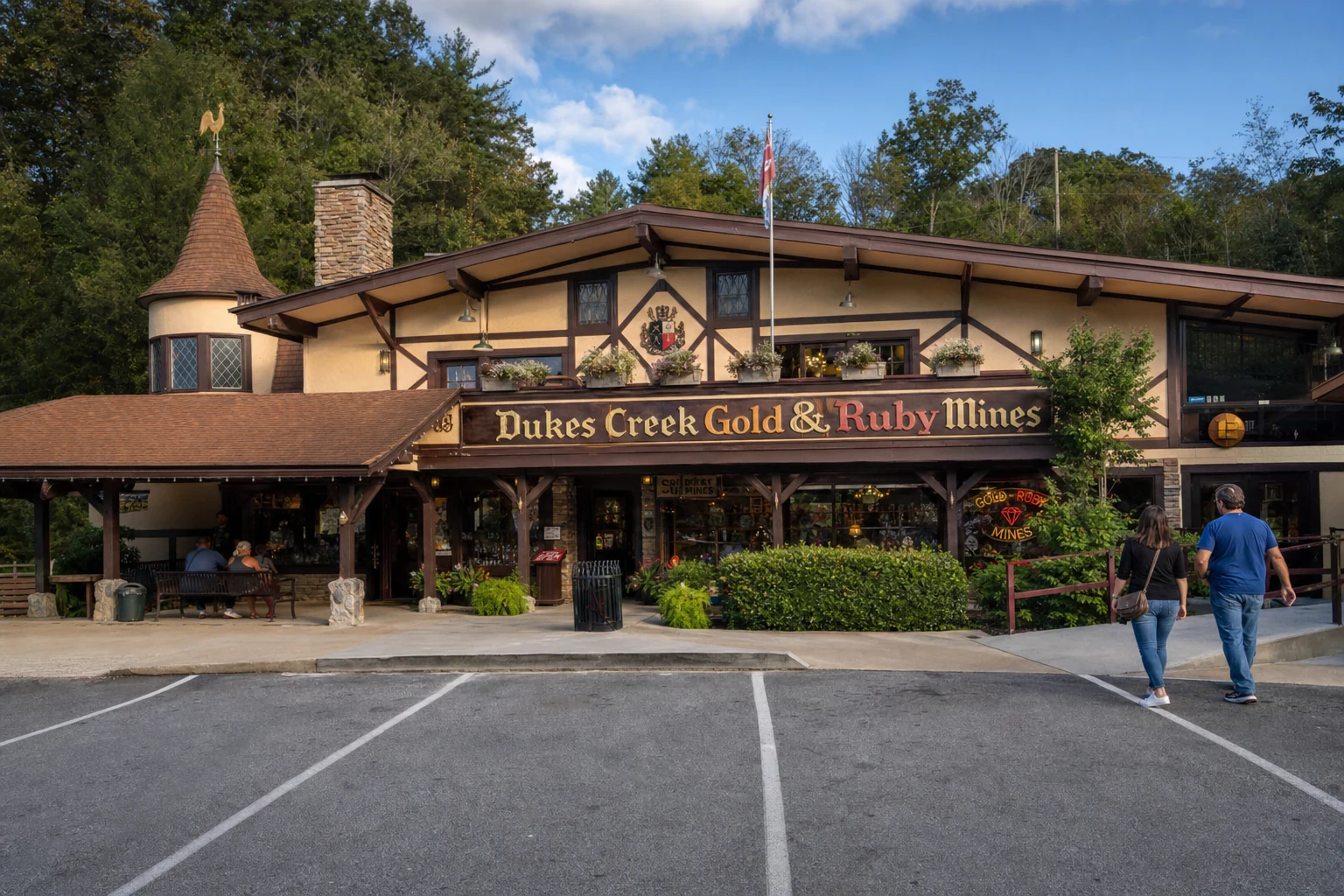
Dukes Creek Gold & Ruby Mines
Located in the Sautee Nacoochee Valley, this operation is historically significant as it sits on the actual site of the early gold discoveries.
Operational History: The site began as Nacoochee Sand & Gravel in 1976, founded by Del Jackson. Due to the high volume of gold and gemstones encountered during gravel extraction, the site was opened to the public for panning in 1981.
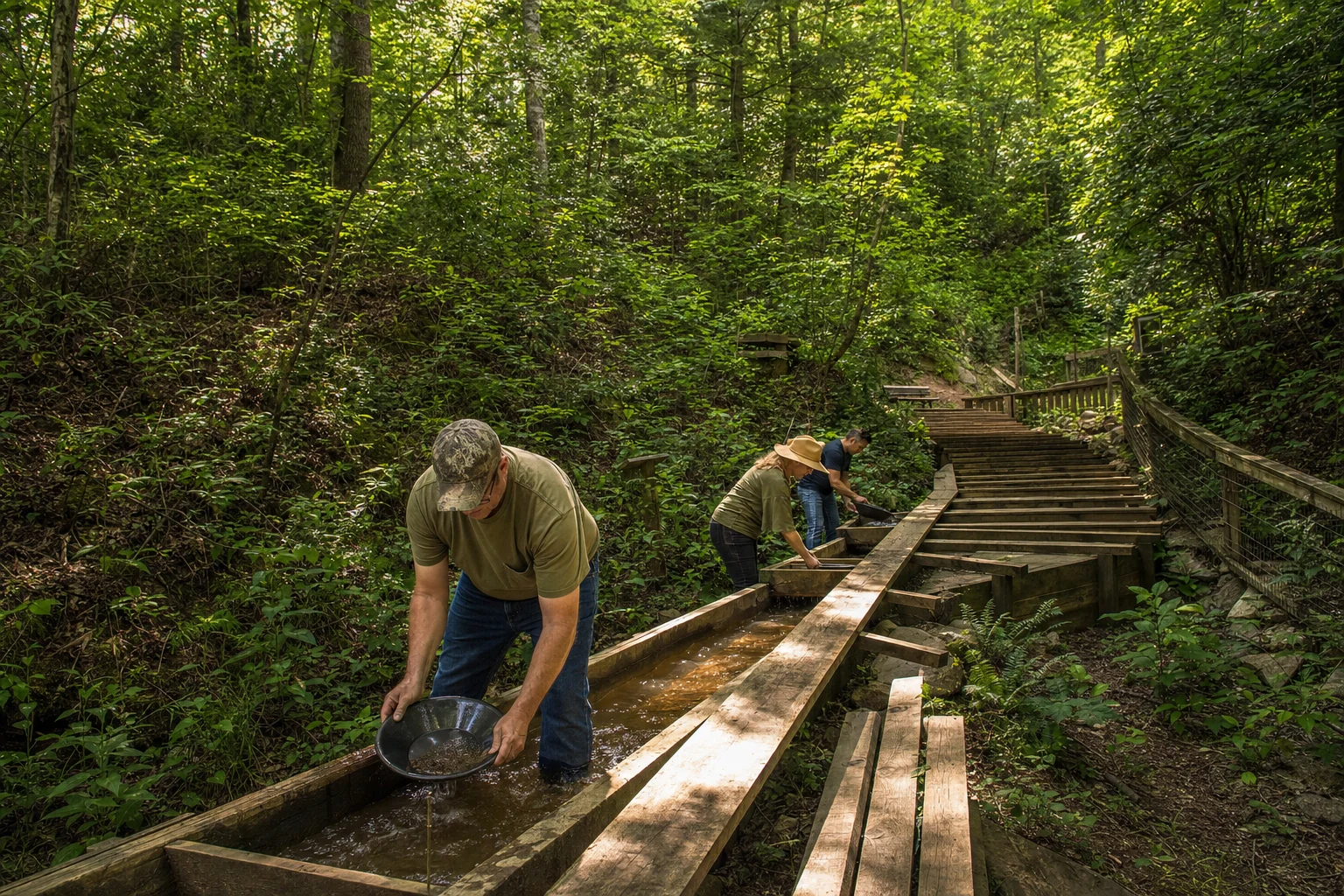
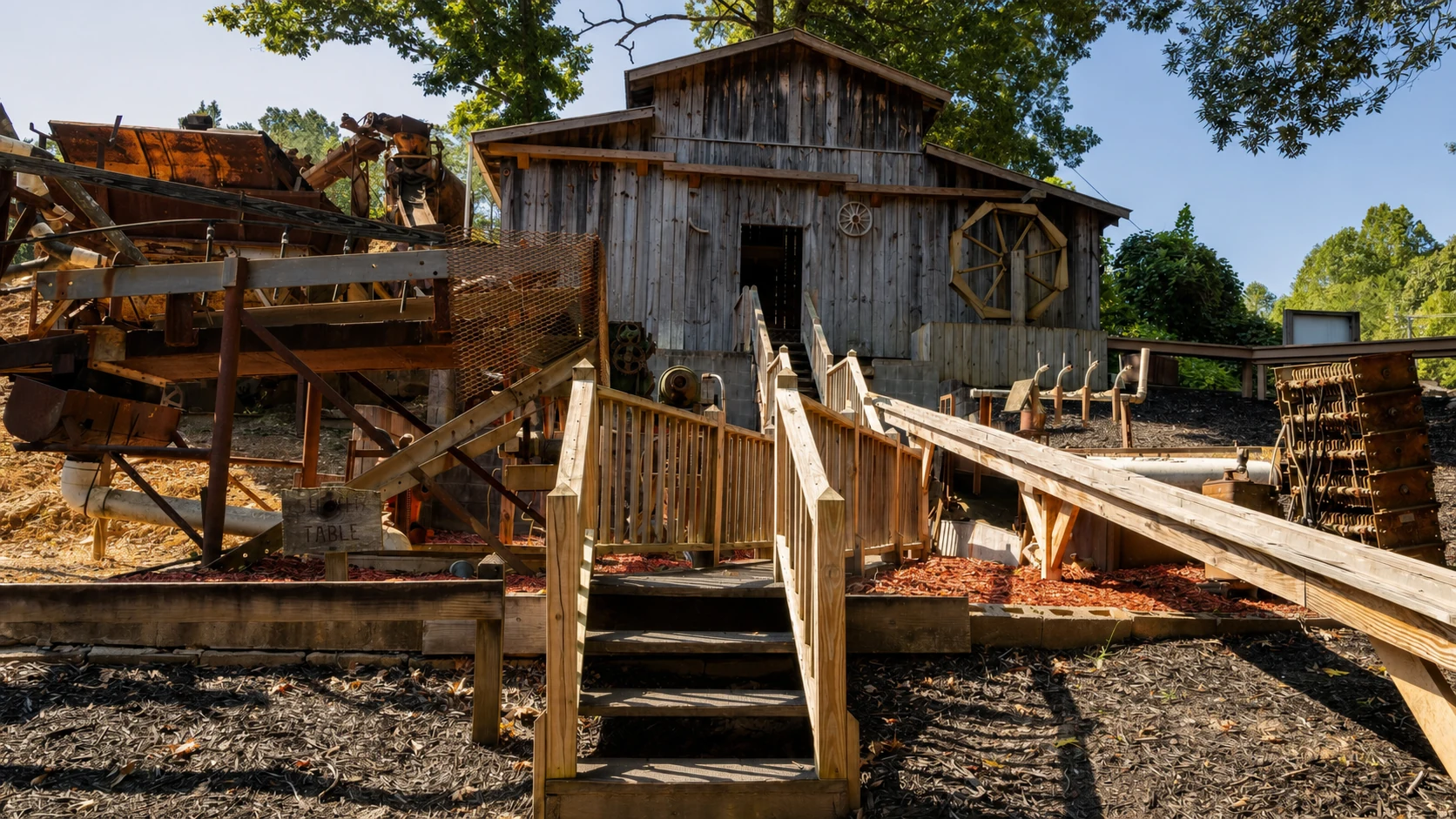
Offerings: The mine offers covered panning tables where visitors process buckets of ore. The facility emphasizes its location on the historic Dukes Creek gold belt.
Connection to "Nacoochee Gold and Ruby Mine": Users frequently query regarding "Nacoochee Gold and Ruby Mine." Research indicates that Dukes Creek Gold & Ruby Mines is the direct evolution of the Nacoochee Sand & Gravel operations. The terms are often used interchangeably in historical contexts, but "Dukes Creek Gold & Ruby Mines" is the current commercial trade name.
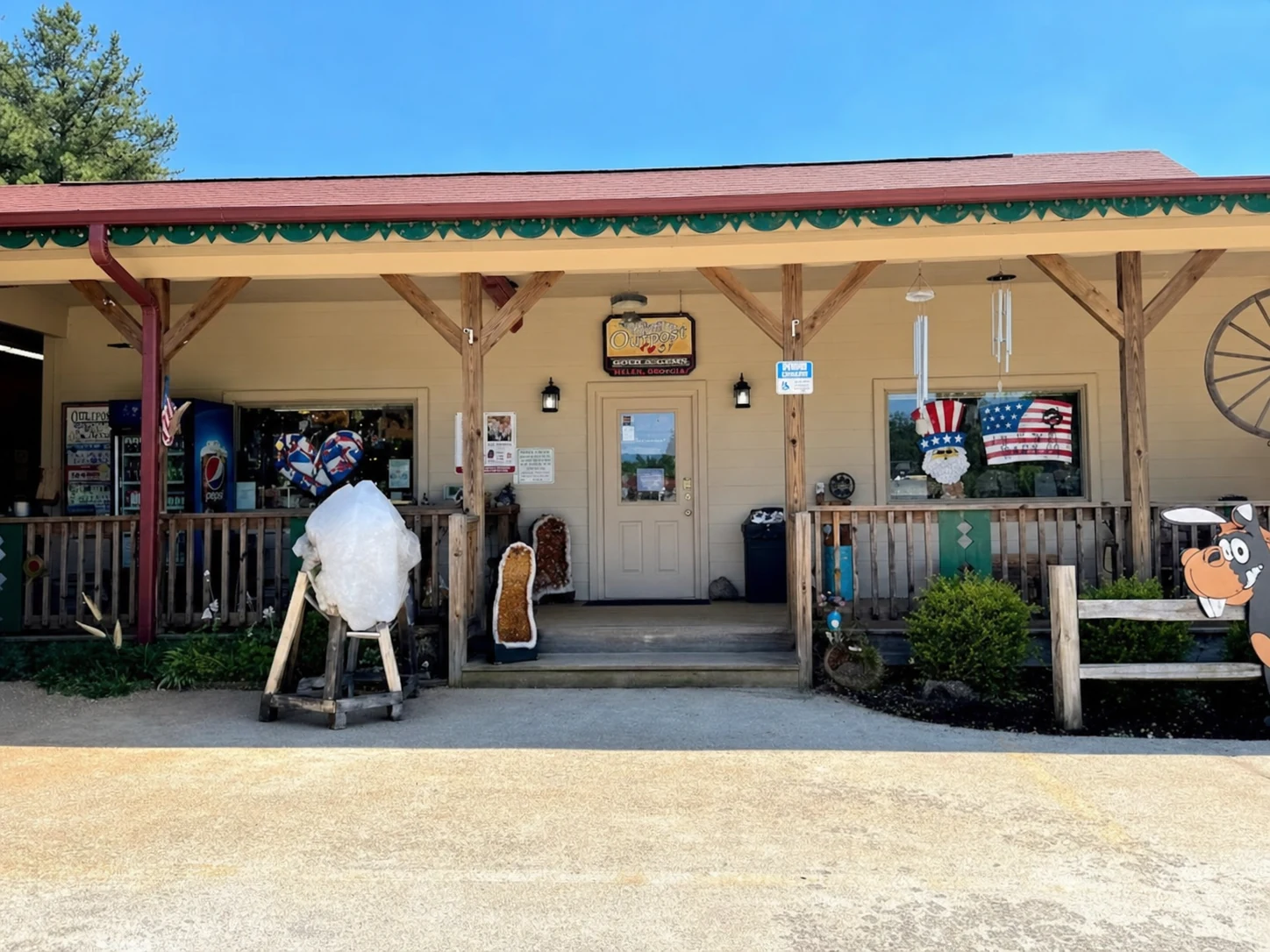
Outpost Gold & Gem Panning
Situated within the city limits of Helen, the Outpost is a "sister" location to the Dukes Creek mine, established to provide more accessible panning options to tourists.
Facilities: Opened in 2015 by Chad Jackson (son of Del Jackson), this location features covered all-weather panning tables and a specialized gift shop.
Material Source: The operation uses "Georgia Gold Rush Paydirt," which is mined locally from the family's Dukes Creek property and transported to the Outpost for panning. This ensures that the gold found is historically authentic to the region.
Services: The Outpost provides lapidary services, allowing visitors to have their rough finds cut and set into jewelry on-site.
Gold 'n Gem Grubbin' (Now Online Only)
Historically, Gold 'n Gem Grubbin' in Cleveland, Georgia (west of Helen), was a premier destination operating on the site of the historic Loud Mine.
Current Status: Recent data confirms that this location has ceased public mining operations and has transitioned to an online-only business model selling paydirt and jewelry. The physical mine and campground are no longer open to the public.
Historical Relevance: The Loud Mine was famous for producing large nuggets and supplying bullion to the Dahlonega Mint.
A Few More Options in Dahlonega
While outside Helen proper, Dahlonega (approx. 20 miles away) offers complementary experiences:
Crisson Gold Mine: Features a 130-year-old stamp mill and open-pit mining. It is noted for selling concentrated ore that is often richer in gold content.
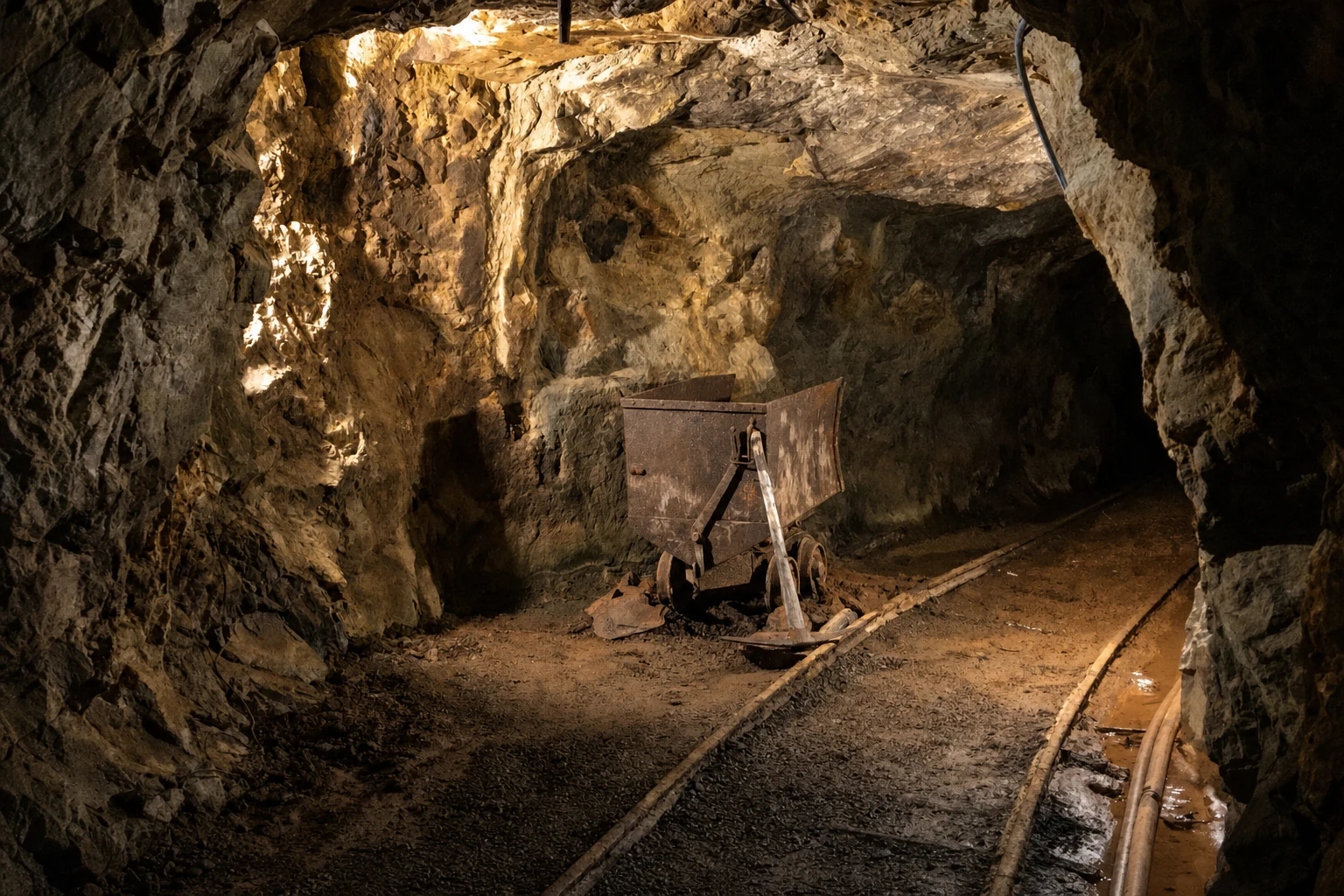
Consolidated Gold Mine: Offers underground tours of the original mine tunnels, providing a geological perspective on hard-rock mining distinct from the placer mining focus in Helen.
Real Gold, Seeded Gems: What's Actually in the Bucket
Here is something worth understanding about recreational mining: the gold in Helen's paydirt is usually real local gold from the Dukes Creek area. The gemstones, though, are a different story -- most outfitters "enrich" or "seed" their gem buckets with imported stones to make sure everyone finds something.