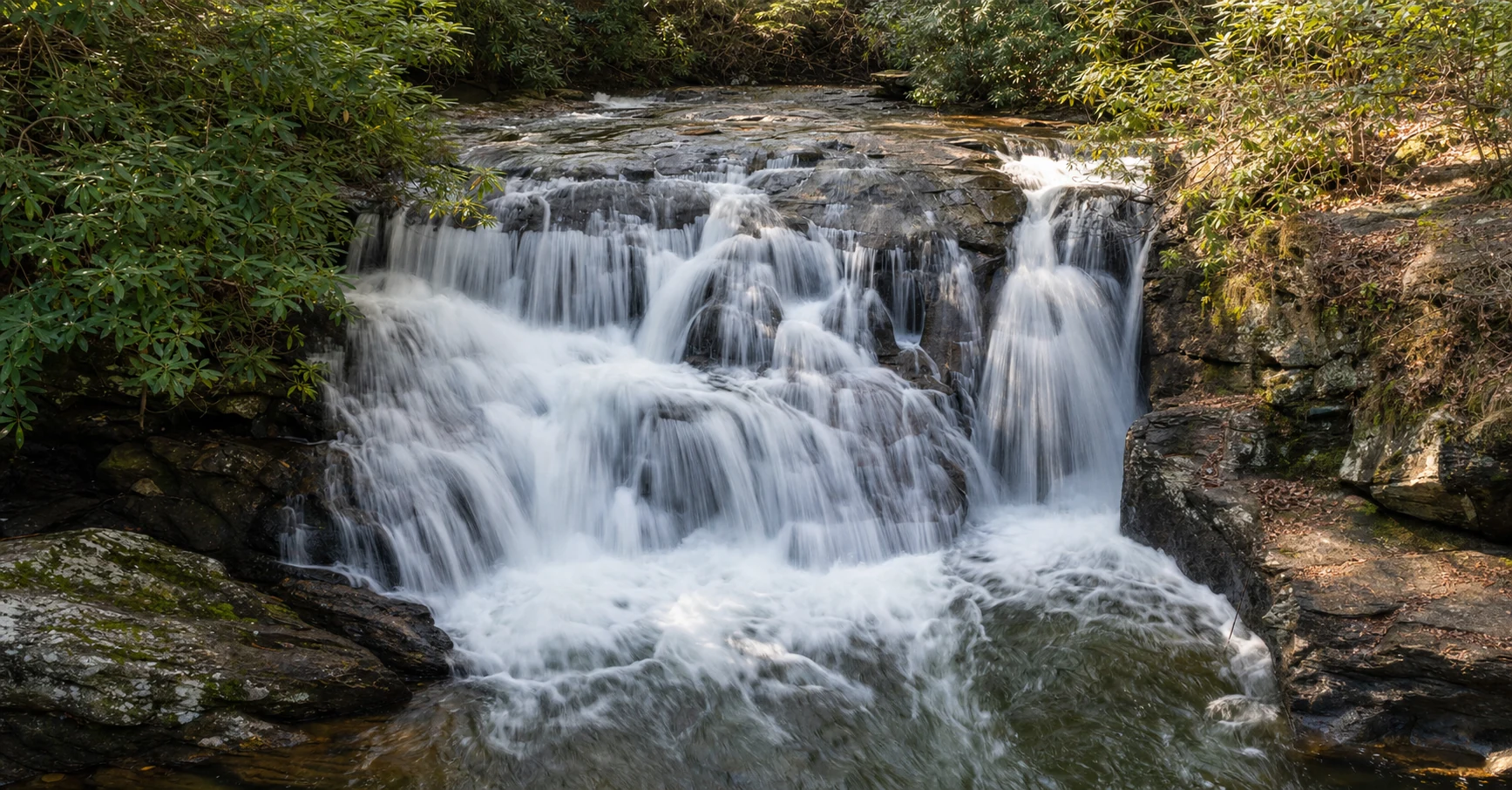

Mountain Swimming Holes Around Helen
Mountain creek pools, waterfall plunge basins, and cool river spots for summer swimming near Helen
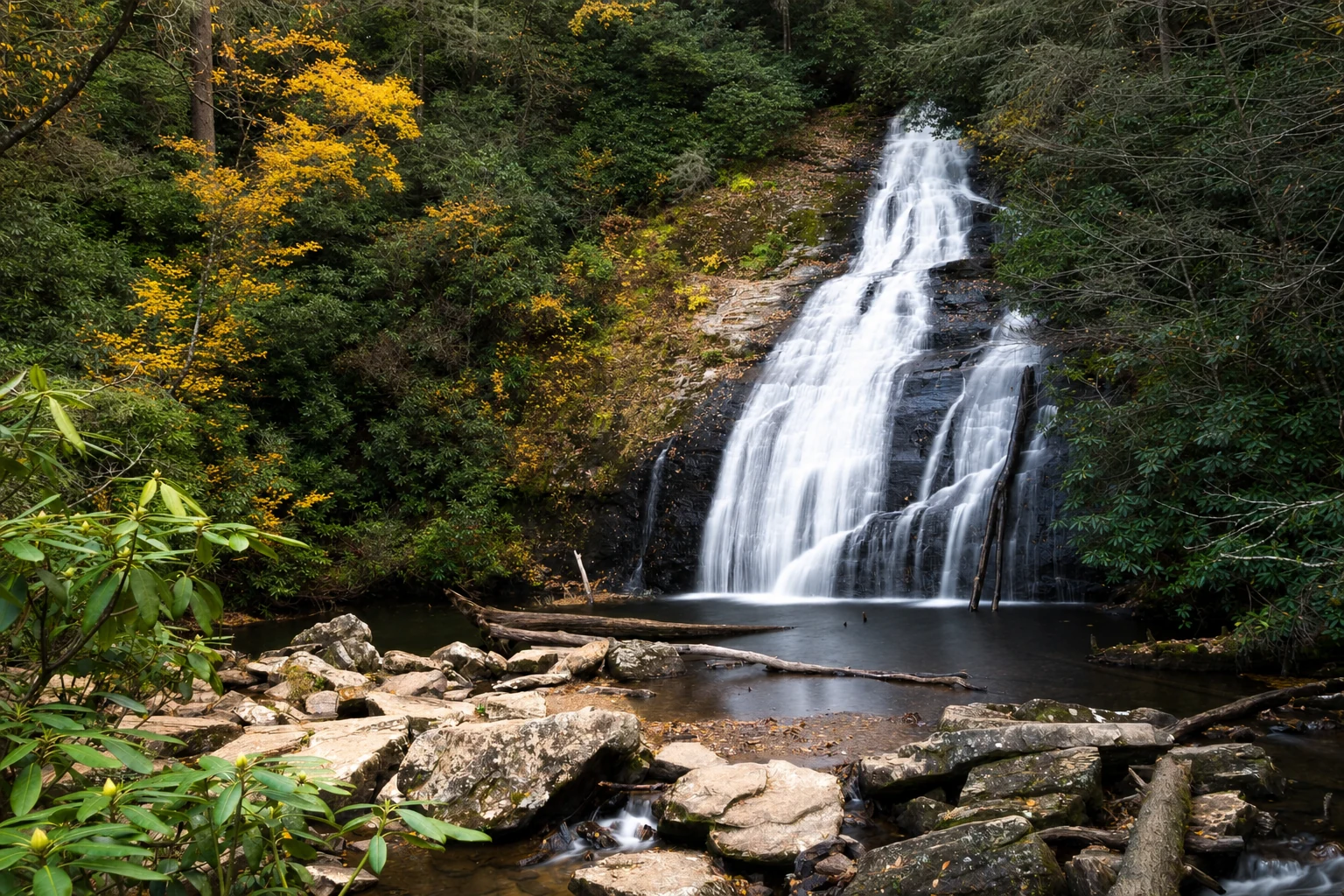
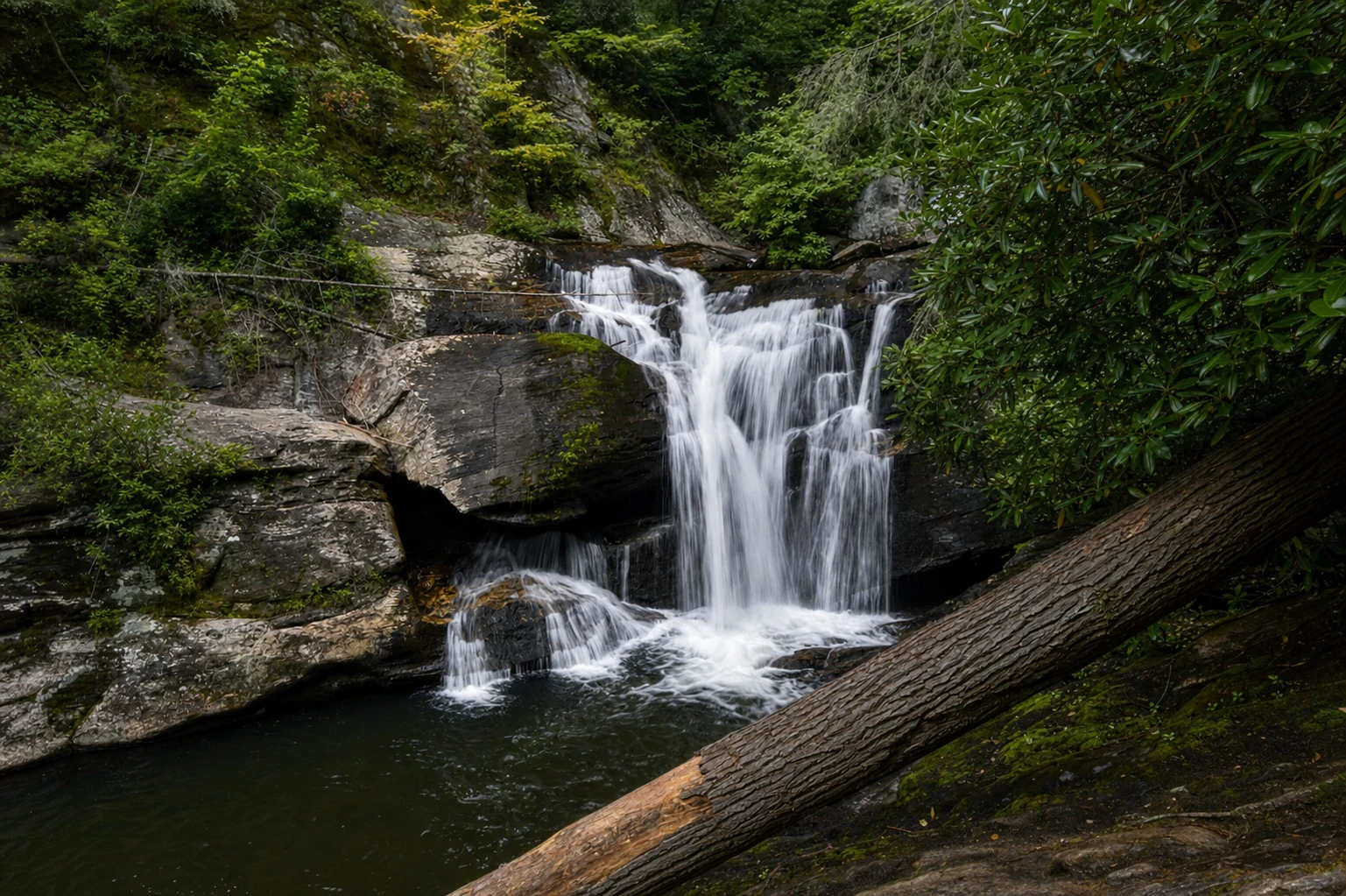
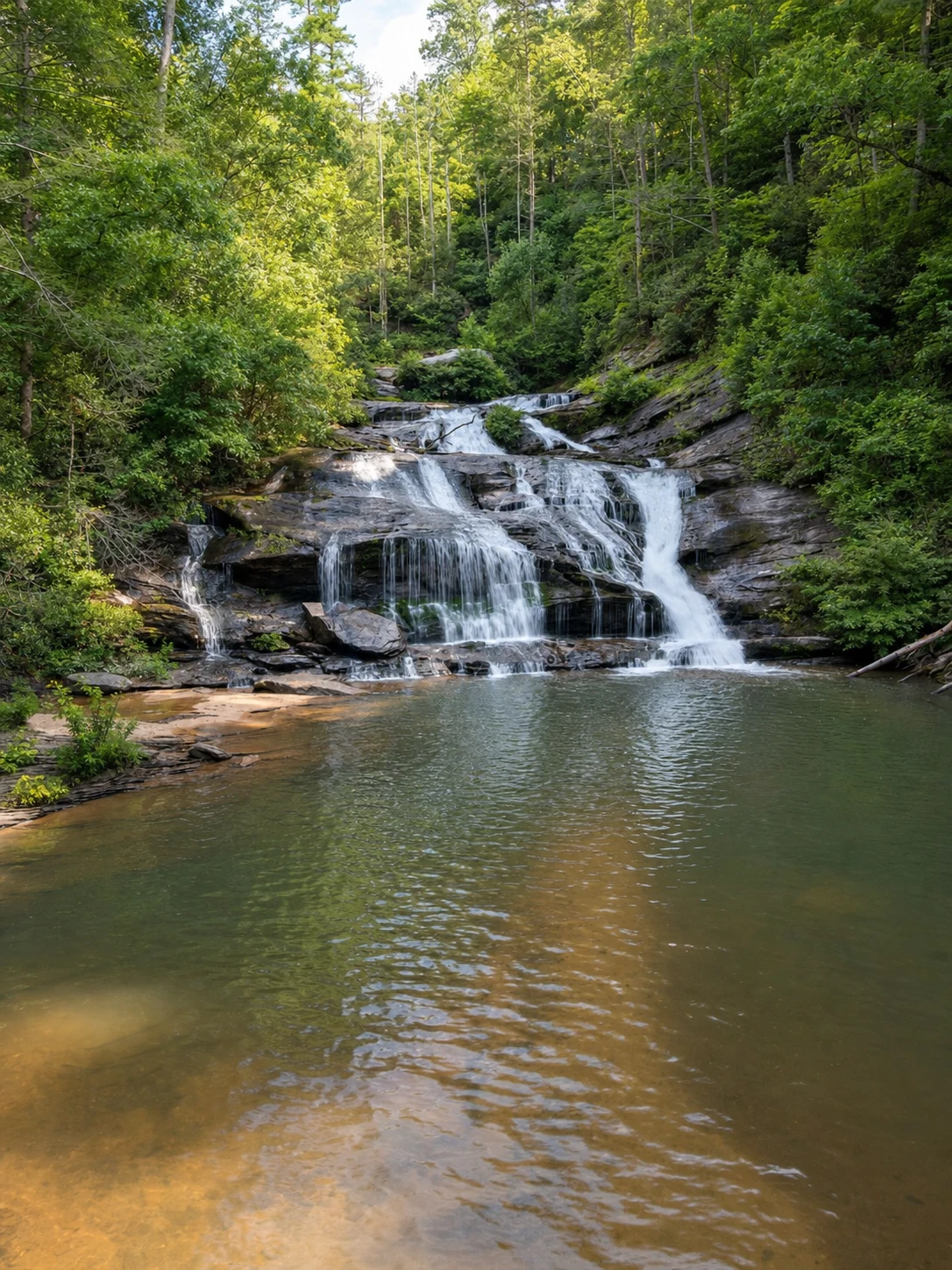
The mountains near Helen, inside the Chattahoochee-Oconee National Forest, have some great swimming spots. Four locations stand out: Helton Creek Falls, Dukes Creek Falls, Panther Creek Falls, and Dick's Creek Falls (at the confluence with Waters Creek).
They range widely in difficulty. Helton Creek Falls and Dick's Creek Falls (Lumpkin County/Dahlonega) are the most family-friendly with short approach trails, though Dick's Creek has some hydraulic hazards to watch for. Panther Creek Falls is a serious hike, especially after recent storm damage to the trail infrastructure. Dukes Creek Falls falls in between: the trail is moderate and partly accessible, though it is more of a viewing destination than a swimming spot, with some wading possible in the lower shallows.
Water temperatures in these mountain creeks stay cold, often 55°F to 65°F (13°C to 18°C) well into late spring and peaking in the high 60s or low 70s in summer. The rocks are slippery and flash floods happen fast, so always check NOAA Weather for flash flood warnings before heading out.
What Makes These Creeks Special
The North Georgia mountains sit at the southern end of the Blue Ridge, and they are laced with streams and creeks. Around Helen, everything feeds into the headwaters of the Chattahoochee River, which starts as a cold trout stream before growing into the major river that flows toward Atlanta. The steep terrain creates waterfalls, plunge pools, and natural water slides that people have been swimming in for generations.
What makes these swimming holes special is the water itself. Unlike the warm, flat water of reservoirs like Lake Lanier, these creeks are fed by groundwater and high-elevation runoff. The water is cold, clear, and moving. On a 90-degree Georgia summer day, that cold shock when you wade in is half the fun. But these are wild places, not swimming pools. You need to know the access rules, legal restrictions, and real hazards before you go.
This guide covers four swimming holes near Helen: Dukes Creek Falls, Panther Creek Falls, Helton Creek Falls, and Dick's Creek Falls. It breaks down which ones are family-friendly versus adventurous, what the water temperatures are like through the seasons, and the safety basics you should know.
How Cold Is the Water, Really
Knowing the water temperature before you jump in can save you an unpleasant surprise. The creeks in North Georgia are "freestone" streams, fed by rainfall and groundwater. Some tailwater sections stay cold year-round because of deep-release dams.
Water Temperatures by Season
USGS gauges on the Chattahoochee at Helen and the nearby creeks tell a consistent story: the water here rarely gets anywhere near the bathwater warmth of the coast.
Winter (December – February): Water temperatures plummet to the 30s and 40s°F (approx. 4°C - 9°C). Swimming during this period is biologically hazardous without thermal protection (wetsuits/drysuits) due to the immediate risk of cold shock response and incapacitation.
Spring (March – May): As air temperatures rise into the 60s and 70s, water temperatures lag behind, typically ranging from 50°F to 60°F (10°C - 15°C). While air temperatures may feel conducive to swimming, the water remains dangerously cold for prolonged submersion. Trout are most active in this range, indicating the cold nature of the flows.
Summer (June – August): This is the primary swimming season. Air temperatures frequently exceed 85°F (29°C). However, the water in shaded mountain creeks like Helton or deeper pools like Panther Creek typically stabilizes between 60°F and 70°F (15°C - 21°C), occasionally reaching the mid-70s in shallow, sun-exposed shoals. This distinct temperature differential provides the "refreshing" quality sought by tourists but can still induce shivering in children or those with low body fat after extended periods.
Autumn (September – November): Water temperatures begin a rapid decline, returning to the 50s. While early September remains viable for swimming, by October, the activity is generally restricted to wading.
Watch for Cold Layers in Deep Pools
Deep plunge pools, like the one at Panther Creek or Blue Hole Falls, layer their temperatures. The sun warms the surface, but the water just a few feet down can be much colder. That sudden drop can cause cramping or cold shock if you dive or tread water in the deep sections.
Staying Safe in the Water
Swimming in uncontrolled environments presents risks not found in pools or designated beaches. The distinct geology of the North Georgia mountains creates specific hazards.
Slippery Rocks and Hidden Obstacles
The bedrock of the Blue Ridge mountains often supports the growth of algae and mosses, particularly in spray zones near waterfalls.
Slippery Substrates: Rocks at locations like Helton Creek and Dick’s Creek are notoriously slippery. The coefficient of friction on wet, algae-covered granite is near zero. Falls on these rocks are a leading cause of injury.
Submerged Obstructions: Water clarity varies with rainfall. Submerged logs, jagged rocks, and hydraulic features may be invisible from the surface.
No Diving Rule: "Never Dive" is a universal rule for these locations. Plunge pools constantly change depth due to sediment transport during storms. A pool that was deep one year may be filled with sand or debris the next.
Currents, Whitewater, and Flash Floods
Aerated Water: The "white water" directly under a waterfall is highly aerated (filled with air bubbles). This water is less dense than non-aerated water, meaning a swimmer effectively loses buoyancy and struggles to stay afloat, regardless of swimming ability.
Hydraulic Recirculation: Water pouring over a ledge can create a "hole" or "hydraulic" that traps floating objects (and swimmers) in a recirculating loop. This was a contributing factor in tragic drownings at Dick’s Creek Falls.
Flash Flooding: Mountain streams respond rapidly to rainfall. A storm miles upstream can cause a sudden, deadly rise in water levels at a swimming hole, even if the sky is clear at the swimming location.
Wildlife and Remote Locations
Wildlife: Copperheads and other venomous snakes often sun themselves on rocks near streams.
Entrapment: Roots and undercut rocks can trap feet or limbs underwater.
Isolation: Many of these locations, particularly Panther Creek, lack cellular service. Emergency response times can exceed an hour.
The Swimming Holes: Dukes Creek Falls
Classification: Scenic/Observation (Wading Possible, Swimming Restricted)
Location: White County, near Helen (Richard B. Russell Scenic Hwy)
Related Imagery from Around Helen