Rock Climbing in the North Georgia Mountains
Granite slabs on Mount Yonah, trad routes in Tallulah Gorge, and friction climbing on Currahee, all within reach of Helen.
What to Know Before You Climb
The North Georgia mountains around Helen have some of the best rock climbing in the Southeast, and the variety is what makes it interesting. Mount Yonah has granite slab and face routes with real history -- the U.S. Army has been training Rangers on those walls since the 1950s. Tallulah Gorge has high-quality quartzite for experienced trad climbers, though access is restricted by permit and seasonal closures for falcon nesting. Currahee Mountain offers accessible friction slabs. There are no dedicated climbing gyms right in Helen, but guide services operate in the area, and the Southeastern Climbers Coalition (SCC) does a lot of work maintaining access and keeping the crags clean. Here is what you need to know about climbing near Helen.
The Crags at a Glance
Mount Yonah is the main climbing destination near Helen, with single and multi-pitch granite slab and face climbing. It has real historical significance as a U.S. Army Ranger training site -- you can still see the legacy bolts and painted route markers on the rock.
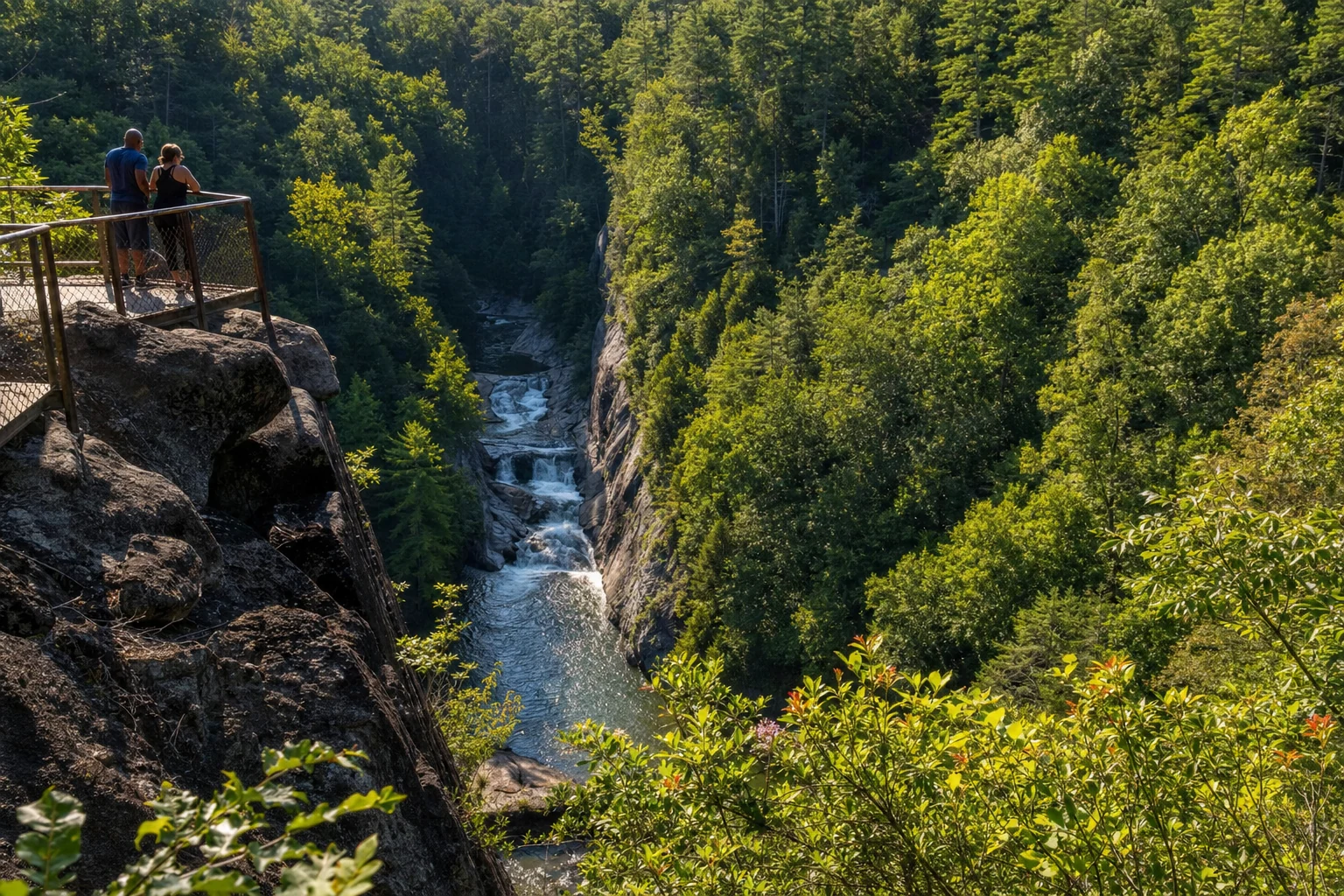
Tallulah Gorge State Park offers advanced traditional climbing on high-quality quartzite. Access is strictly regulated through a permit system, with seasonal closures for Peregrine Falcon nesting (typically February through June) and scheduled water releases.
Currahee Mountain has accessible friction slab climbing, though the crag has struggled with graffiti and vandalism that community volunteers and SCC cleanups keep on top of.
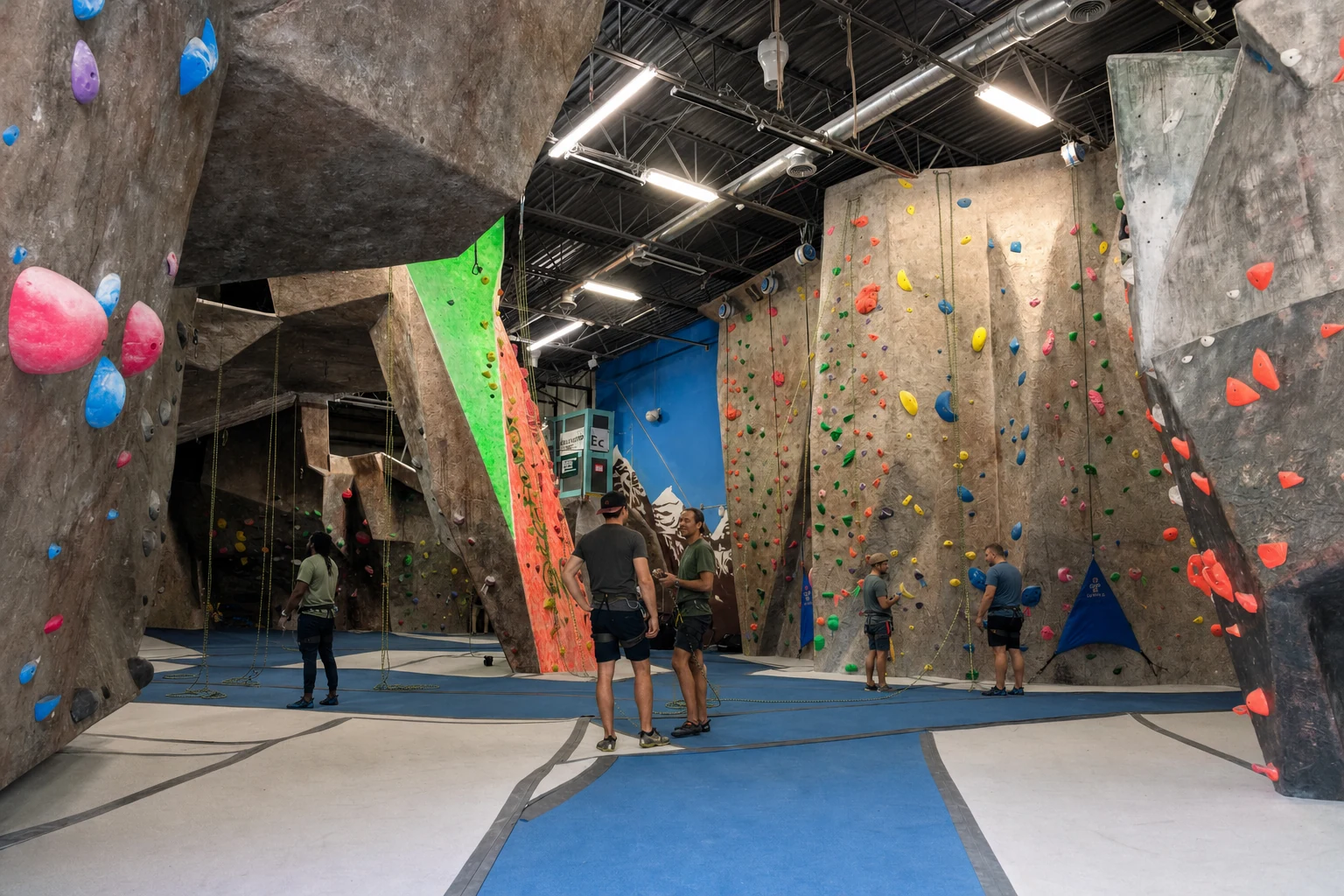
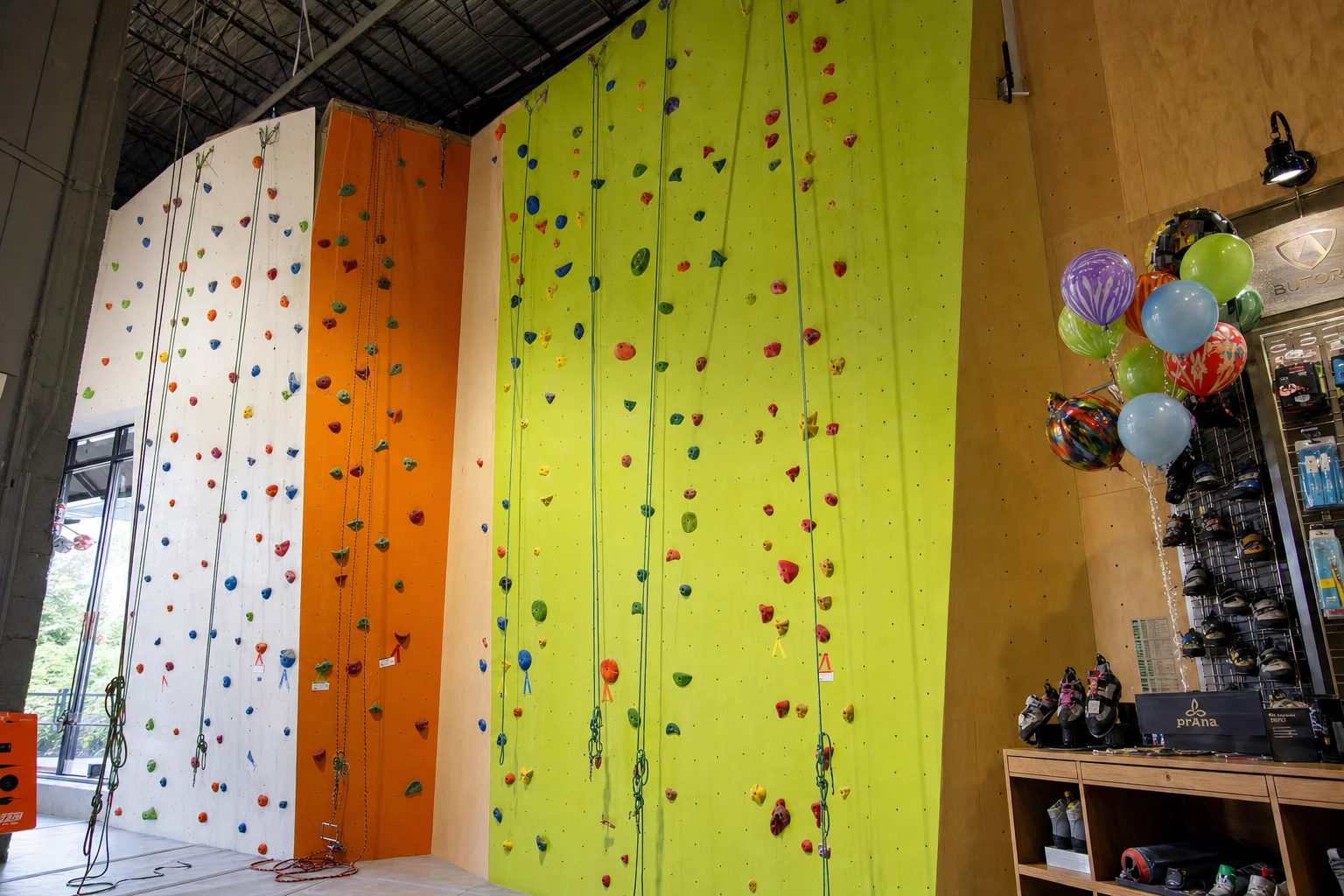
Indoor options right around Helen are limited to recreational walls like Cool River Adventures. The nearest dedicated climbing gyms, Adrenaline Climbing and Active Climbing, are about an hour away in Suwanee and Athens. Community stewardship carries a lot of weight in this area too: the Southeastern Climbers Coalition (SCC) does the heavy lifting on land acquisition, keeping access open, and preserving the local crags.
Mount Yonah: The Granite Monolith of White County
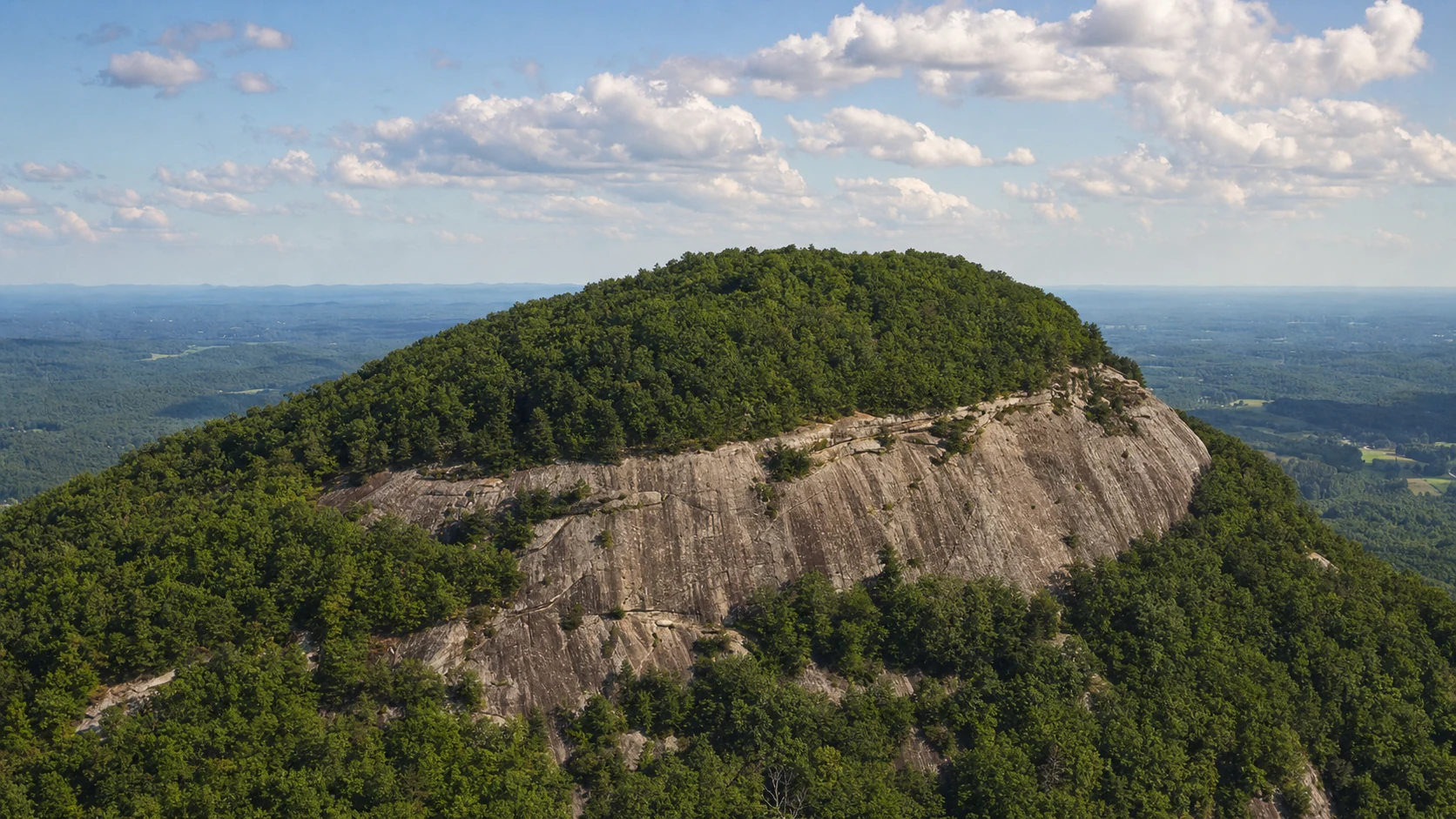
Mount Yonah, standing at an elevation of 3,166 feet, is the most iconic climbing destination in the immediate vicinity of Helen, Georgia. A granite gneiss dome rising from the foothills of the southern Appalachian Mountains, it offers a distinct climbing style characterized by friction slabs, crimpy face climbing, and military-style infrastructure.
Geology and History
Geologically, Mount Yonah is a resistant pluton of granite that has withstood the erosion affecting the surrounding softer rock. Its name is derived from the Cherokee word for "Bear," often referred to as "Yonah Bald" by locals. The mountain holds cultural significance through the Native American legend of Sautee and Nacoochee, a narrative of forbidden love and tragedy associated with the cliffs.
The modern climbing history of Mount Yonah is tied to the military. Since about 1960 the mountain has been a training ground for the U.S. Army Rangers, specifically the 5th Ranger Training Battalion based at nearby Camp Frank D. Merrill, and that use left a physical legacy on the rock. Routes on the Main Face were once marked with spray-painted numbers and colors to guide large groups of trainees, and while the painting has long stopped, some of those markings remain as historical artifacts. The Army also installed serious hardware, including heavy-duty bolts and cable systems: the "Army Balance Climb" area has a steel cable bolted to the face that lets climbers ascend quickly to set up top-ropes or traverse.
In the 1970s and 1980s, civilian climbers such as Chris Hall, Dave Fortner, and Michael Crowder started putting up routes in the areas the military used less, pushing the grades and expanding the climbing well beyond basic training lines.
Climbing Areas and Routes
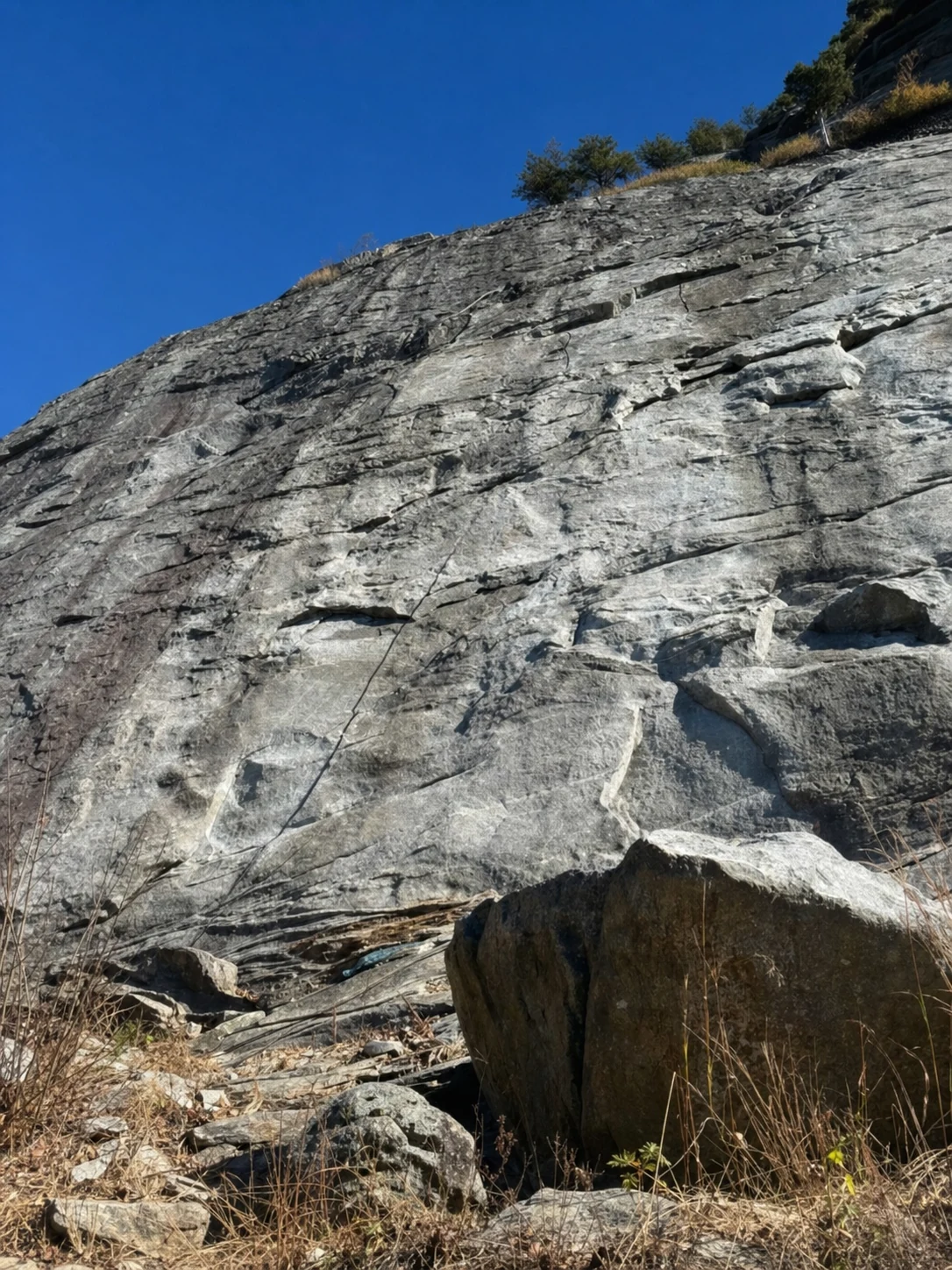
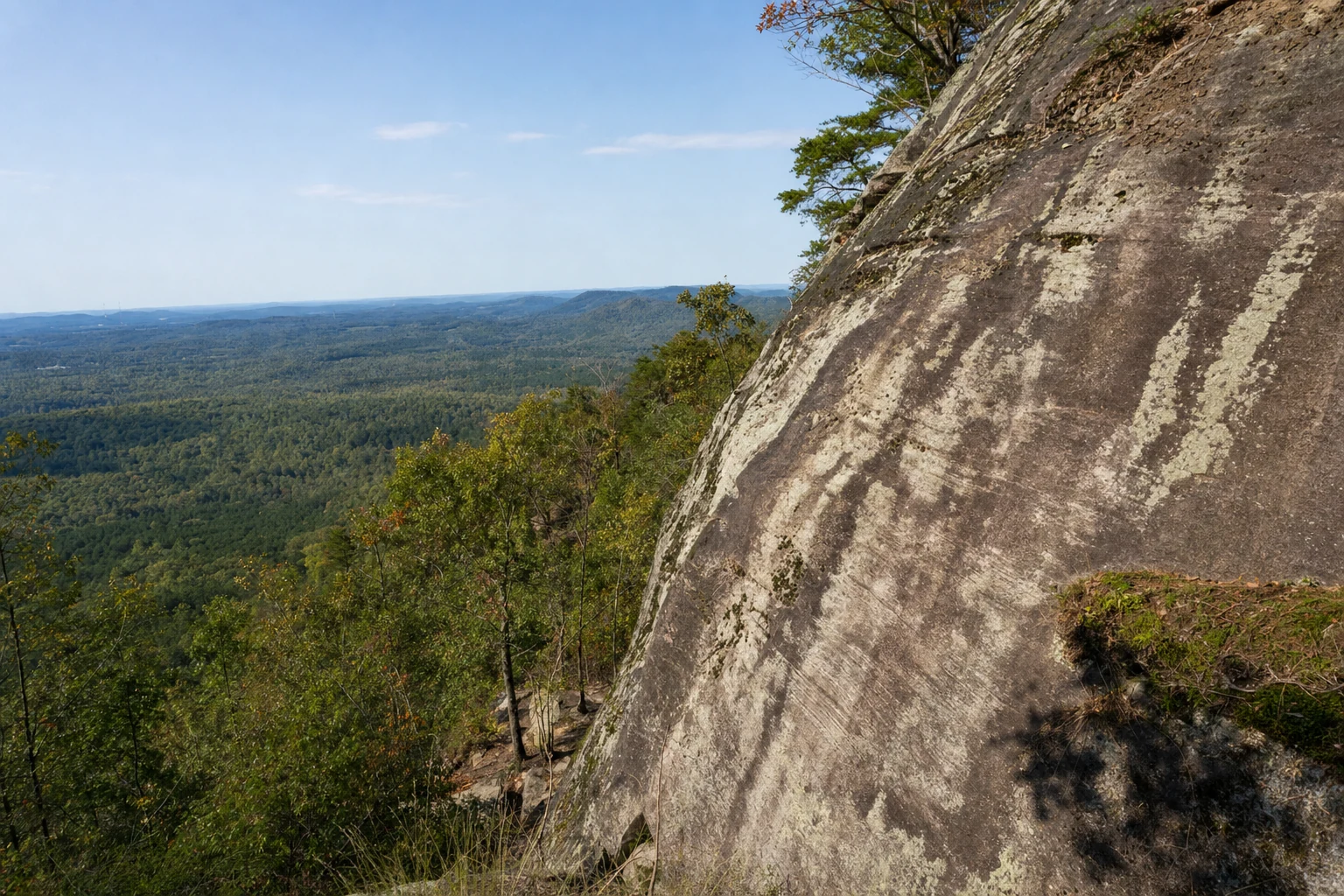
Climbing at Mount Yonah is spread across several distinct sectors with a range of grades and styles. The rock is solid granite, and it often asks for confident footwork on friction slabs.
The Main Face is the most prominent feature, visible from miles away. It faces southwest, which makes it a good winter destination but potentially scorching in summer. The routes here are mostly single-pitch, though multi-pitch link-ups are common.
Style: The climbing involves low-angle friction slabs transitioning into steeper faces.
Difficulty: Grades range significantly, but the area is renowned for its moderate routes (5.5 to 5.9), making it an excellent training ground for aspiring trad leaders and multi-pitch climbers.
Military Routes: Many routes on the Main Face are equipped with varied bolting hardware. Climbers must exercise judgment regarding the age and condition of fixed gear, although efforts by the SCC and local advocates like Michael Crowder have led to the replacement of many unsafe bolts.
Getting There and Access
Trailhead: Access is via Chambers Road. The hike to the climbing areas is approximately 1.5 to 2.3 miles and is considered strenuous, gaining roughly 1,400 to 1,500 feet in elevation.
Regulations: No permits are currently required for climbing, and parking is free, although the area is managed by the U.S. Forest Service.
Military Closures: As an active training site, portions of the mountain may occasionally be closed for Ranger training exercises. Climbers are advised to check with the Camp Merrill training office or local forums before visiting.
Tallulah Gorge State Park: A Trad Climber's Test
Tallulah Gorge, often cited as one of the "Seven Natural Wonders of Georgia," presents a radically different climbing experience from Mount Yonah. Carved by the Tallulah River, the gorge walls are composed of quartzite, a metamorphic rock that forms hard, blocky, and often steep features.
The Climbing and the Ethic
Tallulah Gorge is strictly a traditional (trad) climbing area. Unlike the sport-mixed environment of Yonah, Tallulah demands proficiency in placing gear, route finding, and multi-pitch efficiency.
Rock Type: High-quality quartzite.
Difficulty: The climbing is generally stiff, with very few routes below 5.8. It is not considered a beginner destination. Routes are often multi-pitch, requiring a 60-meter rope and a full rack of traditional protection.
Classic Routes:
Digital Delight (5.8): A 4-pitch classic featuring varied climbing through cracks, corners, and faces, topping out on the rim.
Mescaline Daydream (5.8): A 2-pitch adventure noted for its exposed corner and roof systems.
Permits and Seasonal Closures
Access to climbing in Tallulah Gorge is heavily regulated due to environmental concerns and the state park management structure.
Permits: Climbers must obtain a free permit from the Jane Hurt Yarn Interpretive Center on the day of the climb. Only 20 climbing permits are issued per day.
Peregrine Falcon Closures: A significant portion of the climbing season is affected by the nesting of Peregrine Falcons. The main climbing walls are typically closed from February 1st through mid-June (or until chicks fledge). This restricts the prime climbing season to late autumn and early winter.
Water Releases: Climbing is prohibited during scheduled aesthetic and whitewater releases from the dam. These releases occur on specific weekends in April and November (whitewater) and other dates for aesthetic viewing. Climbers must consult the park schedule to avoid these dates.
Currahee Mountain: History and Friction
Located near Toccoa, approximately 30 miles east of Helen, Currahee Mountain offers a distinct climbing venue characterized by accessible granite slabs and a rich, albeit complicated, history.