State of the River
Real-time Chattahoochee gauge height and flow at Helen, from USGS station 02330450
Is the Chattahoochee open for tubing today?
Current Conditions
Live data from USGS station 02330450, Chattahoochee River at Helen, GA
River Gauge
Fetching live data...
River Mood
Loading...
Checking current conditions
Float-O-Meter
... hrs
Estimated long ride duration
Butt-Drag Risk
Chance of rock contact
Flow Rate
... cfs
Live flow from USGS
Outfitter Status
Water Temp
...°F
Seasonal estimate
7-Day River Trend
Gauge height over the past week
Loading 7-day history from USGS...
The Helen Tubing Index (HTI)
Six zones that translate gauge height into a real-world tubing experience
The Chattahoochee at Helen is a small mountain stream, and it rises and falls with the weather. The USGS gauge (station 02330450) measures gauge height in feet. We group that number into six zones as a rule of thumb for what kind of day to expect. It is our own index, not an official outfitter standard, so always follow the outfitters' own closing rules: Cool River closes at 1.5 ft, and Helen Tubing says it may close over 3 ft.
The Rock Garden
Below 0.75 ft: low water
At this level you will be scraping rock and sometimes walking your tube through the shallows. Expect a slow trip and bring sturdy water shoes. Cool River allows its own push sticks without sharp edges, and on low-water days its shorter ride, where the water is deeper, is the better choice. The gauge read about 0.4 ft on the morning of October 8, 2026.
The Bumpy Ride
0.76 to 0.95 ft: bumpy
Floatable but bumpy. Look for the deeper channel through each shallow stretch and expect some grounding on gravel bars. It's easier if you untether tubes from the group in the shallows and reconnect in the pools.
The Perfect Float
0.96 to 1.25 ft: the sweet spot
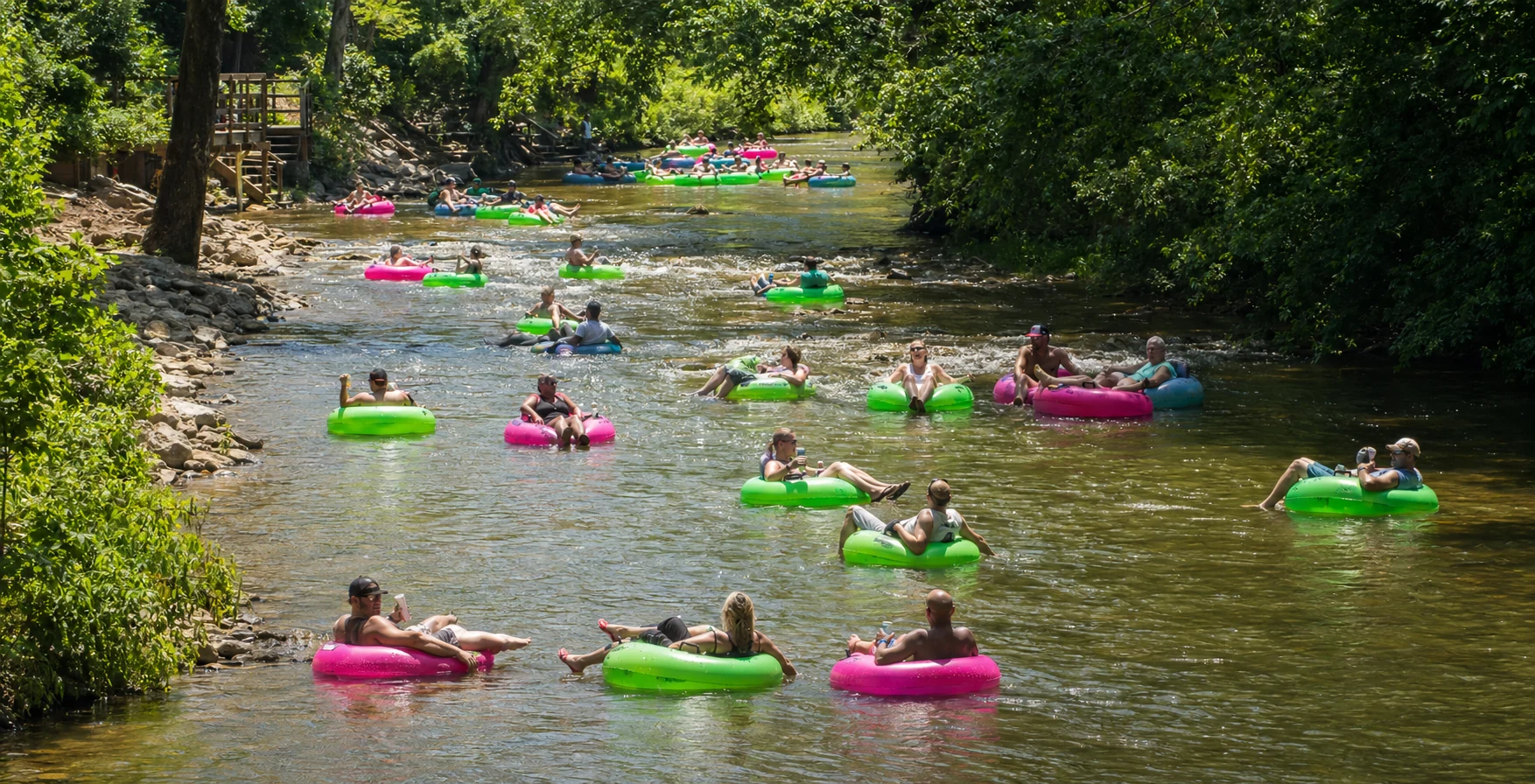
Our pick for the best conditions: enough water to cover most of the rocks and a current gentle enough that groups stay together. Cool River lists its long ride at 2 to 2.5 hours and its short ride at 1 to 1.5 hours. Children 12 and under are required to wear a life jacket at Cool River.
Swift & Sporty
1.26 to 1.50 ft: fast
The water turns brown and picks up speed. Bridge supports and low branches become hazards, so this level is for confident swimmers. Cool River closes at 1.5 ft on the river gauge, which it says happens once or twice a summer after a heavy overnight rain.
Wild Ride
1.51 to 3.00 ft: dangerous
Cool River is closed above 1.5 ft. Helen Tubing says water over 3 feet may be too high and dangerous and that it may decide to close, so the two outfitters can differ. Treat this range as a no-go unless you are an expert swimmer, and never stand in fast current, because a trapped foot is dangerous.
Flood Stage
Above 3.00 ft: flood stage
Above 3.0 feet the river is in flood conditions, and Helen Tubing says it may close over 3 feet. Debris moves in the water and the current can pin a person against fixed objects. A sudden storm can raise this mountain stream quickly, so stay out of the water and off the banks, and enjoy the restaurants, shops and wineries instead.
The Go/No-Go Checklist
Three steps before you drive to the river
Step 1: Check the Gauge
This page updates every 15 minutes with live USGS data. Below about 0.8 ft, expect a bumpy trip. Between roughly 1.0 and 1.25 ft is the sweet spot. Above 1.5 ft, call the outfitters before you drive to Helen.
Step 2: Check the Weather
Afternoon thunderstorms can raise a mountain stream quickly. Start early, and if you hear thunder, get out of the river. A low gauge in the morning doesn't guarantee the same reading in the afternoon.
Step 3: Gear Up
Water shoes with toe protection, not flip-flops. A push stick without sharp edges if the water is low. Sunscreen. Cool River allows one 32 oz plastic drink container per tuber and no alcohol, so leave coolers behind. Leave valuables in the car.
Safety on the river
Rules and what to do if the river rises
City Regulations
Rules differ by outfitter, so read theirs when you buy tickets. Cool River Tubing requires life jackets for all kids age 12 and under, allows one 32 oz plastic drink container per tuber and no alcohol, and asks that any push stick have no sharp edges. Helen Tubing posts its own rules and conditions on its website.
Emergency Protocol
If you hear thunder or see lightning, get out of the river and onto the nearest bank right away. Cool River says its shuttles run to all locations until everyone is off the river. If you flip in fast water, float on your back with your feet pointed downstream and don't try to stand in strong current, since a trapped foot is the danger.
The Outfitter Difference
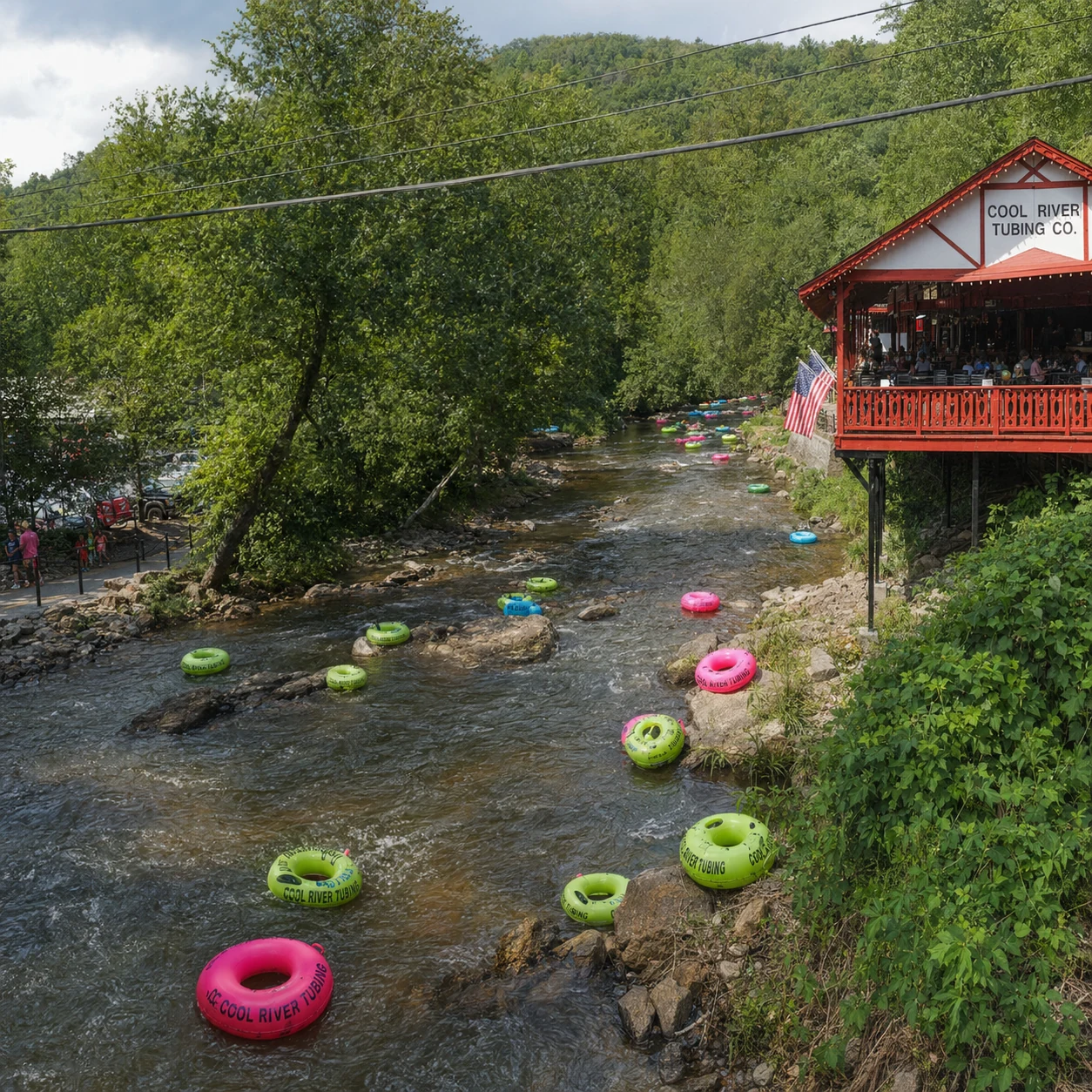
Cool River Tubing (three outposts, including Chattahoochee Outpost at 590 Edelweiss Strasse, 706-878-2665) and Helen Tubing & Waterpark (9917 Hwy 75 N) both run the river. Cool River closes at 1.5 ft on the gauge, while Helen Tubing says it may close over 3 ft. If one is open and the other closed, take that as a hint about the current conditions and call before you go.
Low Water Strategy
In low water, Cool River recommends its shorter route, where the water is deeper. Cool River lists its long ride at 2 to 2.5 hours and its short ride at 1 to 1.5 hours, and the same ticket price covers either: $14 on weekdays and $16 on weekends and holidays.
More to Explore
Related guides and resources for your Helen visit
Related Imagery from Around Helen