Native Plants of the Helen Area
Mountain laurel, rhododendron, flame azalea, and trillium, and where and when to find them blooming.
What to Know Before You Go
The Southern Appalachian forests around Helen are one of the most biologically diverse temperate regions on the planet, a "biological crossroads" where northern and southern species overlap.
What you will notice most is the understory of the Heath family (Ericaceae): rhododendron, mountain laurel (Kalmia), and native azaleas. These are the backbone of the creek-side and cove forests here, and they put on the biggest show when they bloom.
Why These Forests Are So Diverse
The forests around Helen are not just pretty backdrop. They are some of the most botanically diverse in the temperate world. The Southern Appalachians were never covered by glaciers during the last Ice Age, so plant species that were wiped out elsewhere survived here and kept evolving. The result is a patchwork of distinct plant communities: dry pine-oak ridges, rich cove hardwood forests, and creek-side zones thick with rhododendron and hemlock. Each has its own character and its own set of species.
A lot of what grows here comes down to the acidic soils, which feed the heath balds and the understories full of rhododendron and mountain laurel. The canopy is still changing, too. The American Chestnut that once dominated was lost in the early 20th century, and the Eastern Hemlocks are in decline now, so the forest is shifting toward Tulip Poplar and oak. The rest of this guide walks through the plants, the forest types, and when things bloom around Helen.
A Meeting Point for North and South
Helen sits in a transition zone where northern and southern species overlap, and the plant diversity here is extraordinary. The Southern Appalachians have more tree species than all of Europe combined. The terrain creates dozens of microclimates within a small area, and each one supports different plants. The Georgia Botanical Society runs regular field trips here to study these communities.
Topography and Microclimates
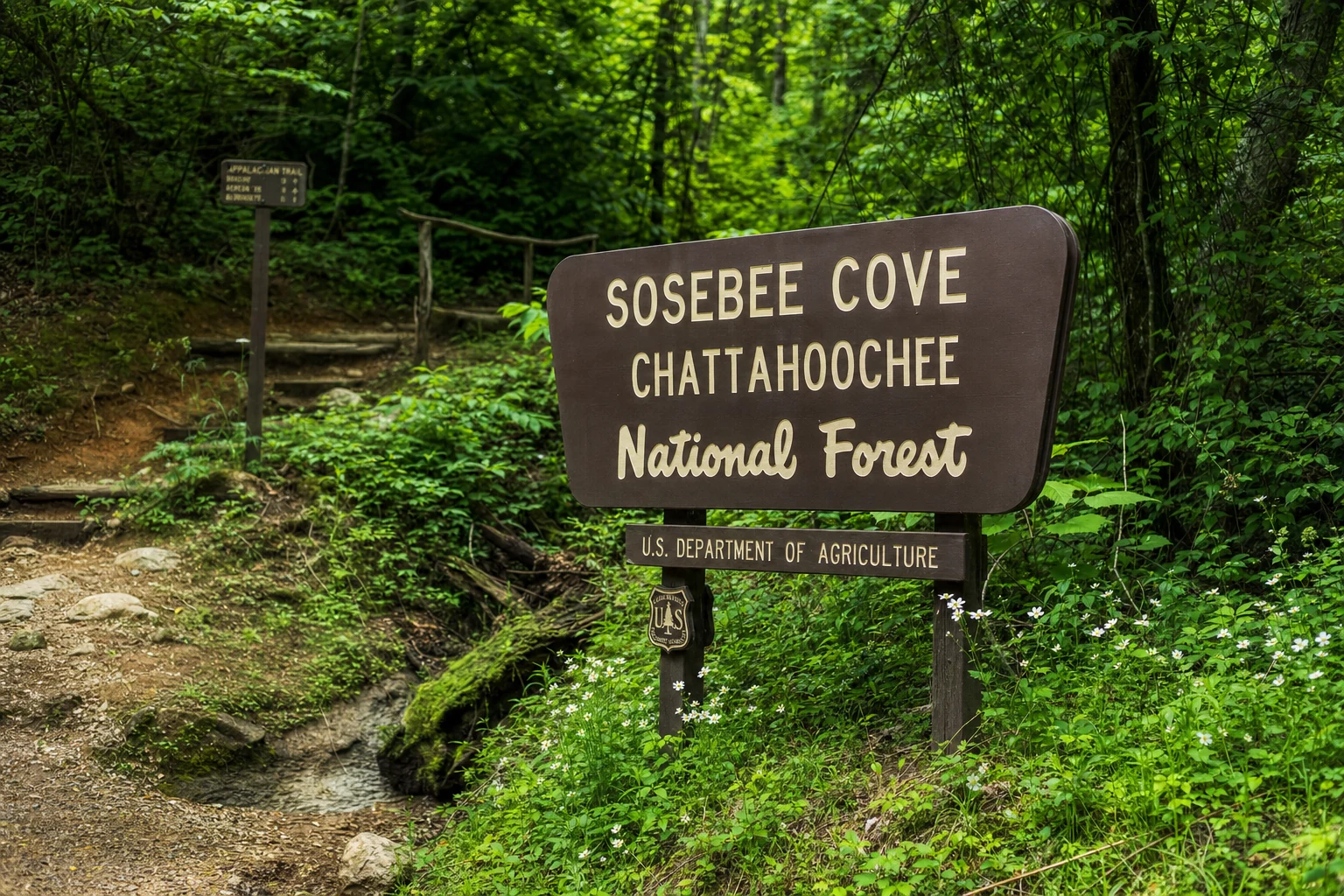
The rugged terrain creates distinct moisture and temperature gradients. North-facing slopes, such as those found at Sosebee Cove, receive less direct sunlight and retain higher soil moisture, mimicking conditions found in New England or Canada. This allows "northern" hardwoods like Yellow Birch (Betula alleghaniensis) and Basswood (Tilia americana) to thrive alongside southern species. Conversely, south-facing slopes are drier and warmer, supporting xeric species like Scarlet Oak and various pines.
Creek-Side Zones and "Laurel Hells"
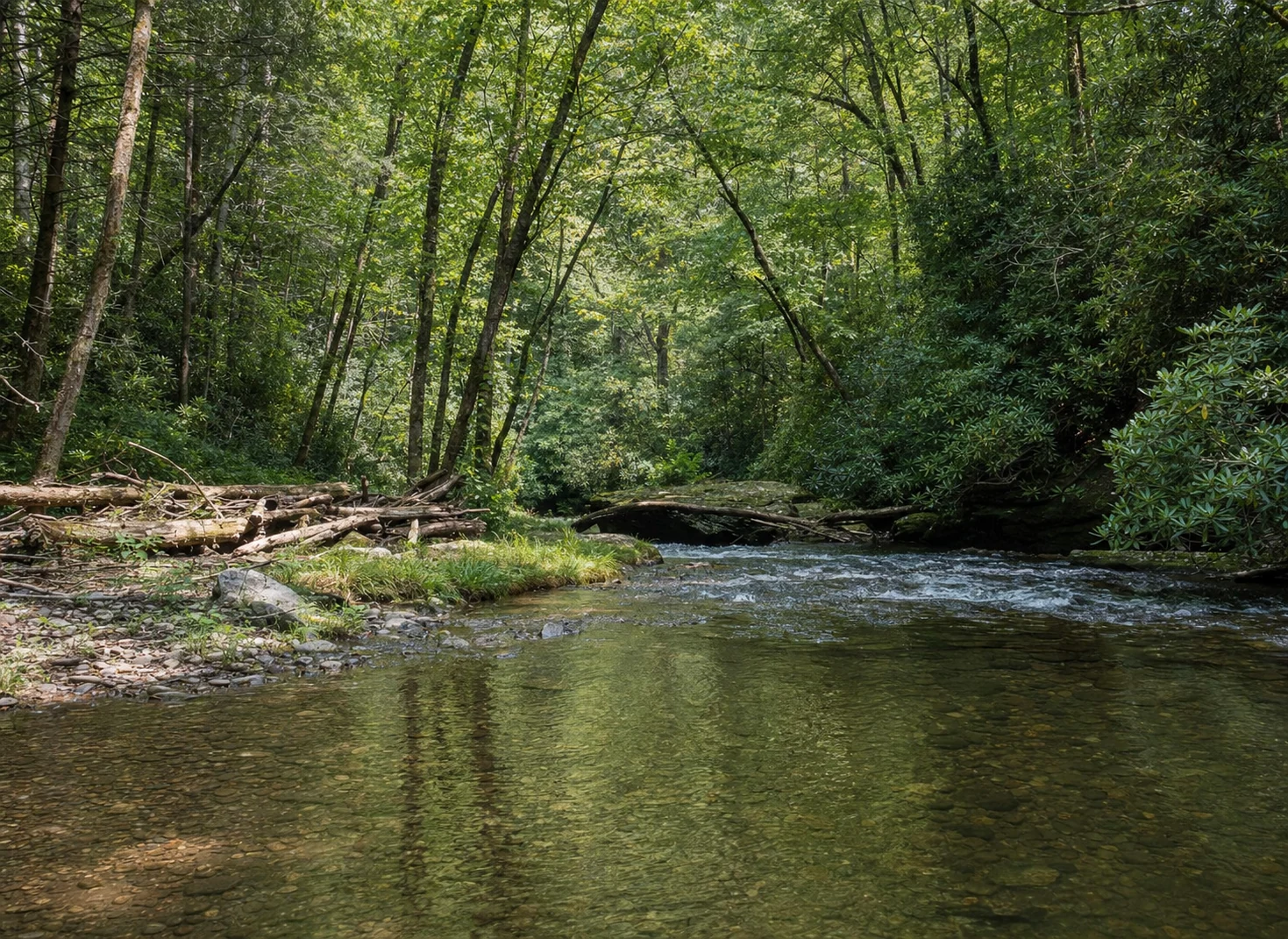
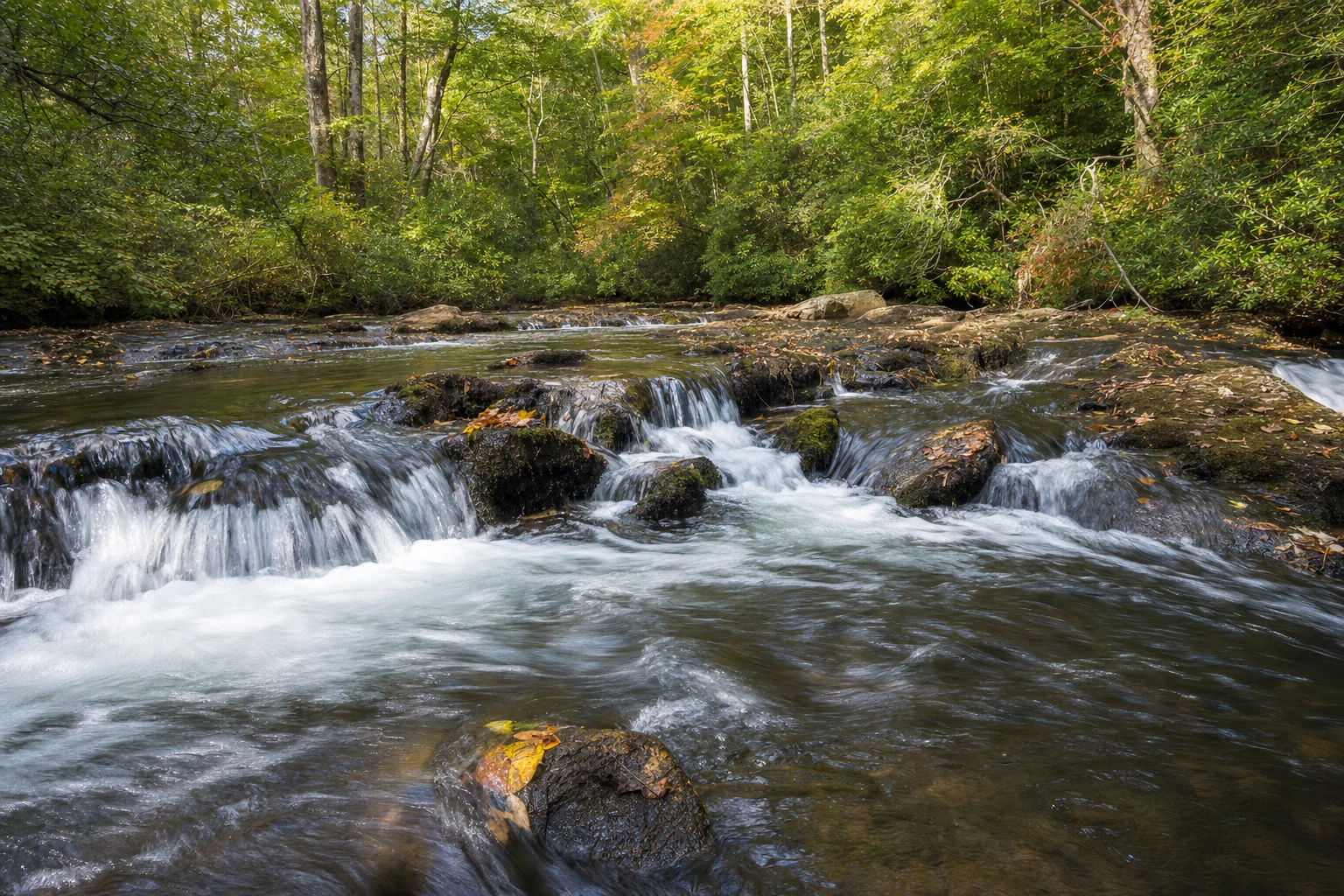
Along the numerous watercourses, such as the Chattahoochee River headwaters, Dukes Creek, and Smith Creek, the environment is defined by high humidity and shade. These riparian zones are historically the domain of the Eastern Hemlock and Great Laurel (Rhododendron maximum). In many areas, the density of rhododendron and mountain laurel is so extreme that they form impenetrable thickets known historically and locally as "laurel hells," which stabilize stream banks but also suppress the regeneration of canopy tree seedlings through shading.
The Flowering Shrubs: The Heath Family
The showstoppers in the North Georgia woods are the broadleaf evergreen and deciduous shrubs of the Heath family (Ericaceae). They do well in the region's acidic, well-drained soils, and they are what most people come to see when the blooms are out.
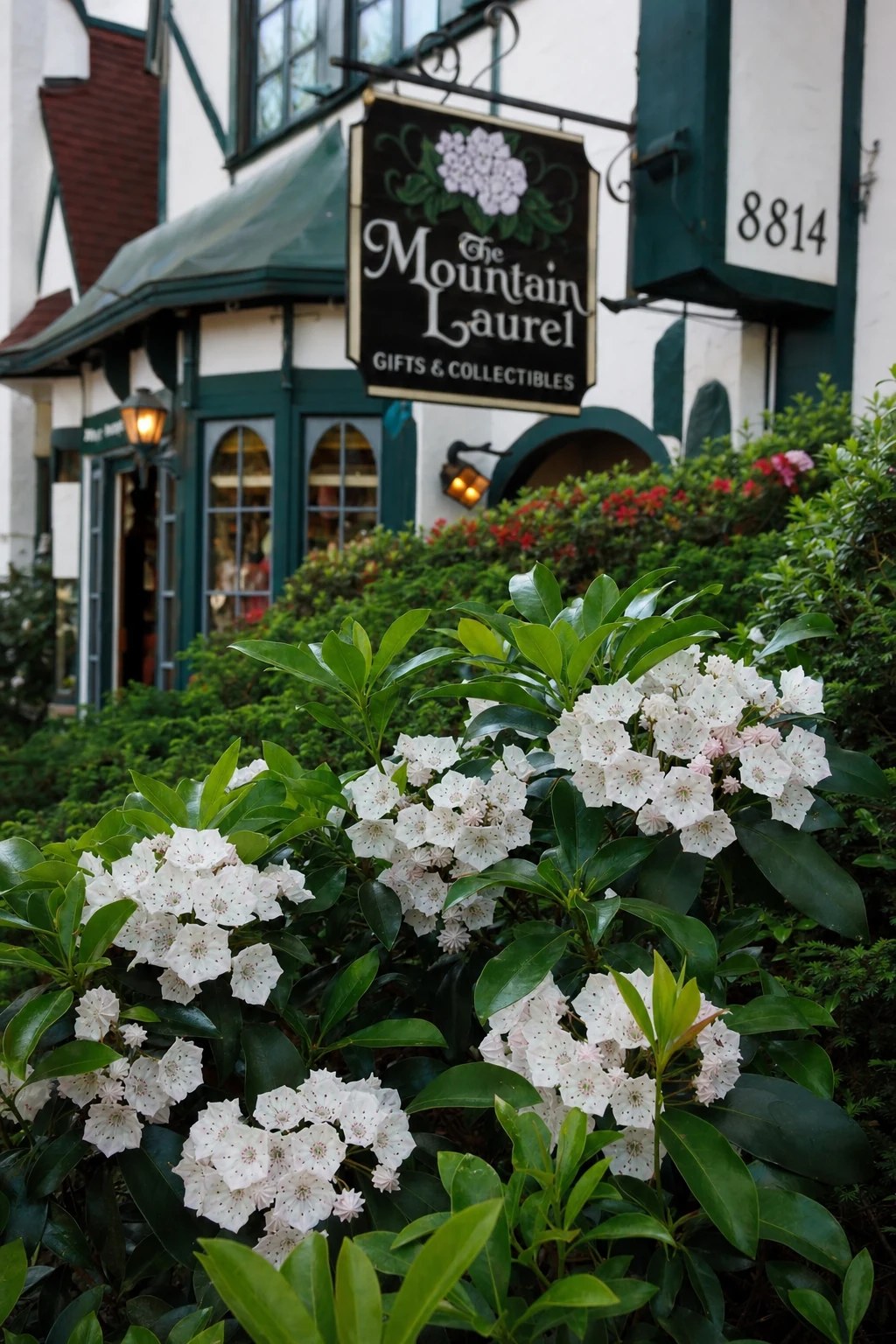
Mountain Laurel (Kalmia latifolia)
Mountain Laurel is a gnarly-branched evergreen shrub or small tree, usually 6 to 15 feet tall, with leathery oval leaves and hexagonal cup-shaped flowers. Those flowers have a neat trick: the stamens are tucked into little pockets in the petals, and when a pollinator lands, they spring free and slap the insect with pollen to make sure it cross-pollinates.
You will find it everywhere around Helen, on rocky slopes, in cool meadows, and along stream banks. It is drought-tolerant once established but really thrives in the moist, cool mountain air. Look for blooms from late May through June, right between the early spring wildflowers and the summer rhododendrons.
Rhododendron Species
The genus Rhododendron is split into two primary groups in this region: the evergreen "true" rhododendrons and the deciduous azaleas.
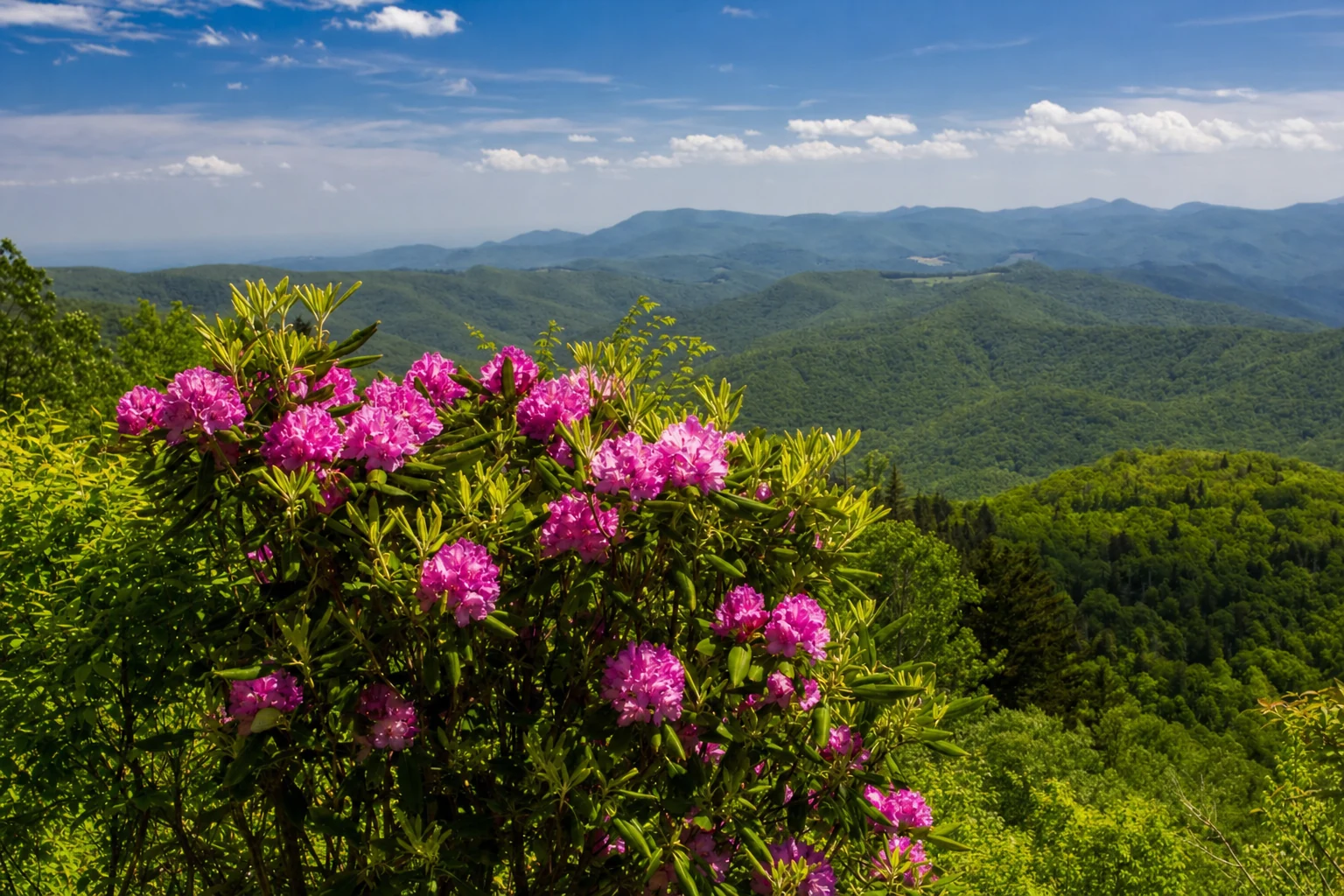
Catawba Rhododendron (Rhododendron catawbiense): Also known as the Purple Rhododendron or Mountain Rosebay, this one is famous for its big clusters of pink to purple flowers. It grows on ridges and open balds, and in open woodlands too. It blooms from late spring into early summer (May and June) and draws plenty of flower-watchers.
Great Laurel or Rosebay Rhododendron (Rhododendron maximum):
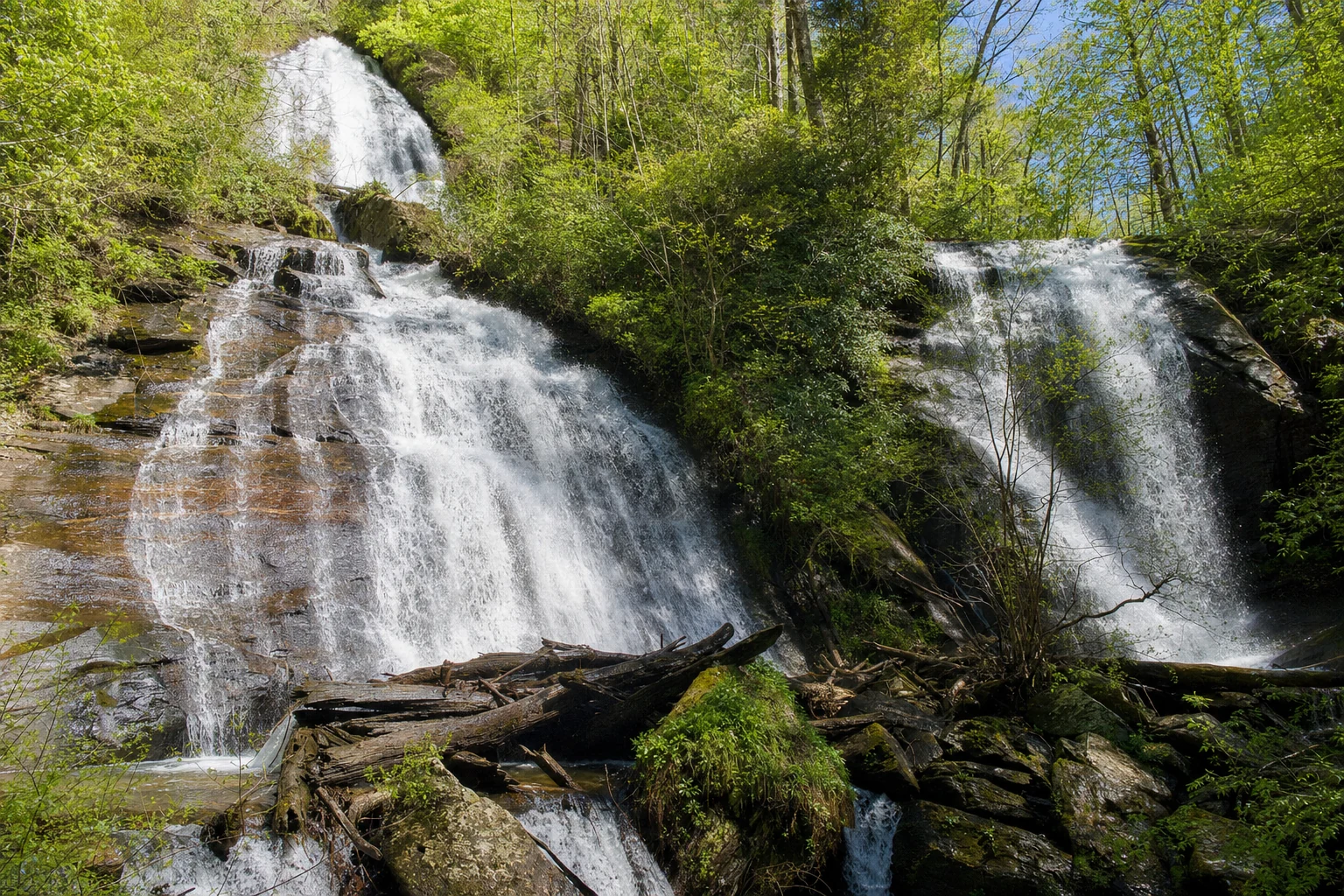
This is the dominant understory shrub of riparian zones and deep coves near Helen (e.g., Anna Ruby Falls). It has larger, longer leaves than R. catawbiense and blooms later, typically in June and July. Its flowers are white to pale pink. It is considered a foundation species because its dense canopy regulates the temperature and moisture of the forest floor and streams, critical for trout and salamander populations monitored by the Georgia DNR Wildlife Resources Division.
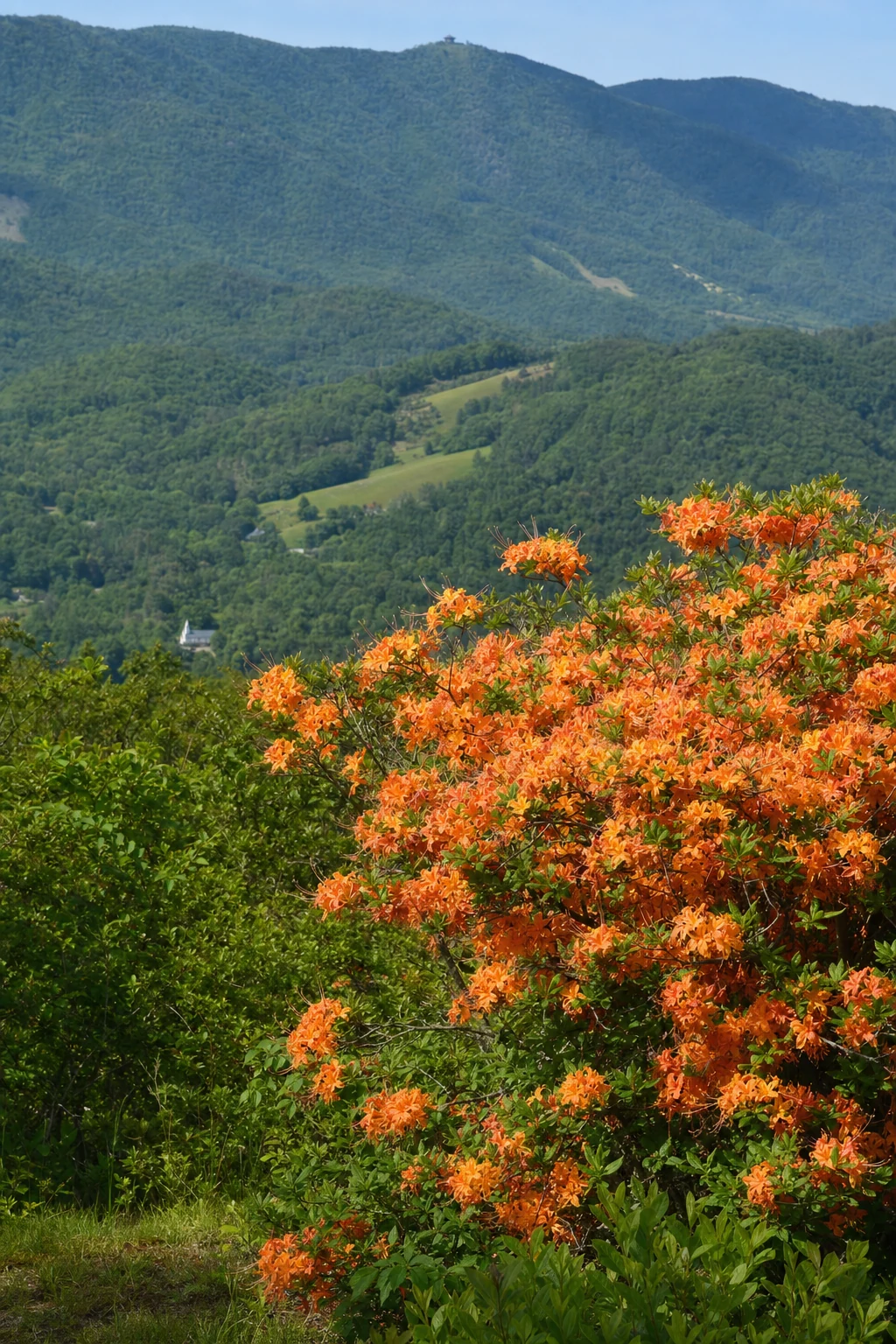
Flame Azalea (Rhododendron calendulaceum)
Unlike its evergreen cousins, the Flame Azalea is deciduous, and it is known for flowers that run from yellow to fiery orange and scarlet. The shrub grows 6 to 12 feet tall and wide, and you will find it on woodland slopes and grassy mountain balds. It blooms from late spring to early summer (April through June), often before or during leaf-out, so the color pops against the greening forest.
Wildflowers and Spring Ephemerals
The wildflowers are thickest in the "cove hardwood" forests around Helen, where the soil holds the most nutrients.
Trillium Species
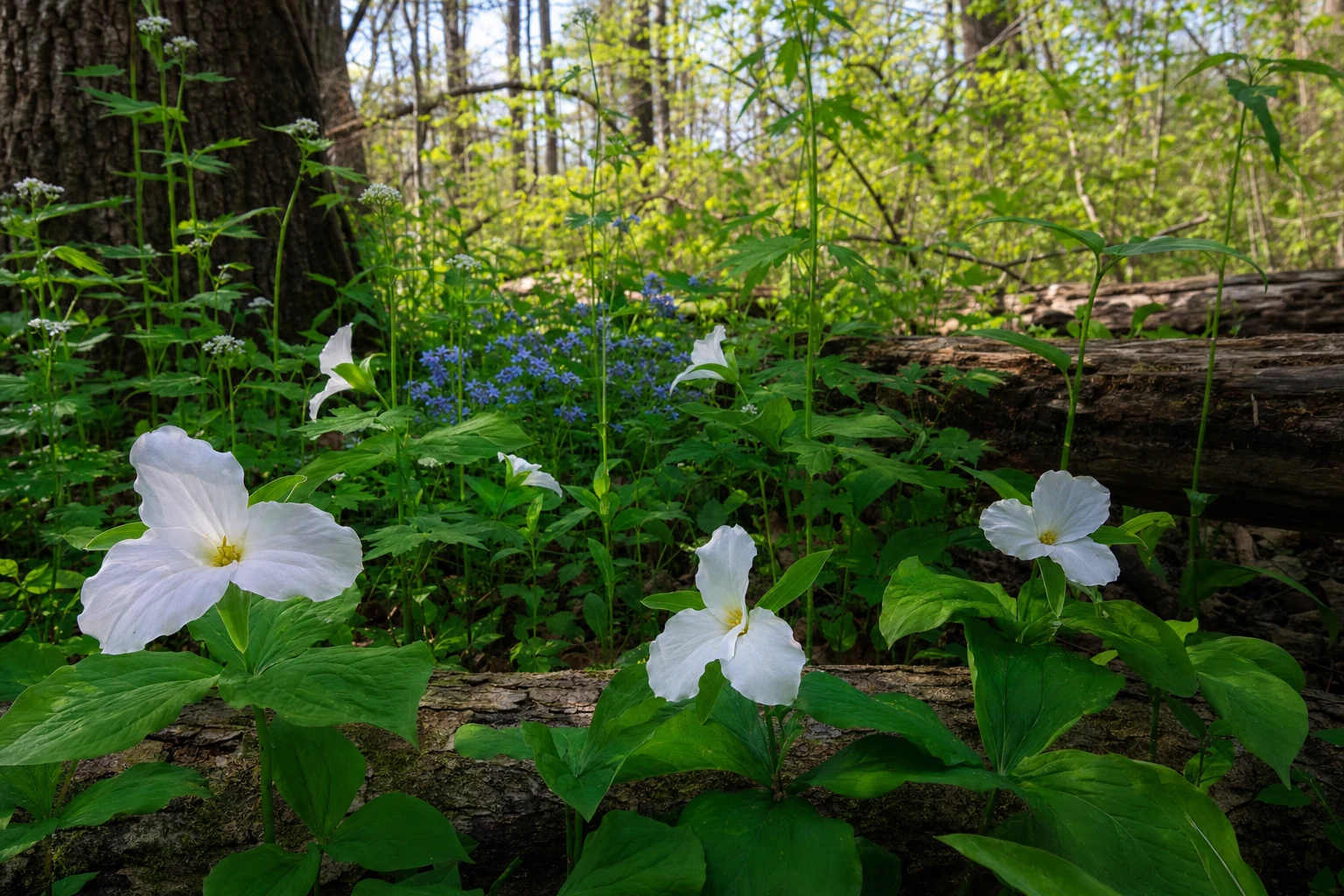
Trilliums are a hallmark of the Appalachian spring. They are characterized by three leaves, three sepals, and three petals.
Toadshade Trillium (Trillium cuneatum): Sessile flowers (resting directly on the leaves) that are maroon or brownish-red. These are among the earliest to bloom.
Large-flowered Trillium (Trillium grandiflorum): Features large white flowers that fade to pink as they age. Found in rich coves like Sosebee Cove.
Vasey’s Trillium (Trillium vaseyi): Also known as Sweet Wakerobin. This is a massive trillium with a red flower that often hangs below the leaves, requiring an observer to look underneath to see the bloom. It is notably present along the Anna Ruby Falls trail.
Related Imagery from Around Helen