Tallulah Gorge
A thousand-foot chasm carved through ancient quartzite - one of the most spectacular canyon landscapes in the eastern United States
Tallulah Gorge is a place that stops people mid-sentence. Nearly 1,000 feet deep and two miles long, this dramatic chasm slices through some of the oldest exposed rock in North America - ancient quartzite that was already hundreds of millions of years old when the first dinosaurs walked the Earth. The gorge was carved over millennia by the Tallulah River, which drops through a series of six waterfalls as it passes between sheer walls of weathered stone draped in moss, ferns, and clinging rhododendron. It is, by any measure, one of the most spectacular natural landmarks in the eastern United States.
Located just 30 miles east of Helen in Rabun County - roughly a 45-minute drive - Tallulah Gorge State Park protects this geological wonder and provides visitors with a range of ways to experience it. From the rim overlooks that peer down into the misty depths, to the swaying suspension bridge that spans the chasm, to the grueling but rewarding descent to the gorge floor itself, Tallulah offers levels of adventure that suit everyone from families with young children to experienced hikers looking for a real physical challenge.
The Rim Trail & Suspension Bridge
Dramatic overlooks and a crossing 80 feet above the gorge floor
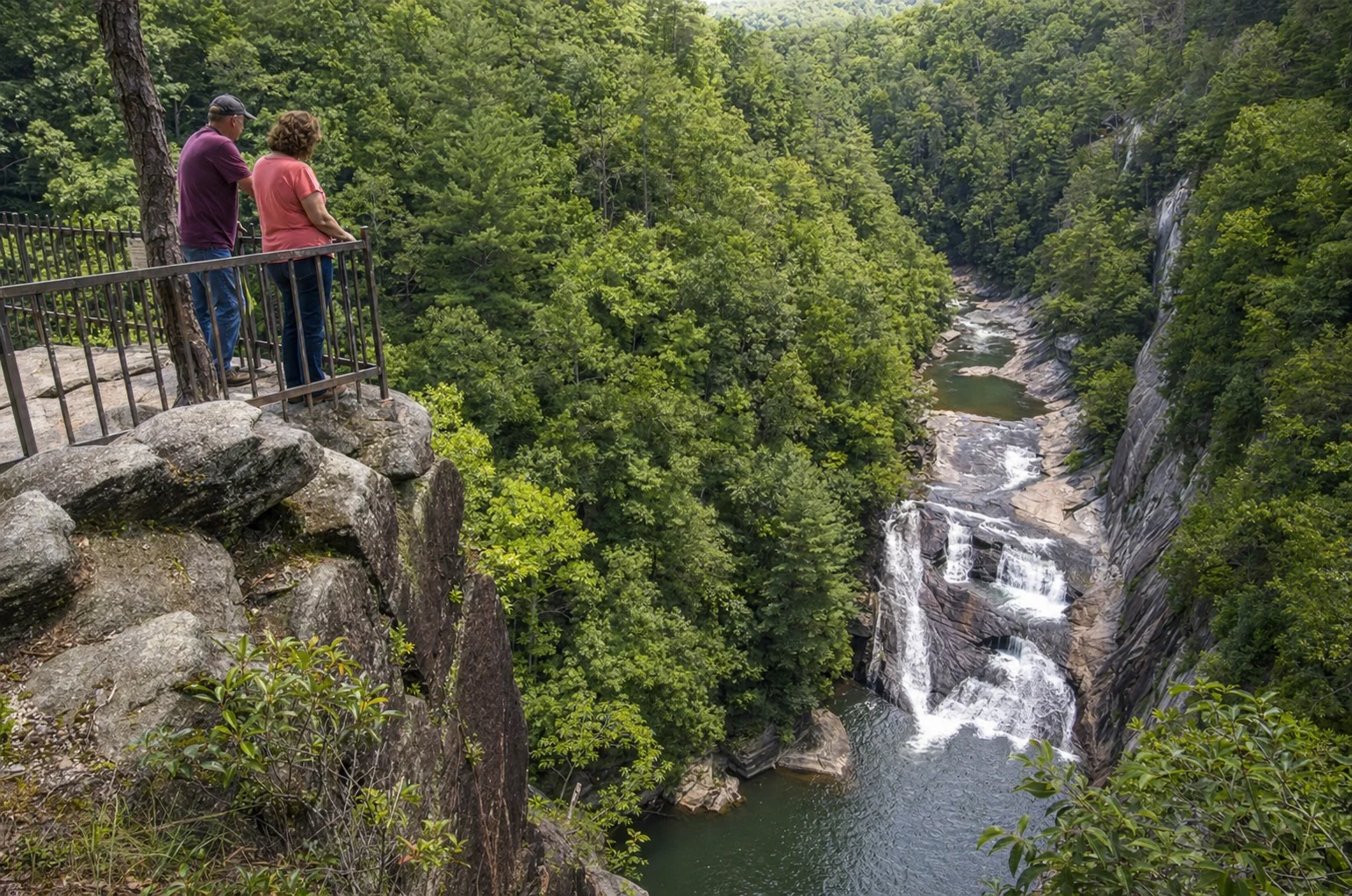
The primary visitor experience at Tallulah Gorge centers on the North and South Rim Trails, which together form a loop of about 2 miles along the gorge's edge. A series of numbered overlooks - ten in total - provide staggering views down into the chasm from different angles, each one revealing a new waterfall, a different play of light on the quartzite walls, or a fresh perspective on the sheer depth of the canyon. The trails are well-maintained with metal railings and concrete steps in the steepest sections, though the terrain is genuinely rugged in places.
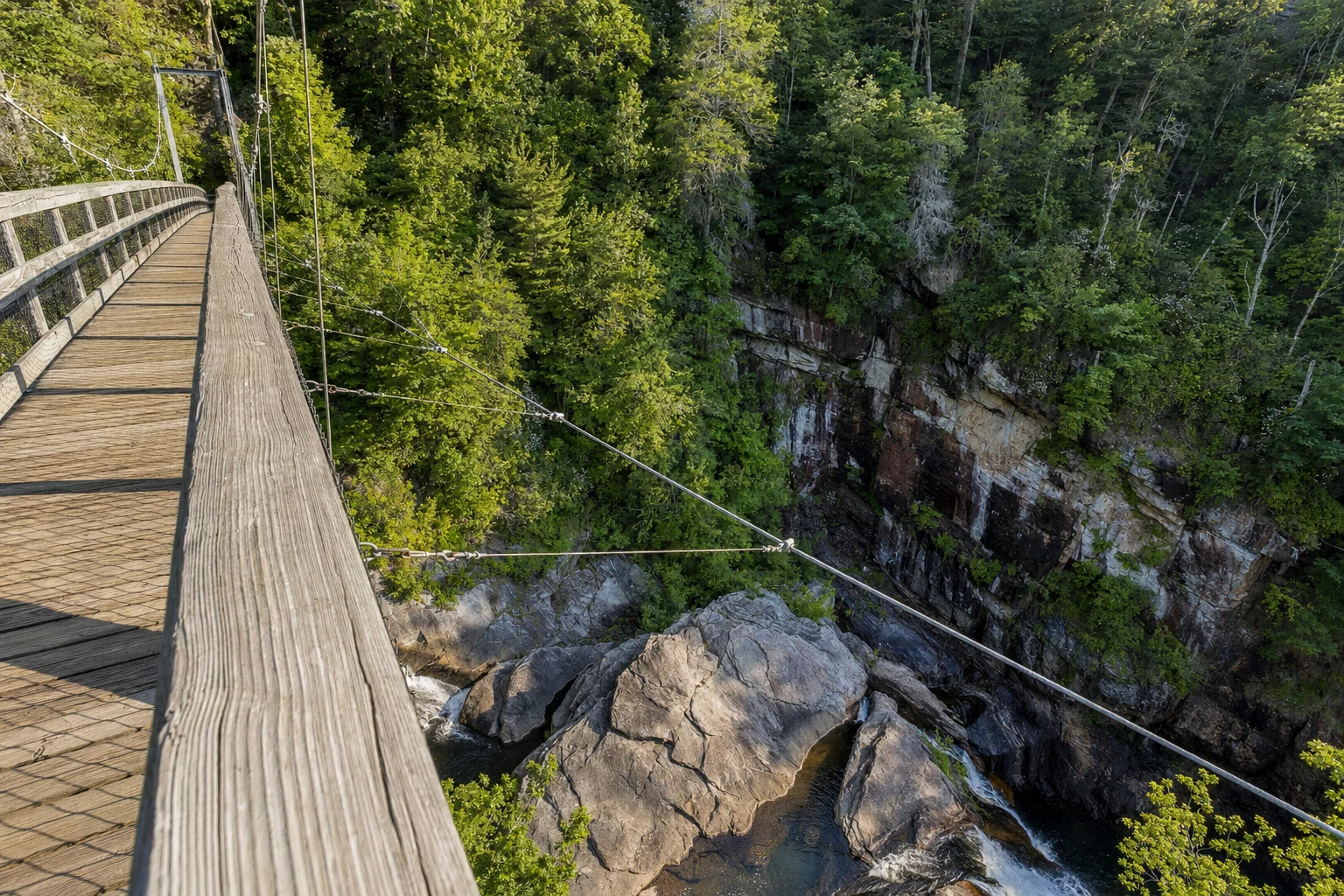
The highlight for many visitors is the suspension bridge, which spans the gorge between the north and south rims. Reaching the bridge requires descending 310 to 347 steps (depending on which side you approach from), and the crossing itself offers a vertigo-inducing view straight down to the river churning far below. The bridge sways gently with foot traffic, adding to the sense of exposure. It is thrilling in the best possible way, and the photographs taken from the bridge - looking up at the towering quartzite walls on either side - are among the most dramatic images you will take anywhere in Georgia.
The Gorge Floor
A permitted adventure into the heart of the chasm
For those willing to earn it, the gorge floor experience is unlike anything else in the Georgia mountains. Access requires a free permit, issued daily on a first-come, first-served basis at the park's interpretive center. The number of permits is limited to protect the fragile environment, so arriving early - ideally when the center opens at 8 AM - is essential, especially on weekends and during peak seasons.
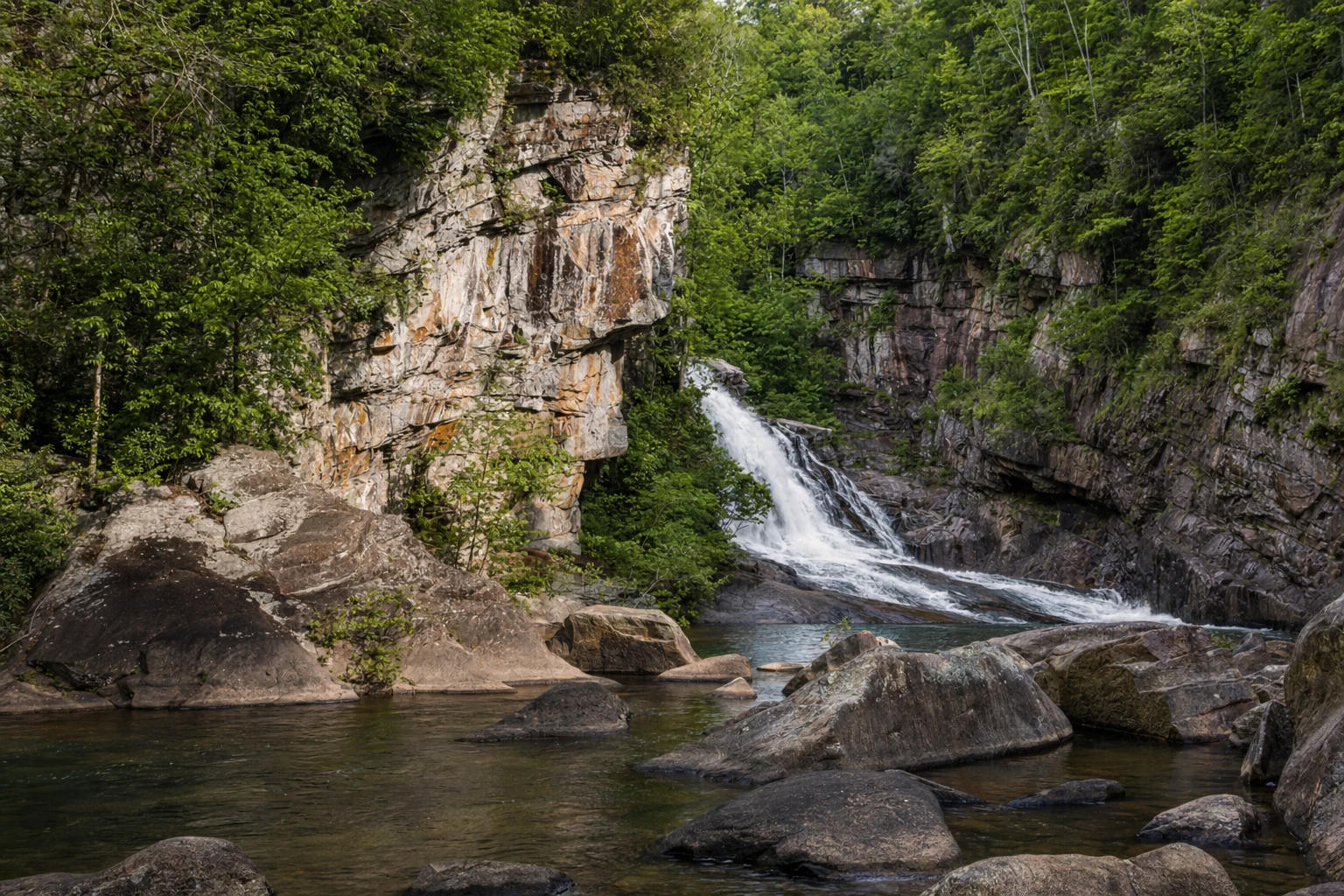
The descent to the gorge floor involves the Hurricane Falls staircase, a metal structure of approximately 550 steps that switchbacks down the near-vertical wall of the gorge. At the bottom, visitors emerge into a cathedral-like space where Hurricane Falls thunders into a dark pool, spray filling the air and coating the surrounding rocks in a perpetual mist. The acoustics of the enclosed gorge amplify the sound of the falls into something almost primordial. Getting back out requires climbing those same 550 steps - and then tackling the Sliding Rock exit, a 45-degree rock scramble that is the final challenge before regaining the rim. This is a genuinely demanding physical experience, but those who complete it describe it as one of the most rewarding outdoor adventures in the Southeast.
History & the Wallenda Crossing
From tourist mecca to tightrope spectacle
Tallulah Gorge has drawn visitors since the mid-1800s, when a string of luxury hotels sprang up along the rim to cater to tourists arriving by railroad from Atlanta and beyond. At its peak in the late 19th century, the town of Tallulah Falls was one of the most popular resort destinations in the South, drawing thousands who came to marvel at the waterfalls and the dramatic scenery. The construction of a hydroelectric dam in 1913 diminished the river's flow and the town's fortunes declined, but the gorge itself remained a place of wild beauty.
The gorge's most famous moment came on July 18, 1970, when the legendary Karl Wallenda - patriarch of the Flying Wallendas high-wire family - walked a tightrope across the gorge 750 feet above the river. Performing without a net before a crowd estimated at 30,000, the 65-year-old Wallenda completed the crossing and then, incredibly, performed two headstands on the wire at the midpoint. The remnants of the north tower used to anchor his wire are still visible near one of the overlooks, a quiet monument to an act of extraordinary daring.
Water Releases & Camping
Scheduled flows and overnight options
Because the Tallulah River's flow is controlled by a hydroelectric dam upstream, the gorge's waterfalls vary dramatically in volume. The state park coordinates periodic aesthetic water releases - typically scheduled on select weekends in spring and fall - when the dam releases additional water to restore the falls to something closer to their natural glory. These releases transform the gorge, filling it with the roar of rushing water and creating spectacular photo opportunities. Whitewater releases are also scheduled periodically for experienced kayakers, drawing paddlers from across the region to run the Class IV-V rapids through the gorge.
For those who want to spend the night, the Terrora Campground offers pioneer-style camping sites with pit toilets and a more rustic experience than the developed campgrounds at other Georgia state parks. The simplicity is part of the charm - these sites put you close to the gorge in a setting that feels genuinely wild, with the sound of the river echoing up through the trees as night falls. After exploring the gorge, consider spending time in the nearby town of Tallulah Falls, a charming mountain community with local shops, restaurants, and rich history from its resort heyday.
Visitor's Perspective
What to know before you descend
- Get the gorge floor permit early. Permits are limited and free, distributed first-come first-served when the interpretive center opens at 8 AM. On popular weekends, people line up before opening. If you want the full experience, make this your priority.
- Prepare for the stairs. The Hurricane Falls staircase has roughly 550 steps down and then back up, plus the 45-degree Sliding Rock scramble. Bring water, wear sturdy shoes with good grip, and be honest about your fitness level.
- Check the water release schedule. The waterfalls are most impressive during scheduled aesthetic releases. Check the Georgia State Parks website before visiting to see if a release weekend aligns with your trip.
- The rim trail alone is worth the drive. Even if you skip the gorge floor, the overlooks and suspension bridge are spectacular. The rim loop is about 2 miles and accessible to most visitors.
- Visit the interpretive center. The exhibits on the gorge's geology, ecology, and the Wallenda crossing are well done and add context that makes the overlooks more meaningful.
More to Explore
Nearby destinations and related guides
Related Imagery from Around Helen