North Georgia's Covered Bridges
Historic wooden spans over mountain creeks, including the 1895 Stovall Mill Bridge near Helen
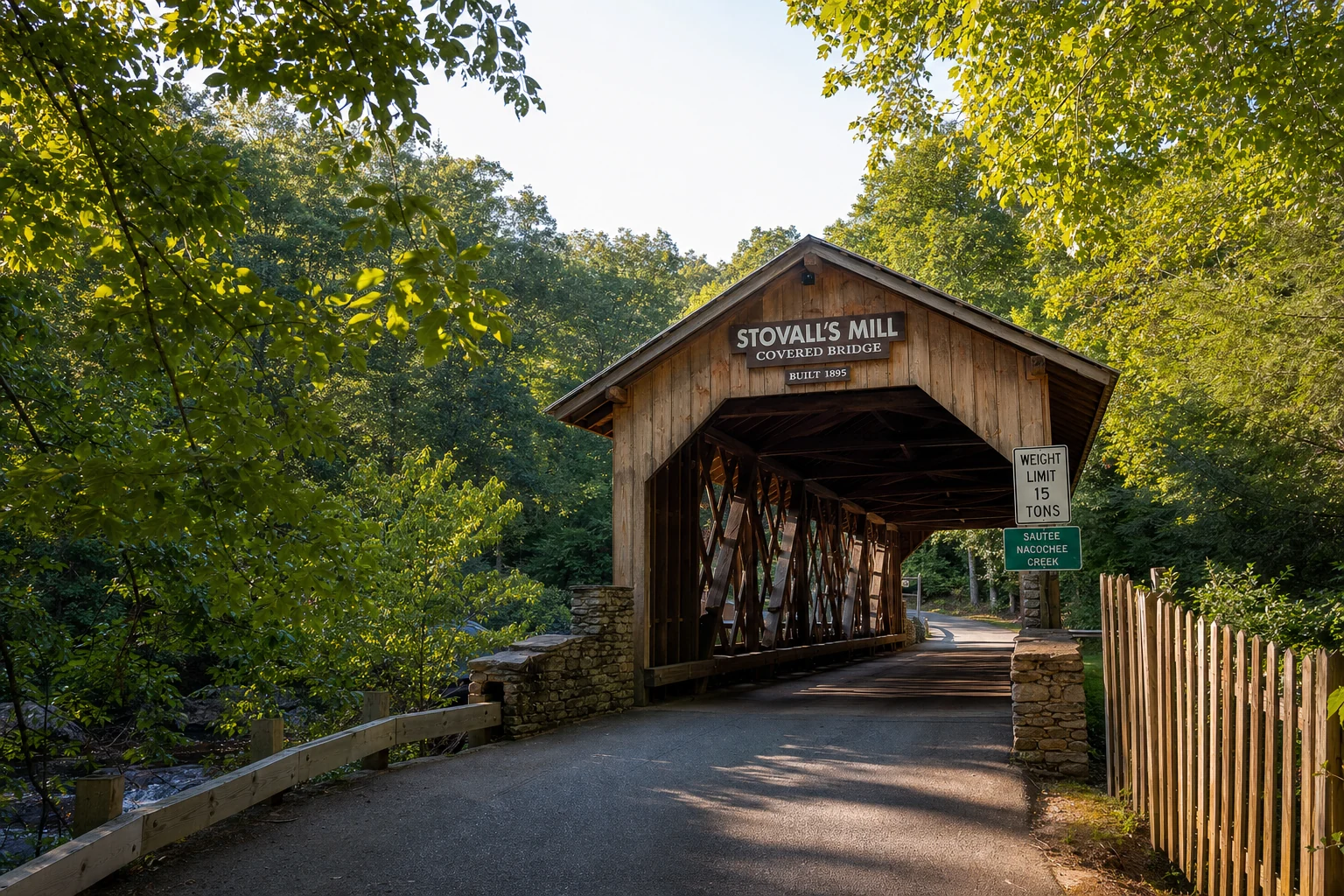
Stovall Mill Covered Bridge is the closest historic bridge to Helen, Georgia. Built in 1895 by Will Pardue, it uses a Queen-post truss design and shows up in the 1951 film I'd Climb the Highest Mountain.
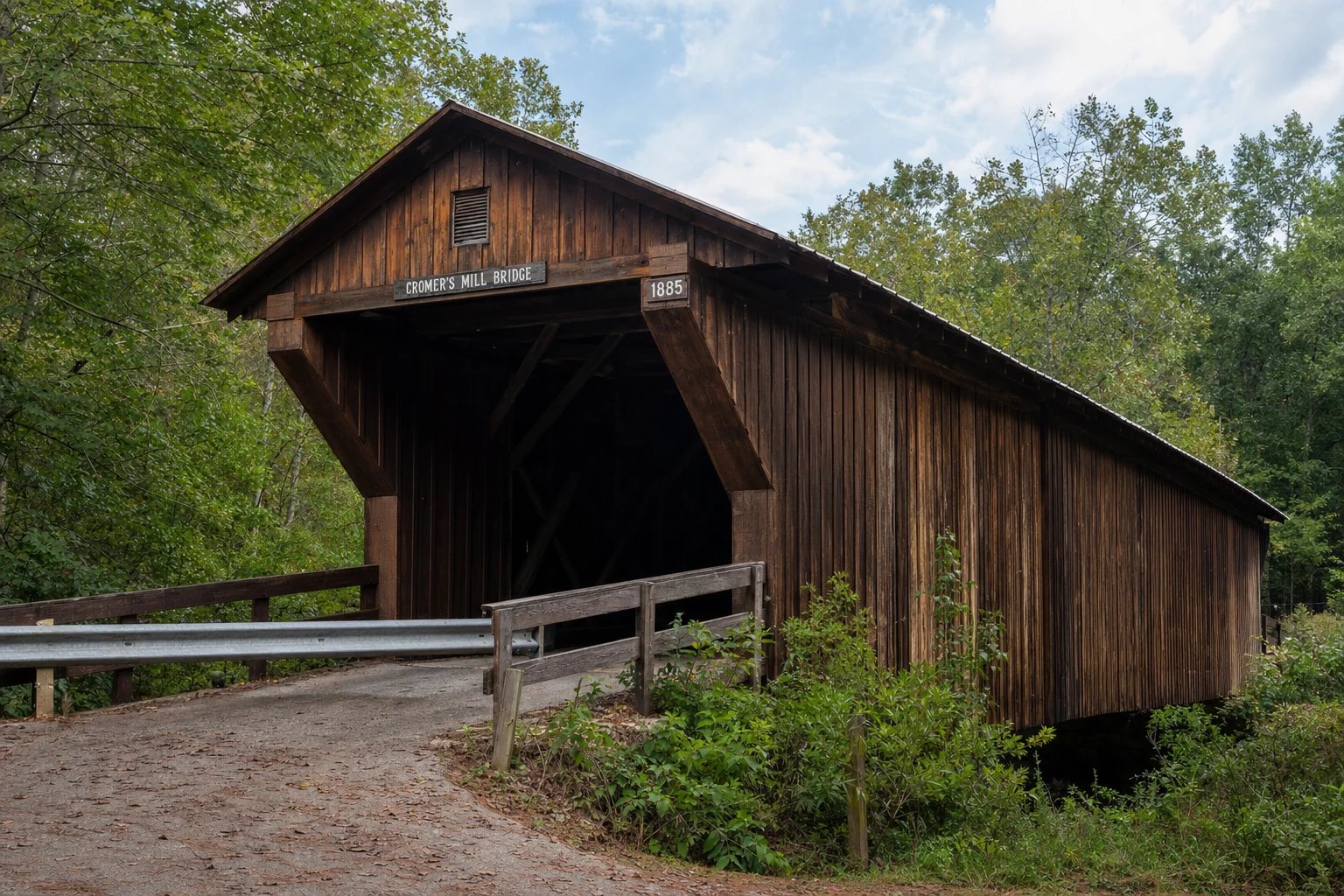
You'll find a few different truss designs across North Georgia, mainly the Town Lattice (Watson Mill, Cromer's Mill) and the Queen-post or King-post (Stovall Mill, Lula Bridge). Builders favored the Town Lattice for its durability and lighter planks.
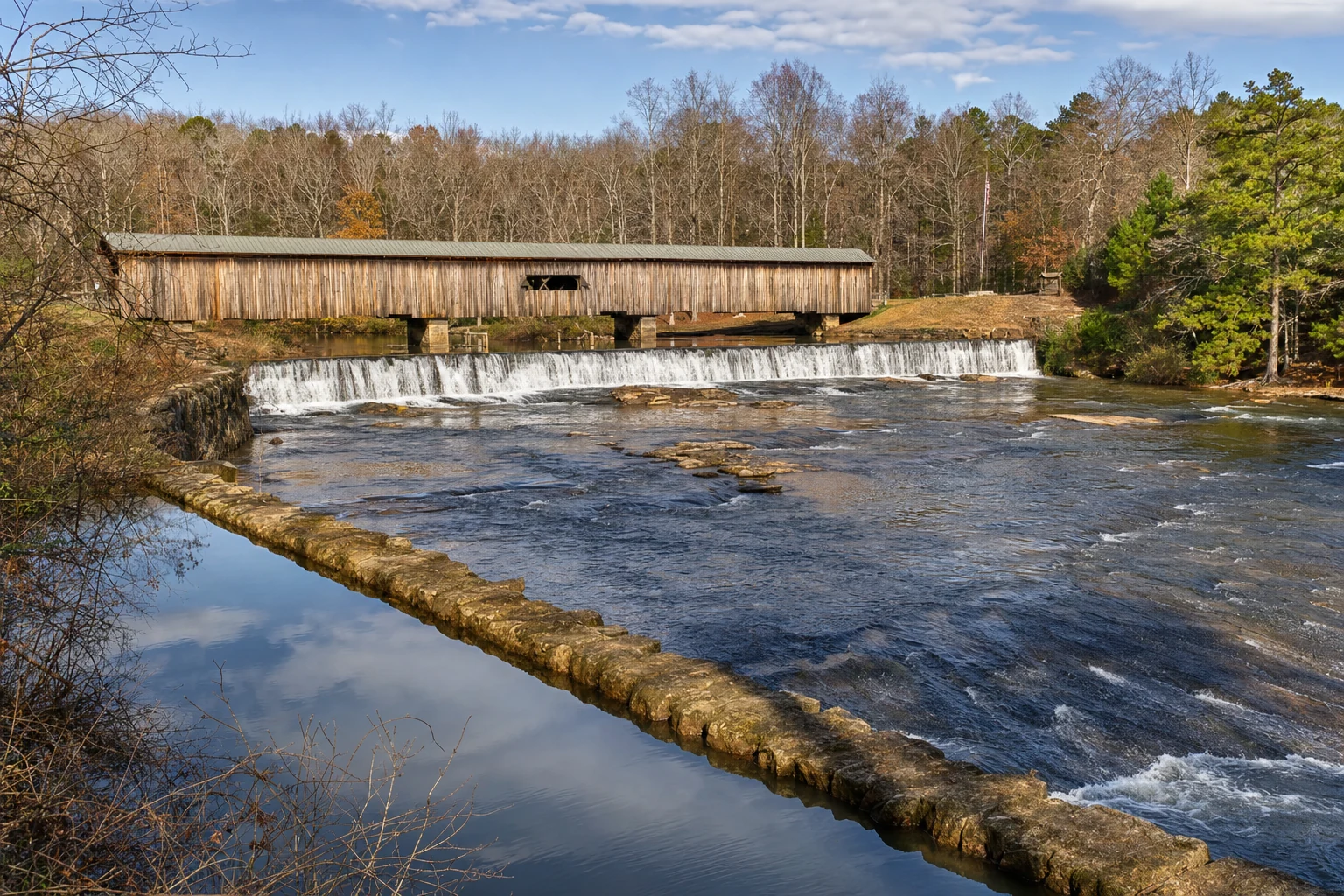
Horace King, a formerly enslaved master bridge builder, and his son Washington W. King left their mark all over the region. W.W. King built the Watson Mill Bridge, the state's longest remaining covered bridge.
What to Know Before You Go
Of the more than 250 covered bridges Georgia once had, fewer than 20 remain, and several sit on the National Register of Historic Places. Watson Mill and Stovall Mill are well maintained, while others like the Lula Bridge are hard to reach because they sit on private land.
These bridges were economic lifelines, connecting farming communities to the grist and saw mills. Today they are heritage sites, and the folklore only adds to the draw, including the "crybaby" legends attached to Stovall Mill.
Where 19th-Century Engineering Meets Mountain Life
North Georgia's covered bridges are where 19th-century engineering meets the practical needs of an agricultural mountain community. Most visitors know Helen for its Alpine storefronts, but the surrounding countryside holds a collection of historic timber bridges that tell the story of how people moved goods and livestock through the post-Civil War South. What follows focuses on the Stovall Mill Covered Bridge, the closest to Helen, and branches out to other bridges in the region, their engineering, and the work being done to keep them standing.
The Stovall Mill Covered Bridge
About seven miles from Helen in the Sautee Nacoochee Valley, the Stovall Mill Covered Bridge (White County) is one of the best-preserved rural bridges in the region. It is a direct link to the small mill complexes that once lined the tributaries of the Chattahoochee River system.
Historical Context and Origins
The current structure, spanning Chickamauga Creek, was erected in 1895 by builder Will Pardue. It was not the first bridge at this location; an earlier covered bridge, constructed by Fred Dover in the late 19th century, was destroyed by a flood in the early 1890s. The site was originally the epicenter of a bustling mill complex owned by Dover, which included a grist mill, saw mill, and shingle mill, all powered by a water turbine.
In 1917, the operation was purchased by Fred Stovall, Sr., lending the bridge its current name. While the mill complex and the associated dam were washed away during a flood in 1964, the bridge survived, though the road it serviced (the old Cleveland to Clayton road) was realigned in 1959, leaving the bridge as a pedestrian historic site rather than a vehicular thoroughfare.
A Queen-Post Truss, Built Small
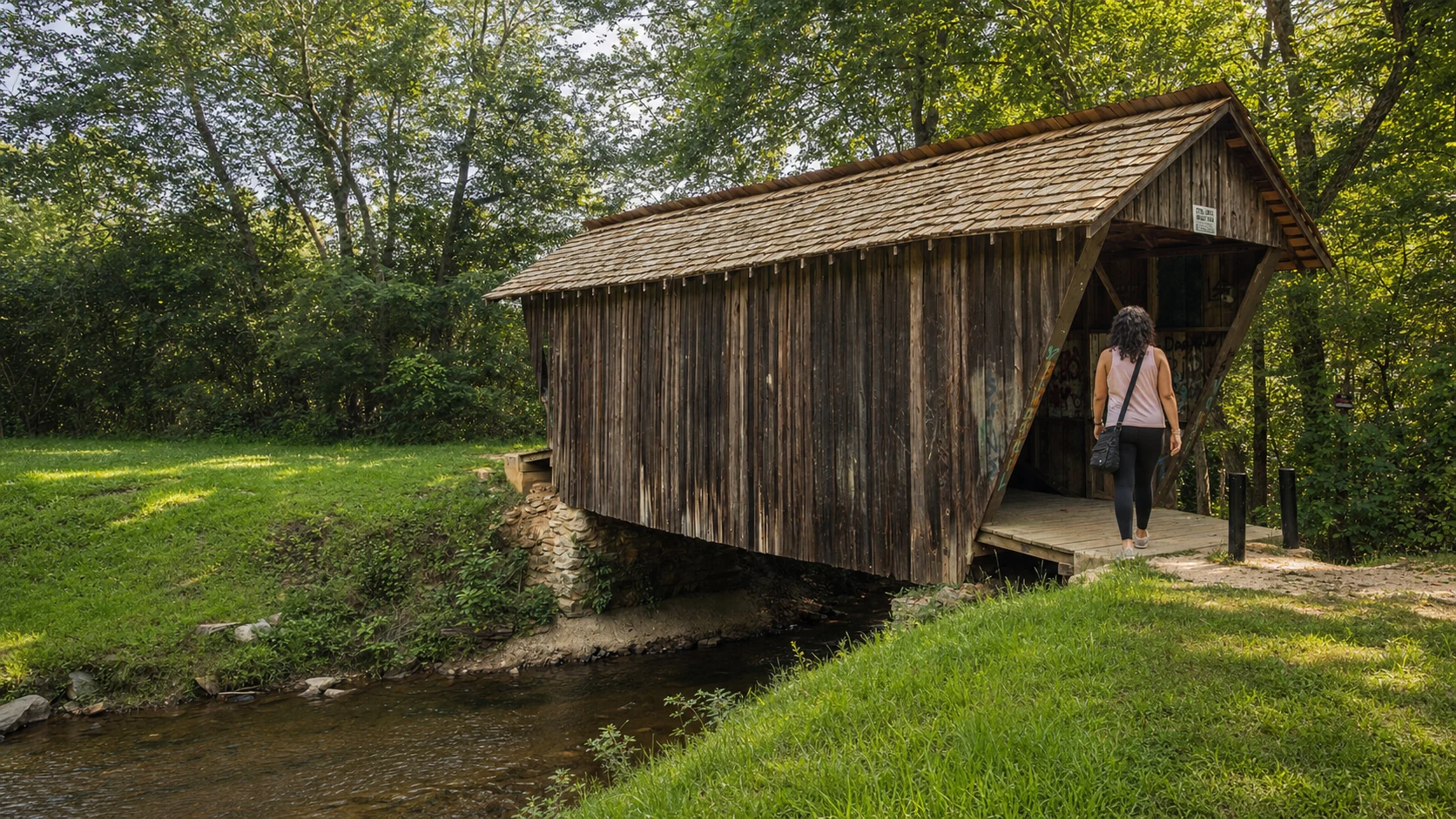
What sets the Stovall Mill Bridge apart is how small it is and how it was framed. It is often called the smallest covered bridge in Georgia, with a recorded length between 33 and 38 feet, a single span just one lane wide.
Unlike the larger bridges in the region that use the Town Lattice design, Stovall Mill uses a Queen-post truss, sometimes called a modified King-post. Two vertical posts are separated by a horizontal crosspiece, with iron rods often added for tension, which works well for shorter spans where the more complex lattice work isn't needed.
The bridge is timber, protected by a tin roof. That roof is why it's still standing. It kept the structural members dry and out of the rot that took down most uncovered wooden bridges of the era.
Hollywood and a Few Ghost Stories
The bridge turns up in the 1951 film I'd Climb the Highest Mountain, starring Susan Hayward and Rory Calhoun, which is part of how it earned its reputation as a romantic, rustic landmark.
Local lore says the bridge is haunted. It shows up regularly on lists of Georgia's "crybaby bridges," with stories of unseen babies crying or phantom horse-drawn carriages heard at night, usually tied back to the floods that have hit the creek over the years.
Planning Your Visit
Getting there: 2617 GA-255, Sautee Nacoochee, GA 30571, reachable via GA-75 and GA-255 from Helen.
Access: The bridge is open to pedestrians and closed to vehicle traffic. Admission is free.
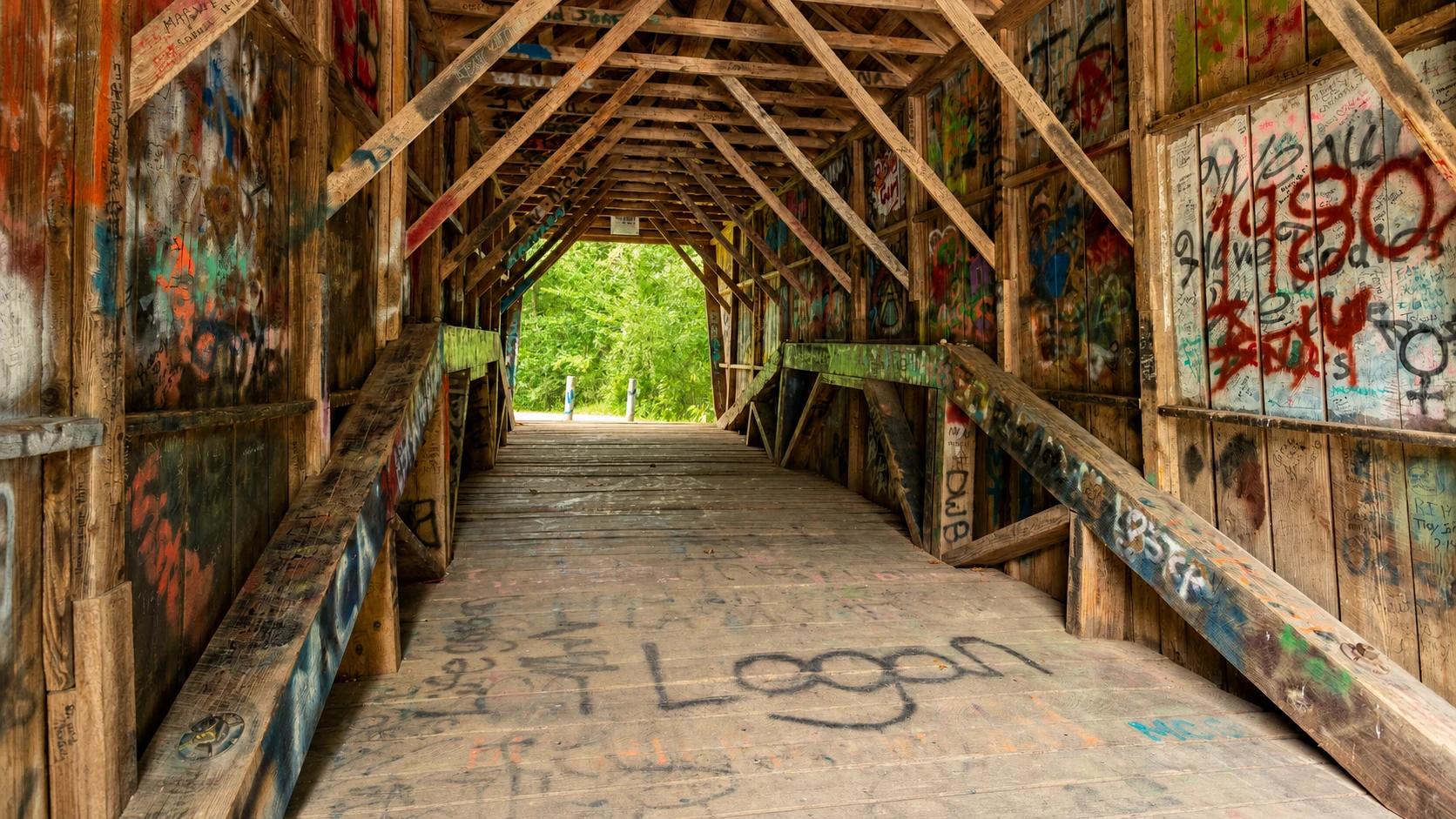
There's a picnic area on site, and the creek below is a popular spot for wading and swimming in summer. A historical marker from the Georgia Historical Society lays out the site's history. The bridge is structurally sound, though you'll notice a fair amount of graffiti on the interior timbers, which is common at historic sites that aren't monitored.
Why They Covered the Bridges
To appreciate North Georgia's covered bridges, it helps to picture the problem builders faced in the 1800s. The terrain here is full of creeks and rivers prone to flash flooding, Chickamauga Creek and the Broad River among them, and crossing them meant building something that could take a beating.
The Purpose of the Cover
Contrary to romantic notions that bridges were covered to shelter travelers or keep horses calm, the engineering reality was purely functional: longevity. An uncovered wooden bridge might last 10 to 20 years before the structural timbers rotted from exposure to rain and sun. A covered bridge, with its roof and siding protecting the truss, could last over a century.
The Two Main Truss Designs
Two designs show up again and again across North Georgia. The first is the Town Lattice truss, patented by architect Ithiel Town in 1820, which changed how bridges got built. It uses a web of closely spaced diagonal planks fastened with wooden pegs, called trunnels or tree-nails, at each intersection.
The appeal was cost. The Town Lattice did away with the massive, hard-to-find timbers and the fussy joinery of older designs, so relatively unskilled crews could build one out of standard dimension lumber, "built by the mile and cut off by the yard." For rural Georgia counties, that made all the difference. You can see it on the Watson Mill and Cromer's Mill bridges.
The second is the King-post and Queen-post family, the simpler designs used on shorter crossings like Stovall Mill.