Black Rock Mountain State Park
Georgia's highest state park - 1,743 acres of mountain wilderness perched at 3,640 feet with views that stretch across four states
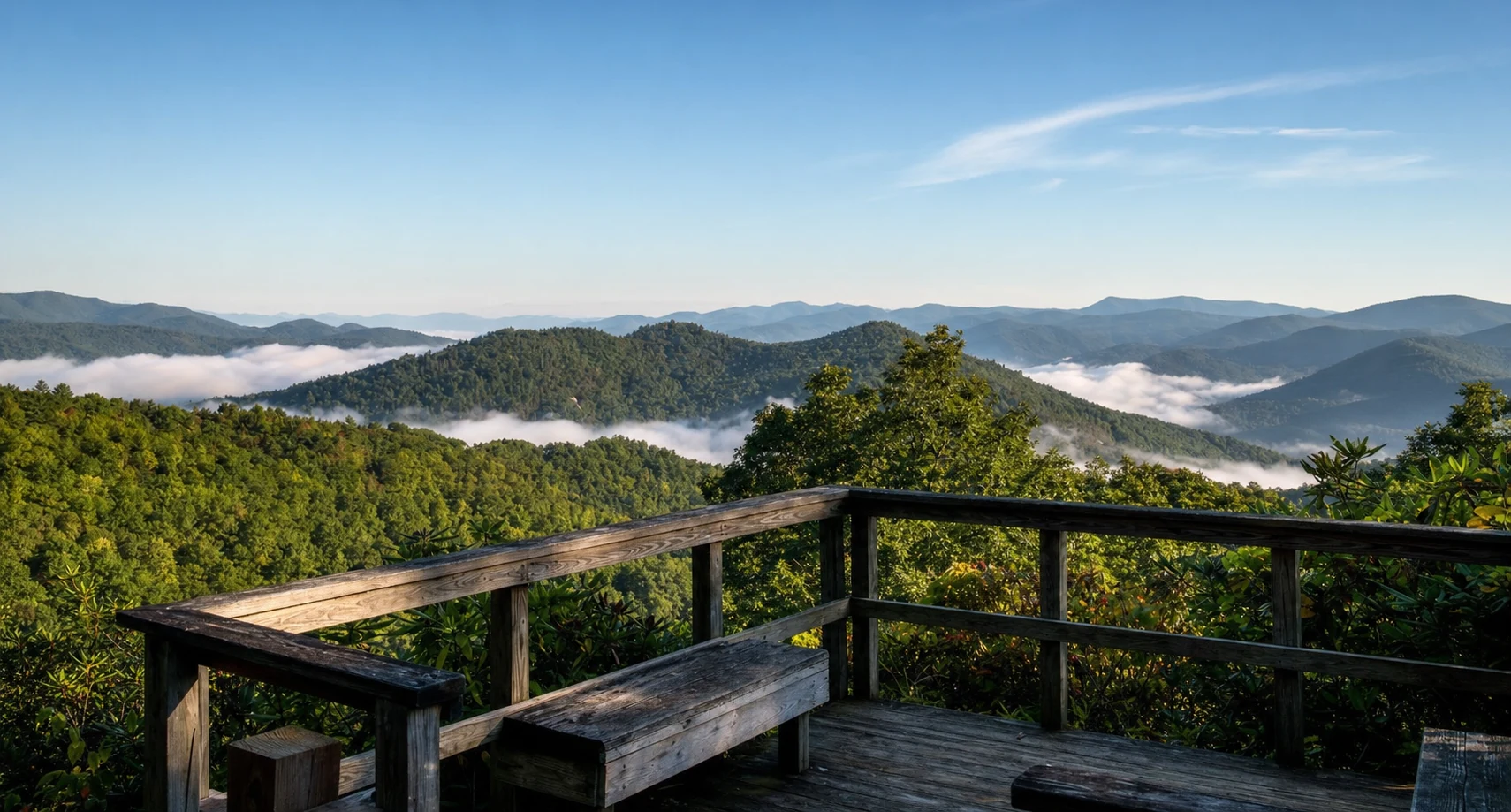
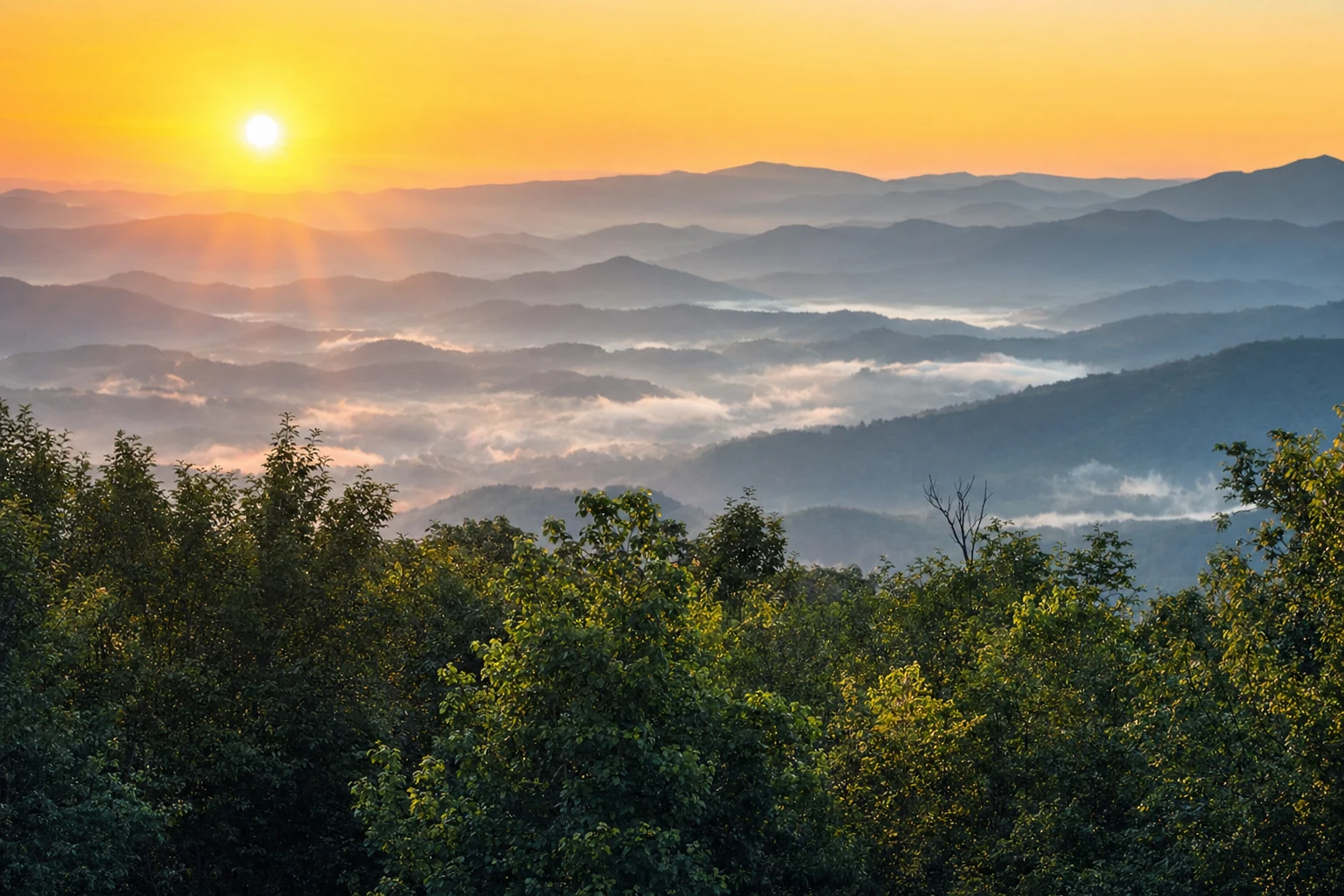
Black Rock Mountain State Park sits at 3,640 feet above sea level, making it the highest state park in Georgia. Spread across 1,743 acres of mountain terrain near the small town of Mountain City in Rabun County, the park occupies a commanding position along the Eastern Continental Divide, where rainwater falling on the western slopes drains toward the Gulf of Mexico and water on the eastern slopes flows toward the Atlantic Ocean. From the overlooks near the summit, the views stretch an astonishing 80 miles across four states - Georgia, North Carolina, South Carolina, and Tennessee - a panorama of ridgeline after ridgeline fading into the blue distance.
The park takes its name from the dark biotite gneiss rock outcrops that are exposed along the mountain's face, their surface glinting almost black in the sunlight. The drive from Helen takes about one hour, winding through some of the most beautiful mountain country in Rabun County, and the park itself feels like a world apart - quieter, higher, and wilder than most destinations in the region. It is a place where the air is noticeably cooler, the forests feel older, and the sense of elevation is palpable.
A Mountain Legacy
From one man's vision to Georgia's highest protected landscape
The story of Black Rock Mountain as a state park begins with John V. Arrendale (1878-1972), a Rabun County businessman and civic leader who began acquiring land on the mountain in 1938. Arrendale's vision was to preserve the mountain's remarkable beauty for public enjoyment, and through decades of patient land acquisition, he assembled the core of what would become the park. Black Rock Mountain State Park was officially established in 1952, giving Georgia its highest protected landscape and preserving one of the most ecologically significant mountain environments in the state.
The park expanded significantly in 1995 with a 301-acre addition funded through the state's Preservation 2000 program, pushing the total protected area to its current 1,743 acres. On April 27, 2011, an EF-2 tornado cut a swath through the park, toppling trees and damaging trails - a dramatic reminder of the powerful weather systems that sweep across these high ridgelines. The park recovered and rebuilt, and the regenerating forest along the tornado's path has become an unexpected window into the resilience of Appalachian ecosystems.
Trails & Natural Beauty
From a gentle waterfall walk to a strenuous backcountry loop
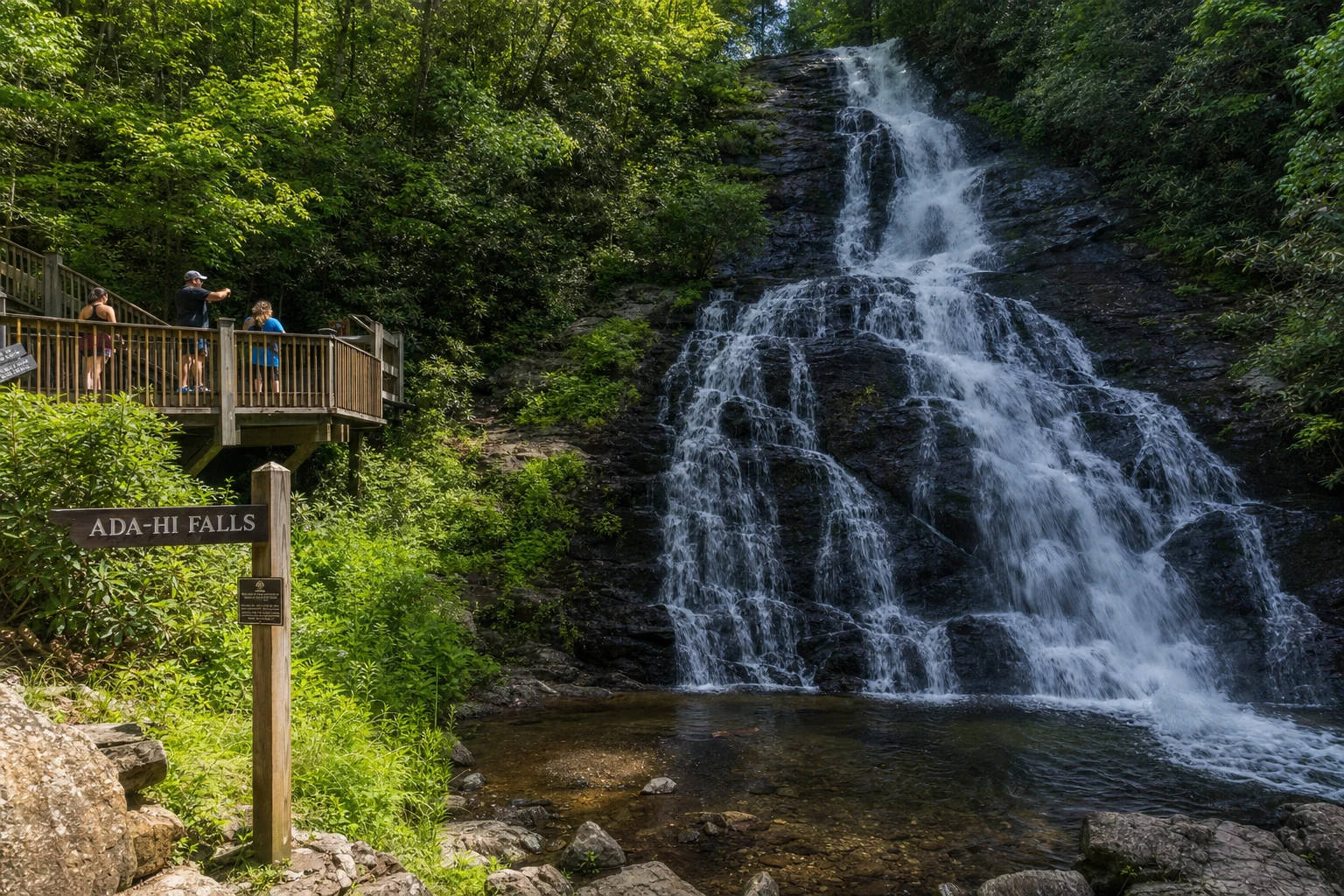
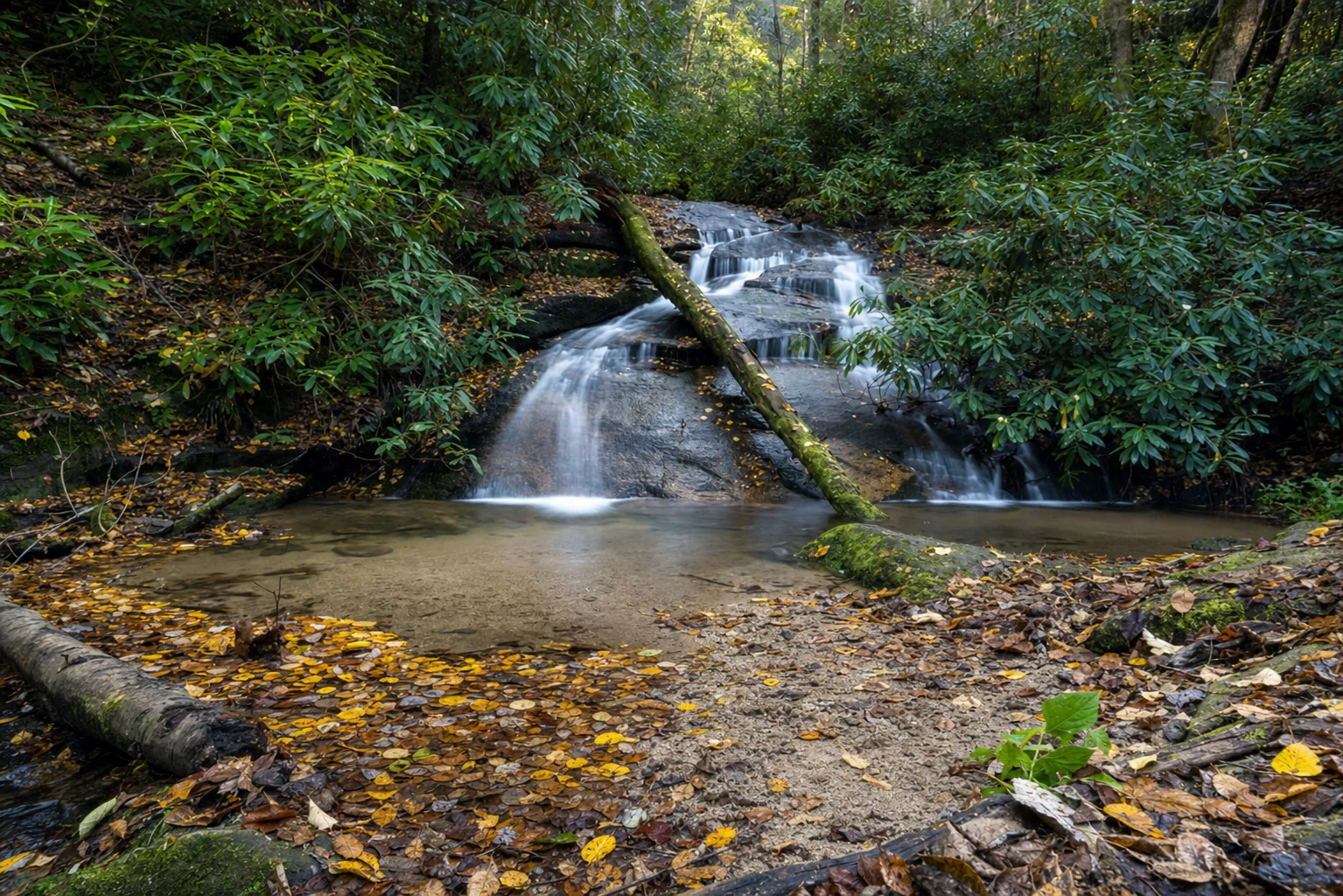
Black Rock Mountain offers four distinct trails that showcase the full range of the park's terrain. The Ada-Hi Falls Trail is the gentlest option - a 0.25-mile one-way walk that descends to a small but lovely waterfall tucked into a shaded cove. The name "Ada-Hi" comes from the Cherokee word meaning "place in the woods," and the trail lives up to its name, winding through a cool forest of hemlock and rhododendron to the falls. It is perfect for families with young children or anyone who wants a quick nature fix.
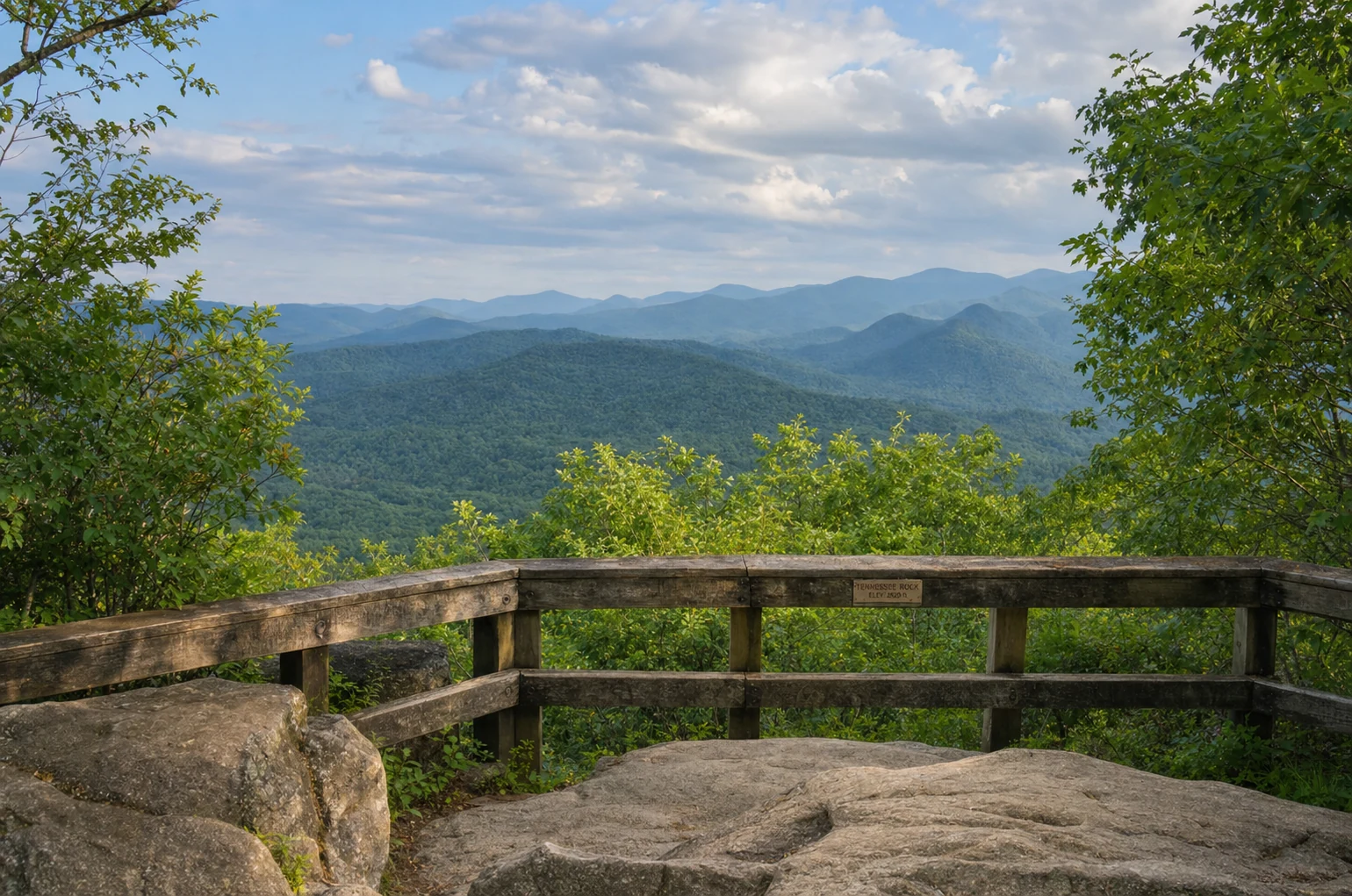
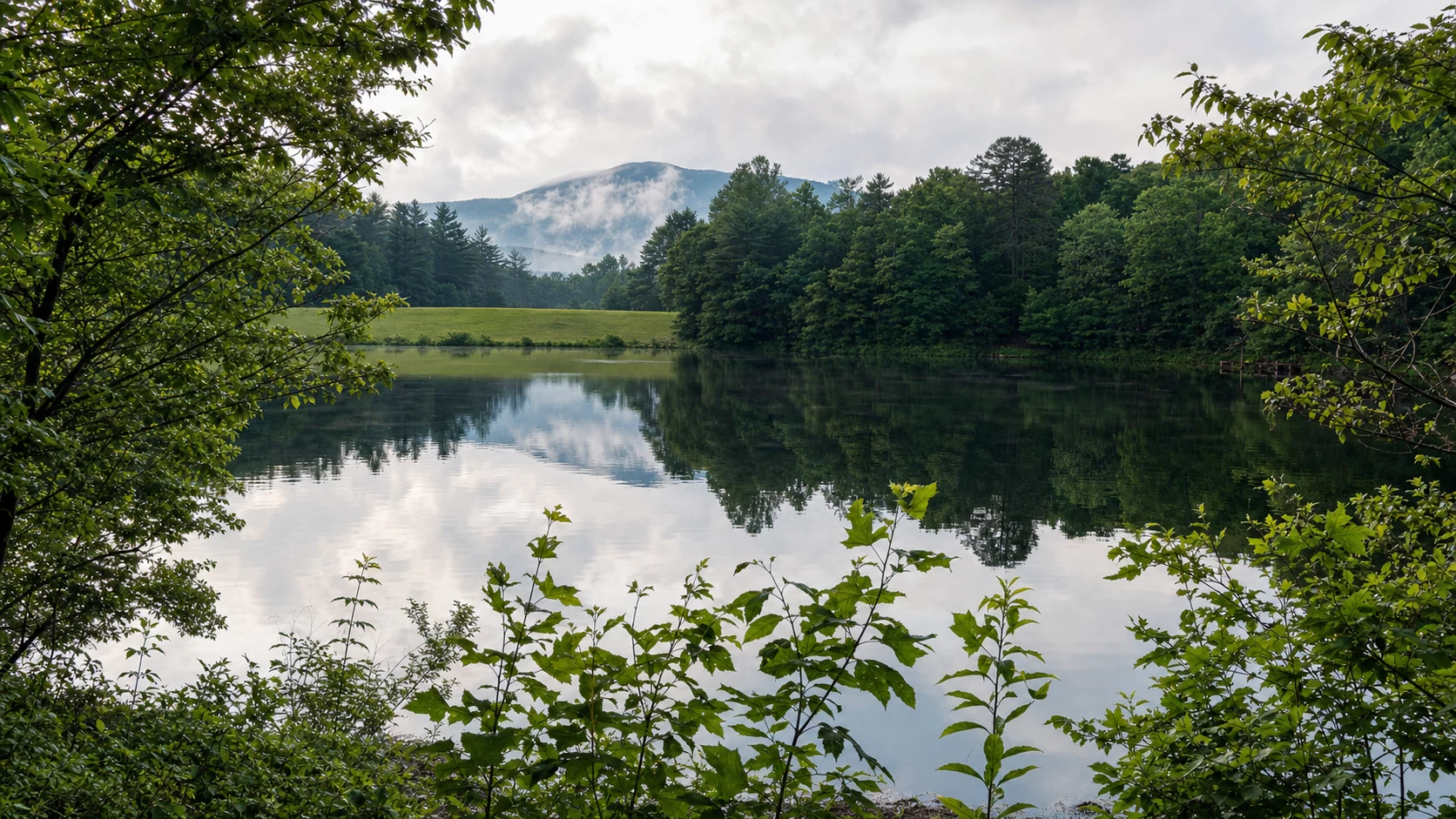
The Black Rock Lake Trail is an 0.85-mile loop completed in 2007 that circles a small mountain pond, offering easy walking through a diverse forest with excellent birding opportunities. The Tennessee Rock Trail is the park's most popular moderate hike - a 2.2-mile loop that climbs approximately 560 feet to an exposed rock outcrop with sweeping views of the surrounding mountains and valleys. The trail passes through mixed hardwood and evergreen forest and features several viewpoints along the way.
For experienced hikers, the James E. Edmonds Backcountry Trail is a challenging 7.2-mile loop rated strenuous. The trail traverses the full breadth of the park, climbing ridgelines, dropping into hollows, and passing through some of the most remote and beautiful terrain in northeast Georgia. Backcountry camping sites are available along the route for those who want to turn the hike into an overnight trip. The elevation changes are significant, and the trail can be rocky and root-covered in places, but the solitude and scenic rewards are exceptional.
Cottages, Camping & Overnight Stays
Mountain lodging from tent sites to fully equipped cottages
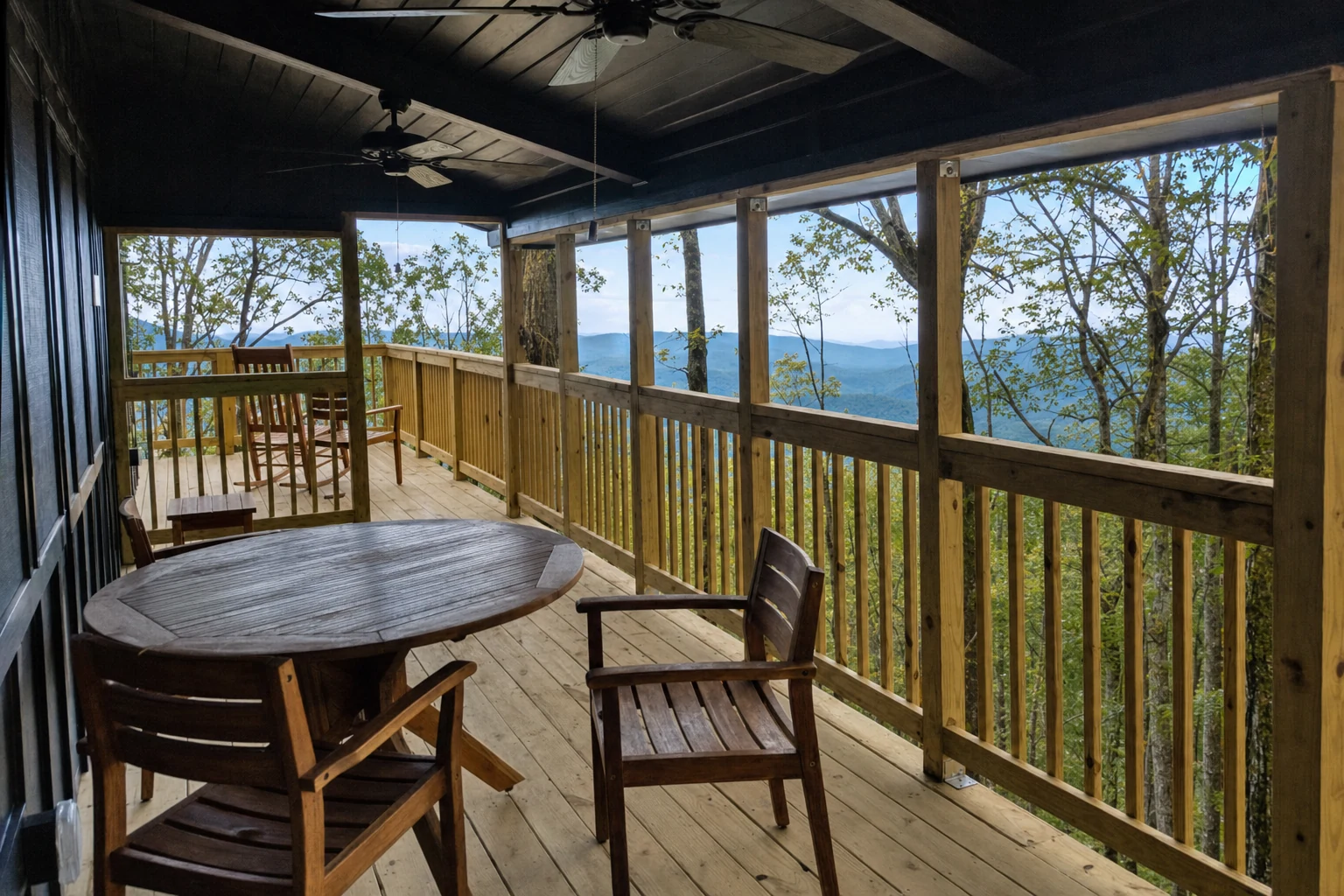
Black Rock Mountain offers 10 cottages in two- and three-bedroom configurations, each featuring full kitchens, fireplaces, linens, and screened porches with mountain views. The cottages are well-maintained and thoughtfully positioned among the trees for privacy, and waking up in one at 3,640 feet - with the morning mist filling the valleys below and birdsong rising from the forest - is one of those mountain experiences that words do not quite capture.
The campground offers 44 drive-in sites with water and electric hookups, suitable for both tents and RVs, plus 12 walk-in tent sites for those who prefer a slightly more secluded experience. Four backcountry campsites along the Edmonds Trail provide the most remote option. All developed campsites include picnic tables, fire rings, and access to bathhouse facilities. The high elevation means summer nights are noticeably cooler here than in the valleys - a natural air conditioning that makes Black Rock Mountain particularly appealing for warm-weather camping.
Visitor's Perspective
Practical tips for making the most of your visit
- Start at the overlook. The main overlook near the park entrance offers the full 80-mile, four-state panorama. Visit early in the morning for the clearest views and the most dramatic light.
- Tennessee Rock Trail is the must-do hike. At 2.2 miles with 560 feet of elevation gain, it offers the best views-to-effort ratio in the park. Allow 1.5 to 2 hours and bring a camera.
- Bring warm layers year-round. At 3,640 feet, temperatures run 10–15 degrees cooler than the valleys. Summer mornings can be surprisingly chilly, and fall evenings require real jackets.
- Combine with Tallulah Gorge. The two parks are roughly 30 minutes apart and make for an incredible full-day combination - the heights of Black Rock Mountain paired with the depths of the gorge.
- Fall foliage peaks here first. Because of the elevation, autumn color arrives at Black Rock Mountain one to two weeks before the lower valleys. Late October is typically prime time for peak color at the summit.
More to Explore
Nearby destinations and helpful resources