Weather in the North Georgia Mountains
Seasonal temperatures, elevation effects, rainfall patterns, and what to pack for the mountains around Helen.
The weather in the North Georgia mountains keeps you on your toes. Pack a sweater for Brasstown Bald even in August, and have tire chains ready if you are visiting in January. The single best piece of advice for any trip to Helen: check the forecast for the peaks, not just the valley. The mountains tell a colder, wetter, more unpredictable story than the town does.
What to Know Before You Go
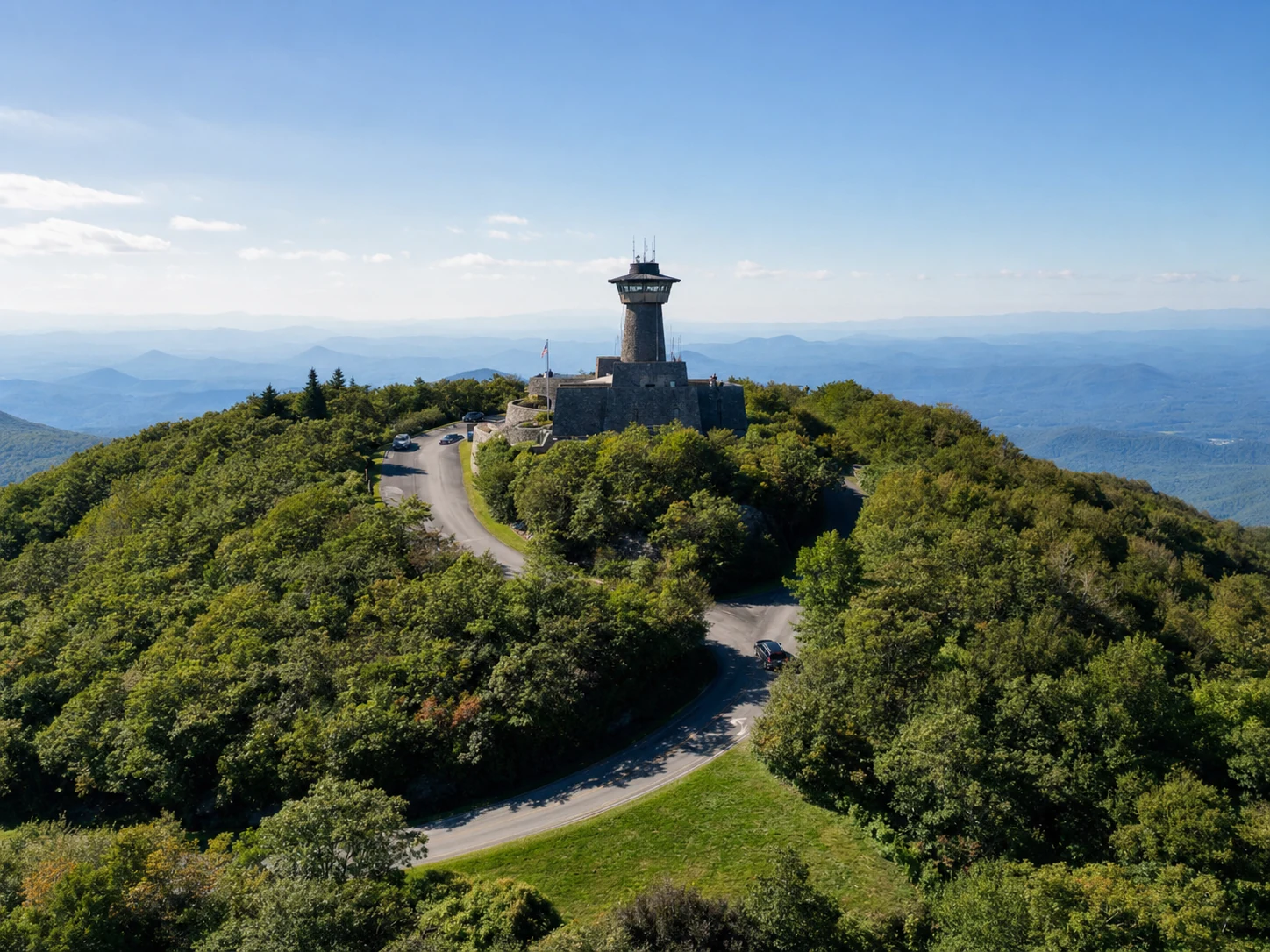
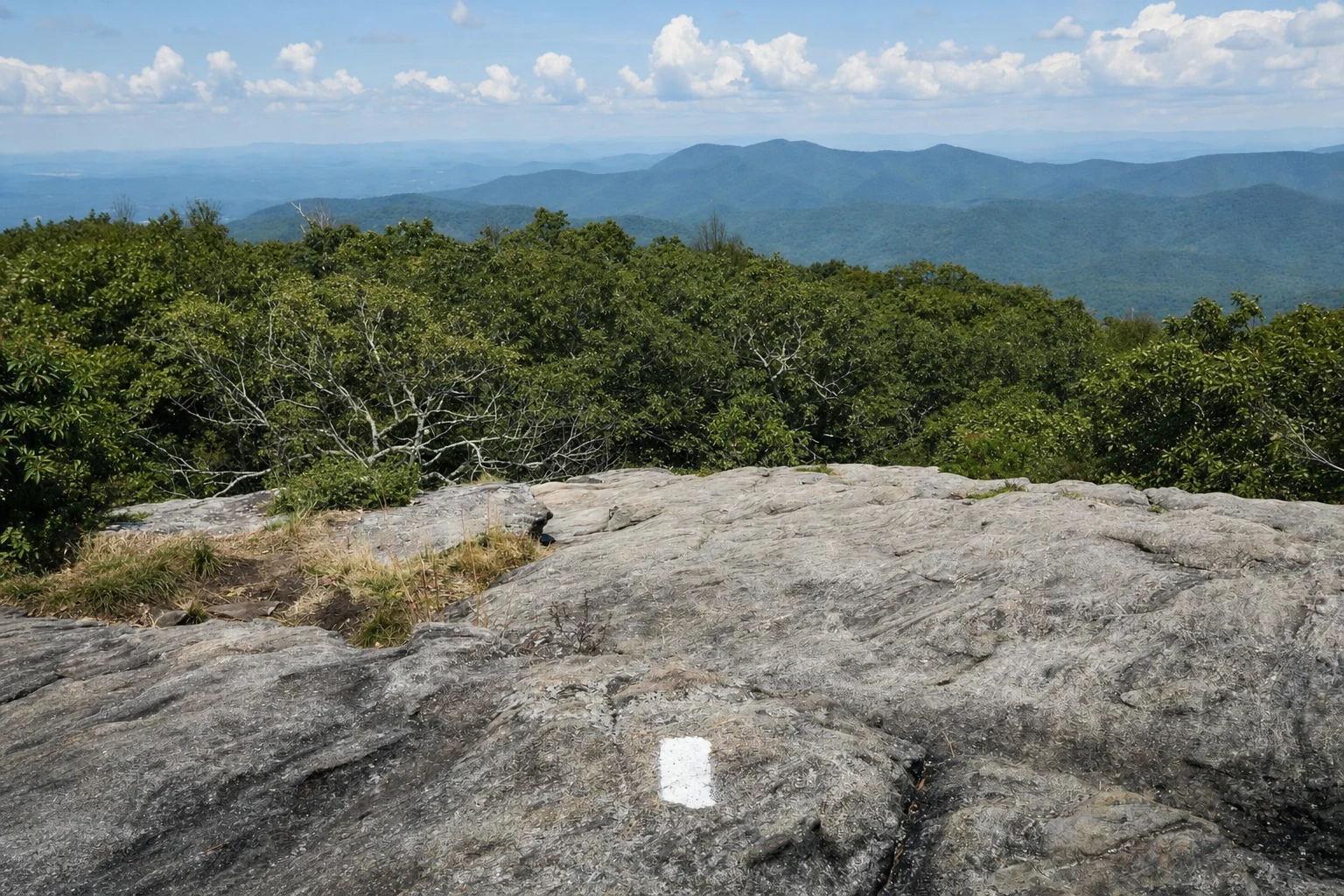
Elevation is the big one. Temperatures drop fast as you climb, and the summit of Brasstown Bald (4,784 ft) usually runs 10 to 15°F cooler than the town of Helen (1,447 ft).
This is also one of the wettest corners of the Eastern U.S. Annual rainfall often tops 65 to 70 inches, so bring good rain gear no matter the season.
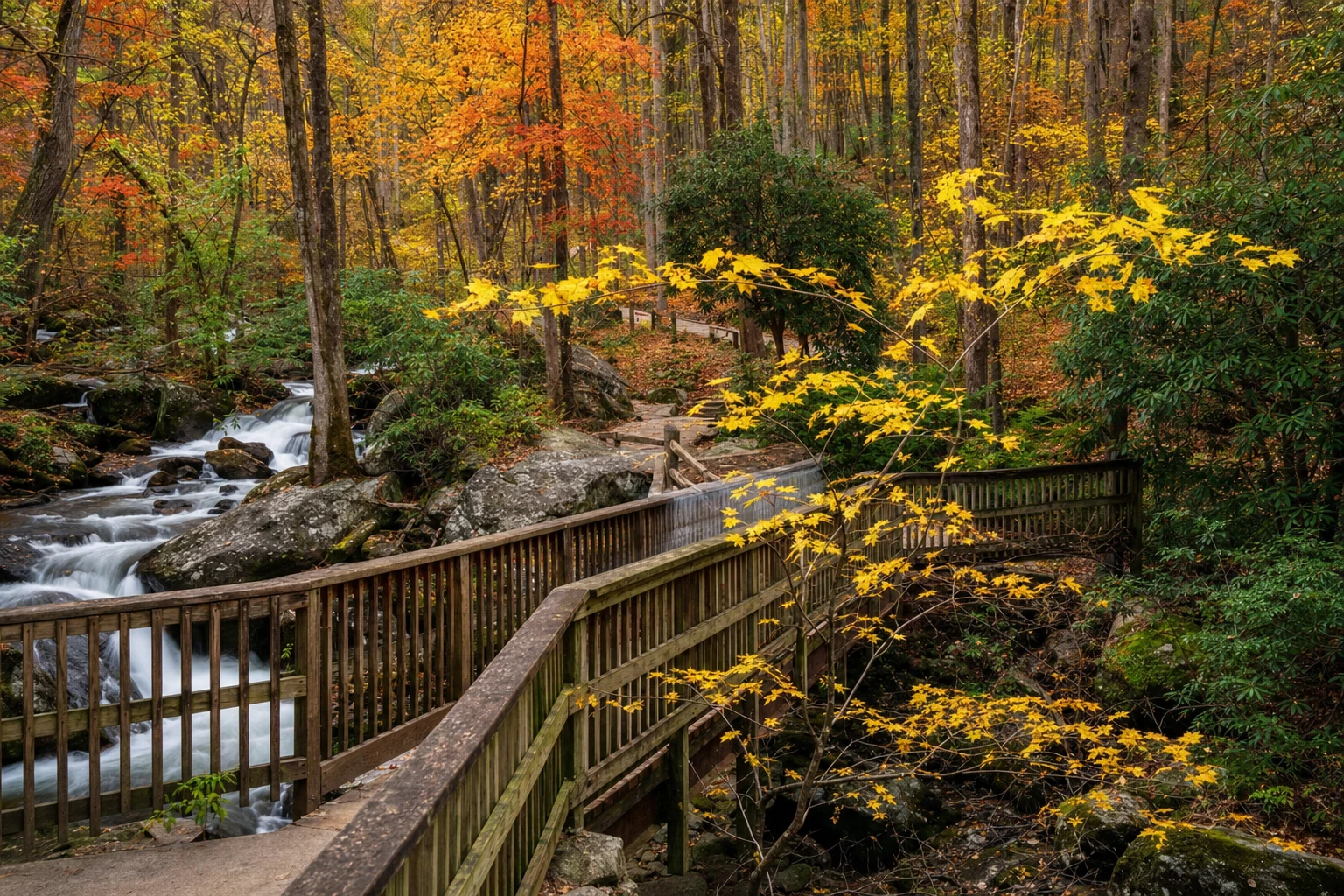
Unlike the Deep South, North Georgia gets four real seasons, including a colorful autumn and a winter that can bring real snow and ice to the higher elevations.
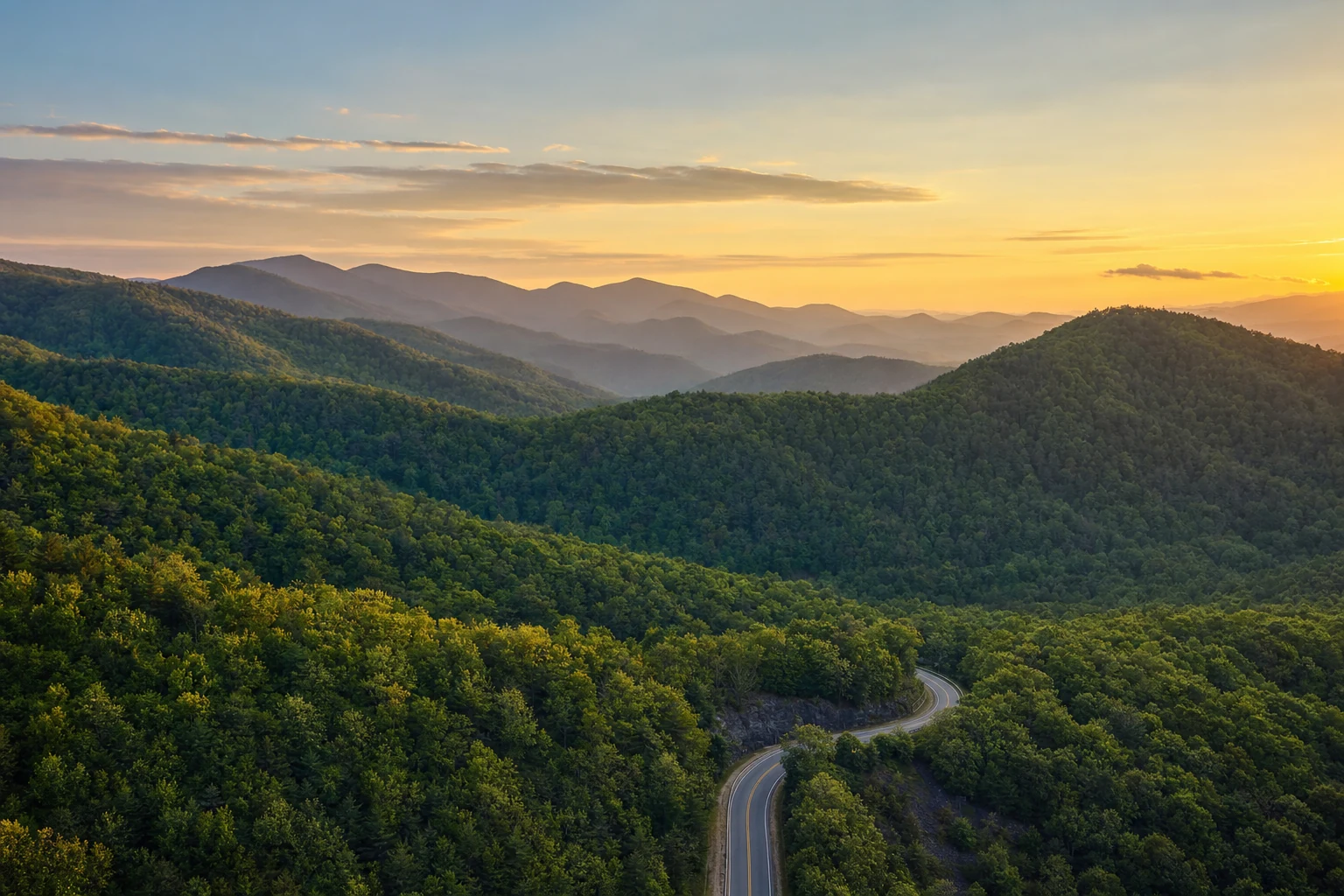
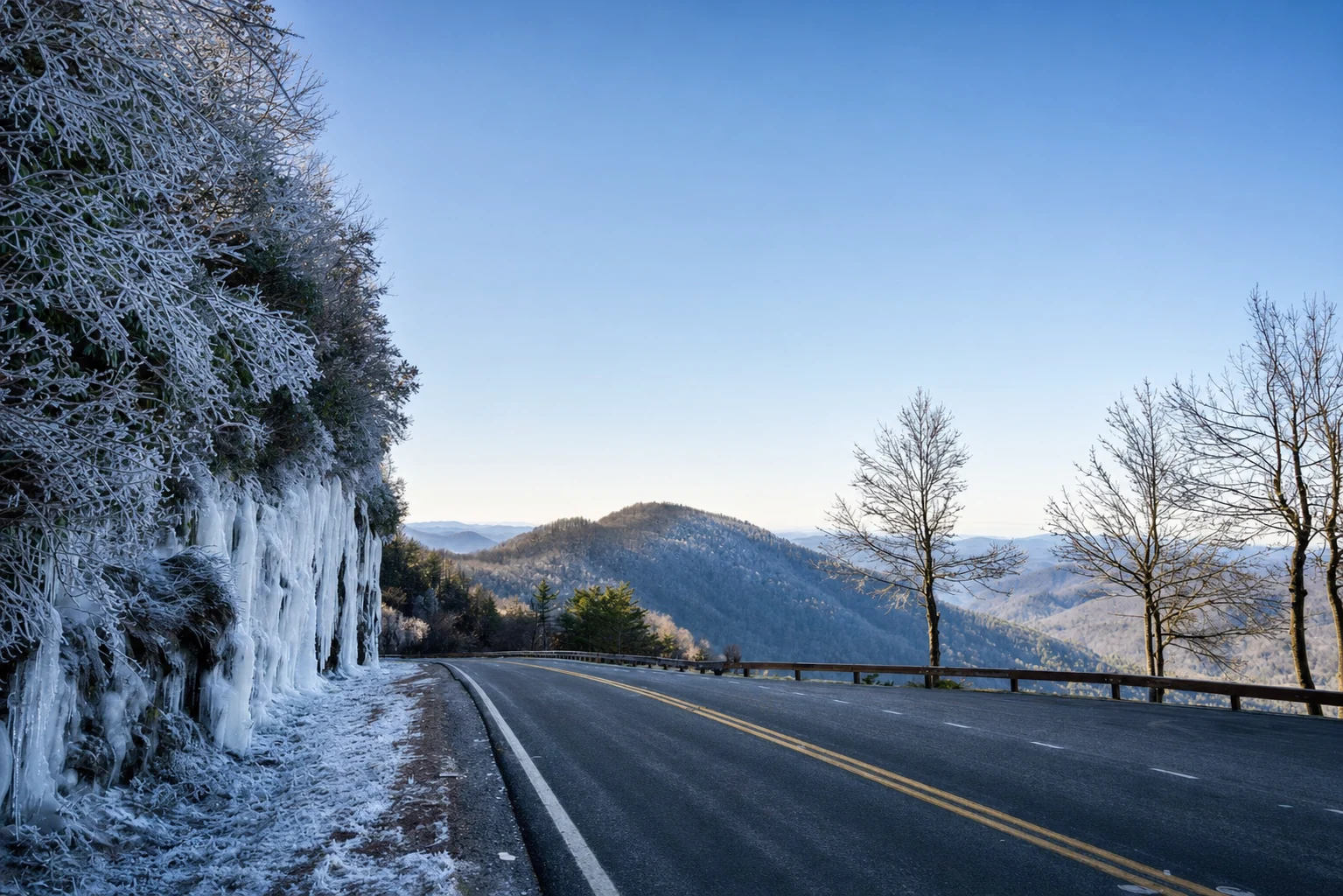
Keep an eye out for spring tornado season (March through May) and the occasional winter storm that can close mountain passes like the Richard B. Russell Scenic Highway.
How Elevation Changes the Temperature
The biggest factor in North Georgia weather is the environmental lapse rate: temperatures drop about 3.5°F to 5°F for every 1,000 feet of elevation you gain. That creates two very different climate zones within a short drive of each other. Down in the Valley Floor (Helen, Unicoi State Park, Nacoochee Valley) it might be pleasant. Up in the High Country (Brasstown Bald, Richard B. Russell Scenic Highway) it could be 15 degrees colder with fog rolling in.
Escaping the Atlanta Heat
Visitors escaping Atlanta often seek relief from the "Urban Heat Island" effect. Atlanta's dense concrete and asphalt absorb and retain heat, keeping overnight lows uncomfortably high. In contrast, the North Georgia mountains naturally shed heat rapidly after sunset.
Atlanta vs. Helen: On a typical mid-summer day, while Atlanta may register heat indices near 105°F with dew points in the oppressive 70s, the mountain valleys around Helen benefit from "cold air drainage" at night, often dropping into the 60s.
The Elevation Bonus: Higher elevations like Brasstown Bald rarely see temperatures exceed 84°F, even during the hottest heat waves, effectively bypassing the suffocating humidity found in the Piedmont region.
Rain, Snow, and Ice
The Southern Appalachians get enough rain to qualify as a temperate rainforest. Moist air from the Gulf of Mexico flows north, hits the steep wall of the Blue Ridge, and gets pushed up. As it rises it cools and dumps its moisture. That is orographic lift, and it is the reason this area gets so much rain.
Rainfall Patterns
Annual Totals: Helen and the surrounding White County area receive between 66 and 72 inches of rain annually. This is nearly double the U.S. average and significantly higher than Atlanta’s 50 inches.
Wettest Month: March and December are historically the wettest months, often seeing 6–7 inches of accumulation.
Driest Month: October is typically the driest and most stable month, making it the premier time for hiking and fall foliage viewing.
Snowfall and Winter Storms: The North Georgia mountains get occasional light snow and the odd winter storm most winters, with more accumulation at higher elevations like Brasstown Bald than down in the valleys.
Fog and Low Clouds
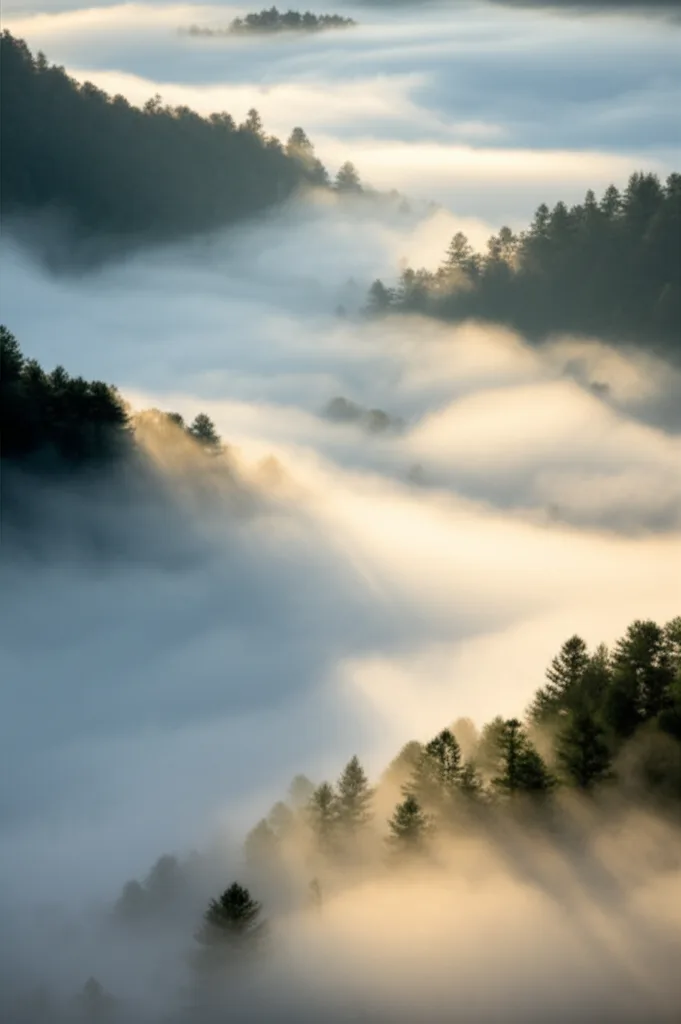
The North Georgia mountains are famous for their "smoky" appearance, a result of both biological and meteorological processes.
Valley Fog and Cold Air Drainage
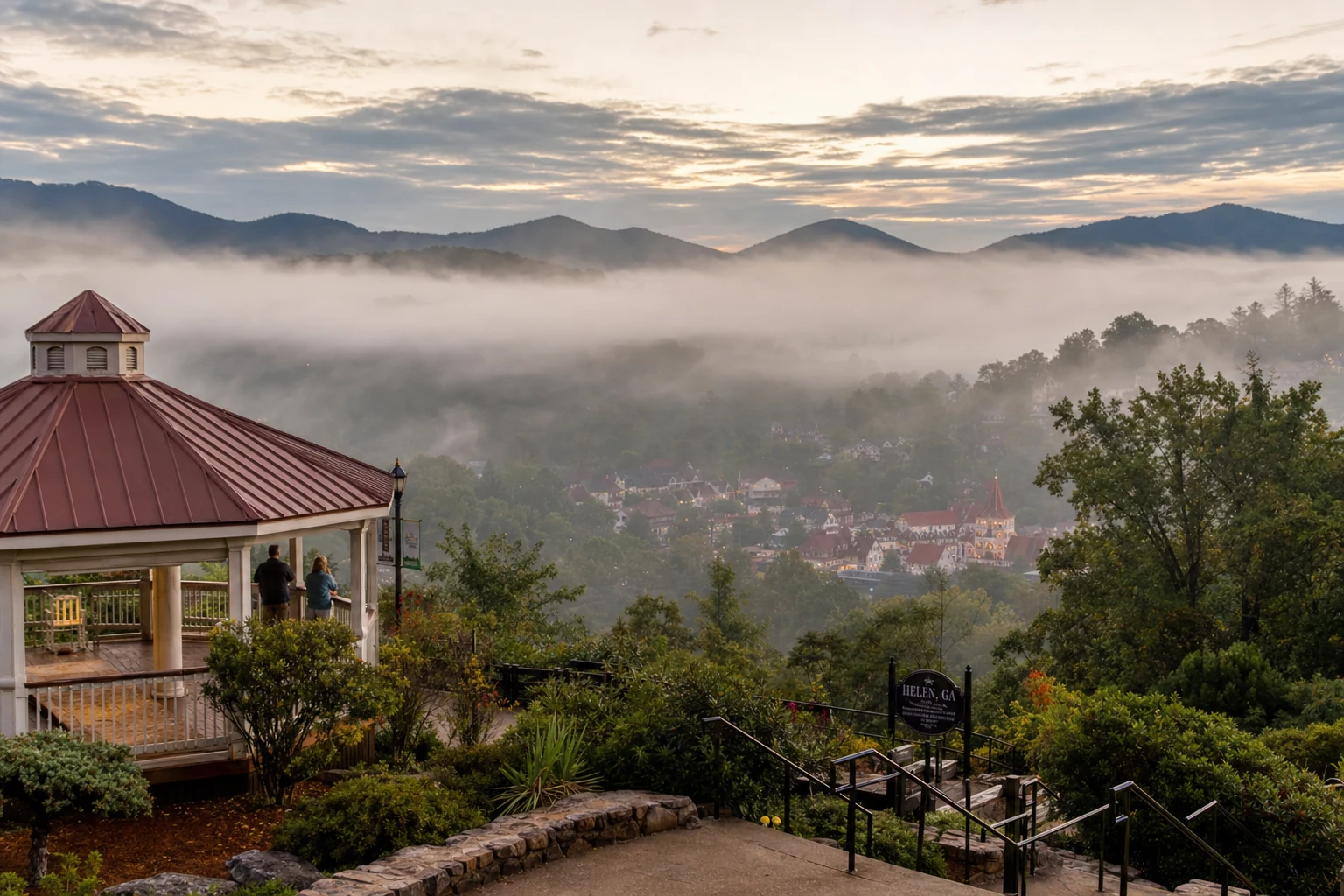
In autumn and spring, clear skies and calm winds create ideal conditions for radiational cooling. The ground cools rapidly at night, chilling the air immediately above it. This dense, cold air slides down the mountain slopes and pools in the valleys (like the Nacoochee Valley in Helen), condensing into thick fog banks while the mountain peaks remain clear. This is often densest around sunrise.
Mountain Mist
Conversely, "upslope fog" occurs when moist winds are pushed up the mountains, capping peaks like Brasstown Bald and Blood Mountain in clouds while the valleys remain clear. Hikers should be prepared for sudden visibility drops to less than 50 feet on ridge lines.
Severe Weather to Watch For
People underestimate how fast mountain weather can turn. The terrain channels wind and hides approaching storms behind ridges. Always check the National Weather Service forecast before going into the mountains.
Tornado Season: The primary threat window is March through May, with a secondary season in November.
Historical Context: The Palm Sunday Outbreak of March 27, 1994, devastated the region. An F3 tornado tore through White, Dawson, and Lumpkin counties, killing three people and causing massive destruction along a 45-mile path.
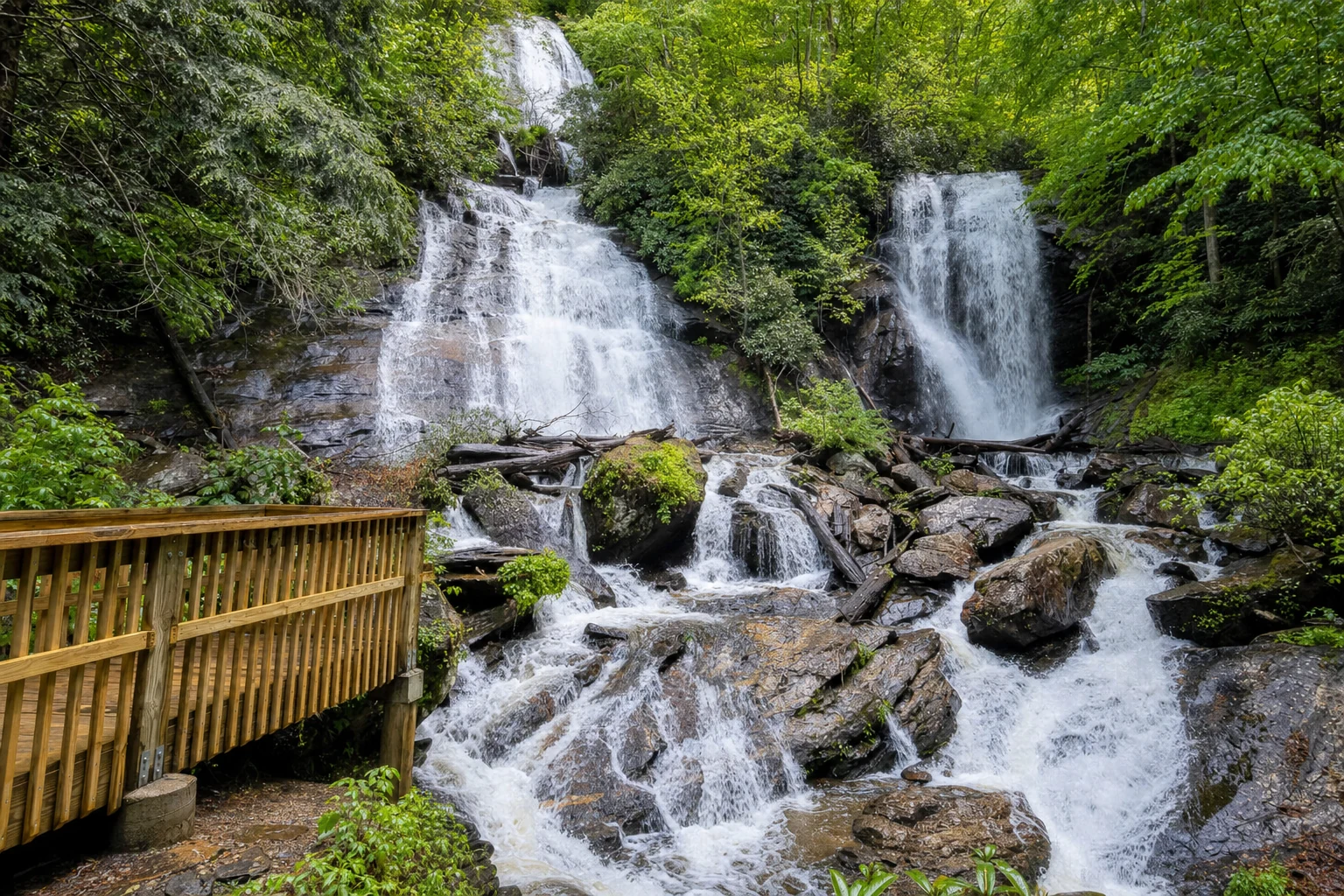
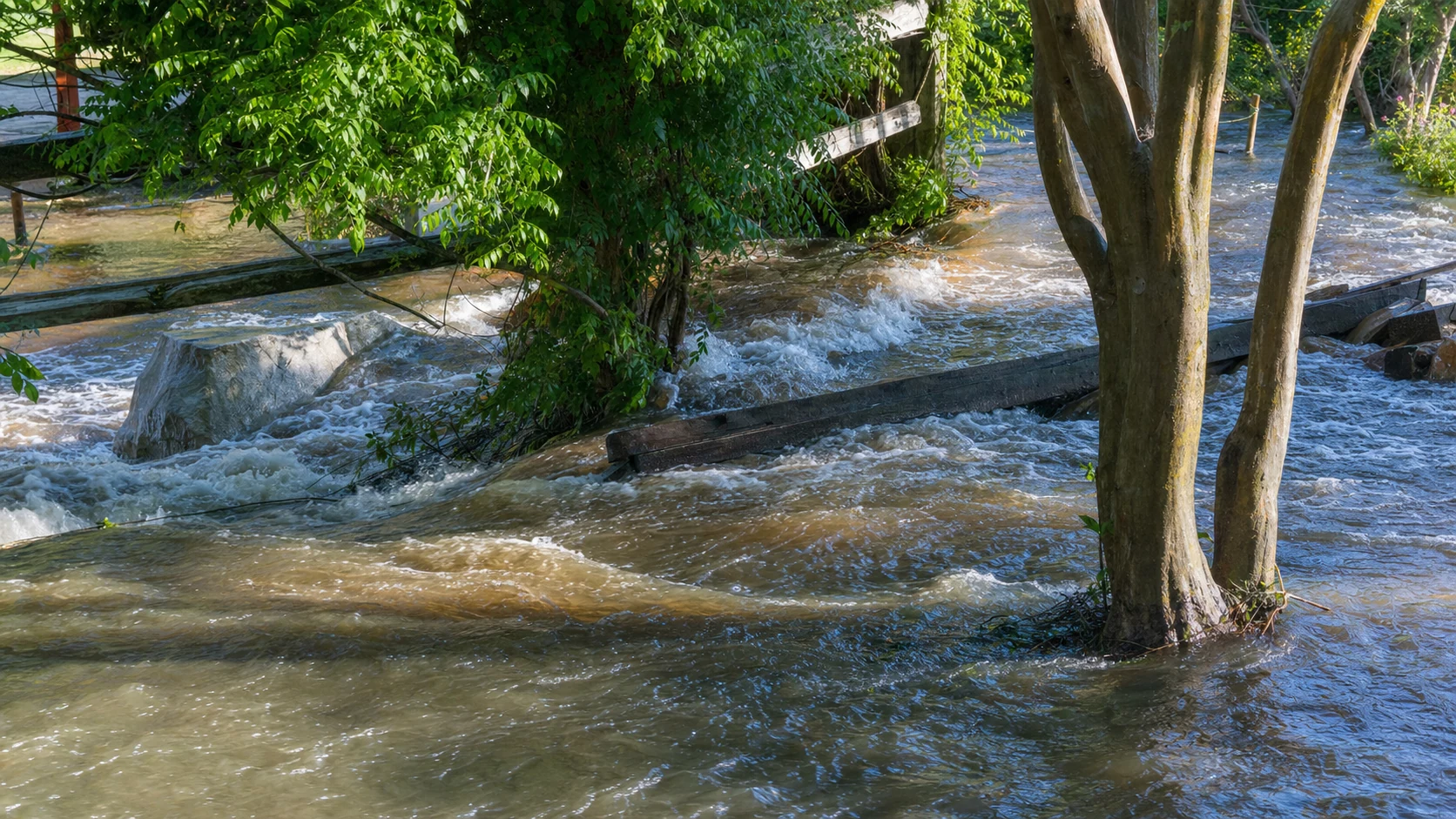
Flash Flooding: With steep terrain and rocky soil, heavy rains (common in summer thunderstorms and tropical systems) cause creeks to rise instantly. Smith Creek (at Anna Ruby Falls) and the Chattahoochee River (downtown Helen) are prone to rapid swelling.
Tropical Impact: In September 2017, Tropical Storm Irma brought sustained winds of 30-45 mph and gusts up to 65 mph to the mountains, toppling thousands of trees and causing widespread power outages.
Safety Tip: In the event of a Tornado Warning, seek shelter in a substantial building on the lowest floor. If you are in a rental cabin, identify the safest interior room (usually a bathroom or closet) immediately upon arrival.
What to Pack, Season by Season
Spring (March to May)
The Vibe: Erratic. Can be 75°F one day and near freezing the next. High river levels make for exciting whitewater but dangerous wading.
Pack: Waterproof hiking boots (trails will be muddy), a heavy fleece or softshell jacket, and a rain shell. Dress in layers.
Key Event: Wildflower blooms (Trillium, Lady Slipper) begin in late March/early April.
Summer (June to August)
The Vibe: Warm and humid days, pleasantly cool nights. Afternoon thunderstorms are clockwork-regular.
Brasstown Bald: The Essentials
Brasstown Bald Visitor Center & Recreation Area
Description: The highest point in Georgia. On clear days, the Atlanta skyline (85 miles away) is visible.
Address: 2941 Hwy 180 Spur, Hiawassee, GA 30546.
Phone: (706) 896-2556.
Hours: Daily 10:00 AM – 5:00 PM (Season typically April–December).
Pricing: ~$8.00 per person (16+), includes shuttle. $5.00 admission in off-season (no shuttle).
Related Imagery from Around Helen