The Dahlonega Gold Museum
America's first gold rush, housed in a historic courthouse with gold coins, mining exhibits, and panning
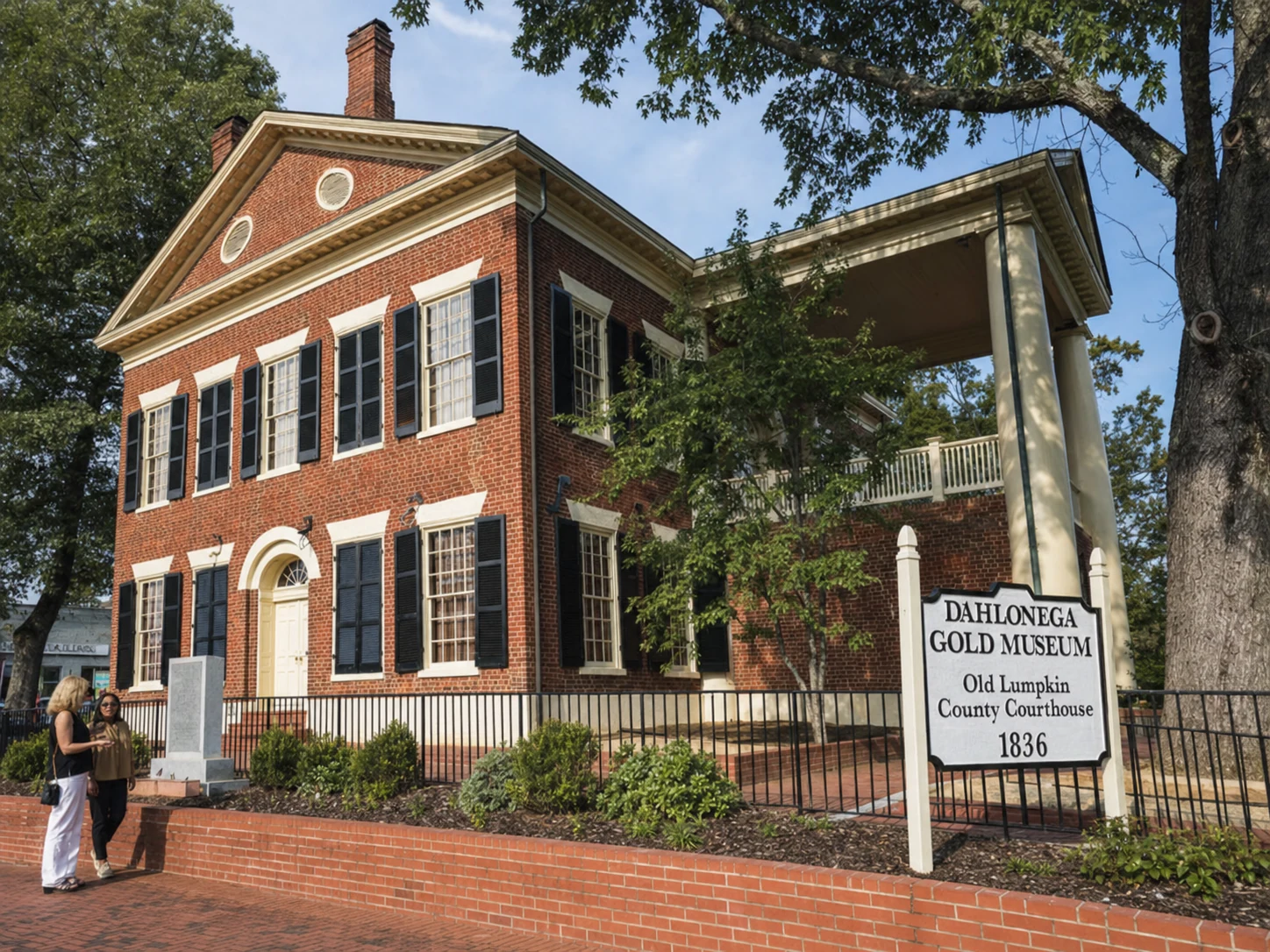
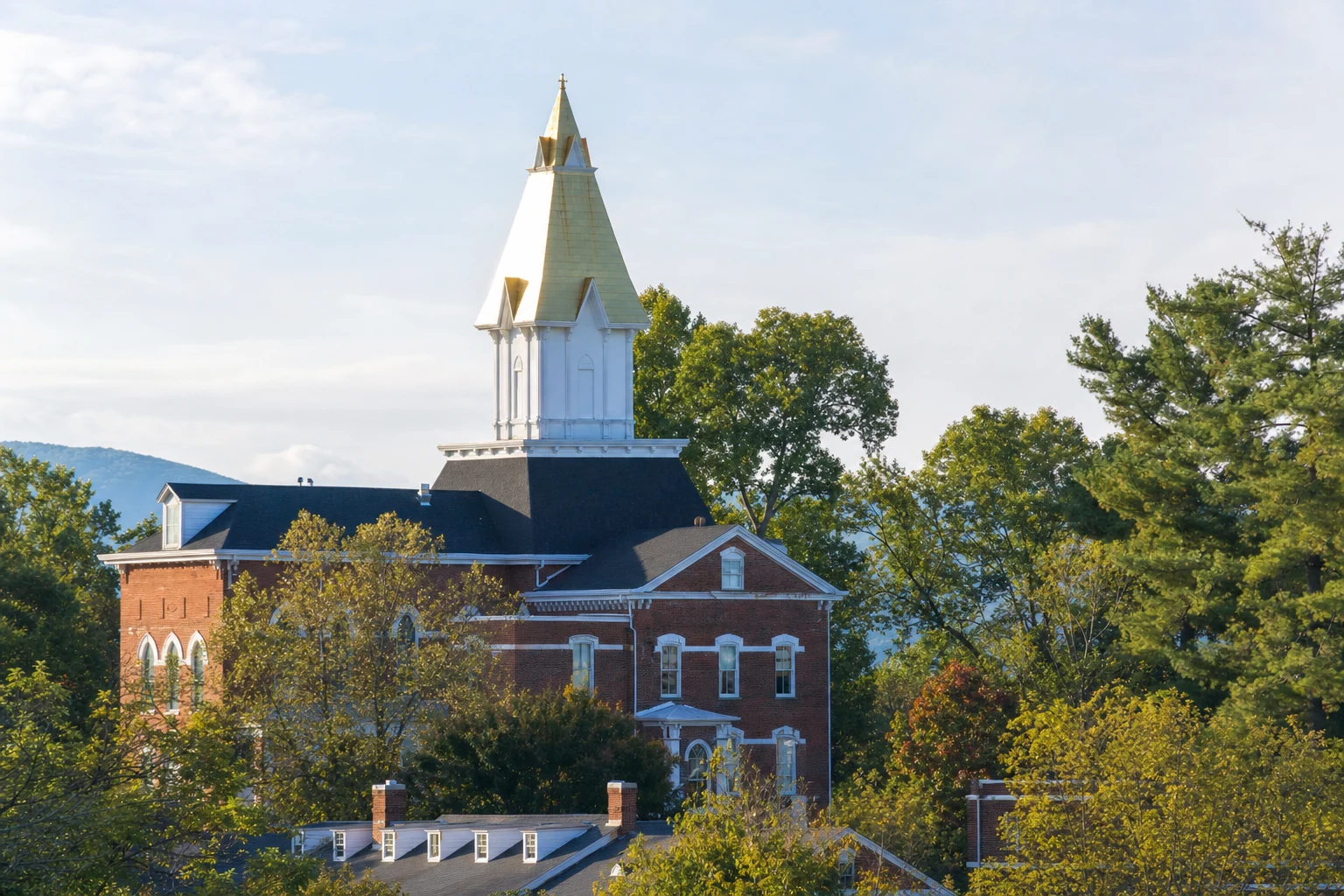
Dahlonega, not California, was the site of the country's first major gold rush, back in 1828. The Dahlonega Gold Museum sits in the 1836 Old Lumpkin County Courthouse, the oldest surviving courthouse in the state, and even the bricks carry trace amounts of gold from the local clay.
What to Know Before You Go
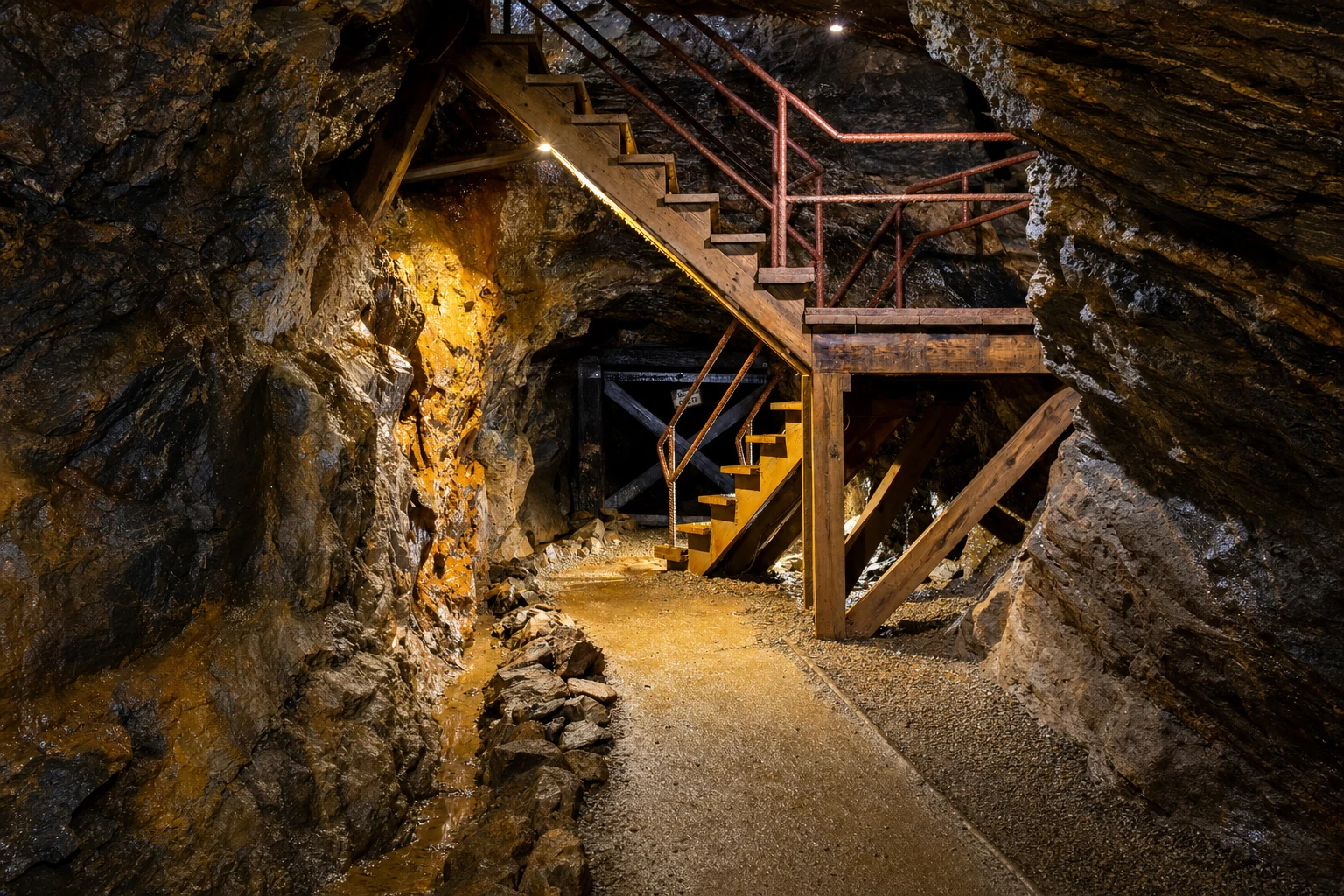
A U.S. Branch Mint operated here from 1838 to 1861, producing over $6 million in gold coinage with the rare "D" mint mark, and the museum holds a complete set of those coins. Nearby you can go 200 feet underground at Consolidated Gold Mine or pan the historic open pits at Crisson Gold Mine. This is also where the phrase "Thar's gold in them thar hills" comes from, coined not by a Western prospector but by Dahlonega's own Dr. M.F. Stephenson. The museum is open daily (Sunday hours vary), with admission running $3.50 to $10.00.
The Lure of the Yellow Money
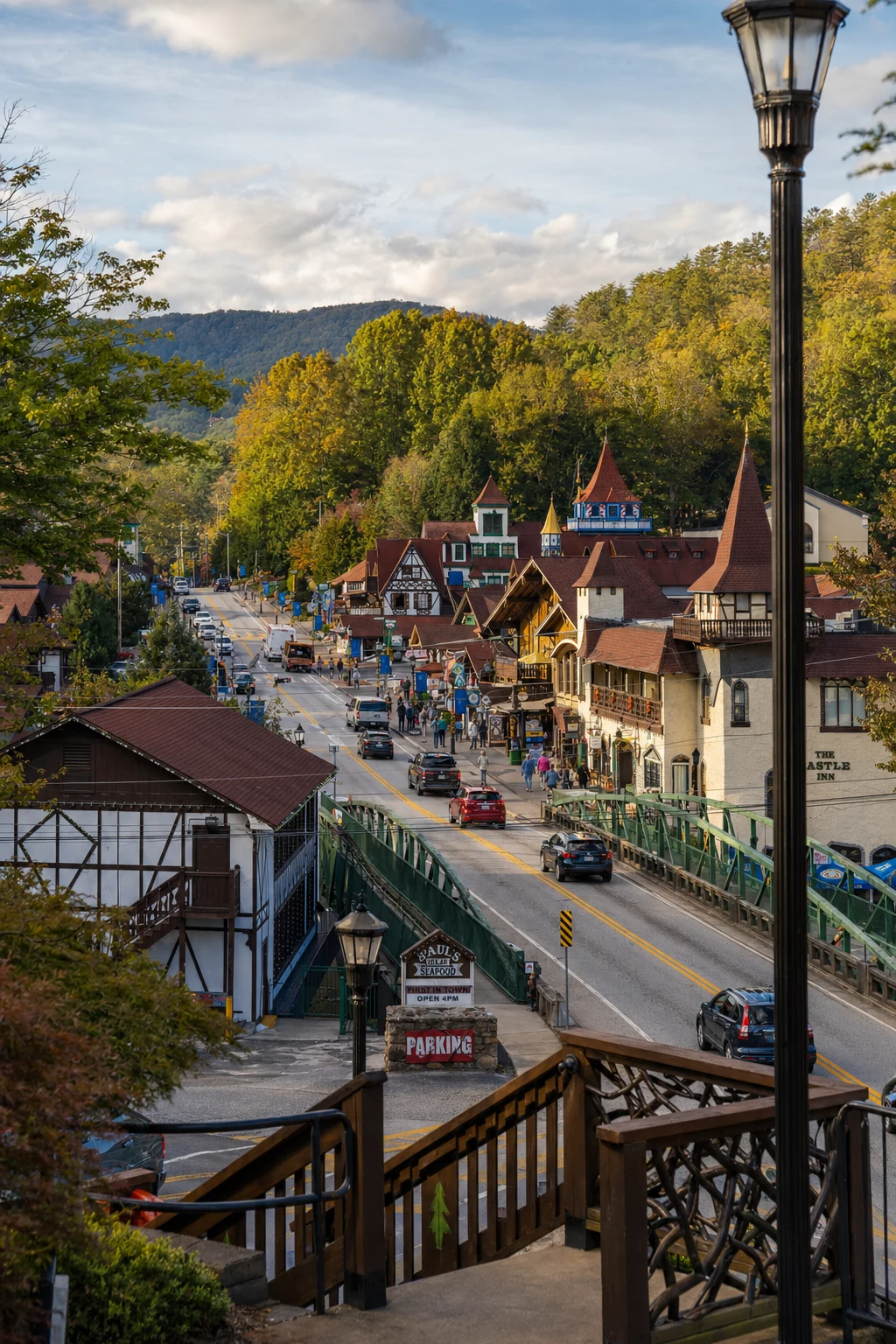
Twenty years before anyone struck gold in California, the Blue Ridge Mountains of North Georgia were already overrun with prospectors. Dahlonega sits about 65 miles north of Atlanta, and its name comes from the Cherokee word tahlonega or dalanigei, meaning "yellow" or "golden." The gold rush that started here in 1828 changed everything about this region.
The Dahlonega Gold Museum State Historic Site sits right in the center of the town square, housed in a building that has seen it all: the boom, the bust, the Civil War, and the slow reinvention of a mountain town. The museum preserves the story of a federal mint, the forced removal of the Cherokee people, and a geological windfall that still draws visitors today.
Here is what you need to know before you visit, from the history behind the exhibits to the practical details of planning your trip.
The Spark: 1828 and the Great Intrusion
The museum makes a lot more sense once you know the story behind it. Scattered reports of gold in these mountains go back to the 1500s, but the event that changed everything happened in 1828.
The Benjamin Parks Discovery
The most widely told version credits Benjamin Parks, a deer hunter who was walking through the woods about two and a half miles south of present-day Dahlonega when he tripped over a rock. He picked it up and found it was quartz, laced with gold.
In later years, Parks recounted the scene that followed his discovery: "The news got abroad, and such excitement you never saw. It seemed within a few days as if the whole world must have heard of it." Within a single year, 15,000 prospectors - described as "acting more like crazy men" - flooded the region.
The Cherokee Displacement
This gold rush happened on Cherokee Nation land. The flood of miners, known as the "Great Intrusion," created enormous pressure on state and federal governments to seize the territory. The gold rush directly contributed to the Indian Removal Act of 1830 and the Trail of Tears in 1838. The Dahlonega Gold Museum addresses this painful history head-on, with exhibits that detail what the gold rush cost the Cherokee people.
The Dahlonega Gold Museum State Historic Site
The museum sits right in the middle of the town square, and it is usually the first stop for visitors to Dahlonega.
The Old Lumpkin County Courthouse
The building itself is part of the story. Constructed in 1836 as the Lumpkin County Courthouse, it is the oldest surviving courthouse in Georgia and one of the oldest public buildings in the state.
Here is a detail that catches people off guard: the bricks were made from local clay, and because the soil here is laced with microscopic gold dust, lab tests have confirmed that the courthouse walls actually contain trace amounts of gold. You are literally looking at a building made partly of gold.
Exhibits and Artifacts
The museum, managed by the Georgia Department of Natural Resources, spans two floors. Note that due to the building's historic status on the National Register of Historic Places, there is no elevator, making the second floor inaccessible to wheelchairs.
The Coin Collection
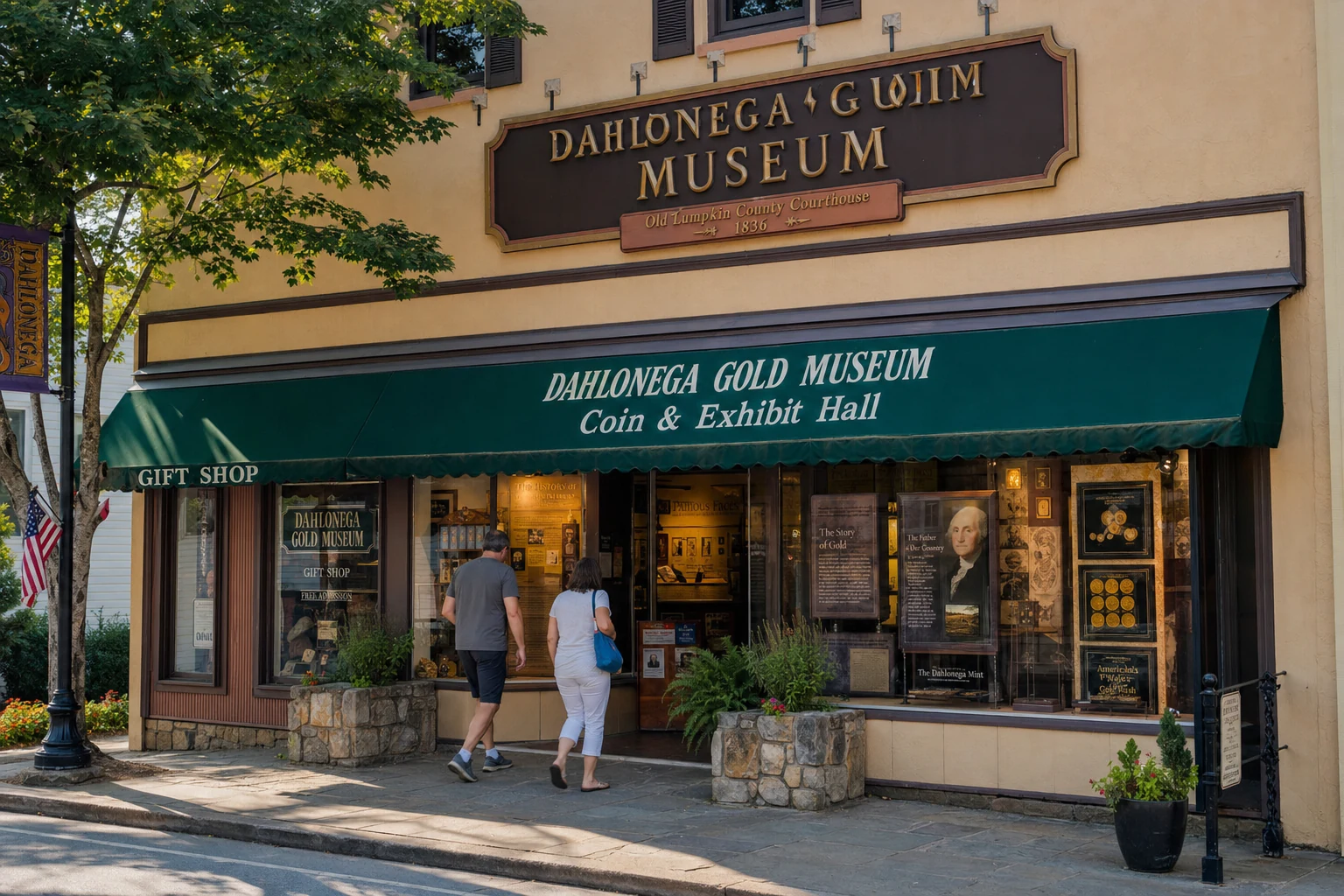
The coin collection is the museum's most prized exhibit. It houses a complete set of gold coins minted in Dahlonega. These coins are exceptionally rare; the U.S. Branch Mint in Dahlonega (discussed below) produced low volumes compared to Philadelphia, making these coins highly prized by collectors. The collection includes the $1.00, $2.50 (Quarter Eagle), $3.00 (minted only in 1854), and $5.00 (Half Eagle) gold pieces.
The 5-Ounce Nugget
Most miners found dust or flakes, but what everyone dreamed of was a nugget. The museum displays a massive gold nugget weighing more than five ounces - the kind of find that would have made a miner's year.
The U.S. Branch Mint and Price Memorial Hall
The volume of gold coming out of North Georgia was staggering - over $212,000 shipped to Philadelphia in 1830 alone. Hauling gold dust through the wilderness to a distant mint was slow and dangerous, and it was clear the region needed its own facility.
The Dahlonega Mint (1838–1861)
In 1838, the United States opened a Branch Mint in Dahlonega specifically for producing gold coins. Over its 23 years of operation, the mint coined more than $6 million in gold.
The Mint's operations ceased abruptly in 1861 with the outbreak of the Civil War. The Confederates seized the facility, minting a small number of coins (the exact number remains a subject of historical debate, with estimates of around 1,597 half eagles) before the supply of bullion ran dry. The building was never reopened as a U.S. Mint.