
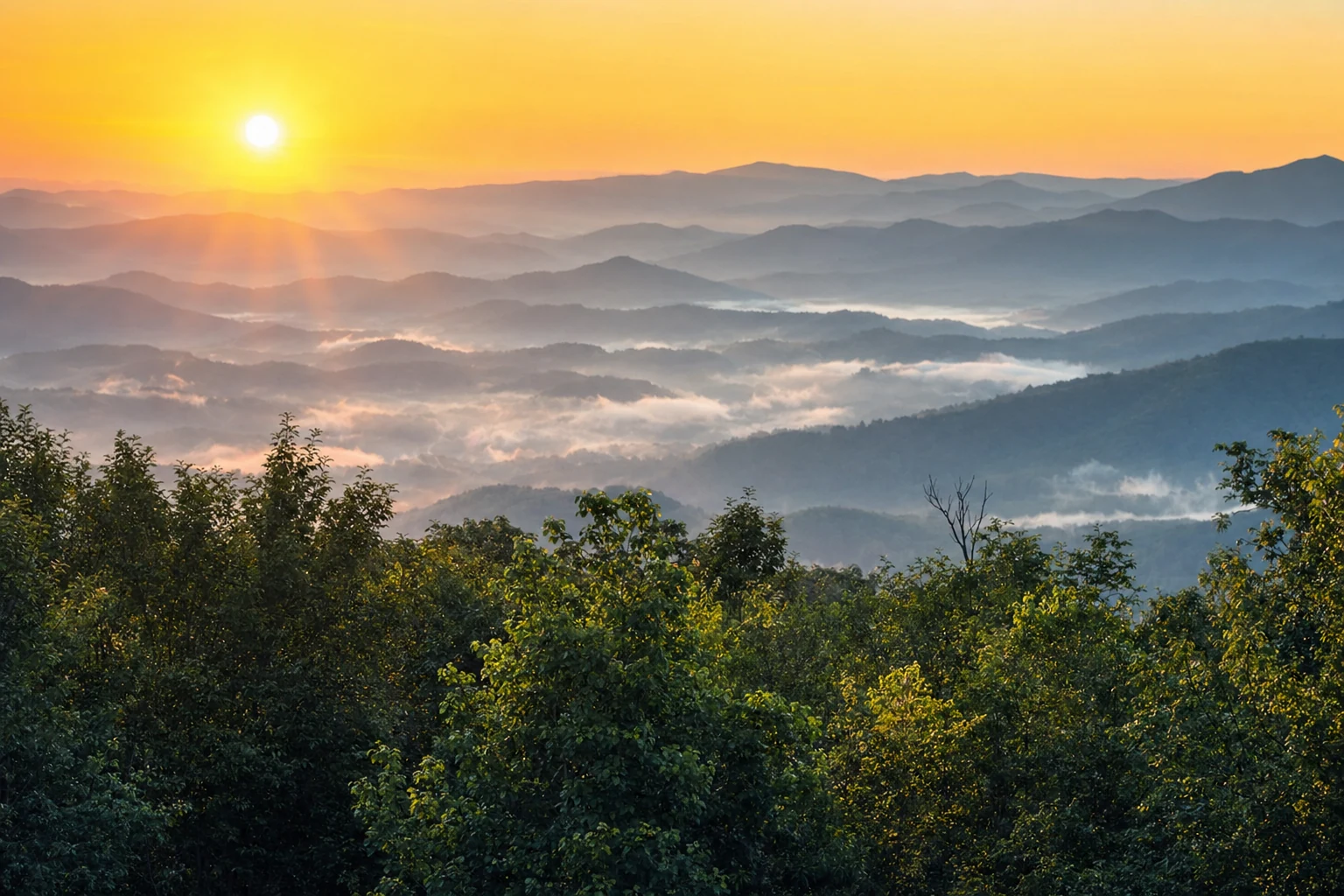
Helen GA Weather by Month
Highs, lows, rain and what to pack for every month of the year
The short answer
Source: NOAA 1991-2020 climate normals for the Helen station (USC00094230). Averages, not forecasts; the ridges run cooler than town.
| Month | Average high °F | Average low °F | Rain (in) | Snow (in) |
|---|---|---|---|---|
| January | 49 | 29 | 6.8 | 0.5 |
| February | 53 | 31 | 6 | 0.7 |
| March | 61 | 36 | 6.8 | 0 |
| April | 70 | 43 | 5.8 | 0 |
| May | 77 | 52 | 5.6 | 0 |
| June | 83 | 61 | 6.3 | 0 |
| July | 86 | 65 | 5.6 | 0 |
| August | 85 | 64 | 6.6 | 0 |
| September | 80 | 58 | 5.3 | 0 |
| October | 70 | 46 | 4.9 | 0 |
| November | 60 | 36 | 6 | 0 |
| December | 51 | 32 | 7 | 0.3 |
Why the mountains change the forecast
Downtown Helen sits at about 1,440 feet, with ridges above 3,000 feet a short drive north. Evenings cool off quickly even in July, so a light layer earns its spot in the bag all year. Afternoon thunderstorms are common in summer; they tend to blow through fast, but you'll want a rain jacket in your daypack anyway. Our North Georgia climate overview covers the wider region.
The ten-day forecast is fine for picking a weekend, but check the National Weather Service point forecast two days out. Mountain conditions change faster than an app can keep up with.
The numbers behind the chart
Average conditions for Helen, 1991-2020
| Month | Avg high | Avg low | Precipitation | Snow | Nights at or below 32°F |
|---|---|---|---|---|---|
| January | 49°F | 29°F | 6.8 in | 0.5 in | 20 |
| February | 53°F | 31°F | 6.0 in | 0.7 in | 16 |
| March | 61°F | 36°F | 6.8 in | 0.0 in | 10 |
| April | 70°F | 43°F | 5.8 in | 0.0 in | 3 |
| May | 77°F | 52°F | 5.6 in | 0.0 in | 0 |
| June | 83°F | 61°F | 6.3 in | 0.0 in | 0 |
| July | 86°F | 65°F | 5.6 in | 0.0 in | 0 |
| August | 85°F | 64°F | 6.6 in | 0.0 in | 0 |
| September | 80°F | 58°F | 5.3 in | 0.0 in | 0 |
| October | 70°F | 46°F | 4.9 in | 0.0 in | 2 |
| November | 60°F | 36°F | 6.0 in | 0.0 in | 12 |
| December | 51°F | 32°F | 7.0 in | 0.3 in | 17 |
Source: NOAA U.S. Climate Normals, Helen station (USC00094230). Annual totals average about 72 inches of precipitation.
What each month feels like
Plus what to pack
January · 49°F / 29°F
The quietest month and the lowest lodging rates. A cabin with a fireplace is the whole point. Trails stay open, but shaded stretches and higher elevations can ice up.
Pack: Heavy coat, base and mid layers, waterproof boots, microspikes if you'll hike.
February · 53°F / 31°F
Still cold, with a few mild afternoons by the end of the month. Fasching season is on; the Festhalle party is February 6, 2027.
Pack: The same winter kit, plus a lighter mid-layer for sunny afternoons.
March · 61°F / 36°F
A swing month: chilly mornings, T-shirt afternoons and strong waterfalls after the winter rain. The Helen Trout Tournament is March 27, 2027.
Pack: Layers, a rain jacket and waterproof trail shoes.
April · 70°F / 43°F
Easy hiking weather, spring wildflowers and a livelier village on weekends.
Pack: Light layers, a rain jacket and walking shoes.
May · 77°F / 52°F
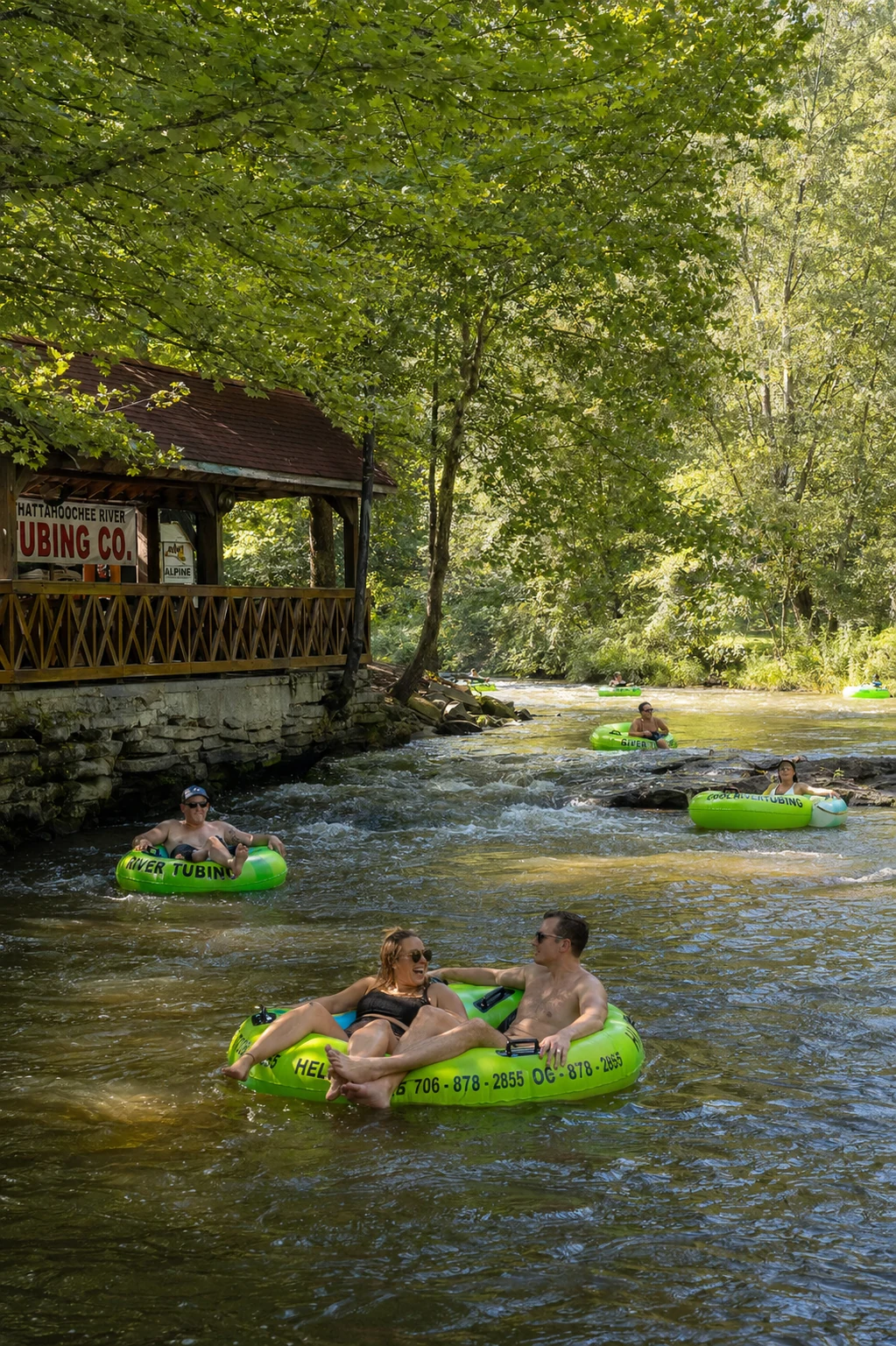
The leaves are fully out and the air is still comfortable. Memorial Day weekend is busy, and it's when the daily tubing season starts.
Pack: Shorts and T-shirts, a light jacket for evenings, rain gear.
June · 83°F / 61°F
Warm days and cool evenings, with school-out crowds. The Helen to the Atlantic Balloon Race lands in early June (2027 dates to be announced).
Pack: Swimwear, water shoes, sunscreen, a rain jacket.
July · 86°F / 65°F
The warmest month, with about ten days at 90°F or higher in a typical year. Tubing lines are longest on weekends and holidays.
Pack: Breathable clothes, swimwear, a sun hat, a rain jacket.
August · 85°F / 64°F
Much like July, with the weekend crowds easing once schools restart.
Pack: The same as July.
September · 80°F / 58°F
The heat lets up and Oktoberfest gets going. It opens September 9 in 2027.
Pack: Layers (T-shirt by day, fleece at night) and comfortable shoes for the Festhalle.
October · 70°F / 46°F
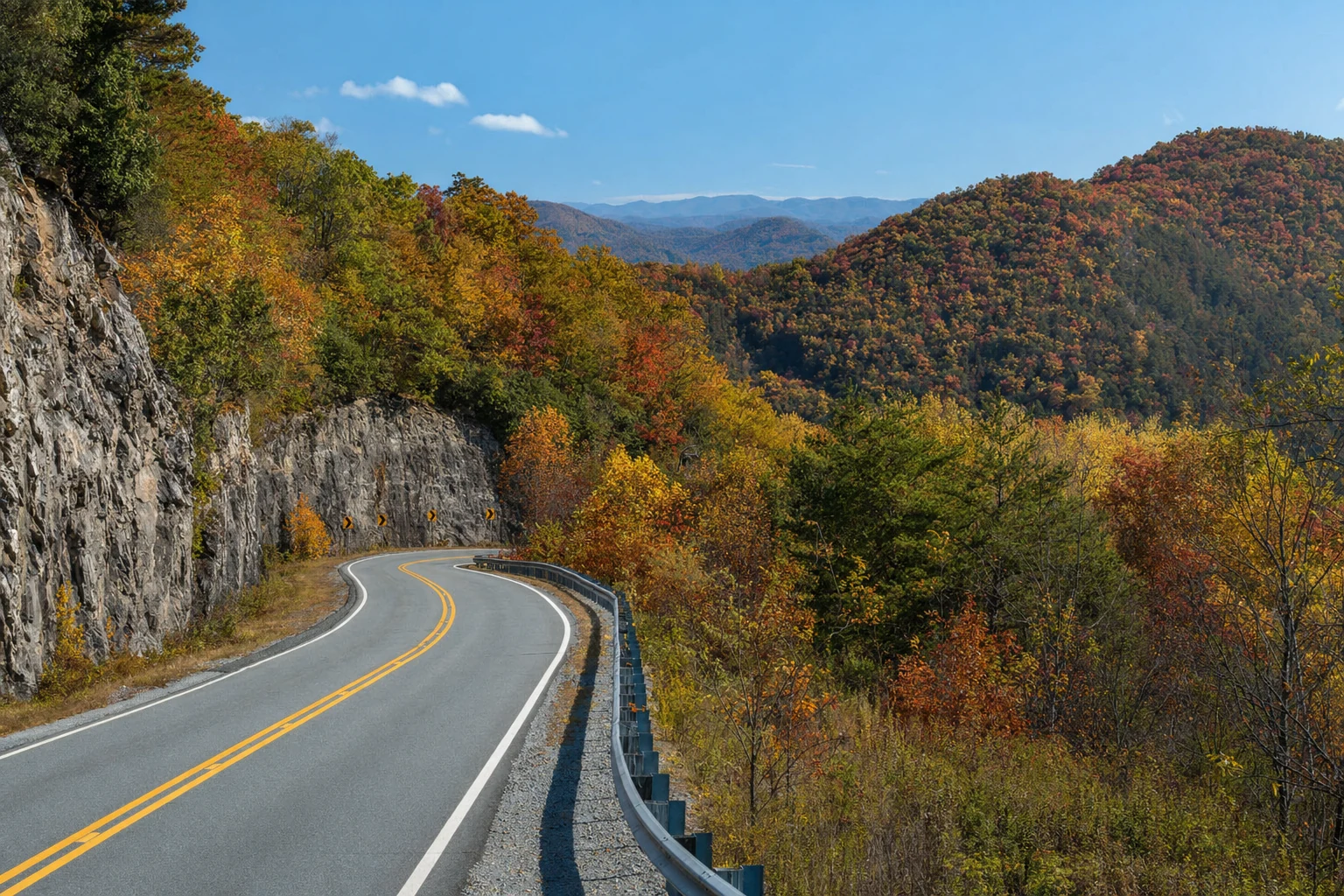
The driest month and the busiest. Color peaks on the ridges in late October and in town around the first of November.
Pack: Medium layers, a rain jacket and shoes for long walking days.
November · 60°F / 36°F
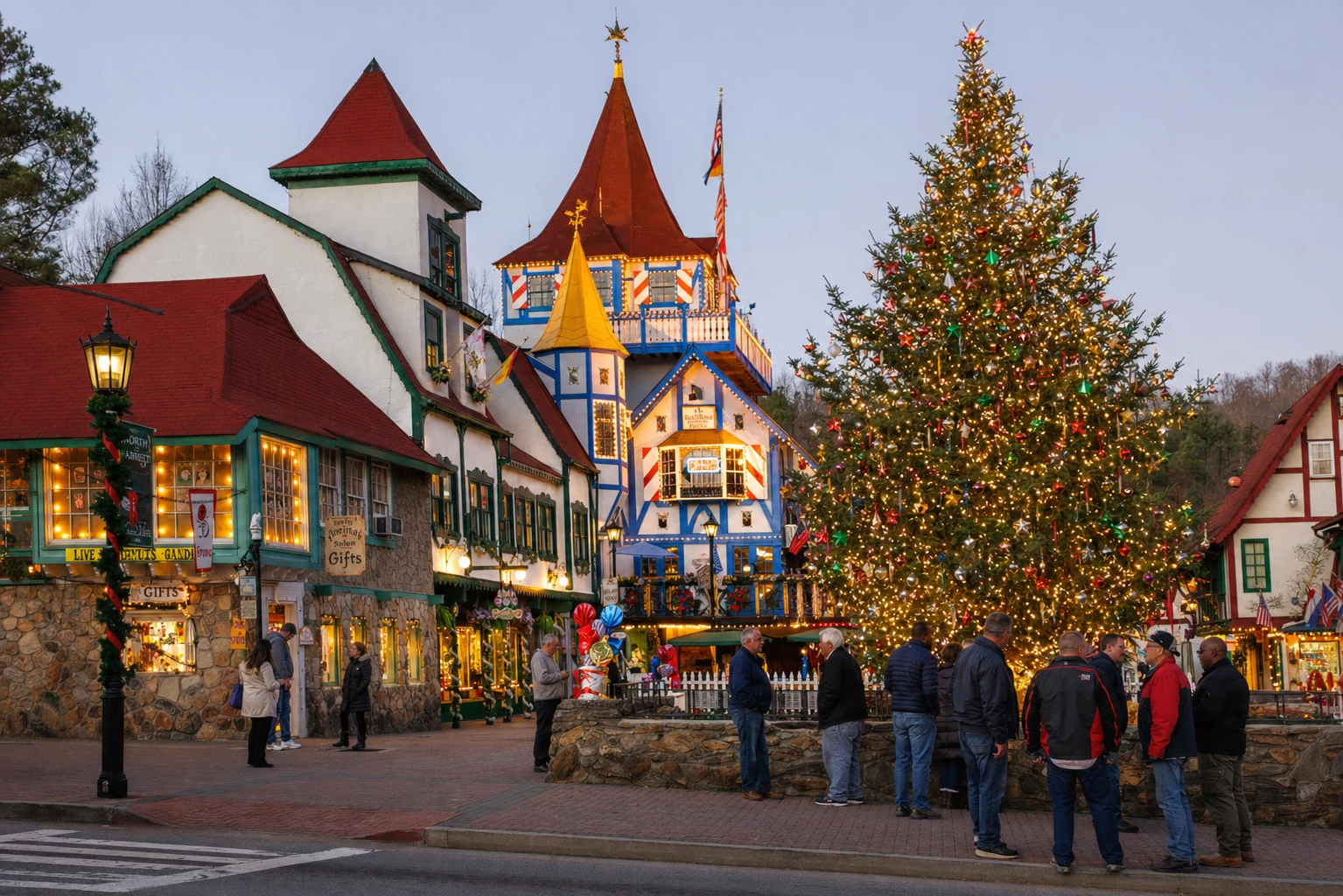
Frosts arrive and the last color fades. The Lighting of the Village is the Friday after Thanksgiving, and the Christmas Market follows over two weekends.
Pack: An insulated jacket, waterproof boots and gloves for early hikes.
December · 51°F / 32°F
The wettest month on average. The village lights are up, the Christmas Market runs the first weekend or two, and the parade is on the second Saturday.
Pack: A full winter kit: coat, thermal layers, boots, hat and gloves.
Oktoberfest is the biggest crowd driver. The 2026 run goes through November 1, and our Oktoberfest guide has the schedule and prices. Peak color has its own page: the fall foliage guide. For river season, see tubing on the Chattahoochee.
Packing by season
Winter (Dec-Feb)
- Insulated coat and thermal base layers
- Waterproof insulated boots
- Hat, gloves and a neck gaiter
- Microspikes for icy trails
Spring (Mar-May)
- Layers for swings of 20°F or more in a day
- Packable waterproof jacket
- Waterproof trail shoes
- A light fleece for evenings
Summer (Jun-Aug)
- Light, breathable clothing
- Swimwear and water shoes for tubing
- Sun hat and sunscreen
- Rain jacket for afternoon storms
Fall (Sep-Nov)
- A fleece or hoodie as your mid-layer
- Comfortable walking shoes for the festival and trails
- A rain layer
- Gloves for November mornings
Picking your dates
Check the events calendar before you book. Festival weekends fill cabins and parking lots fast, and the parking guide explains your options.
If you have flexibility, a weekday in early May, a weekday in early October ahead of peak color, or a January cabin weekend each trade a little weather risk for far fewer people. The accommodations guide covers lodging by season.
Ready to pick your dates?
Browse cabins, B&Bs and hotels in Helen, with rates and availability by date.