Alpine Village Walking Tour
A self-guided journey through the Bavarian architecture and history of downtown Helen
Walking through downtown Helen, Georgia is like stepping into a small Bavarian village that has been transplanted into the Blue Ridge Mountains. Every building in the compact downtown - from the gas station to the fire department to the smallest gift shop - features Alpine-style architecture complete with stucco facades, exposed timber framing, flower boxes, painted murals, and shingled balconies. The effect is remarkably immersive, and understanding the history behind this transformation makes the experience even more rewarding.
This self-guided walking tour covers the main streets of downtown Helen in approximately one mile of easy walking. There are no steep hills to navigate, and the entire route is on sidewalks and paved surfaces. Plan for an hour and a half to two hours, allowing time for photographs, window shopping, and a coffee or ice cream stop along the way. The tour works well at any time of year, but the village takes on special character in the evening, when the buildings are illuminated against the mountain darkness, and during the holiday season, when thousands of lights transform the streetscape.
The Story Behind the Village
How a struggling lumber town became a Bavarian showcase
The story of Helen's transformation is one of the most remarkable reinvention tales in American small-town history. In the early 1960s, Helen was a dying lumber town. The timber industry that had sustained the community for decades was in steep decline, and the town's Main Street was lined with deteriorating clapboard buildings and empty storefronts. The population was dwindling, businesses were closing, and Helen appeared destined to become another forgotten mountain hamlet.
The idea that changed everything came from a local businessman, Pete Hodkinson, who in 1968 approached John Kollock, a local artist and veteran who had been stationed in the Bavarian Alps during his military service. Kollock saw in Helen's mountain setting a natural resemblance to the Alpine villages he had known in Germany and proposed a radical concept: transform every building in town into Bavarian Alpine architecture. Kollock produced a series of watercolor renderings showing what the buildings could look like, and the community rallied behind the vision.
Beginning in 1969, building owners began converting their facades. Stucco was applied over clapboard, half-timber framing was added, balconies were built, and hand-painted murals depicting Alpine scenes appeared on walls throughout town. The transformation was complete within a few years, and the results were immediate. Tourists who had no reason to stop in a fading lumber town were suddenly drawn to this unexpected slice of Bavaria in the Georgia mountains. To this day, strict zoning laws require all buildings in the downtown core to maintain the Alpine aesthetic - even gas stations, banks, and the fire department must conform to the Bavarian theme. Today, Helen welcomes over two million visitors annually, making it one of the most visited small towns in the southeastern United States.
Walking Tour Highlights
Key stops and what to look for as you explore
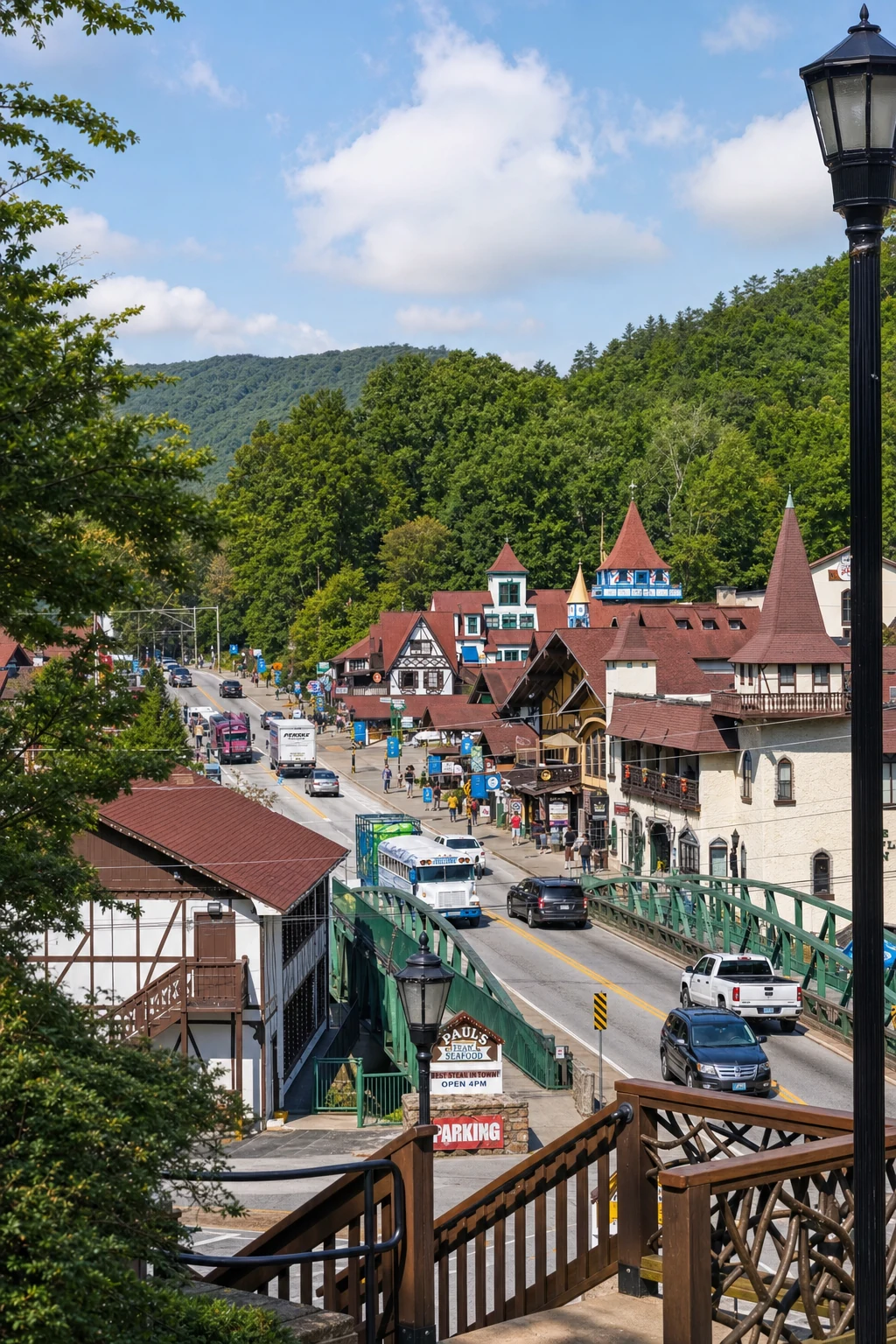
Bruckenstrasse is the main artery of Helen's Alpine Village, lined with shops, restaurants, and photo opportunities.
Begin your tour at the covered bridge on Bruckenstrasse, which spans the Chattahoochee River near the center of downtown. This pedestrian bridge is one of the most photographed spots in Helen, offering views up and down the river with the Alpine buildings framing both sides. From here, walk north along Bruckenstrasse, the main commercial street. Notice how each building has its own character - different color schemes, unique mural designs, and varied balcony styles - while maintaining the cohesive Alpine aesthetic that ties the village together.
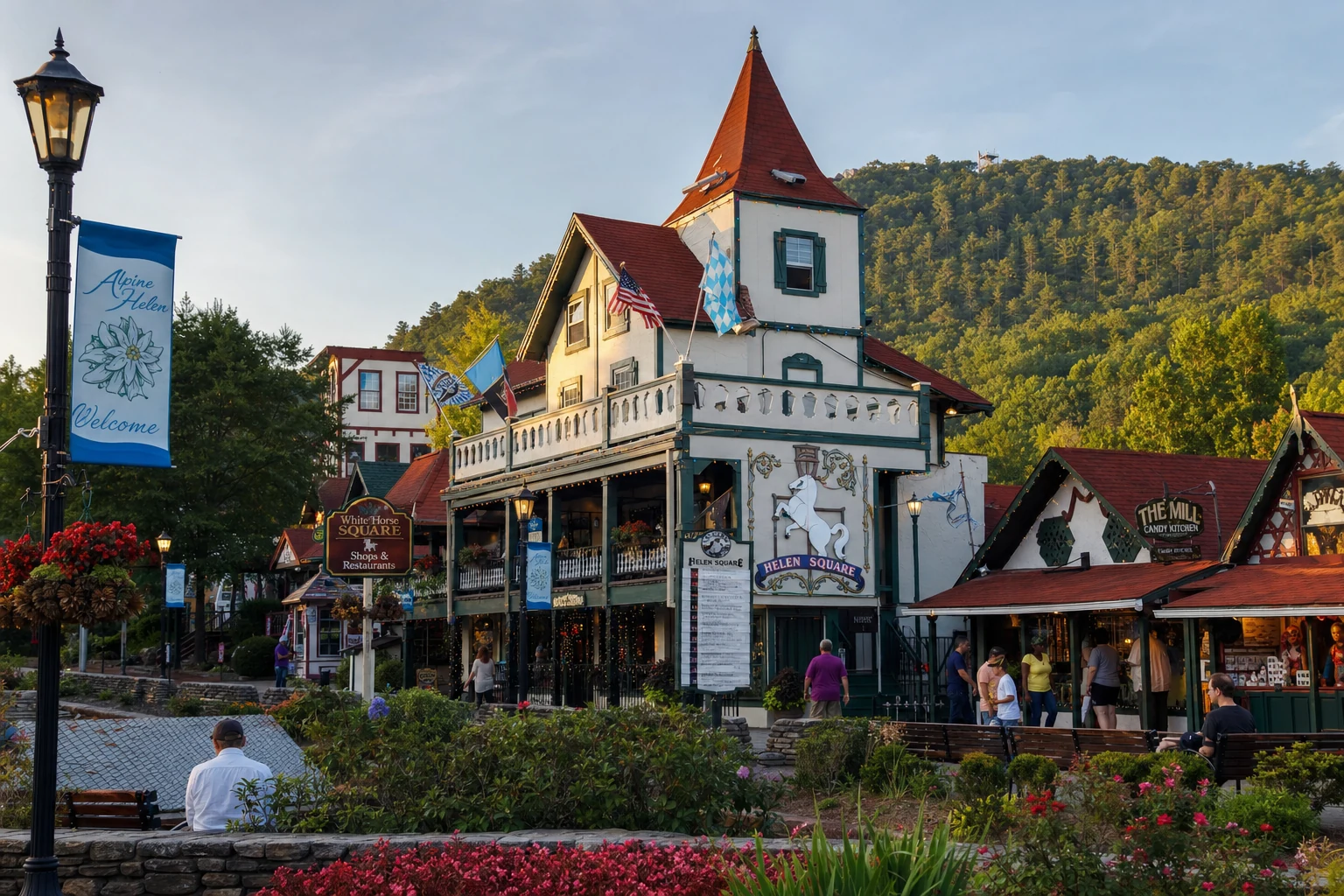
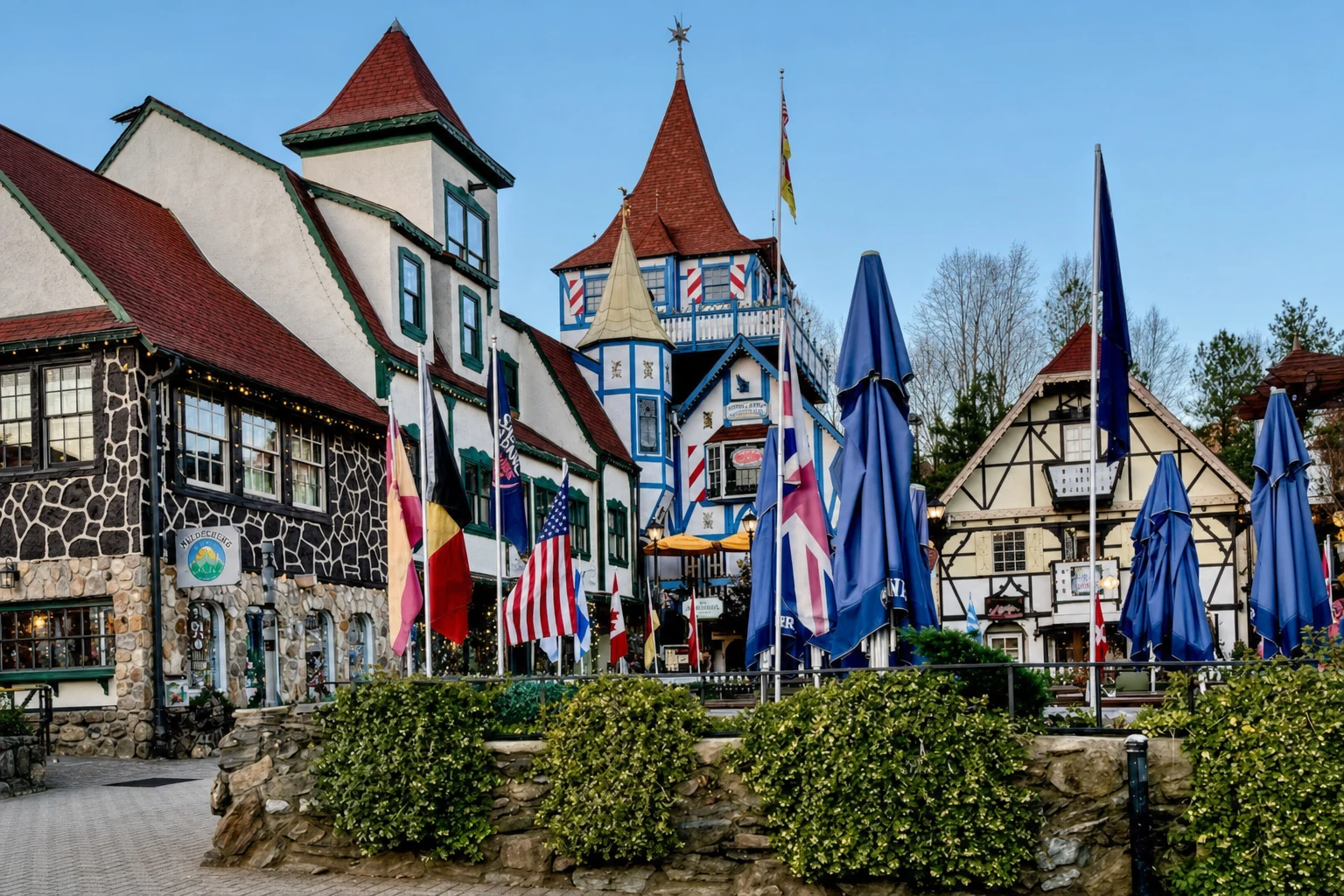
As you walk north, look for the hand-painted murals that decorate many building facades. These paintings, a tradition in Bavarian architecture known as Luftlmalerei, depict Alpine scenes, forest wildlife, and Bavarian folk motifs. Some are elaborate full-wall compositions, while others are smaller decorative panels tucked into corners and above doorways. Do not miss White Horse Square, one of the most photographed commercial plazas in town, or The Heidelberg - a striking blue chalet that is one of the most distinctively decorated buildings in the village. The flower boxes that adorn windows and balconies throughout the village are maintained with genuine care, overflowing with seasonal blooms from spring through fall and replaced with evergreen arrangements during winter.
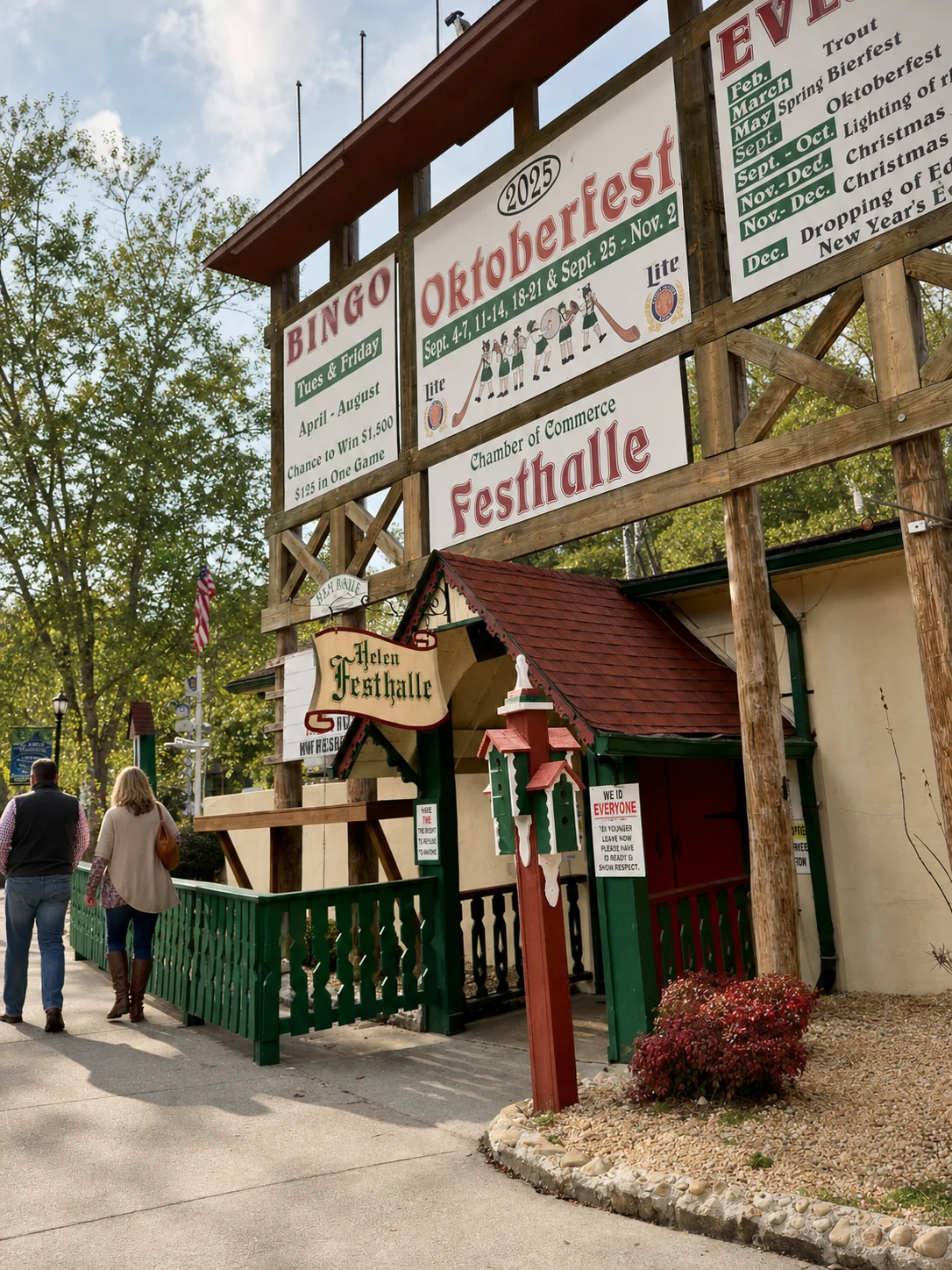
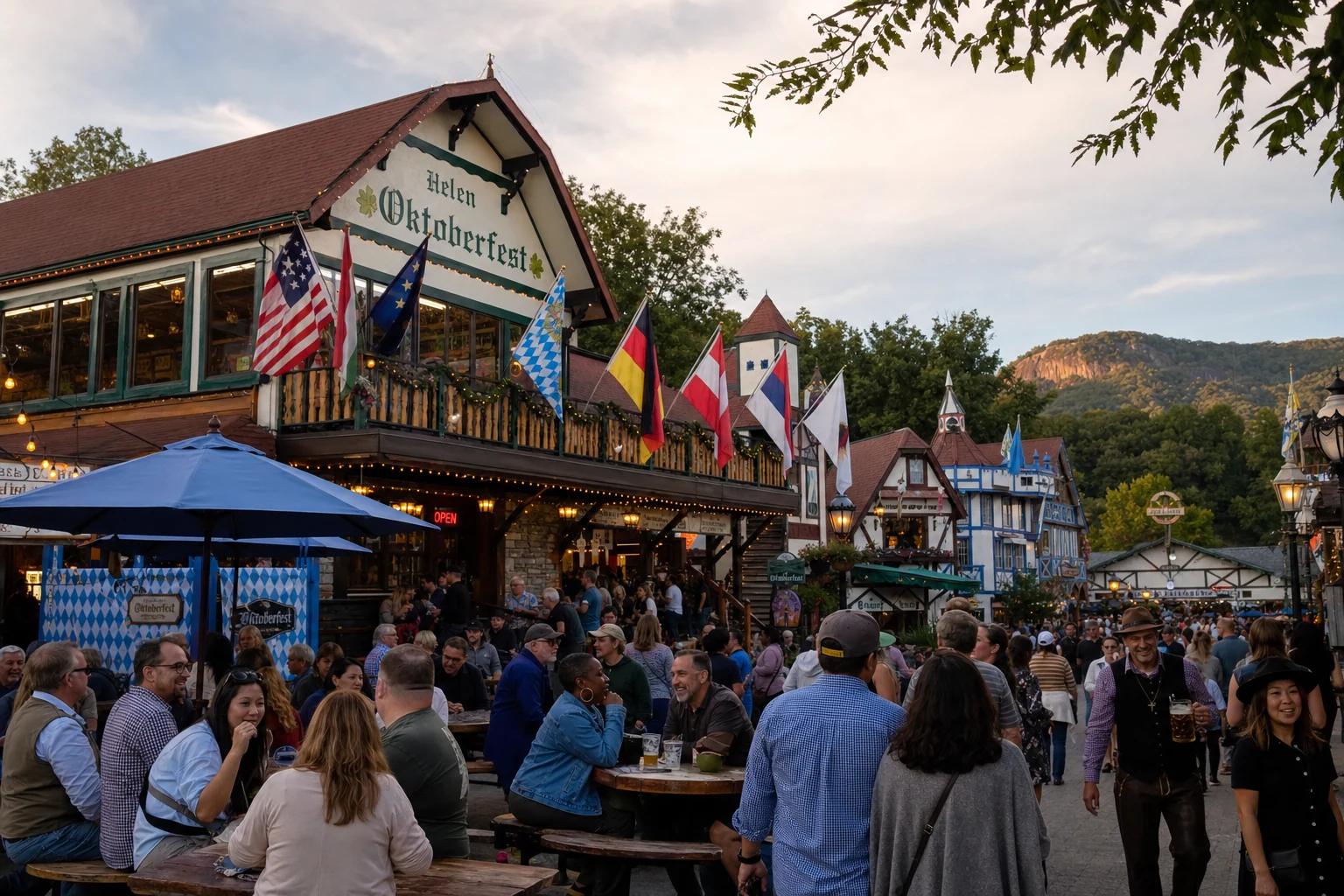
Continue to the Helen Festhalle at the north end of downtown. This large hall is the centerpiece of Helen's Oktoberfest celebrations and houses the dance floor, stage, and beer garden where the festival takes place each fall. Even outside of Oktoberfest season, the Festhalle's exterior is worth admiring - its large-scale Alpine design is the most imposing in the village, with a broad timber-framed facade and traditional Bavarian color scheme.
River Walk & Side Streets
Exploring beyond the main commercial corridor
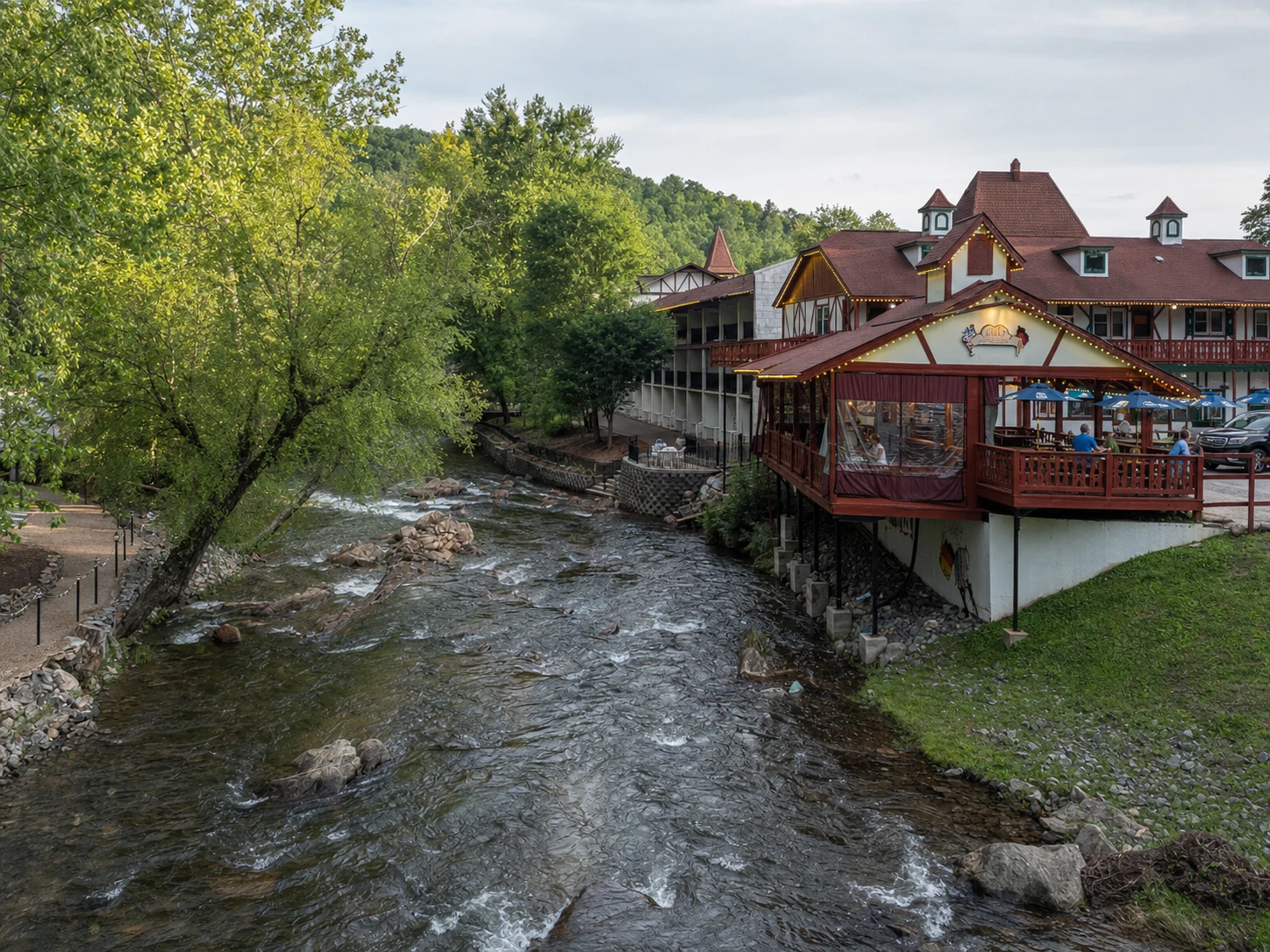
From the main street, cross to the river side and walk along the Chattahoochee. The river walk passes behind several restaurants that have outdoor decks overlooking the water, and the perspective from the river side reveals architectural details that are easy to miss from the street. The sound of the rushing water provides a constant natural soundtrack that softens the bustle of the commercial district.
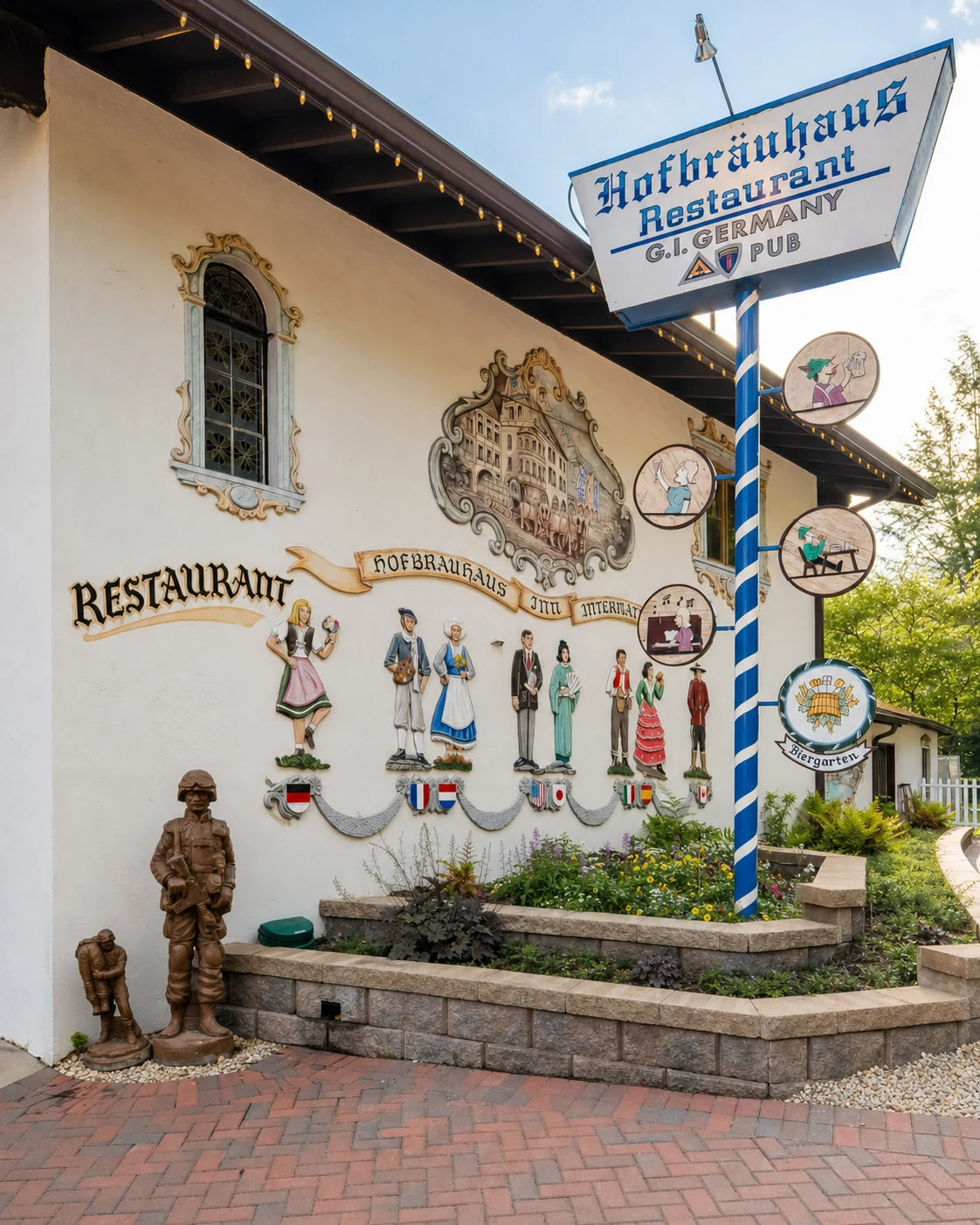
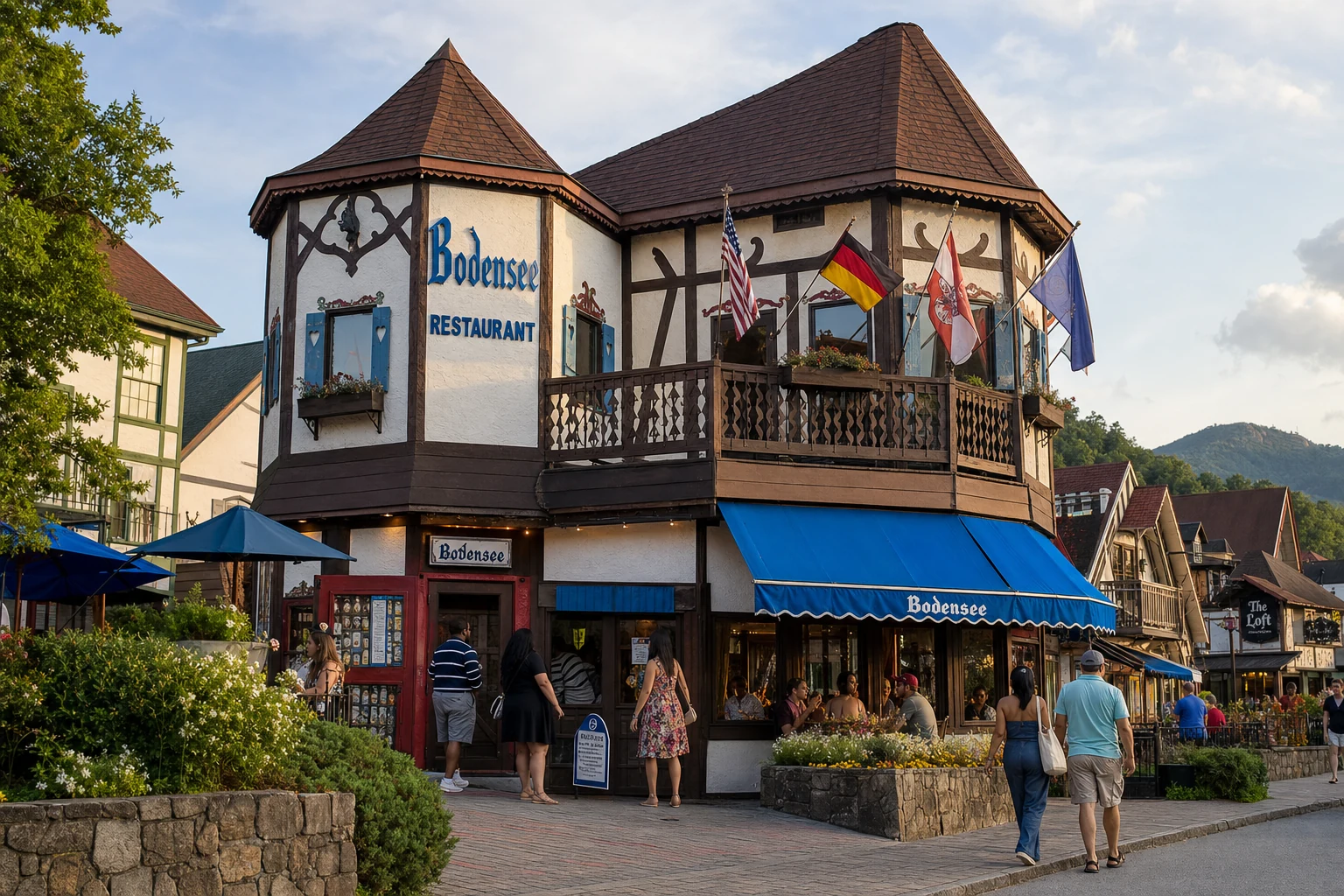
Turn down Munich Strasse and Chattahoochee Strasse to explore the secondary streets, which are often quieter than the main drag and reveal some of the village's most charming details. Smaller shops, galleries, and restaurants tucked along these streets reward the curious walker with less-visited finds. The Hofbrauhaus and Bodensee Restaurant are both located off the main street and are worth passing by even if you are not dining - their architectural details are among the most authentic in the village.
Best Photo Spots
Where to capture Helen at its most photogenic
Covered Bridge
The iconic wooden bridge over the Chattahoochee frames perfectly with the village behind. Best in morning light or evening illumination.
River Overlook
From the stone wall along the river, capture the buildings reflected in the water. Best on calm mornings when the surface is glassy.
Festhalle Entrance
The large timber-framed entrance to the Festhalle creates a dramatic architectural frame, especially during Oktoberfest with its banners and decorations.
Night Village
After dark, the illuminated buildings against the mountain backdrop create magical photographs. Bring a tripod or steady your phone for the best results.
Evening Atmosphere
The village transforms after dark
If your schedule allows, revisit the walking tour route in the evening. The village takes on an entirely different character after sunset. Warm light spills from shop windows and restaurant interiors, the river catches reflections from the bridge and building lights, and the crowds thin to a gentle flow of couples and families taking evening strolls. During the Christmas season, thousands of lights drape the buildings and trees, creating a winter wonderland atmosphere that feels genuinely magical. The evening walk is often the moment when visitors fall in love with Helen - when the commercial tourism fades and the village's simple, warm charm shines through most clearly.
A Visitor's Perspective
Tips from someone who has walked these streets hundreds of times
The biggest mistake visitors make is treating the Alpine Village as a backdrop for shopping and nothing more. The architecture itself rewards close attention - once you start looking at the details of John Kollock's original 1969 vision, you notice things you would otherwise miss: the way each building has a slightly different color scheme, the folk art motifs worked into the timber framing, the clever way the covered bridge connects the two sides of town. I recommend doing the walk twice: once during the day for photographs and shopping, and once after dark when the illuminated buildings glow against the mountain sky.
Start at the covered bridge on Bruckenstrasse and work your way north. The river walk along the Chattahoochee is the most underappreciated part of the tour - most visitors stick to the main street and miss the peaceful path behind the restaurants where you can hear the water and see the buildings from a different angle. If you only have an hour, hit the covered bridge, White Horse Square, the Heidelberg blue chalet, and the Festhalle. And do not skip the side streets - Munich Strasse and Chattahoochee Strasse have some of the village's most charming small shops.
More to Explore
Discover nearby attractions