The Dream of an Atomic Airplane
In 1951, at the white-hot peak of the Cold War, the United States government decided it needed a bomber that could stay aloft for days, even weeks, without refueling. The solution, Pentagon planners believed, was a nuclear-powered aircraft. Lockheed Martin and General Electric were awarded contracts for what would become the Aircraft Nuclear Propulsion program, and a remote patch of Georgia forest in Dawson County was chosen as the testing ground. The facility was officially designated Air Force Plant 67, but everyone who worked there knew it by another name: the Georgia Nuclear Aircraft Laboratory, or GNAL.
The site was ideal for all the wrong reasons: it was far enough from major population centers that a catastrophic failure would not immediately threaten Atlanta, but close enough to Lockheed's Marietta plant for easy logistics. The U.S. Air Force, in partnership with Lockheed Martin, needed a place where they could do things that would be unthinkable anywhere near civilization. By the late 1950s, construction crews had carved a sprawling complex out of the forest, centered on a facility that would have made a Bond villain envious. To build it, the government seized more than 10,000 acres of private land from local families, including a man named Roscoe Tucker, whose family had farmed those hollows for generations. One day they owned the land; the next, the Air Force did.
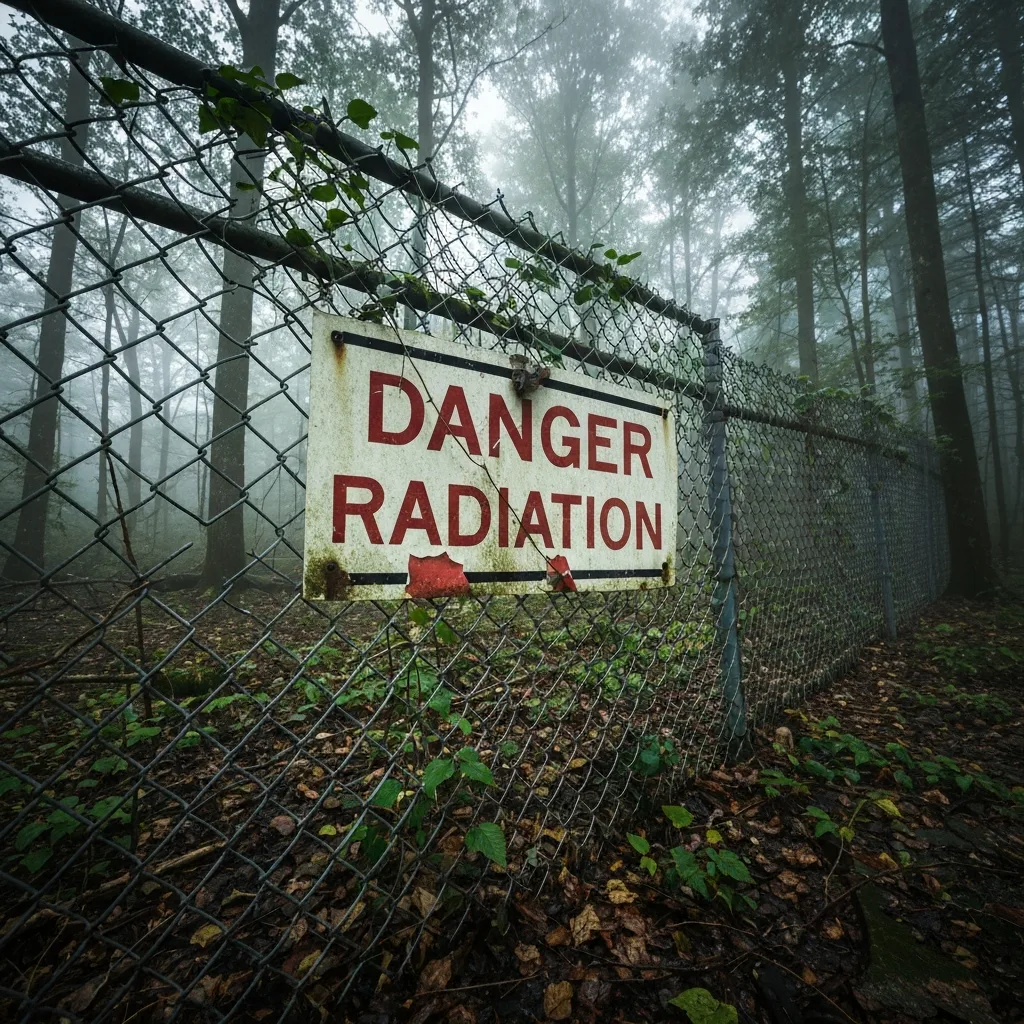
The 10-Megawatt Monster: The Radiation Effects Facility
At the heart of the complex sat the Radiation Effects Facility, or REF, and it was unlike anything else ever built on American soil. Picture a 10-megawatt nuclear reactor, deliberately operated without the shielding that would have been standard in any civilian power plant. The reactor sat submerged at the bottom of a 30-foot-deep, water-filled concrete shaft. When tests were ready to begin, a hydraulic ram raised the reactor from the safety of its underwater home up to the surface, where it blasted the surrounding area with unfiltered radiation. After the test, the ram lowered the reactor back into the water. The entire point was to study what happens when an unshielded reactor's radiation strikes aircraft components, because that is precisely the problem engineers would need to solve before mounting one inside an airplane.
The area around the reactor was enclosed by what workers grimly called the "Lethal Fence." This was not a figure of speech. Any living being inside that perimeter during an active test would receive a fatal dose of radiation. Not "might." Not "could." Would. The fence was the line between the living world and something else entirely, a boundary beyond which biology simply stopped working as intended.
"They called it the Kill Zone. Not because anyone was killed there, but because the radiation levels beyond the lethal fence could deliver a fatal dose in minutes. Workers accessed the reactor remotely, from bunkers connected by underground tunnels."
The Hot Cell Building
Two miles from the Radiation Effects Facility stood the Hot Cell Building, and even today, its shell is one of the most unsettling structures you will ever stand beside. The building was constructed with six-foot-thick concrete walls lined with stainless steel, designed to contain the most intensely radioactive materials produced by the reactor tests. Inside, workers manipulated fuel rods, irradiated aircraft components, and reactor assemblies using mechanical arms that extended through the walls, watching their work through windows made of dense lead glass stacked in multiple layers. The movements were controlled remotely, with operators watching through protective glass as robotic appendages performed tasks that no human hand could touch and survive.
Perhaps the most surreal feature of the Hot Cell Building was its nuclear train system. Remote-controlled trains carried radioactive materials between the Hot Cell Building and the reactor site along dedicated tracks, their cargo too dangerous for any human to transport by hand. Picture a model railroad, except the cargo was lethal and the trainyard was surrounded by warnings that would make your blood run cold. The Hot Cell Building's shell still stands today, sealed and ringed with barbed wire. Cobalt-60 particulates remain embedded in the concrete, a permanent ghost of the work that was done there.
Instant Taxidermy and Lockwood Floors
Among the strangest footnotes in the GNAL story is the phenomenon that workers called "instant taxidermy." Animals that wandered past the Lethal Fence during active reactor tests -- frogs, birds, squirrels, and on at least one occasion, a mule -- would be killed so instantly by the radiation burst that they were essentially preserved in place. The radiation was so intense that it sterilized all the bacteria in and on the animals' bodies, meaning that decomposition never began. The creatures stood or sat exactly where they died, eerily intact, like biological statues. Former workers described the scene as one of the most uncanny things they had ever witnessed: a forest clearing populated by perfectly preserved dead animals that simply never rotted.
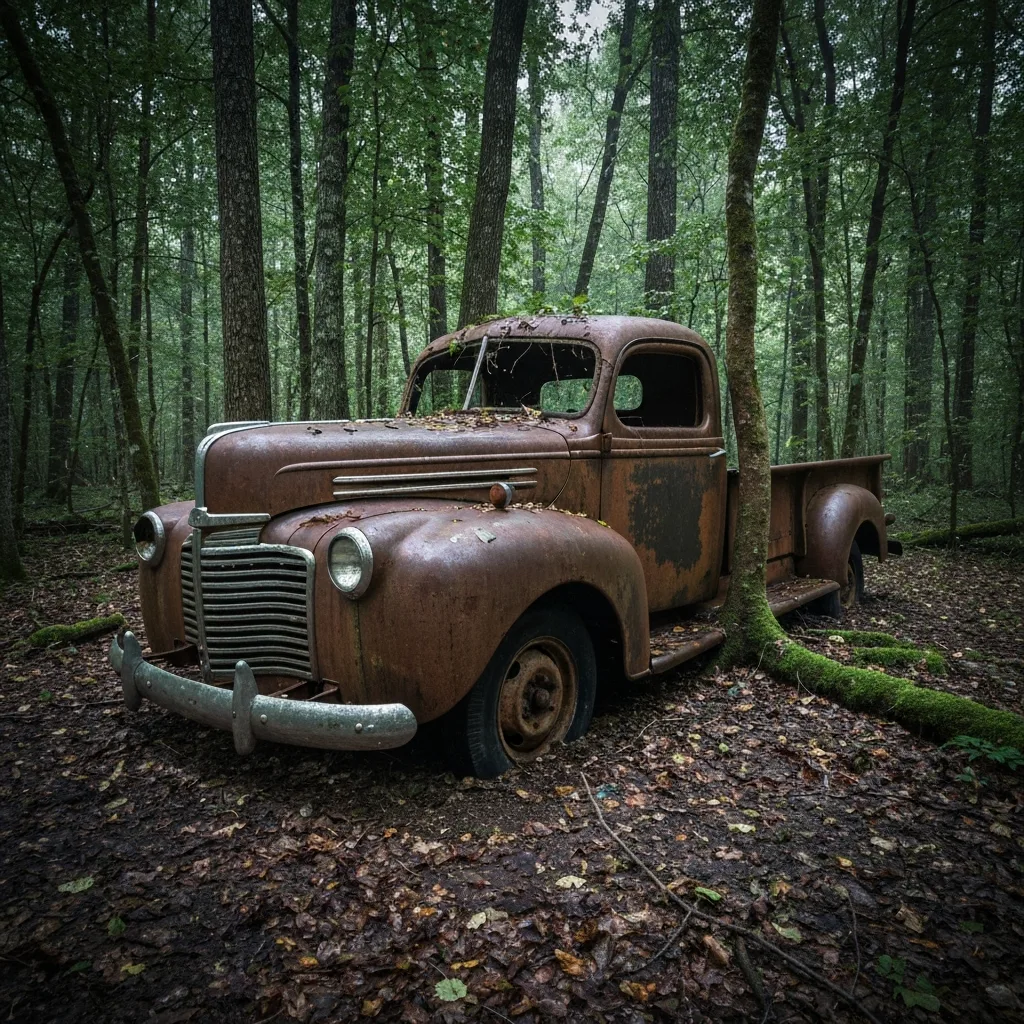
The radiation did not only affect living things. Hydraulic fluids exposed to reactor tests turned into a substance with the consistency of chewing gum. Rubber tires were simultaneously liquefied and petrified, their molecular structure rearranged into something that was no longer rubber in any meaningful sense. Electronics failed immediately in the radiation field, circuits scrambled and components destroyed by the invisible torrent of gamma rays and neutrons. Understanding these effects was the entire purpose of the facility -- if a nuclear reactor was going to power an airplane, engineers needed to know exactly what radiation would do to every component of the aircraft.
Lockwood: The Nuclear Floor Beneath Your Feet
Perhaps the strangest commercial product to emerge from the GNAL was something called "Lockwood." Engineers discovered that wood impregnated with liquid plastic and then hardened by exposure to gamma radiation became extraordinarily durable -- harder and more resistant to wear than any natural wood product. The irradiated, plastic-infused lumber was virtually indestructible under normal foot traffic. The process was patented, and Lockwood flooring found its way into some surprising places, including the floors of the Kansas City Airport and the headquarters of the Atomic Energy Commission itself. There is a fitting irony in the fact that the agency overseeing America's nuclear program walked on floors made possible by the very radiation they were trying to harness.
What Happened to the Program
President Kennedy cancelled the Aircraft Nuclear Propulsion program in 1961, having concluded that intercontinental ballistic missiles made atomic bombers obsolete before they were ever built. The reactor was decommissioned, the nuclear fuel removed, and the site was partially decontaminated. But the program's cancellation did not mean the site was immediately forgotten. In 1963, two years after the shutdown, none other than Wernher von Braun -- the former Nazi rocket scientist who had become the father of America's space program -- visited the GNAL site. What exactly von Braun was looking at and why remains a matter of some speculation, but his visit underscores just how significant the facility was in the landscape of Cold War science.
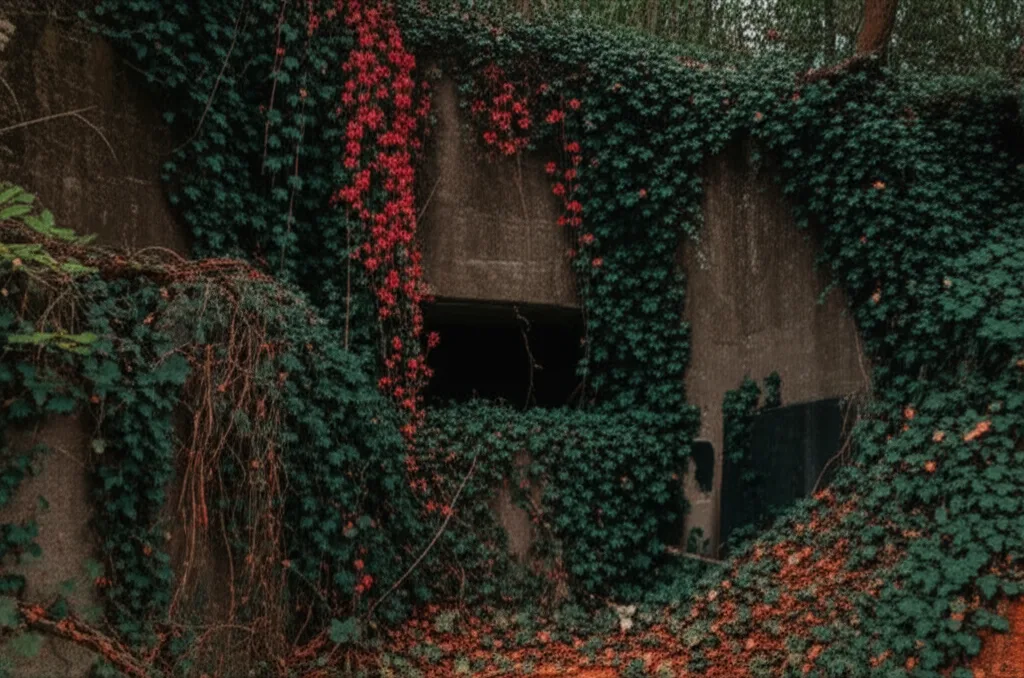
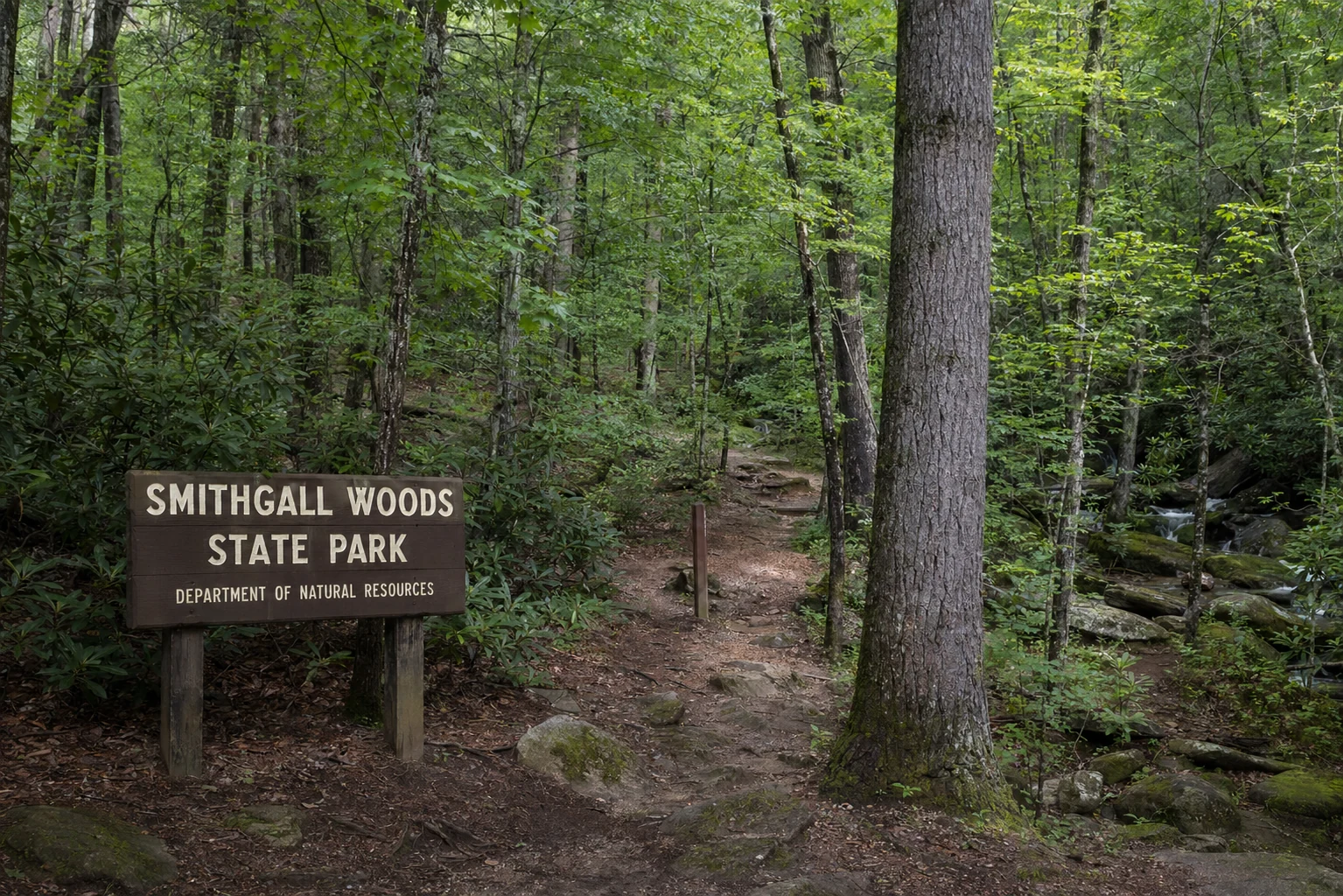
The forest around the facility was eventually transferred to the Army Corps of Engineers and later opened to the public as part of the Dawson Forest Wildlife Management Area. Decades of monitoring have confirmed that background radiation levels in the forest have returned to normal. The Georgia Department of Natural Resources conducts periodic testing, and the site has been open to hikers, mountain bikers, and hunters since the 1990s. But the ruins remain, slowly being swallowed by kudzu and hardwoods, a concrete memorial to one of the Cold War's most audacious and ultimately futile ambitions. And somewhere in the walls of the Hot Cell Building, Cobalt-60 atoms continue their slow, invisible decay, a half-life ticking away in the Georgia woods.
Hiking the Ruins: A Practical Guide
The Dawson Forest Wildlife Management Area is located off Highway 53 in Dawson County, roughly a 90-minute drive from Helen. The trail system covers over 25 miles, but the ruins of the nuclear lab can be reached on a moderate 4-mile round-trip hike from the main parking area off Yellow Creek Road.
Trail Information
- Distance: Approximately 4 miles round trip to the main ruins
- Difficulty: Moderate. Some overgrown sections and uneven terrain near the ruins.
- Safety: Radiation levels are normal. Stay out of unstable structures. Watch for snakes in warm months.
- Best Season: Fall and winter, when foliage is thin and the ruins are most visible.
- Note: During managed hunts (check GA DNR schedule), the WMA may be closed to non-hunters.
When you reach the ruins, you will find massive concrete foundations, the remnants of the Hot Cell Building with its impossibly thick walls, and the circular footprint of the reactor containment area. It is an eerie place, especially in winter when the bare trees frame the ruins against a gray sky. Bring a camera and a sense of history, and remember that you are standing on one of the strangest pieces of ground in the American South.
Dawson Forest sits about 90 minutes from Helen, making it a full-day commitment as a day trip from the alpine village. If you are building a weekend around North Georgia's hidden and haunted places, pair this hike with the bootlegger's wreck near Amicalola Falls — another piece of abandoned history hiding in the forest — or swing through Dawsonville to explore the NASCAR heritage trail that starts in the same mountain communities where the GNAL was built. And if the Cold War-era secrecy of this place gets you thinking about what else might be hidden in the Georgia mountains, the story of how Helen reinvented itself reveals how thoroughly an entire chapter of regional history can be painted over.
Local writers sharing the hidden stories and trails of North Georgia's mountain country.
Continue Exploring
More stories from North Georgia
Related Stories
More adventures and hidden history from North Georgia