
The Decision That Made the Town
The story behind Helen begins with a moment of collective desperation. By the late 1960s, the timber industry that had sustained the Nacoochee Valley for generations had collapsed. Helen had a main street, a post office, a few hundred residents, and no particular reason for anyone from Atlanta to make the ninety-minute drive. The town was, in the blunt accounting of the era, dying.
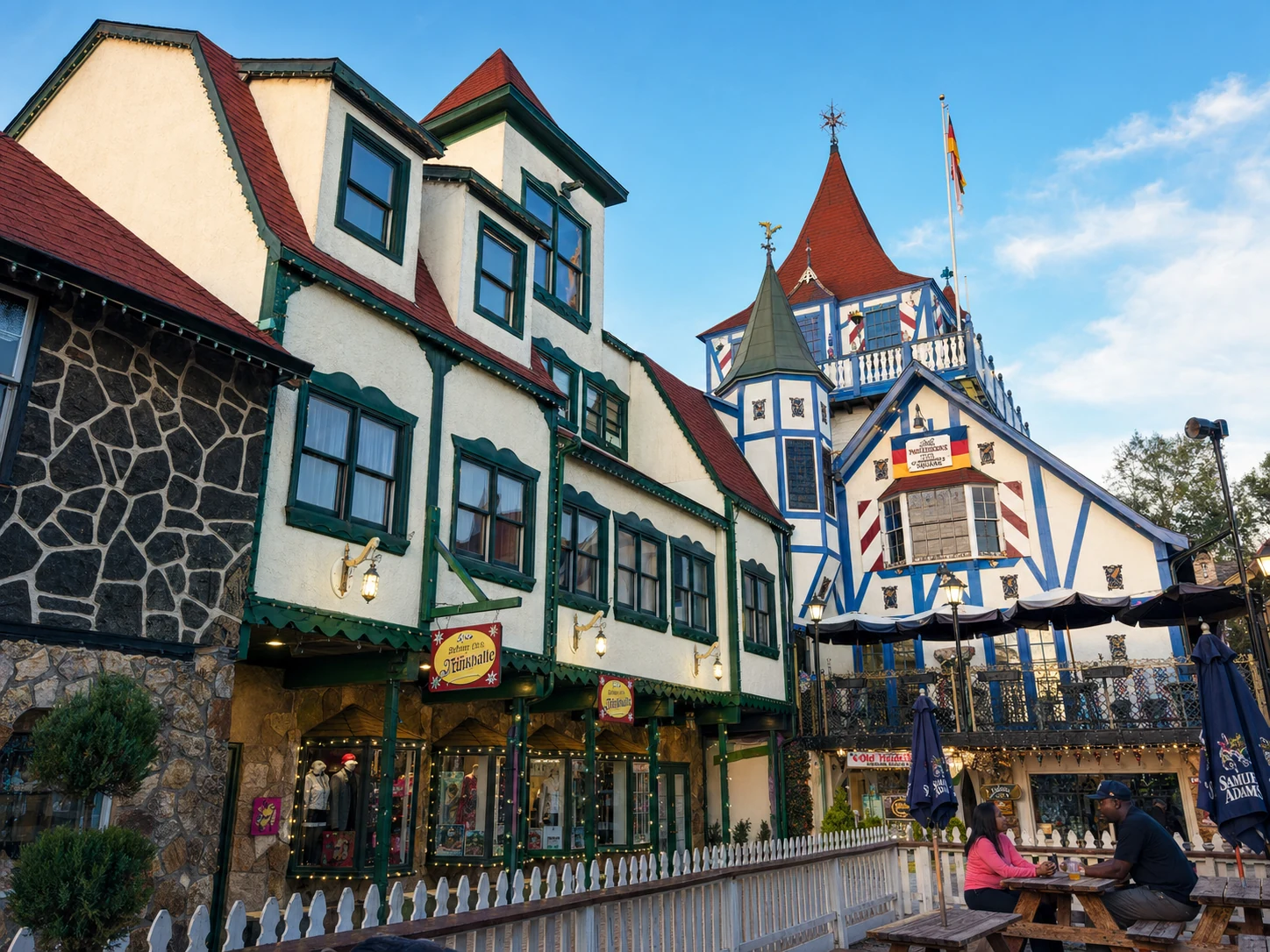
In 1969, a group of local business owners brought in a watercolor artist named John Kollock, who had spent time in Germany, and asked him to sketch what the commercial district might look like if it were built to resemble an alpine village. Kollock produced a few paintings. The business owners looked at them, then looked at their struggling storefronts, then agreed to paint Bavarian facades on their existing buildings. The transformation happened quickly, storefront by storefront, over the next couple of years. There was no deeper cultural connection to Germany. There was no imported craftsmanship from the old country. There were local contractors with brushes and timber planks and a pressing need for something to change.
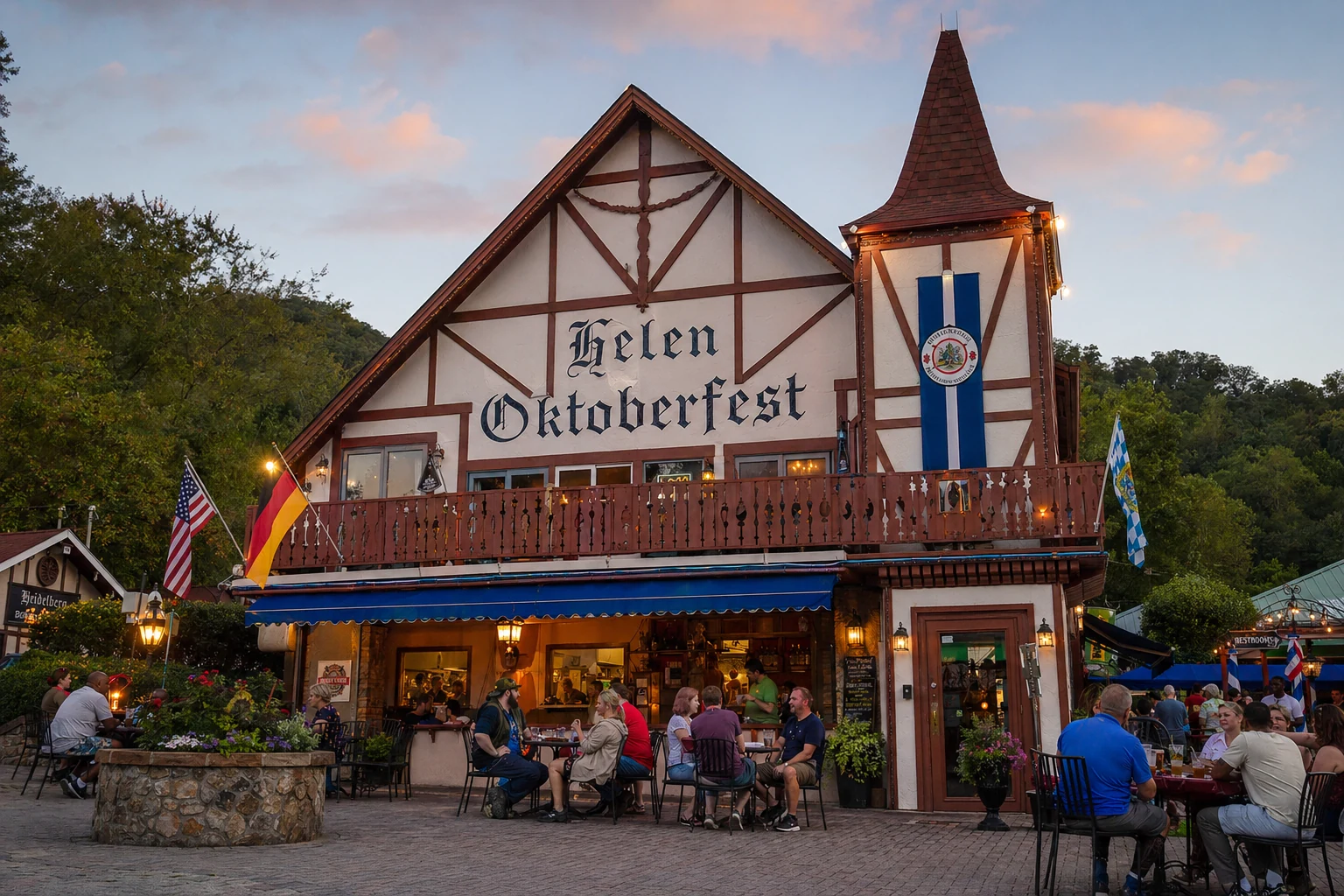
It worked almost immediately. Tourists came. Then more tourists came. Oktoberfest launched around 1970 and grew into one of the longest-running festivals of its kind in the South. By the 1980s, Helen had become a genuine destination. By now, it absorbs roughly two million visitors a year — a figure that strains comprehension when you are standing in a town of roughly 530 permanent residents.
The Problem With Calling It Inauthentic
The easy critique writes itself. Helen is a manufactured experience. It is a stage set built over a Georgia lumber town. The schnitzel comes from a kitchen in White County, not Bavaria. The window boxes overflow with plastic flowers in winter. The lederhosen are rented.
All of that is true. It is also roughly as interesting as noting that Colonial Williamsburg involves actors, or that Disneyland is not actually located in a fairy tale. The inauthenticity critique tends to collapse under its own weight once you spend an afternoon in Helen, because the category of "authentic" begins to feel slippery in ways that are worth sitting with.
What, exactly, would authentic look like? A preserved logging town, quiet and economically marginal, appealing to a very specific kind of nostalgia that most visitors do not actually carry? Helen's residents made a choice in 1969 to survive, and they made it by building something that people would travel to see. That choice is now over fifty years old. The kids who grew up in the painted-facade era are grandparents. Local restaurants have been owned by the same families for generations. The festival that started as a marketing experiment has genuine community roots now. At some point, invented becomes inherited.
What the River Does
Separate from the theming argument, there is something that Helen gets right that has nothing to do with painted buildings: the Chattahoochee River runs directly through downtown, and the town has built itself around that fact in a way that most mountain towns have not managed.
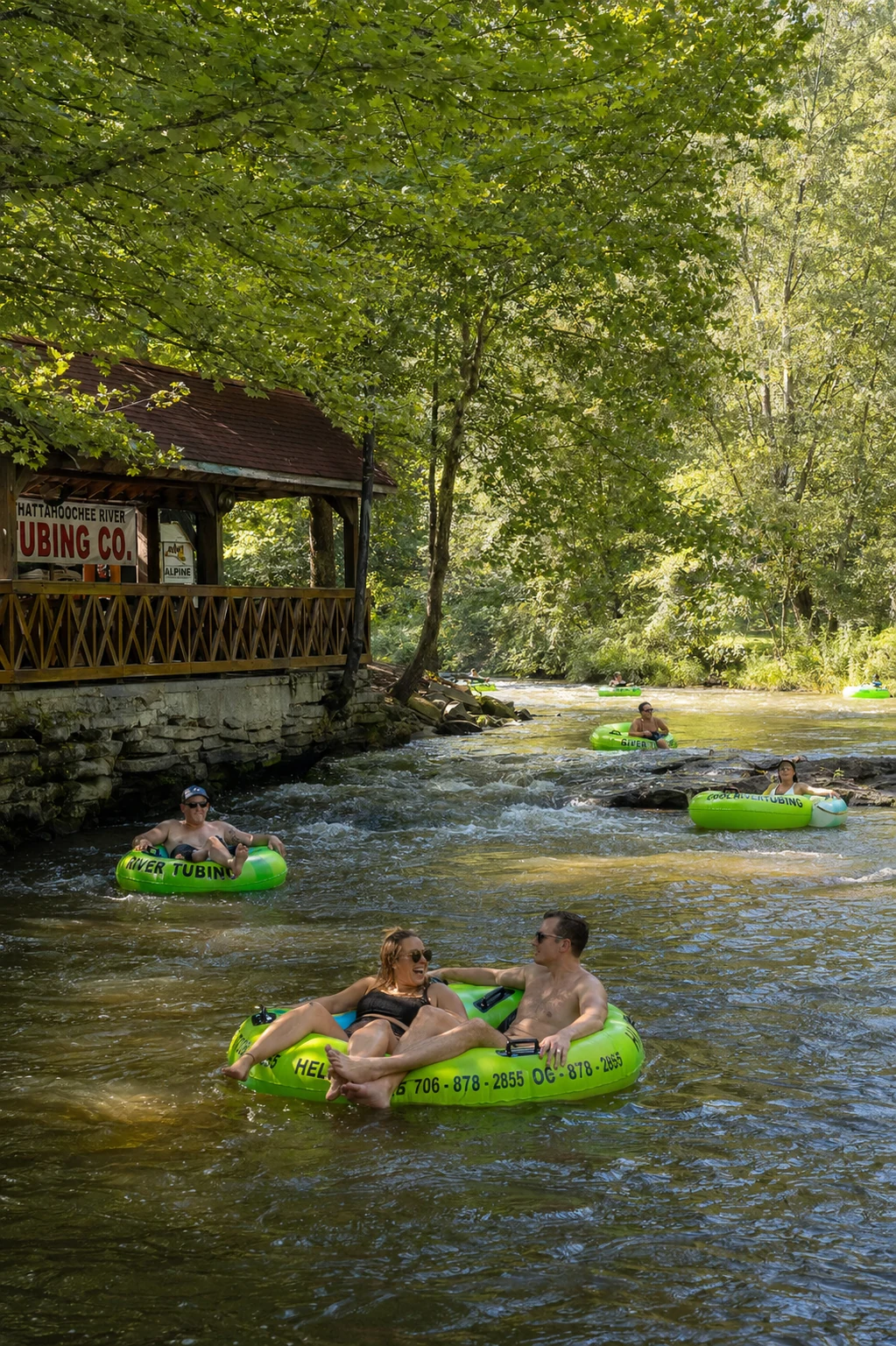
This is the upper Chattahoochee, still a few hours from its widening into the reservoir system south of Atlanta. Here it is narrow enough to wade across in most spots, clear enough to watch trout hold against the current, and fast enough to make tubing genuinely entertaining rather than just floating in place. The river walk through Helen's commercial district puts you within a few feet of moving water for most of the town's length. Restaurants have decks suspended over the current. In summer, tubers drift past the shopping district at eye level with the diners on those decks.
That proximity matters in a way that is hard to articulate until you are standing in it. Water has a specific effect on attention — it draws the eye, slows the pace, makes people willing to sit still and watch something for longer than they would otherwise. Helen works partly because the Bavarian facades give it a visual identity, but it also works because the river gives it an anchor. The buildings are the show. The Chattahoochee is the reason people stay longer than they planned.
The Mountains Are Not Decoration
Helen sits in a valley between Blue Ridge ridgelines that top out around four thousand feet. The surrounding Chattahoochee National Forest contains hundreds of miles of hiking trails, dozens of accessible waterfalls, the Appalachian Trail corridor, and some of the best trout fishing in the Southeast. None of this was built. None of it is themed. It was here long before anyone thought to put timber beams on a gas station.
This is the part of the Helen argument that skeptics often overlook. Yes, the village facade is manufactured. But you can drive fifteen minutes from downtown and stand next to Anna Ruby Falls — a double waterfall where two creeks converge into a single pool — and there is nothing manufactured about that. You can take GA-348, the Richard Russell Scenic Highway, up over the Blue Ridge crest and watch the ridgeline unfold in both directions on a clear day, and that requires no suspension of disbelief at all.
Helen works as a trip not because the alpine theme is particularly convincing but because it functions as a very good base camp. You can spend the morning at the waterfall, the afternoon at the beer garden, and the evening walking the river lit up by the building lights reflecting off the water. That itinerary holds together. It is more varied than most day trips within ninety miles of Atlanta, and it has a better answer to the question of what you do after lunch than most towns its size.
The Math of Two Million Visitors
Roughly two million people come to Helen each year. The town has 530 residents. That ratio — about 3,800 visitors for every one permanent resident — is not a typo. It is one of the more extreme visitor-to-population ratios of any small town in the country, and it creates a particular kind of pressure that shapes everything about how the town functions.
The economics are visible everywhere. Is Helen worth visiting? depends partly on what you are willing to tolerate about that ratio. The main street fills to capacity on October Saturdays in ways that make the river walk feel less like a stroll and more like a slow shuffle. Restaurants that seat 80 people face waits measured in hours. The parking situation, always tight, becomes genuinely stressful during peak season. These are the direct consequences of a small town successfully attracting far more visitors than it was built to handle.
What is remarkable is that the town has, mostly, absorbed this without losing its coherence. There are still local business owners, not just chains. The festival culture is community-organized, not imported wholesale from a hospitality conglomerate. The accommodations run from small family-owned inns to independent cabin rentals; the major hotel brands have not taken over. This is not the case everywhere a small town successfully monetizes its identity. The fact that Helen has retained something like a local character through fifty-plus years of heavy tourism is, in its own way, as interesting as the alpine facades.
The Permission to Enjoy It
There is a certain kind of traveler who arrives in Helen carrying a mild hostility toward the whole enterprise — the performative theming, the tourist infrastructure, the sense that this is not a real place in the way that a town with an organic history is a real place. I understand that posture. I held it myself the first time.
What loosens it, usually, is the Chattahoochee. You are walking the river path and a family of tubers goes by — a grandmother in the lead tube, a seven-year-old gripping the handles of the next one, everyone wet and loud and not caring about anything except the current — and the question of whether the building facades are historically authentic stops being interesting. The place is doing what it was always meant to do: giving people a reason to be outside, near water, in the mountains, not at work.
Helen's particular genius, if that is not too grand a word for a town that put fake German facades on a Georgia timber depot, is that it gave people permission to use the landscape. The Bavarian branding is the draw, the conversation piece, the reason to tell someone you are going to Helen rather than just driving north on GA-75 to look at mountains. But once people arrive, the mountains do the actual work. The theming is the hook. The Blue Ridge is what holds.
So the honest answer to whether Helen works is: yes, but not entirely for the reasons it advertises. The alpine village is real enough in its way — fifty years of investment and community identity make it more than a coat of paint. But the river and the ridgelines have always been here, waiting for someone to build a reason to come find them. In 1969, a group of desperate business owners accidentally built one of the better excuses for a North Georgia road trip in existence. That accident has held up longer than most deliberate plans.
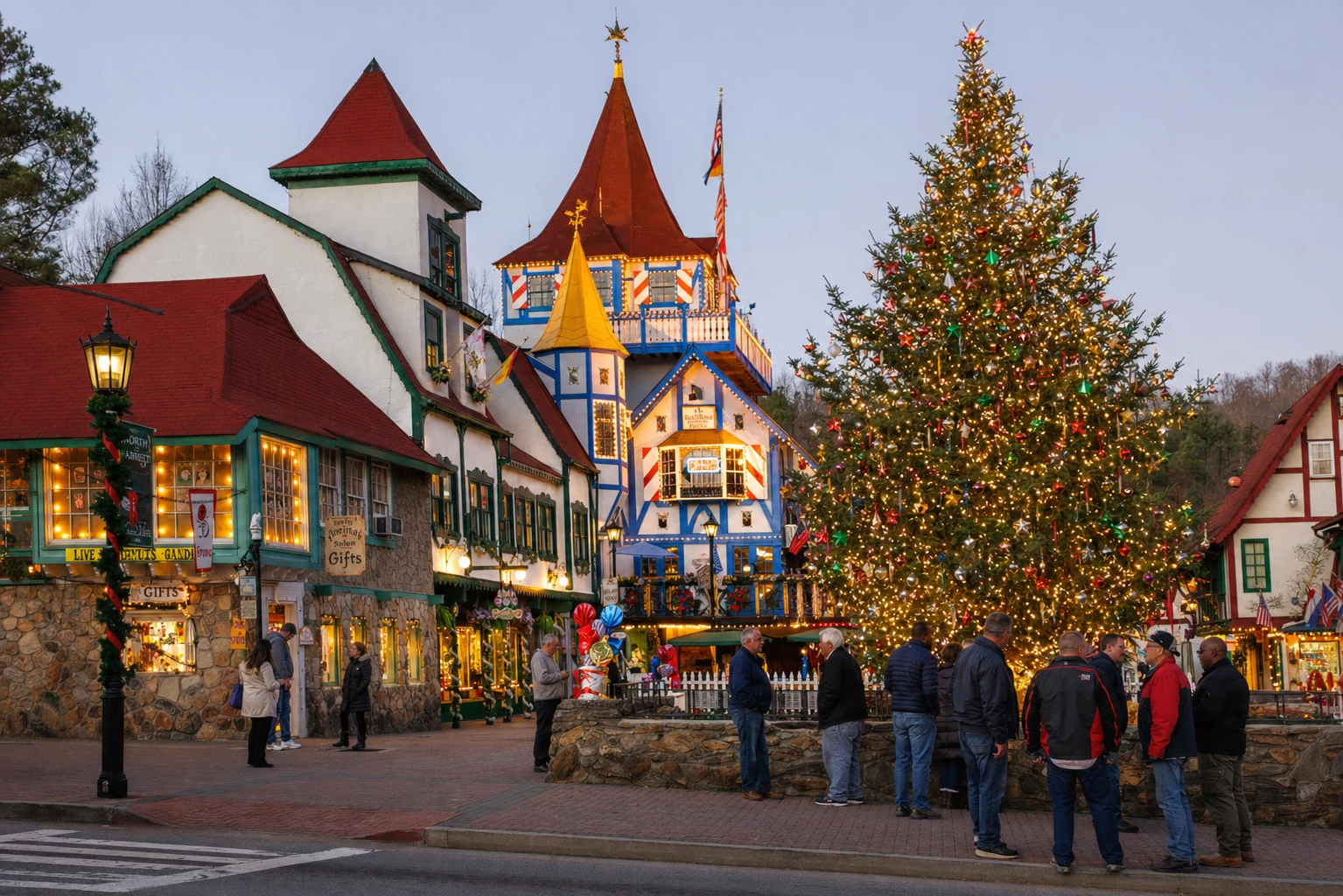
Whether you come for Oktoberfest, or a December weekend at the Christkindlmarkt, or a summer afternoon on the river, or just to drive the Russell Scenic Highway and stop somewhere for schnitzel on the way back — give it more credit than the premise deserves. You might find, as most visitors do, that it gives back more than you expected. Browse the full list of things to do and make your own itinerary. And when you are ready to book a bed for the night, the options range from downtown inns to deep-woods cabins.
Local writers covering the history, culture, and landscape of North Georgia's mountain country.