How It All Started: Mayor Hodkinson's Big Idea
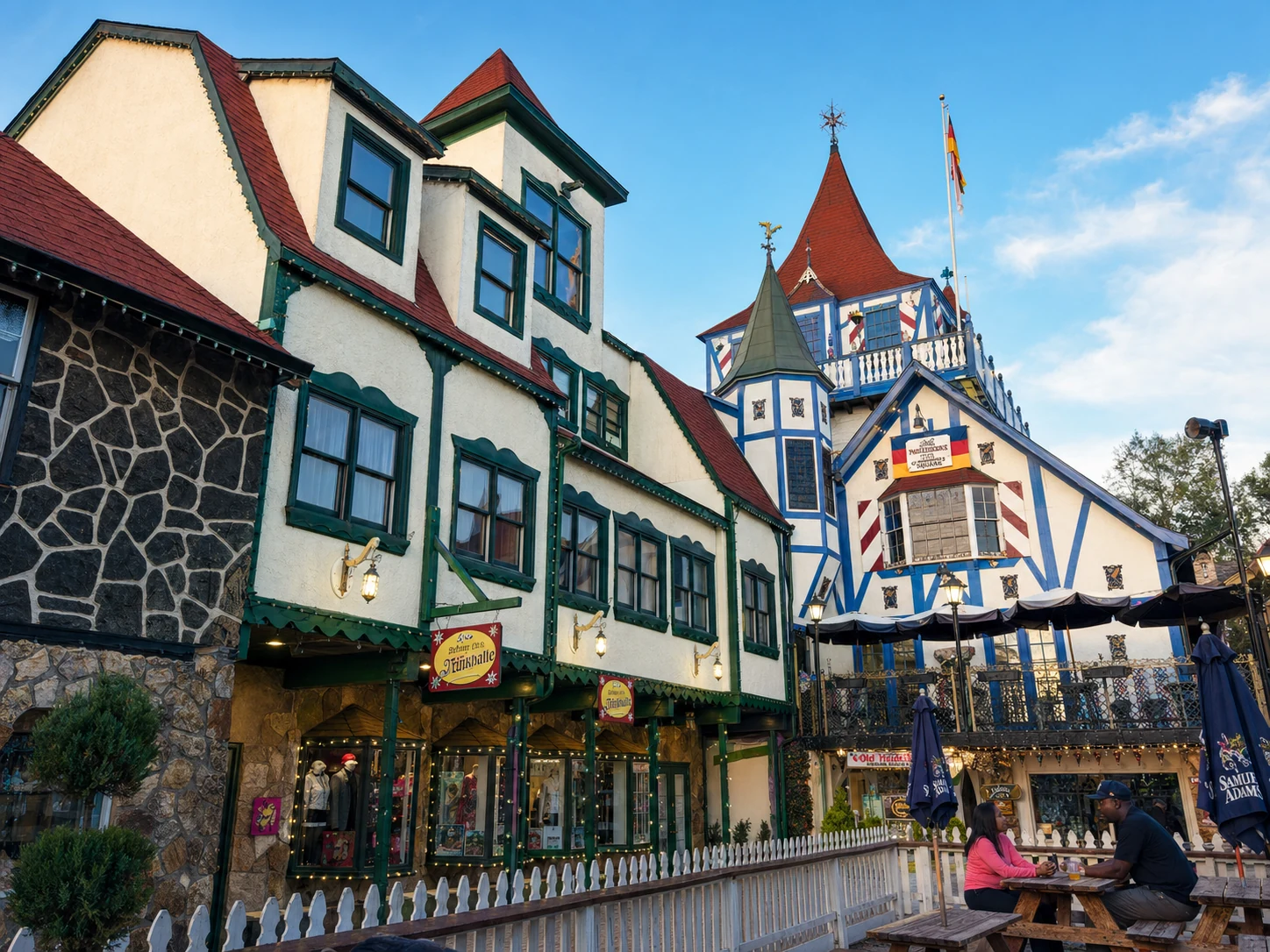
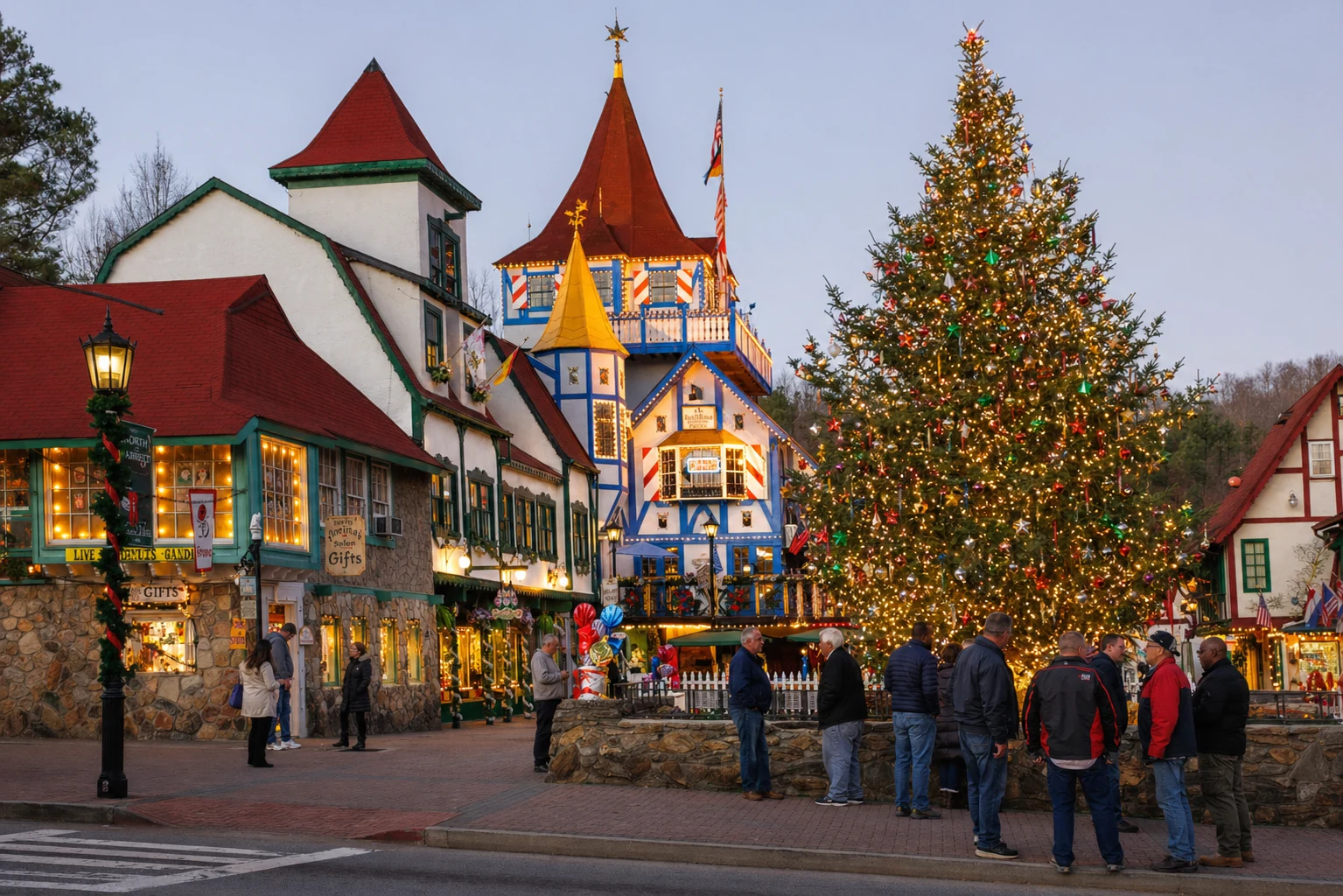
To understand Helen's Oktoberfest, you have to understand what happened to Helen in the winter of 1968–69. The town was a dying logging settlement tucked into a bend of the Chattahoochee River, and the mill had closed. Three local businessmen — Jim Wilkins, Bob Fowler, and Pete Hodkinson — sat down with artist John Kollock, who had served in Bavaria during his time in the Army, and asked him to sketch what the storefronts might look like if they were reimagined in the alpine style Kollock remembered. Those sketches became the full Bavarian transformation that defines the town today, and the story is worth reading in full on our complete history of Helen's alpine transformation.
By 1970, Hodkinson — soon to be mayor — wanted a festival to match the new architecture. The first Oktoberfest was a modest two-weekend affair held in a tent on the riverbank. Locals still talk about how skeptical they were that anyone would show up. Carloads did. Within five years the festival had outgrown the tent and the Helen Festhalle was purpose-built on Edelweiss Strasse to hold it. Fifty-six years later, the festival has never missed a year — not for recession, not for weather, not even for 2020, when a scaled-back version still took place with spaced tables. That continuity is the single most important thing to know about Helen's Oktoberfest: no other community celebration in the South has sustained itself this long.
Dates and Schedule for 2026
Helen's Oktoberfest 2026 is projected to run from Thursday, September 10, 2026 through Sunday, November 1, 2026 — roughly eight weeks, which is genuinely unusual for an Oktoberfest anywhere in the world. The festival operates on a tiered schedule that catches a lot of first-time visitors off guard. In the early weeks (the first two weekends of September), the Festhalle is open Friday and Saturday only. During the peak weeks from late September through mid-October, it shifts to Thursday, Friday, Saturday, and Sunday. In the closing weeks of late October, it drops back to Friday and Saturday only. Always confirm the current week's schedule on the Helen Chamber of Commerce website before you drive up, or call the Chamber directly at (706) 878-2181.
Doors at the Festhalle typically open at 5:30 PM on weekdays and around 12:30 PM on weekends, with the bands starting shortly after. The real peak — the weekend most locals brace for — is the first weekend in October, when leaf season begins and the mountain color starts to come in. If you want the full festival experience with maximum energy, that is your target. If you want the same music and food with room to breathe, aim for a Thursday evening during the second week, or a Sunday afternoon in late October. For the complete week-by-week breakdown, see our full Helen Oktoberfest schedule page.
Inside the Festhalle
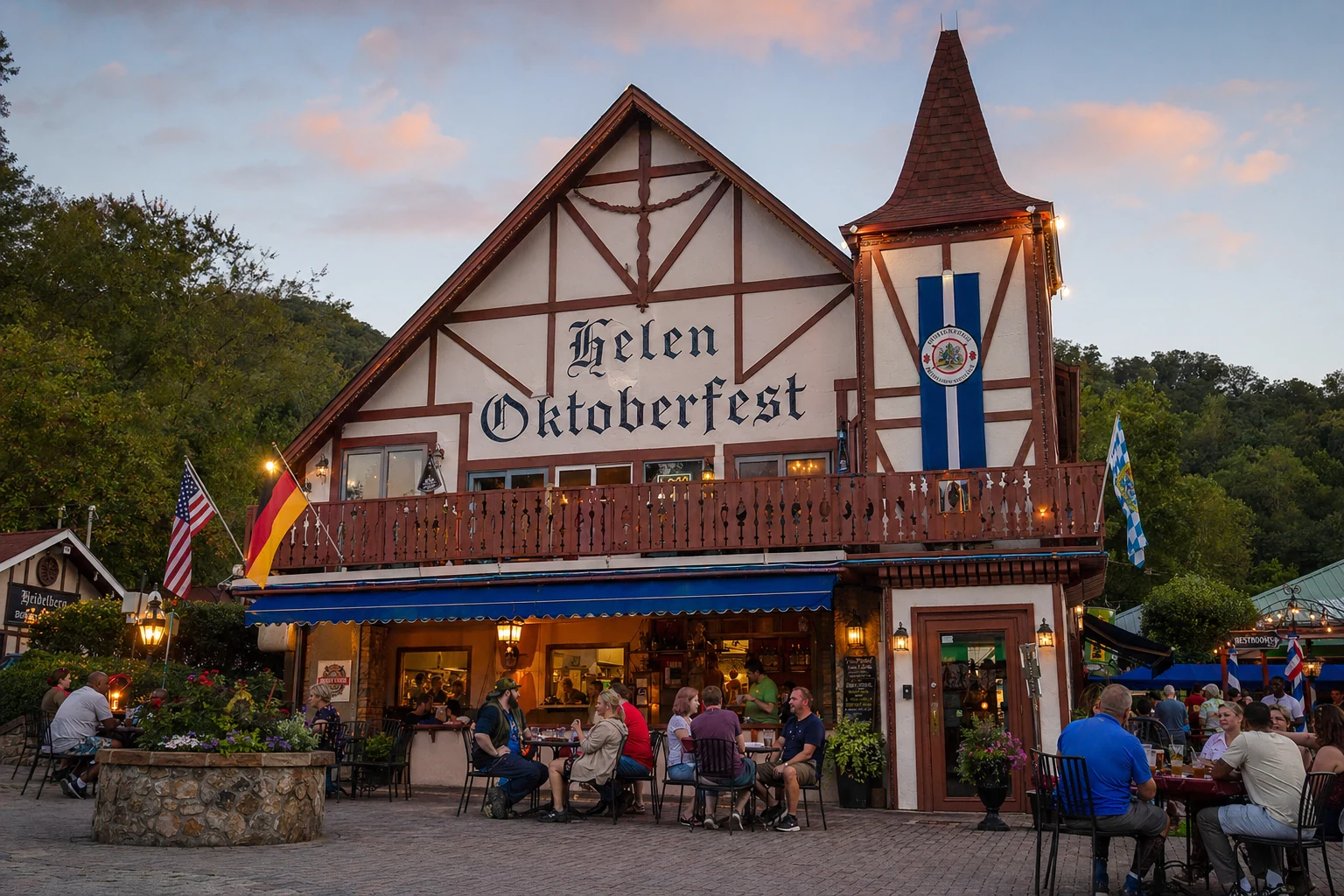
The heart of Helen's Oktoberfest is the Festhalle, a purpose-built open-air pavilion on the banks of the Chattahoochee at 1074 Edelweiss Strasse. It seats roughly 1,500 people at long communal tables, with a large wooden dance floor in the middle and a stage along one wall. The architecture is deliberately traditional German beer-hall style — exposed timber trusses, a pitched roof, and painted crests — but the side walls open to the river so you get the crisp mountain air along with the music. We have written a full background on the venue and its history in our Helen Festhalle guide, including floor plans and stage details.
The seating rule is simple: you sit where you find a spot. There are no reserved tables. That communal arrangement is the single thing that makes Helen's Oktoberfest feel like its Munich namesake. You will share your bench with a retired couple from Tennessee on one side and a bachelorette party from Atlanta on the other, and by the third polka you will all be linking arms for the toast. Restrooms are on the east side, beer and food stations run along the north and south walls, and a merchandise booth near the entrance sells steins, hats, and suspenders. Accessibility is good — the main floor is flat, paved, and step-free; see our Helen accessibility guide for full details on mobility access throughout the village.
Tickets and Pricing
The Festhalle is not free to enter — a common misconception because most of the village itself stays open and unticketed. Admission at the door runs roughly $10 on Thursdays and Sundays and $12–$15 on Fridays and Saturdays for 2026. Children under 12 are typically free with a paying adult. A souvenir glass liter stein is usually offered around $15 and is refillable for discounted pours all season, which is the move if you plan to visit more than one weekend. Cash and cards are both accepted at the door and most vendors. Beer runs about $8–$10 per liter stein depending on the pour, and a full plate of food (bratwurst, kraut, pretzel, potato salad) is generally $14–$18. An evening with two beers and dinner works out to roughly $45–$60 per person all-in — significantly less than a comparable evening in Munich or Milwaukee.
"Helen's Oktoberfest has the charm that bigger city celebrations cannot replicate. You are drinking beer in a Bavarian village surrounded by mountains, with a river running right beside you. The setting alone is worth the trip."
The Bands and the Chicken Dance
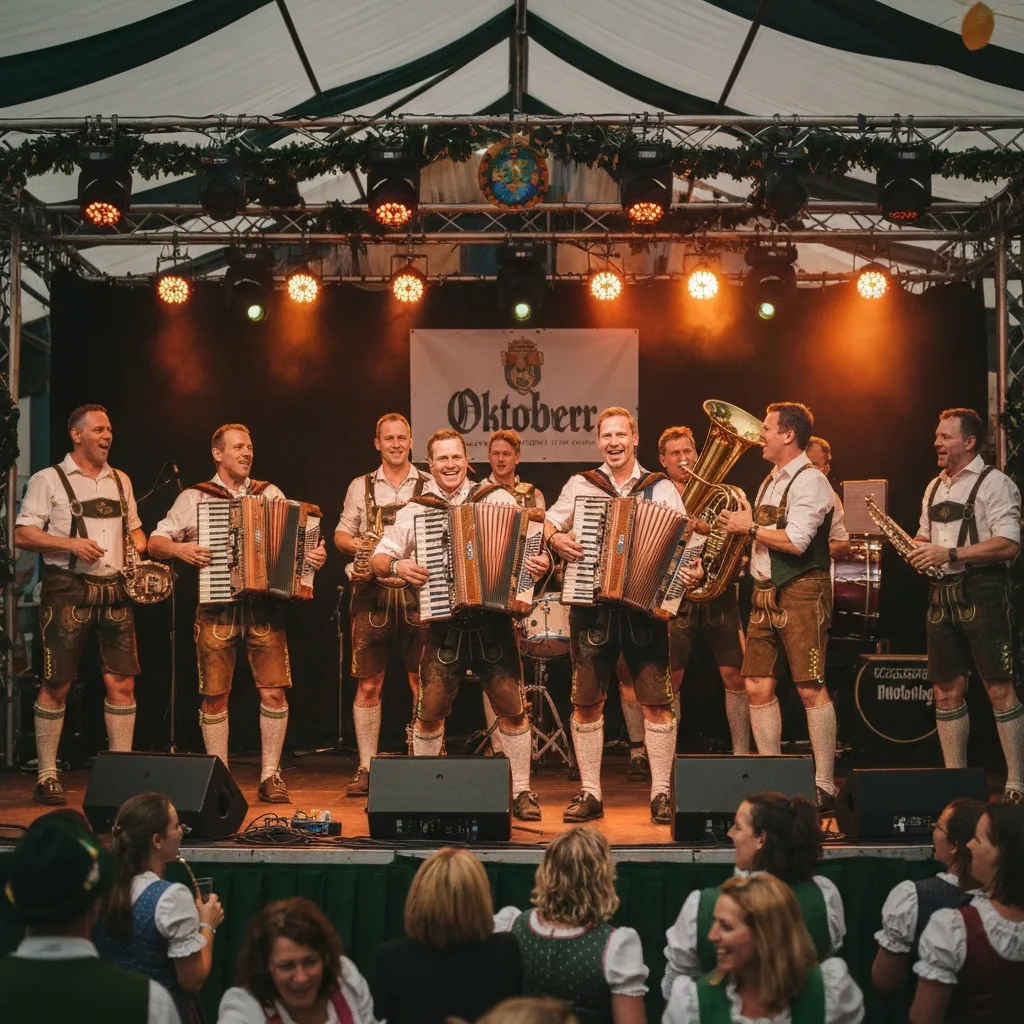
Music at Helen's Oktoberfest is authentic, loud, and constant. The Chamber rotates through a roster of touring German-style bands who play the full American Oktoberfest circuit each fall. Regulars over the last several seasons include The Alex Meixner Band (a Grammy-nominated polka and folk ensemble out of Florida who usually anchor a full week), The Happy Wanderers, The Alpenfest Band, and The International Brass Ensemble. The Chamber posts the weekly band schedule on helenchamber.com before the season opens.
The Chicken Dance is mandatory and happens at least three times per evening. If you have never seen 1,500 people flapping their elbows and wiggling in unison while a tuba plays, it is a sight. The other tradition to know is the Prosit toast — the band leads "Ein Prosit, ein Prosit, der Gemütlichkeit" about every twenty minutes, and every stein in the room goes up. The stein-holding competition (Masskrugstemmen) runs on select Saturday nights: contestants hold a full liter stein straight out at shoulder height, arm locked, and the last one with a level stein wins, usually a free night of lodging and bragging rights. Expect most finalists to last between four and six minutes.
Beer Offerings: What Is Actually on Tap
The beer list at the Festhalle leans on the Munich big six. You will reliably find Paulaner Oktoberfest Märzen and Hofbräu Oktoberfestbier — the two beers most associated with the Munich original — alongside Spaten Lager, Franziskaner Hefeweizen, Warsteiner Pilsner, and rotating seasonals. Pours are in proper 0.5L and 1.0L glass steins, not plastic. Non-alcoholic options include German sodas (Fanta is genuinely different here), several wines, and coffee. Beer sales stop about forty-five minutes before closing each night.
Beyond the Festhalle itself, most of Helen's German restaurants run their own Oktoberfest menus and beer specials from September through November. Hofbräuhaus often pours the same Hofbräu München lineup and takes reservations, which the Festhalle cannot. Bodensee Restaurant is the quieter, white-tablecloth option if you want schnitzel without the dance floor. King Ludwig's Biergarten has an outdoor deck overlooking the river and pours proper liters. All three participate in the Oktoberfest calendar with extended hours. For a broader survey of the food scene, see our Helen German food guide.
Food Inside the Festhalle
Food stands line the side walls of the Festhalle. Expect grilled bratwurst and knockwurst on crusty rolls, breaded pork schnitzel platters with potato salad, soft Bavarian pretzels the size of a dinner plate served with mustard or warm beer-cheese, sauerkraut, spätzle in brown gravy, leberkäse (Bavarian meatloaf), and rouladen on busier nights. The pretzel stand is almost always the longest line and is worth it — the pretzels are baked fresh in the village and delivered throughout the evening. For dessert, apple strudel and Black Forest cake are the standards. For those who prefer non-German options, standard American food (burgers, chicken tenders, fries) is available from a smaller counter. If you want to understand Helen's broader cultural context for all of this — why a town in Georgia serves rouladen at all — our Helen German culture guide is the place to start.

Opening Ceremony, Parade, and Costume Contests
The festival opens each year with a ceremonial keg tapping, usually on the first Saturday afternoon in September. The mayor of Helen or a visiting dignitary taps the first keg of the season — the call is "O'zapft is!" ("It's tapped!") — and the first beers are served free until the tap runs. Arrive by 11:30 AM if you want to be in the ceremony photo. The Oktoberfest Parade steps off from the north end of Main Street on the first Saturday morning, usually around 10 AM, and features local dance groups in tracht, vintage Volkswagens, the Helen Fire Department's antique pumper, and the first of the season's bands on a flatbed. It is a small-town parade — fifteen or twenty minutes end to end — but charming.
Costume contests (best dirndl, best lederhosen, best overall couple) run on select Saturday nights at the Festhalle with prizes from Helen merchants. Full tracht is welcome and common; you will see a lot of it from the second weekend on. If you want the dress code explained properly — including where locals rent versus buy — that is covered in our complete Helen Oktoberfest walkthrough. For families, sober family hours are generally the early afternoon slots on Saturdays and Sundays, when the crowd is smaller, the music is lighter, and the dance floor fills with kids doing the chicken dance with their grandparents. It is unreservedly wholesome.
Parking, Shuttles, and Designated Drivers
Parking is the one genuine headache of an Oktoberfest visit. Helen's street grid is compact and narrow. On peak Saturdays the village fills by 2 PM. Your best options in order: (1) the Helen City Lot at Chattahoochee Strasse and Brucken Strasse, roughly $10–$15 all-day; (2) the Edelweiss Strasse lots closest to the Festhalle, $15 on peak days; (3) the private lots along River Street, $10–$20 depending on proximity; and (4) the overflow lots at the north end of town, $5–$8 with a longer walk. Do not try to park on the shoulder of GA-75 — it gets ticketed and towed on weekends. Arrive by noon on Saturdays, by 4 PM on weekday evenings, and you will have the full menu of choices.
For anyone planning to drink more than a stein or two, the cleanest answer is to lodge within walking distance of the Festhalle and leave the car parked. Ridgewater Campground, about two miles north on GA-75, runs a festival shuttle for its guests that drops at the Festhalle corner and picks up hourly until closing. Several of the in-village inns on Edelweiss Strasse and Main Street are a short walk from the Festhalle. Rideshare (Uber and Lyft) works in Helen but coverage is thin on Saturday nights after 10 PM; many visitors pre-arrange rides with local taxi services such as Helen Cab at (706) 878-8000. The Chamber and the Festhalle staff will happily help you find a designated-driver solution — just ask at the door.
Insider Tips
- Best Nights: Thursdays during peak weeks have the smallest crowds, the same bands, and no lines at the pretzel stand.
- Lodging: Book 9–12 months ahead for peak weekends (late Sept through mid-Oct). Helen has fewer than 2,000 rooms total and they go fast.
- What to Wear: Lederhosen and dirndls are welcome and common. Comfortable shoes are essential — the dance floor gets lively.
- Weather: Mountain evenings drop into the 50s in September and the 40s in October. Bring a jacket; the Festhalle is open-air.
- Combine With: Hike Anna Ruby or Raven Cliff in the morning, nap, then walk to the Festhalle for the 5:30 opening.
- Cash: Bring some. The Festhalle takes cards, but the small vendor booths and tip jars move faster on cash.
Helen's Other Bavarian Festivals
If you miss Oktoberfest or want more of the same energy at other times of year, Helen runs two other major Bavarian-themed events that lean on the same community of musicians, cooks, and volunteers. The Christkindlmarkt in late November and early December turns the village into a traditional German Christmas market with wooden booths, glühwein, and carolers. Fasching — the Bavarian pre-Lenten carnival — runs in February with costumes, parades, and more polka. And for the completist who wants to see every page we have written on the topic, our Oktoberfest overview hub links all of it in one place.
Making a Weekend of It
The best way to experience Oktoberfest is as part of a longer Helen visit. Spend your days exploring the waterfalls, hiking the trails, tubing the Chattahoochee if the weather is still warm, and wandering the alpine shops. Visit the Nacoochee Indian Mound at the south end of the valley, drive the short loop to Stovall Covered Bridge, and stop at one of the Sautee wineries for a late-afternoon tasting. Then, as the mountain shadows lengthen and the evening air turns cool, walk down Edelweiss Strasse to the Festhalle, buy a stein, and join the celebration that has been bringing people together in these mountains for more than half a century. Prost!
Frequently Asked Questions
How long has Helen's Oktoberfest been running?
Helen's Oktoberfest launched in 1970 and has run continuously every autumn since then, making it the longest-running Oktoberfest in the United States. It was conceived in the wake of Helen's 1969 Bavarian-village redesign as an economic engine to keep tourists coming through the shoulder seasons. The 2026 edition marks its 56th consecutive year.
When is Helen Oktoberfest 2026?
Helen Oktoberfest 2026 runs Thursday, September 11 through Sunday, November 2. September operates Thursday through Sunday only. October shifts to daily operation. The final two October weekends are traditionally the busiest days of the entire festival, with Festhalle often reaching capacity by early evening.
What should you wear to Oktoberfest?
Most attendees wear casual clothes — jeans, flannel shirts, and a light jacket for the October evening chill. About 15 to 20 percent of the crowd wears lederhosen, dirndls, or other traditional Bavarian dress, and it's welcomed but never required. Closed-toe comfortable shoes matter more than costume. The Festhalle floor sees a lot of foot traffic and dancing.
Which days have the smallest crowds?
Thursdays and Sundays during Oktoberfest deliver the smallest crowds alongside the lowest admission ($10 versus $15 Friday-Saturday). You get the same band lineup, same food menu, and same Festhalle atmosphere with typically half the weekend attendance. If your schedule allows, a Thursday night or Sunday afternoon visit is the best value-per-dollar window of the festival.
How far in advance should I book a hotel?
For October weekends, book hotels six to eight weeks in advance and cabin rentals three to four months out. September weekends are easier with two to four weeks of lead time. If you wait too long, look at overflow lodging in Cleveland (15 minutes south), Dahlonega (35 minutes), Hiawassee (40 minutes), or Blairsville, all of which stay cheaper even on peak weekends.
What is Festhalle etiquette?
When you toast with steins, clink at the bottom rims rather than the glass tops — stein tops were historically considered more fragile. Say "Prost!" when you clink and make brief eye contact. Don't take glassware outside the Festhalle. Tip your servers cash at each order. Stand on the benches to sing along with the band (it's traditional, not rude). Take turns dancing in the central floor space.
Local writers sharing the hidden stories and trails of North Georgia's mountain country.
Related Stories
More food, culture, and events in Helen