The Legend of the Fairy Tears
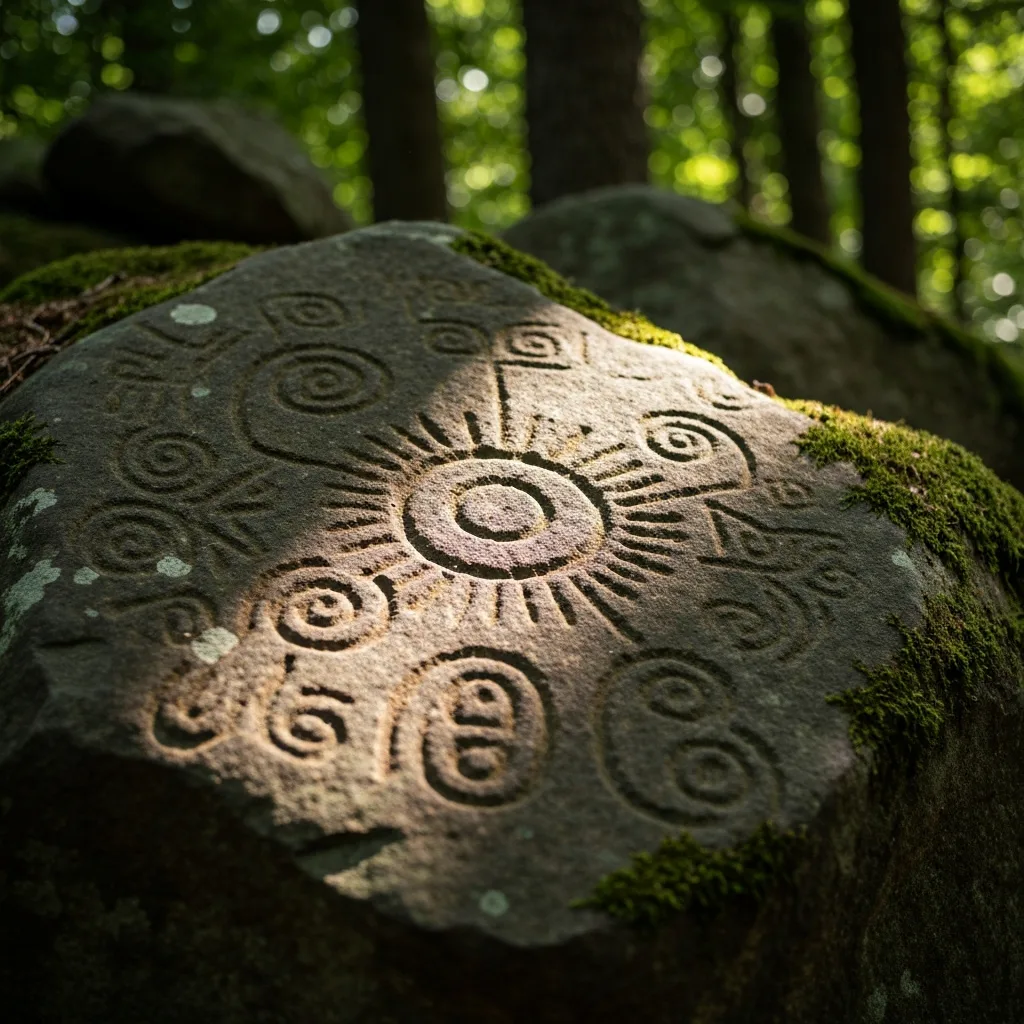
The most widely told legend about fairy crosses comes from the Cherokee and the early Appalachian settlers who lived alongside them. According to this story, when Christ was crucified, the fairies of the mountains wept. Their tears fell to the earth and crystallized into the shape of the cross, a permanent record of their sorrow embedded in the stone of the Blue Ridge. Any person who finds a fairy cross, the legend says, is blessed with good luck and protection from harm.
A parallel legend connects the crystals to the Cherokee Trail of Tears. In this version, when the Cherokee were forcibly removed from their mountain homeland in 1838, the Little People -- the Yunwi Tsunsdi, the fairies and nature spirits of Cherokee tradition -- wept at the injustice, and their tears fell to the earth and crystallized into the cross-shaped stones that are still found in the soil where the Cherokee once lived. This version of the legend is especially poignant because the Trail of Tears passed directly through the areas of Fannin County where staurolite crystals are most commonly found. The idea that the very ground remembers the sorrow of the removal, encoding it in stone for those willing to look, gives these small brown crystals a weight that far exceeds their physical mass.
There are other versions of the legend as well. Some Appalachian families tell the story that fairies were dancing at a woodland ball when a messenger arrived with the news of the Crucifixion. The fairies wept, and their tears struck the ground and hardened into the shape of the cross. Others say simply that finding a fairy cross means that a fairy has chosen you, and that the cross will protect you from harm, bring good fortune, and ward off evil spirits. Whatever the version, the consistent thread is that these are not ordinary stones. They are gifts from another world, shaped by grief and given in blessing.
The Geology
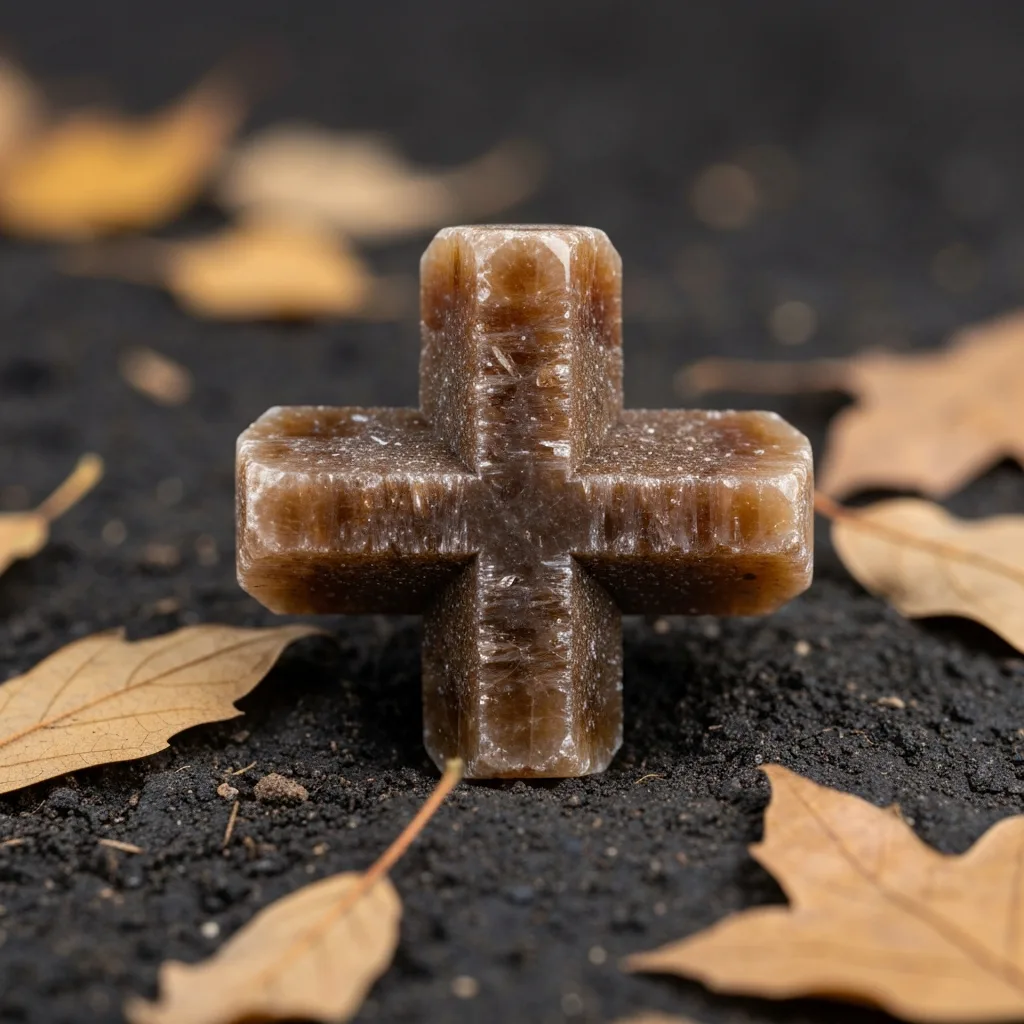
The scientific explanation for fairy crosses is, in its own way, almost as remarkable as the legend. Staurolite is an iron aluminum silicate mineral that forms under specific conditions of heat and pressure during metamorphism -- the process by which existing rocks are transformed by geological forces deep within the earth. What makes staurolite unusual is its crystal structure, which naturally produces twinned crystals that intersect at either 60 or 90 degrees, creating the distinctive cross shape.
The 90-degree crosses are the most prized and the most closely associated with the fairy cross legend, as they form a nearly perfect right-angle cross. The 60-degree twins produce a more X-shaped or star-shaped crystal. Both forms are found in the Blue Ridge, but perfect 90-degree crosses are relatively rare, which adds to their perceived value and mystique. The crystals are typically dark brown to reddish-brown and range in size from a few millimeters to several inches.
"Presidents Theodore Roosevelt and Woodrow Wilson both reportedly carried staurolite fairy crosses as good luck charms. Thomas Edison was another collector. The crystals have been prized as talismans for centuries."
Where to Find Them
The best-known staurolite hunting grounds in North Georgia are in Fannin County, particularly in the area around Blue Ridge and Mineral Bluff. The crystals weather out of the metamorphic rock and concentrate in stream beds and clay soils, where they can be found by careful searching. The best technique is to look in areas where soil has been freshly exposed by erosion, road cuts, or creek bank collapse. Rain is your friend: a good downpour washes soil away from the crystals and makes them easier to spot.
Several locations along the Toccoa River and its tributaries are productive hunting grounds. The key is to look in areas with exposed mica schist, the metamorphic rock that hosts the staurolite crystals. The crystals are harder than the surrounding rock, so they tend to accumulate in creek gravel after the softer matrix erodes away. Look for small, dark brown objects amid the creek pebbles, and you may find your own piece of Appalachian legend.
Hunting Tips
- Best Area: Fannin County, particularly along the Toccoa River and its tributaries, about 1 hour north of Helen.
- Best Time: After heavy rain, when crystals are washed clean and newly exposed.
- What to Look For: Small, dark brown cross-shaped crystals in creek gravel or exposed clay soil.
- Bring: Old shoes, a small garden trowel, and a bag for your finds. Patience is essential.
- Note: Collect only on public land or with landowner permission. Many shop in Helen sell fairy crosses as well.
Famous Collectors
Fairy crosses have been collected and treasured for centuries. Presidents Theodore Roosevelt and Woodrow Wilson reportedly carried staurolite crosses as good luck charms. Thomas Edison was another notable collector. The crystals have appeared in numerous publications on minerals and folklore, and they remain one of the most popular souvenirs from the Blue Ridge region. Many shops in Helen sell fairy crosses, both natural and polished, and they make a distinctive and meaningful keepsake from a visit to the mountains.
But there is something incomparably satisfying about finding your own. To kneel in the red clay of a Fannin County creek bank, to brush dirt away from a small brown crystal and see the unmistakable cross shape emerge, is to hold in your hand a piece of the earth that is hundreds of millions of years old, shaped by forces almost beyond comprehension into a form that has inspired legends of fairies and tears, faith and loss, for as long as anyone can remember. That is worth getting your shoes dirty for.
Local writers sharing the hidden stories and trails of North Georgia's mountain country.
Continue Exploring
More stories from North Georgia
Related Stories
More natural wonders and mysteries from the mountains