The Bridge
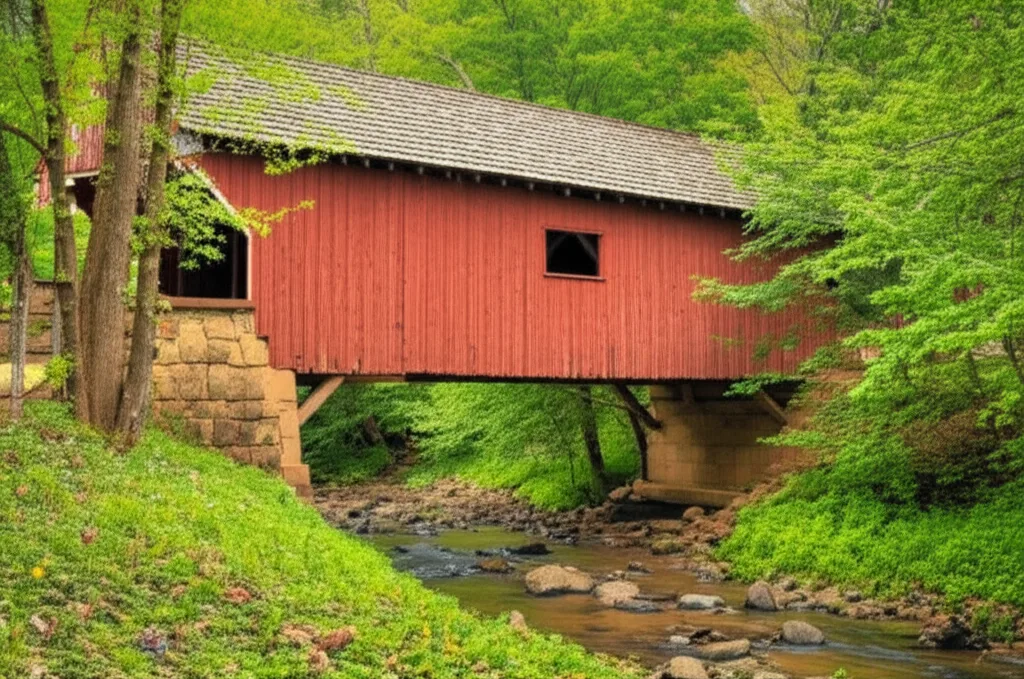
Built in 1895, the Stovall Mill Covered Bridge spans Chickamauga Creek in the Sautee-Nacoochee Valley, just a few miles south of Helen on GA-255. It was built to serve the Stovall family's grist mill, which operated on the creek until the early twentieth century. The bridge is a kingpost truss design, the simplest and oldest form of covered bridge construction, with a single central vertical timber supporting the span. Its weathered wooden planks and hand-hewn timbers have been repaired and reinforced over the decades, but the bridge retains its original character.
The bridge was closed to vehicular traffic years ago and now serves as a pedestrian crossing and historical landmark. It is listed on the National Register of Historic Places and is one of only a handful of covered bridges remaining in Georgia. On any given afternoon, you will find photographers, tourists, and the occasional wedding party making use of its photogenic charms. But visit at night, and the atmosphere changes considerably.
The Legend of the Flood
The most common version of the Crybaby Bridge legend goes like this: sometime in the 1890s, a family was crossing the bridge in a horse-drawn carriage during a sudden mountain storm. Chickamauga Creek, normally a gentle stream, had risen rapidly from heavy rain upstream. As the carriage reached the middle of the bridge, a wall of water hit, sweeping the carriage, the horse, and the family off the bridge and into the torrent. The parents and older children were found downstream the next day. The baby was never recovered.
Since then, the story goes, visitors to the bridge at night have reported hearing a baby crying from beneath the structure, as if the lost infant is still calling for parents who cannot hear. Others report the sound of horse hooves and wooden carriage wheels on the bridge planks when no one is crossing -- the phantom horse-drawn carriage making its final, doomed crossing again and again through eternity. A few claim to have seen a faint light moving along the creek, as though someone is carrying a lantern and searching the banks for the child who was never recovered. Some versions of the legend add that if you park on the bridge at midnight, you can hear the baby's cries rising from the water below, growing louder and more desperate until the sound becomes unbearable and you have no choice but to drive away.
"Park your car on the bridge at midnight, turn off the engine, and listen. If you hear a baby crying, the legend says you should drive away and not look back. Whatever is making that sound does not want to be found."
Separating Fact from Fiction
Is any of it true? Flash floods are absolutely a real danger in the North Georgia mountains, and Chickamauga Creek has flooded many times over its history. Whether a specific family was swept away from the bridge in the 1890s is harder to confirm. County records from that era are incomplete, and the legend has been told and retold so many times that the original details, if there were any, have been polished smooth by repetition.
As for the sounds, skeptics point to the natural acoustics of covered bridges (which amplify and distort sounds from the creek below), the calls of barred owls and other nocturnal wildlife, and the power of suggestion when you visit a reputedly haunted site at midnight expecting to hear something strange. Believers counter that the sounds are too specific and too consistent across decades of reports to be dismissed as creek noise and owl calls. The debate, like most debates about ghosts, is unlikely to be resolved.
Hollywood Comes to the Valley
The Stovall Mill Covered Bridge has one genuine Hollywood credit to its name, and it is a good one. In 1951, the film "I'd Climb the Highest Mountain," starring Susan Hayward and William Lundigan, used the bridge and the surrounding Nacoochee Valley as a primary filming location. Hayward, one of the biggest stars in Hollywood at the time, spent weeks in the valley during production, and the film showcased the bridge, the mist-shrouded mountains, and the pastoral beauty of the Sautee-Nacoochee community to a national audience for the first time.
The movie, based on a novel by Corra Harris about the life of a Methodist minister's wife in the North Georgia mountains, captured the rural beauty of the valley with a warmth and authenticity that resonated with audiences. The Stovall Mill Bridge appeared in several scenes, its weathered timbers and covered span providing the kind of picturesque backdrop that Hollywood location scouts dream about. The film's success brought national attention to the area and cemented the bridge's status as a regional landmark -- a status that the ghost stories have only amplified in the decades since. Today, the bridge is arguably more famous for its phantoms than for its film career, but Susan Hayward got there first.
Visiting the Bridge
The Stovall Mill Covered Bridge is located on GA-255 (Stovall Mill Road) in the Sautee-Nacoochee community, about 4 miles south of Helen. There is a small gravel parking area next to the bridge. Visits are free and the site is accessible at any time, though if you plan to go at night to test the legend, please be respectful of the nearby residents who have to live with curious ghost hunters parking on their road.
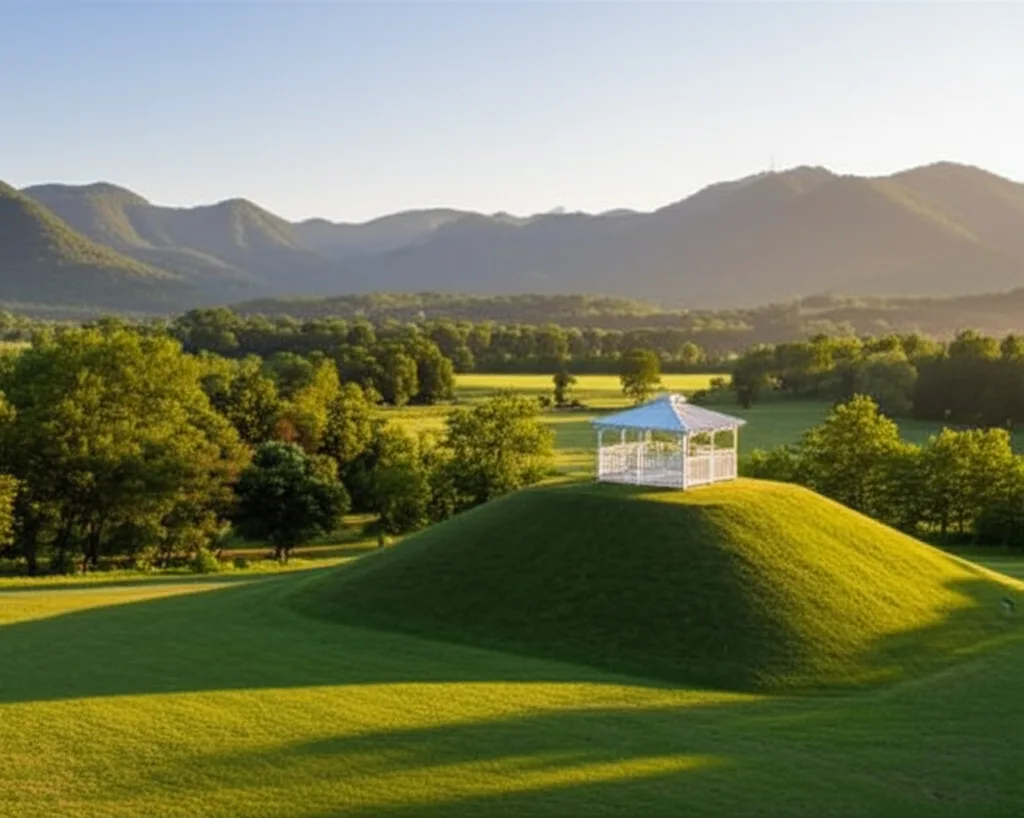
Pair your visit with a stop at the nearby Sautee Nacoochee Center, a community arts center housed in a charming old schoolhouse, and a drive past the Nacoochee Mound with its iconic white gazebo. Together, these three stops make for a fascinating afternoon of history, culture, and maybe a touch of the supernatural.
Visitor Information
- Location: GA-255 (Stovall Mill Road), Sautee-Nacoochee, GA
- From Helen: About 4 miles south, a 10-minute drive.
- Fee: Free. Open at all times.
- Combine with: Nacoochee Mound viewpoint, Hardman Farm, and Sautee Nacoochee Center.
Local writers sharing the hidden stories and trails of North Georgia's mountain country.
Continue Exploring
More stories from North Georgia
Related Stories
More legends and haunted history from the mountains