Mountain Weather Guide
Month-by-month weather in Helen, what changes with elevation, and what to pack in each season
The short answer
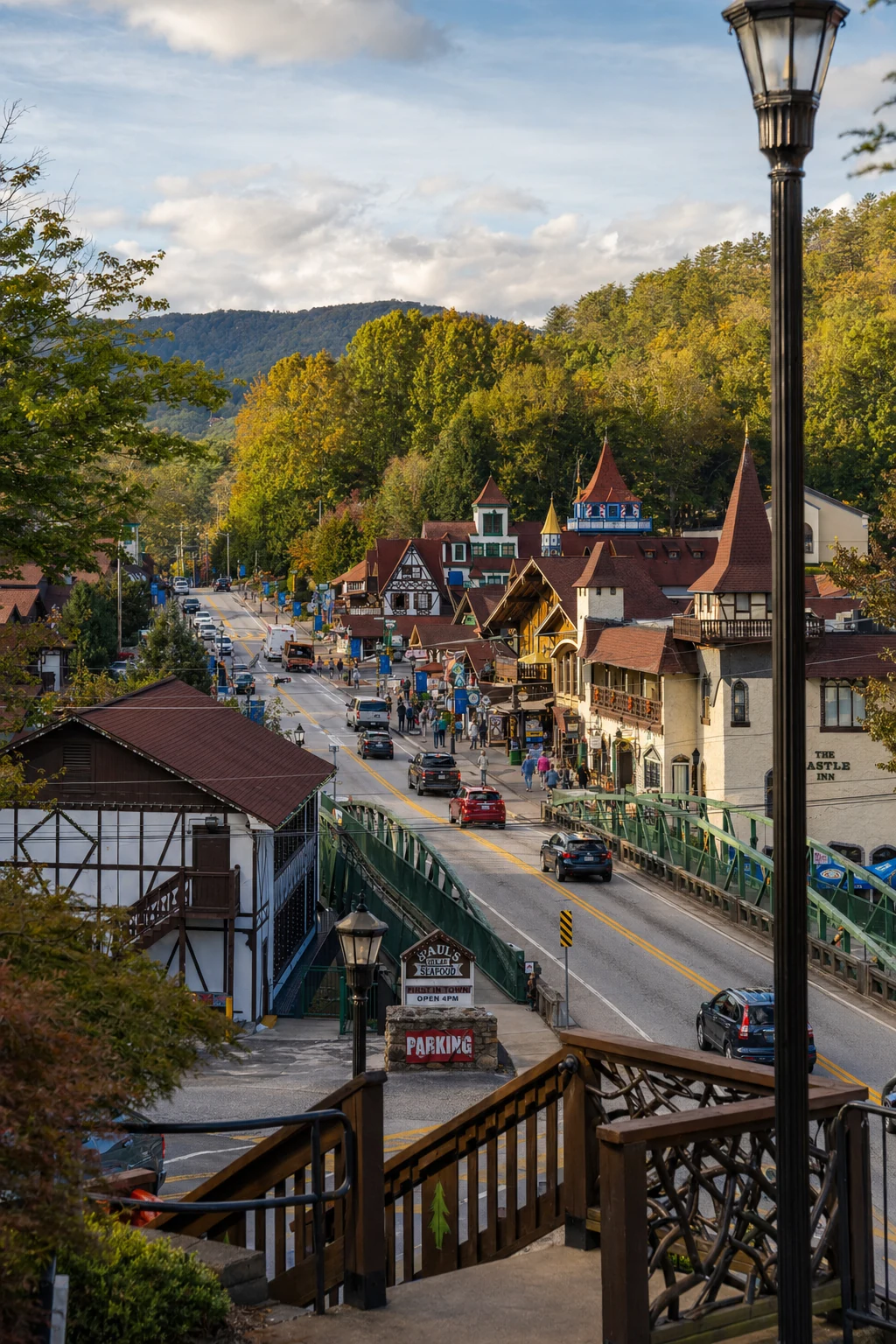
Helen sits at about 1,440 feet in the Georgia mountains, and the weather here is cooler and wetter than in Atlanta. Moist air gets pushed up the ridges, cools, and drops its water on the way, so the hills around town pick up around 72 inches of precipitation a year (see the NOAA climate normals for the Helen station).
The upshot for a visit: pack layers every time of year, expect a shower to roll through on a summer afternoon, and check the forecast for the elevation you're actually going to, not just for town.
Month by month in Helen
Tap a month for the details
Source: NOAA 1991-2020 climate normals for the Helen station (USC00094230). Averages, not forecasts; the ridges run cooler than town.
| Month | Average high °F | Average low °F | Rain (in) | Snow (in) |
|---|---|---|---|---|
| January | 49 | 29 | 6.8 | 0.5 |
| February | 53 | 31 | 6 | 0.7 |
| March | 61 | 36 | 6.8 | 0 |
| April | 70 | 43 | 5.8 | 0 |
| May | 77 | 52 | 5.6 | 0 |
| June | 83 | 61 | 6.3 | 0 |
| July | 86 | 65 | 5.6 | 0 |
| August | 85 | 64 | 6.6 | 0 |
| September | 80 | 58 | 5.3 | 0 |
| October | 70 | 46 | 4.9 | 0 |
| November | 60 | 36 | 6 | 0 |
| December | 51 | 32 | 7 | 0.3 |
Source: NOAA 1991 to 2020 climate normals for the Helen station. Averages hide a lot; any given day can run well above or below them. Check the National Weather Service forecast before you drive up.
How the seasons feel
Winter
Daytime highs sit in the upper 40s to low 50s and most nights in December through February drop to freezing or below. Helen averages only about 1.5 inches of snow a year, so don't count on it; cold rain is more common.
Spring
Highs climb from the 60s in March to the upper 70s in May, and mornings can still start in the 30s early in the season. April and May bring plenty of rain, so trails get muddy.
Summer
Highs run in the low to mid 80s, and July is the warmest month. Helen sees about 10 days a year at or above 90°F in July and a handful in June and August. Afternoon thunderstorms are common in the mountains, so start hikes early.
Fall
This is the favorite season for good reason: September highs are around 80, October highs around 70 with lows in the mid 40s, and October is the driest month of the year. Evenings cool off quickly.
Why elevation matters
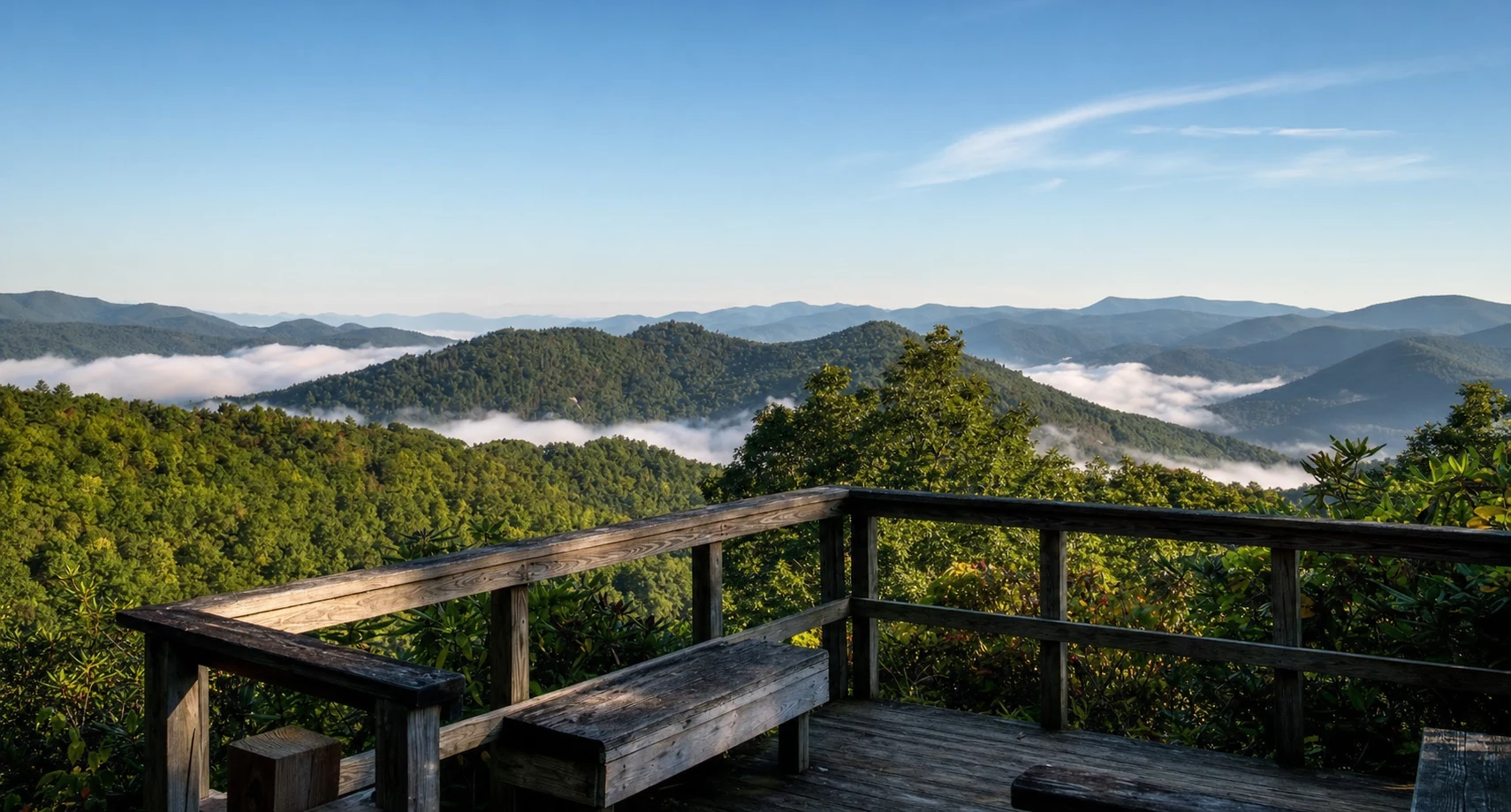
Town sits around 1,440 feet, but many of the hikes and drives you'll want go much higher. Brasstown Bald tops out at 4,784 feet, Georgia's highest point, and about 40 minutes from town by road. It runs noticeably cooler and windier up there than in Helen, so a day that feels mild at the Welcome Center can feel like a different season at the summit. Hogpen Gap on Georgia 348 (about 3,460 feet) and Unicoi Gap on Georgia 17/75 (about 2,940 feet), where the Appalachian Trail crosses, are good examples.
Elevation also sets the fall color schedule. The Forest Service notes that color starts on the highest peaks and peak drops roughly 1,000 feet in elevation per week, which is why the ridges turn before the river valley does. Our fall color guide has this year's timing.
Thunderstorms and lightning
Summer storms in the mountains build fast in the afternoon. The National Weather Service lightning safety page has the basics: when you hear thunder, you're close enough to be struck, so get indoors or into a hard-topped vehicle. Open summits, bald ridgelines and the water are the worst places to be. If your hike has an exposed top, plan to be off it by early afternoon.
What to pack
| Season | Bring |
|---|---|
| Winter (Dec to Feb) | Insulated jacket, hat and gloves, warm socks. Roads and trails can ice over on cold mornings, so traction cleats are worth it for hikes. |
| Spring (Mar to May) | Fleece or light jacket, rain shell, waterproof shoes. Trails stay muddy after rain. |
| Summer (Jun to Aug) | Breathable layers, sun protection, a rain shell for afternoon storms, extra water. Hike early. |
| Fall (Sep to Nov) | Layers you can add or shed, a warm hat for evenings, a rain shell. Nights get cold fast, especially above 3,000 feet. |
A small daypack with a rain shell, an extra layer, water, and a headlamp covers most day trips. Bring different shoes for the river and for the trail; both are on the menu in Helen.
Related guides
For longer-range planning, see North Georgia weather and climate, the stargazing guide for clear-night planning, and our fall color forecast page. For scenic drives that climb through several elevations, the Russell-Brasstown Scenic Byway is a 40-mile loop on Georgia 17/75, 180 and 348.
Related Imagery from Around Helen