
How Helen Became a Bavarian Village
The 1969 story behind Helen's half-timbered facades, and the zoning rules that keep every building in town looking Alpine.
The 1969 revitalization was started by three businessmen, Pete Hodkinson, Jim Wilkins, and Bob Fowler, not three artists. They hired a single artist, John Kollock, to sketch the redesign. What he drew stuck: the "Alpine Bavarian" look is not just a suggestion anymore but a legal requirement, with zoning codes that dictate roof pitches, materials, and "Classic Southern German" styling for every building in the commercial district.
Kollock provided the foundational sketches, but the actual building fell to local craftsmen Ray L. Sims and J.S. Chastain. Later, artist Joseph Mahler shaped the town's look through extensive mural work.
What to Know Before You Go
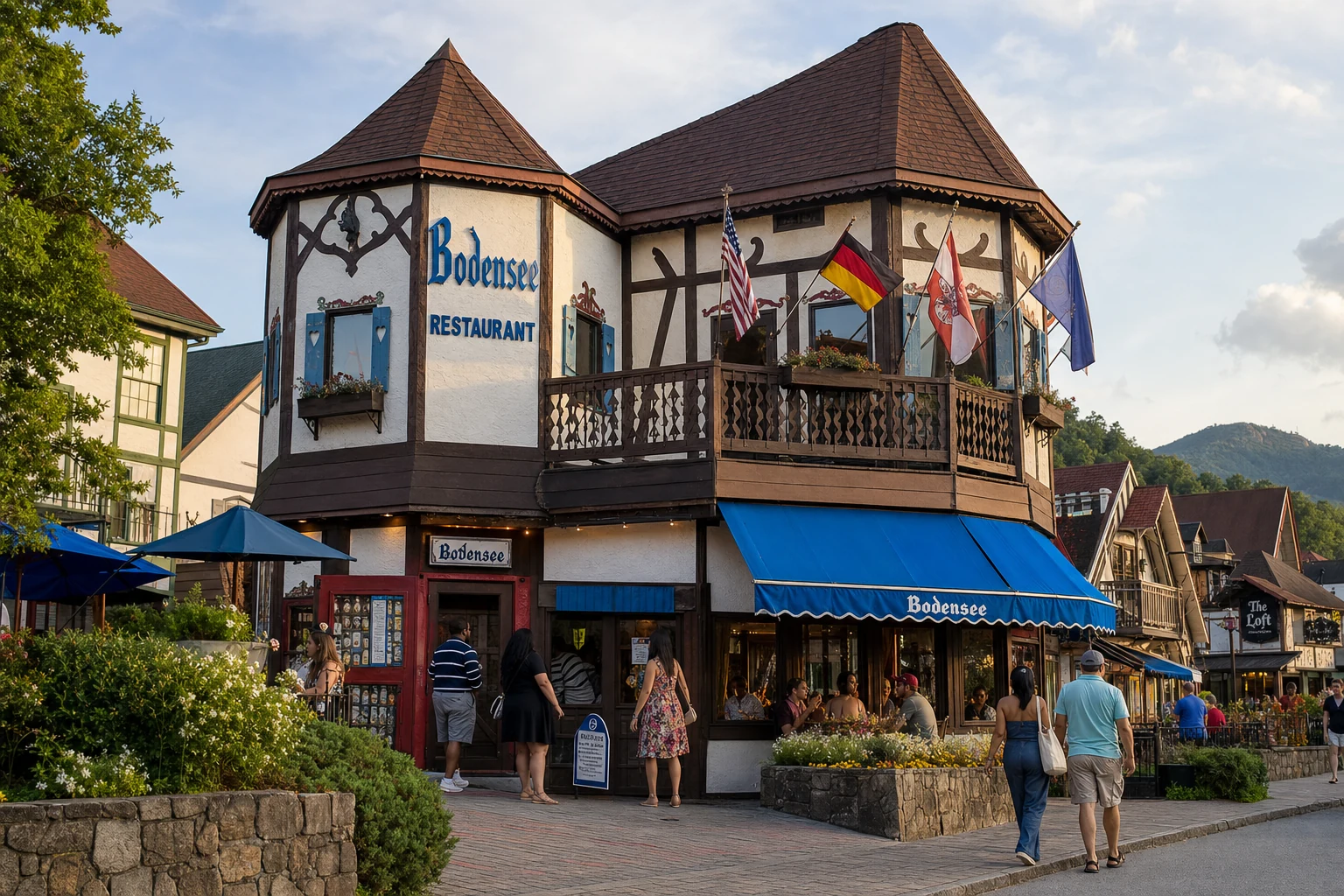
In 1969, Helen was a dying lumber town. Today it looks like a Bavarian village dropped into the Blue Ridge Mountains, and it is one of the most visited small towns in the Southeast. The transformation was not led by German immigrants -- it was a group of local business owners fighting for economic survival. They got artist John Kollock, who had been stationed in Bavaria during his military service, to sketch out what the buildings could look like with half-timbered facades, steep gable roofs, and painted murals. The whole town went for it. Now strict zoning codes require every building in the commercial district to follow the Bavarian style -- even the gas stations and the bank. Helen is the third most-visited city in Georgia, and it has a sister-city relationship with Füssen, Germany, which gives the whole enterprise a bit more authenticity than you might expect.
What Helen Really Is
For all the half-timbering and painted murals, Helen is an "Appalachian Bavaria." The architecture takes German forms and bends them to American commercial needs, so what you get is a hybrid built for tourism and a consistent look rather than strict historical accuracy. That is not a knock on it. The town knew exactly what it was doing, and the result holds together better than most themed places ever manage.
The 1969 Transformation Story
By the late 1960s, Helen was barely hanging on. The Byrd-Matthews lumber mill -- the whole reason the town existed since its incorporation in 1913 -- had been closed for years. Main Street was a depressing row of concrete block buildings with peeling paint and empty storefronts.
The Crisis and the Meeting
In January 1969, the town's commercial district consisted of only nine operating businesses. The catalyst for change was a lunch meeting at Paul’s Steakhouse involving three local businessmen who sought to divert the traffic passing through Helen toward the mountains into the town itself. These men were Pete Hodkinson, Jim Wilkins, and Bob Fowler.
Contrary to some oral histories that suggest a committee of artists initiated the project, it was these three entrepreneurs who conceptualized the need for a "facelift." They observed that the town looked like "an old western town done in cement" and needed a visual hook to attract tourists.
The "Alpinization" Concept
The group approached John Kollock, a prominent artist from nearby Clarkesville, asking if he could improve the town's appearance. Kollock, who had been stationed in Bavaria during his service in the US Army, immediately noted the topographical similarities between the North Georgia mountains (specifically the Nacoochee Valley and the Chattahoochee River) and the foothills of the Alps.
Kollock took photographs of the existing concrete structures and overlaid tracing paper to sketch Bavarian facades onto them. He added gingerbread trim, balconies, and towers to the drab industrial buildings. He presented these watercolors to the merchants and the city leadership, who approved the radical plan. The transformation began almost immediately, with local carpenters and business owners working to "Alpinize" their properties in time for the first Oktoberfest in 1970.
Who Actually Designed Helen
People sometimes say "three artists" designed Helen, but that is a mix-up. Three businessmen came up with the idea, and one artist -- John Kollock -- drew the plans. The actual building fell to local craftsmen, and a muralist added the painted details later. Here is who did what.
The Primary Artist: John Kollock (1928–2014)
John Kollock is the singular artistic architect of Helen’s transformation. His contribution was not just architectural but theatrical; he was a set designer by trade, which influenced his approach to Helen as a stage set for tourism.
His sketches reimagined standard American commercial blocks as Bavarian chalets. He drew in fascia boards, shutters, and iron sign brackets to break up the flat lines of the existing buildings.
Kollock’s watercolors are still the blueprint for the town’s development. He also recorded the history of the region in murals and paintings, so the "Alpine" layer never completely erased the memory of the Cherokee and gold mining history of the valley.
The Builders: Ray L. Sims and J.S. Chastain
While Kollock provided the artistic rendering, the translation of watercolor sketches into wood and stucco fell to two local builders: Ray L. Sims and J.S. Chastain. These men were responsible for the structural modifications required to turn square concrete buildings into convincing Alpine structures. They fabricated the "cutwork, balconies, facade trim, and details" that define the town's silhouette. Their role was critical in establishing the physical vocabulary of the town's architecture.
The Muralist: Joseph Mahler
In the decades following the initial transformation, another artist became central to maintaining and deepening the Alpine theme. Joseph Mahler, a Romanian-born artist who studied in Germany, is responsible for many of the town's most significant murals, including those inside Hofer’s Bakery and the Festhalle. His work provides the Lüftlmalerei (traditional Bavarian facade painting) that adds narrative depth to the architecture.
The Alpine Bavarian Style, Up Close
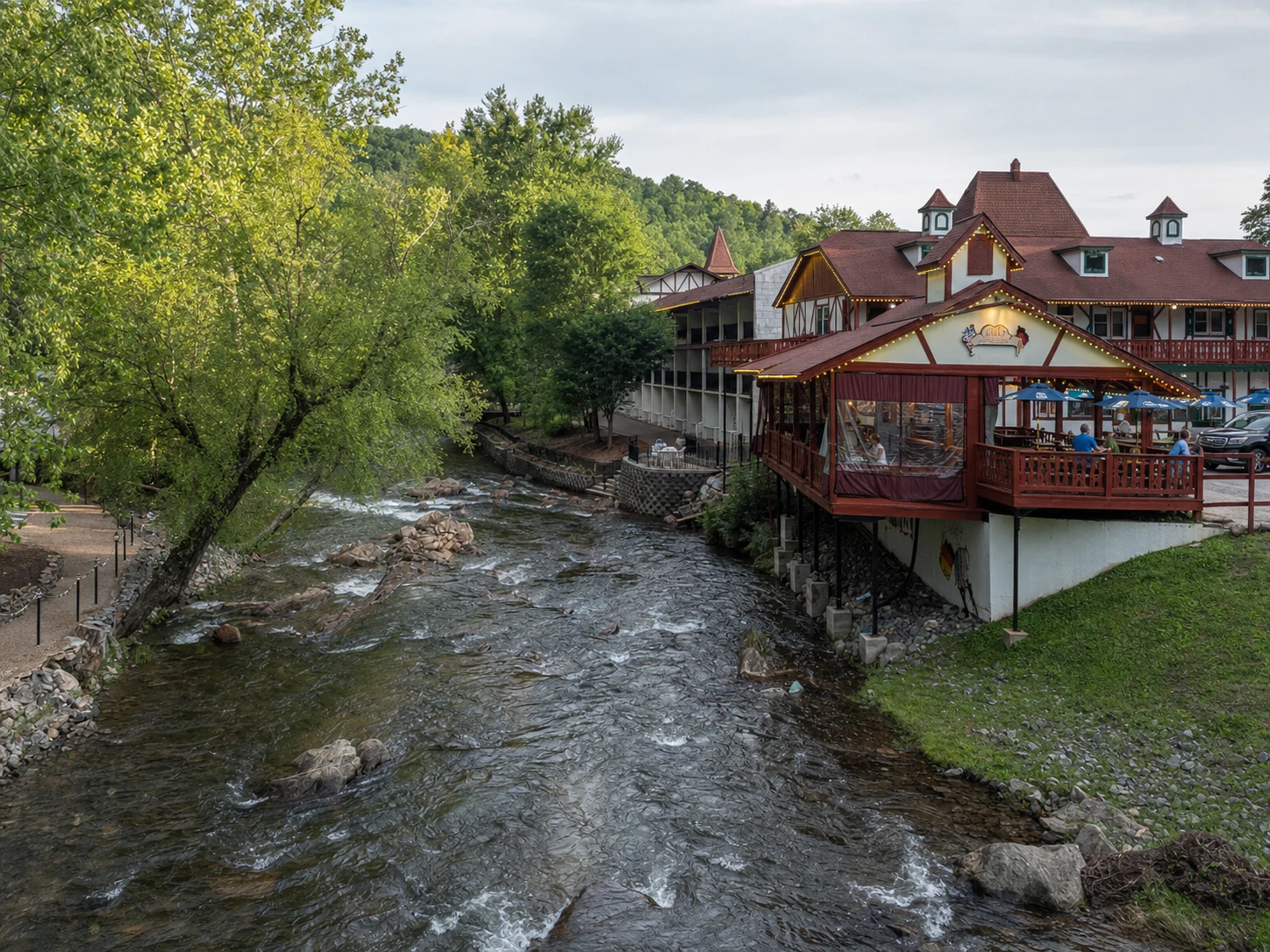
Helen's architecture is an Appalachian take on Southern German and Austrian Tyrolean styles. The goal was always visual impact and consistency rather than strict historical accuracy -- and honestly, that is what makes it work.
Related Imagery from Around Helen