Moonshine Heritage
Corn whiskey, revenuers, and fast cars: the outlaw distilling story of the North Georgia mountains around Helen
Spirits of the Blue Ridge
North Georgia and corn whiskey go way back. Scots-Irish immigrants brought their distilling knowledge across the Atlantic, and the hidden hollows of the Appalachian Mountains turned out to be the perfect place to put it to use. For over two centuries, moonshining in counties like Dawson, White, Rabun, and Gilmer went from a practical way for farmers to sell their corn, to a violent underground trade, to what it is today: a celebrated piece of cultural heritage. The area around Helen and the Nacoochee Valley sits right in the middle of this story. Legendary figures like Simmie Free and Lloyd Seay made their names here, and the souped-up cars bootleggers used to outrun the law directly led to the creation of NASCAR.
How moonshine went from outlaw symbol to regional pride is a complicated story. The "cat-and-mouse" chases between bootleggers ("trippers") and federal agents ("revenuers") make for great folklore and Hollywood movies, but the reality was often ugly, involving murder, federal sieges, and corrupt local officials. Today, you can see this history at the Georgia Racing Hall of Fame, and hikers at Amicalola Falls still stumble across the rusted hulks of abandoned moonshine trucks in the woods. Now that the legal barriers are gone, a new generation of legal distillers has popped up. Places like Grandaddy Mimm's and Dawsonville Moonshine Distillery are using family recipes that were once closely guarded secrets, and visitors can taste the real thing without looking over their shoulder.
The Scots-Irish Roots
North Georgia's moonshine tradition started with the Scots-Irish immigrants who came from Ulster in Northern Ireland during the 1700s. They settled the backcountry and brought their distilling knowledge with them. For these settlers, whiskey was not just something to drink. It was money, medicine, and a way of life rolled into one.
In the rugged terrain of the Blue Ridge Mountains, where roads were often impassable and infrastructure was non-existent, transporting surplus crops to market was logistically impossible. Farmers in North Georgia discovered that converting bulky, perishable crops - specifically corn, apples, and peaches - into whiskey and brandy created a product that was non-perishable, compact, and high in value. Selling alcohol in small glass jars or ceramic jugs was far more efficient than hauling wagonloads of raw corn over rough mountain roads to markets in Atlanta or Augusta. Before the federal taxes arrived, the distiller was a shrewd businessman and a respected member of the community, not a criminal.
The Civil War and the First Moonshiners
The shift from legal distilling to illegal "moonshining" happened during the Civil War. In 1862, President Lincoln and Congress created the Internal Revenue Service and slapped heavy taxes on "luxuries" like tobacco and alcohol to fund the Union war effort.
For the fiercely independent farmers of North Georgia, many of whom viewed the federal government with suspicion - often referring to the conflict as "The War of Northern Aggression" - this tax was an unacceptable burden. Refusing to pay the levy, these distillers moved their operations from their barns and smokehouses into the deep woods and rhododendron thickets. They began operating their stills at night to avoid detection by the smoke rising from their fires, earning the moniker "moonshiners".
This resistance sparked the "Moonshine Wars" of the 1870s, a violent period of conflict between local distillers and federal revenue agents ("revenuers"). The situation in North Georgia became so volatile that the Ku Klux Klan reportedly aligned with moonshiners in the early 1870s to intimidate officials and informants. Historian Wilbur Miller estimated that by 1876, four-fifths of all federal law enforcement efforts in the mountain South were dedicated to suppressing illegal liquor production.
Prohibition and the Boom Years
While Georgia enacted statewide prohibition in 1907, well before the national 18th Amendment in 1920, the demand for alcohol never ceased; it merely moved entirely underground. The enactment of National Prohibition (the Volstead Act) in 1920 fundamentally changed the scale of moonshining. It transitioned from a cottage industry used to supplement farm income into a massive, organized criminal enterprise.
During the Great Depression, this economy became a lifeline. With the collapse of agricultural prices, moonshine provided the only source of hard cash for many families in counties like White, Dawson, and Rabun. The production became so prolific that Atlanta became known as the "moonshine consumption capital of the U.S.," with massive quantities of spirits flowing from the mountains into the city.
Legendary Moonshiners of North Georgia
The stories from this era are full of characters who became near-mythical for their whiskey, their driving skills, or their sheer stubbornness in defying the law.
Simmie Free
Simmie Free (1892-1980) is the classic Appalachian moonshiner. He operated mostly in Rabun County, a descendant of the original Scots-Irish settlers. Free was not a gangster. He saw whiskey-making as a family skill passed down through generations, and he was known for producing excellent corn liquor the old-fashioned way.
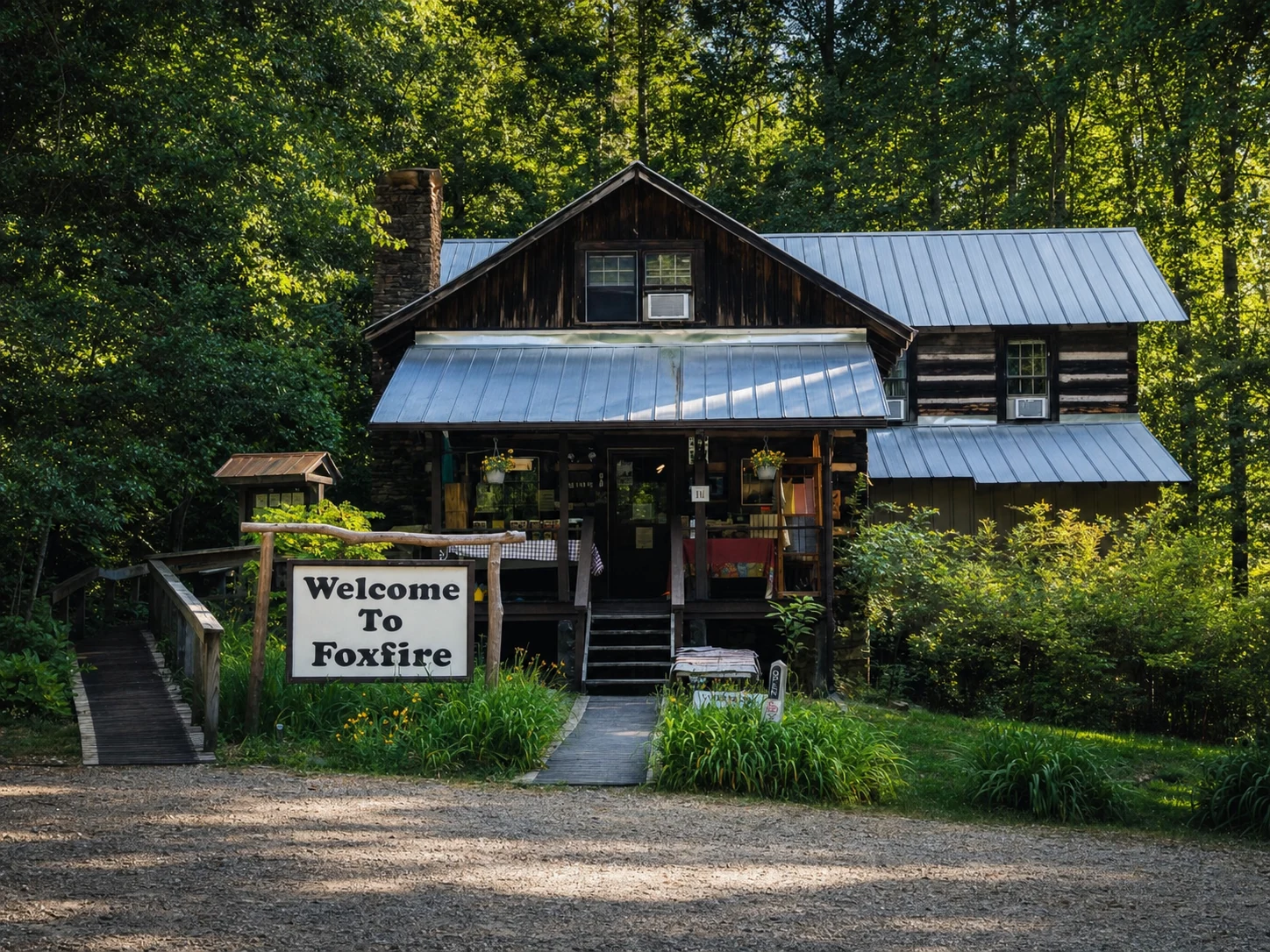
Free was arrested multiple times, but his legacy is preserved through oral histories and family accounts. One famous anecdote recounts a raid on his home where he instructed his young daughter to "sit on these quilts and don't move." The sheriff and deputies searched the house but did not disturb the child; beneath the quilts were cases of Mason jars filled with moonshine. Free's life and techniques were immortalized in the Foxfire book series, which documents Appalachian culture, cementing his status as a cultural icon rather than a mere criminal.
Jack "Mimm" McClure
Operating out of the Young Harris and Blairsville area, Jack "Mimm" McClure (1914–1969) was a bootlegger, philanthropist, and community leader. Mimm was distinct in that he operated during the transition period where moonshining began to intersect heavily with local power structures. He was reputed to have influenced the rise of several Georgia politicians and was known for his benevolence, often using moonshine profits to help neighbors in need. His brandy and whiskey recipes were highly regarded for their smoothness and potency. Today, his legacy is carried on legally by his grandson, Tommy Townsend, through the Grandaddy Mimm’s Distilling Co..
Popcorn Sutton
While primarily associated with Maggie Valley, North Carolina and Cocke County, Tennessee, Marvin "Popcorn" Sutton (1946–2009) is a towering figure in the broader Appalachian distilling narrative, with deep cultural connections to the North Georgia mountains. Sutton was a third-generation moonshiner who gained national fame through documentaries and his autobiography, Me and My Likker. He lived out the defiant spirit of the mountaineer to the end, famously taking his own life in 2009 rather than report to federal prison. His influence runs deep across the North Georgia region, and many consider him the last of the "old guard" traditionalists.
Related Imagery from Around Helen