Vogel State Park
Georgia's second-oldest state park, with CCC-era cabins, a mountain lake, and trails beneath Blood Mountain
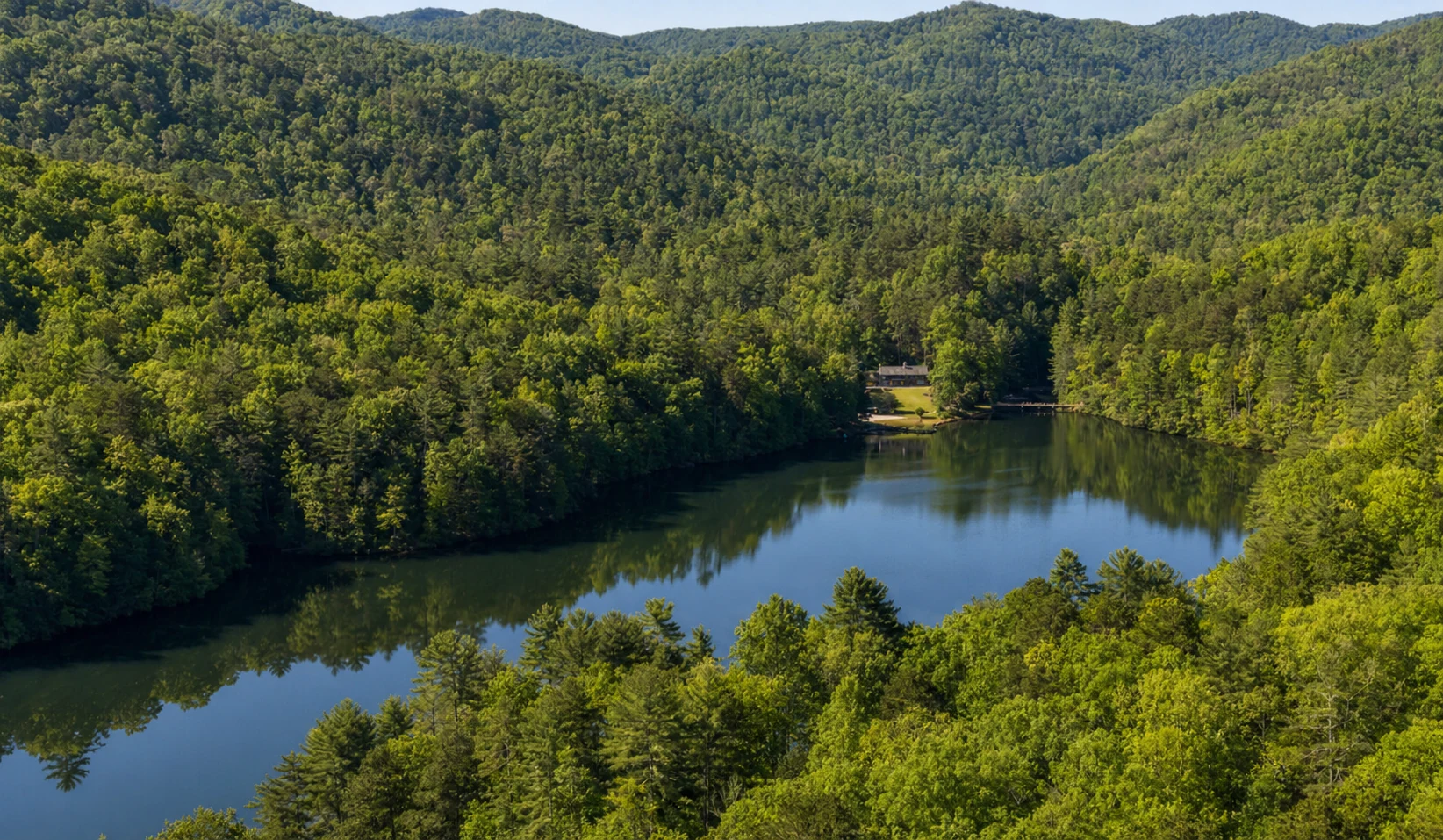
Vogel State Park has been drawing visitors since 1931, making it the second-oldest state park in Georgia. It sits at about 2,500 feet at the base of Blood Mountain, inside the Chattahoochee National Forest, and it is one of the primary gateways to the Appalachian Trail at Neel Gap.
The park centers on 22-acre Lake Trahlyta and has over 17 miles of hiking trails, from easy loops to the strenuous Coosa Backcountry Trail. Many of the stone and timber structures were built by the Civilian Conservation Corps during the Depression, and that CCC architecture gives the park a character you do not find at newer parks. Cherokee folklore adds another layer. The lake and waterfall are named after Trahlyta, a Cherokee maiden whose legend is woven into the identity of this place.
Getting Your Bearings
Vogel State Park sits 11 miles south of Blairsville in Union County, on 233 acres originally donated by the Vogel family of Milwaukee. The Vogels had used the land for harvesting tanbark, and when that industry faded, they gave it to the state for public use. Today the park, managed by the Georgia Department of Natural Resources, is one of the most popular in the system.
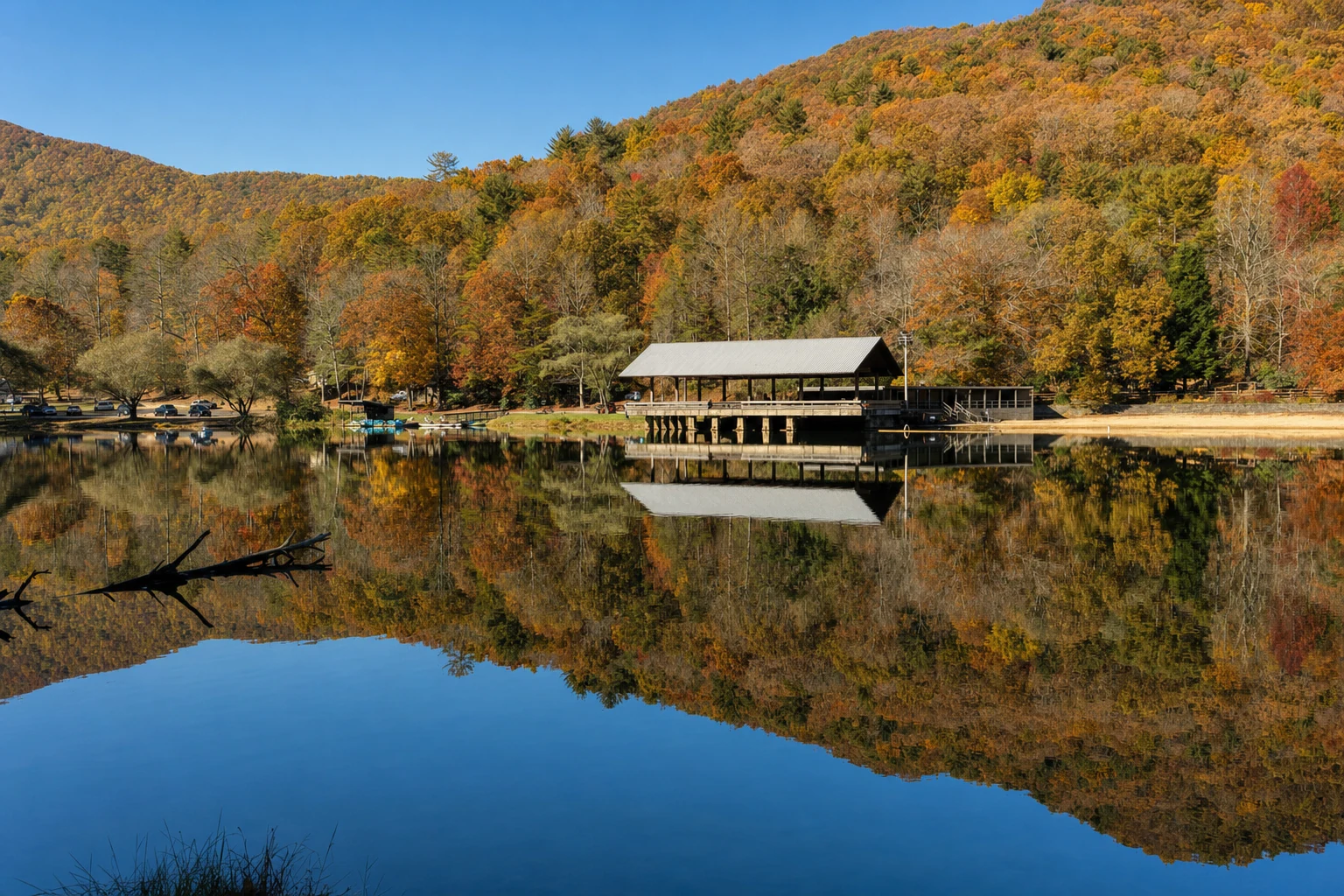
At 2,500 feet, the park stays noticeably cooler than the lowlands in summer, which is part of its appeal. Fall brings some of the best leaf color in the state, and the foliage against the backdrop of Blood and Slaughter Mountains draws crowds every October.
Park Logistics and Contact Details
Address: 405 Vogel State Park Road, Blairsville, GA 30512. Phone: (706) 745-2628. Hours: 7:00 AM to 10:00 PM daily. Parking: $5 daily fee per vehicle.
The Vogel Family and the CCC
How the park came to be
The park’s origins are rooted in the industrial history of the early 20th century. The land was donated in 1927 by August H. Vogel and Fred Vogel Jr., heirs to the Pfister & Vogel Leather Company of Milwaukee, Wisconsin. The family originally utilized the land to harvest tanbark from oak and hemlock trees, which was shipped to Wisconsin for the leather tanning process. Following World War I, the development of synthetic tanning methods rendered the bark harvest obsolete, prompting the Vogels to donate the land to the state of Georgia for public use.
The Civilian Conservation Corps (CCC)
The Depression-era CCC built most of what you see at Vogel today. Company 431 (Camp Enotah / SP-2) arrived in June 1933 and went to work.
The "CCC Boys," young men aged 18 to 25, were responsible for:
Constructing the earthen dam on Wolf Creek to create Lake Trahlyta.
Building the original rustic cabins and picnic shelters.
Carving out the initial trail systems.
Quarrying stone for the park's structures.
The Legend of Trahlyta
The lake and waterfall both carry the name Trahlyta, and that name comes from Cherokee folklore that has been part of this area's identity for generations.
The Folklore
According to legend, Trahlyta was a Cherokee maiden (often romanticized as a princess) of renowned beauty who lived on Cedar Mountain. Her beauty was attributed to the waters of a "magic spring" (Fountain of Youth) near her home. A rejection of the courtship of a warrior named Wahsega led to her kidnapping. Taken far from her mountain home and her magic springs, Trahlyta’s beauty faded, and she eventually died of a broken heart and weakness.
Stonepile Gap
Before her death, Wahsega promised to return her body to her home. She was buried at a pass now known as Stonepile Gap, located at the intersection of U.S. Highway 19 and Georgia State Route 60, south of the park near Dahlonega. Legend dictates that passersby should place a stone on her grave for good fortune and safe passage. Removing a stone, on the other hand, is said to invite the curse of the "Witch of Cedar Mountain" or bring misfortune.
While historical markers and local custom perpetuate the legend, archaeological evidence regarding the grave's origins remains ambiguous, with some researchers suggesting the stone pile may predate the specific legend or serve a different ceremonial purpose. Nevertheless, the name Trahlyta remains central to Vogel State Park's identity.
Lake Trahlyta and the Waterfall
Lake Trahlyta
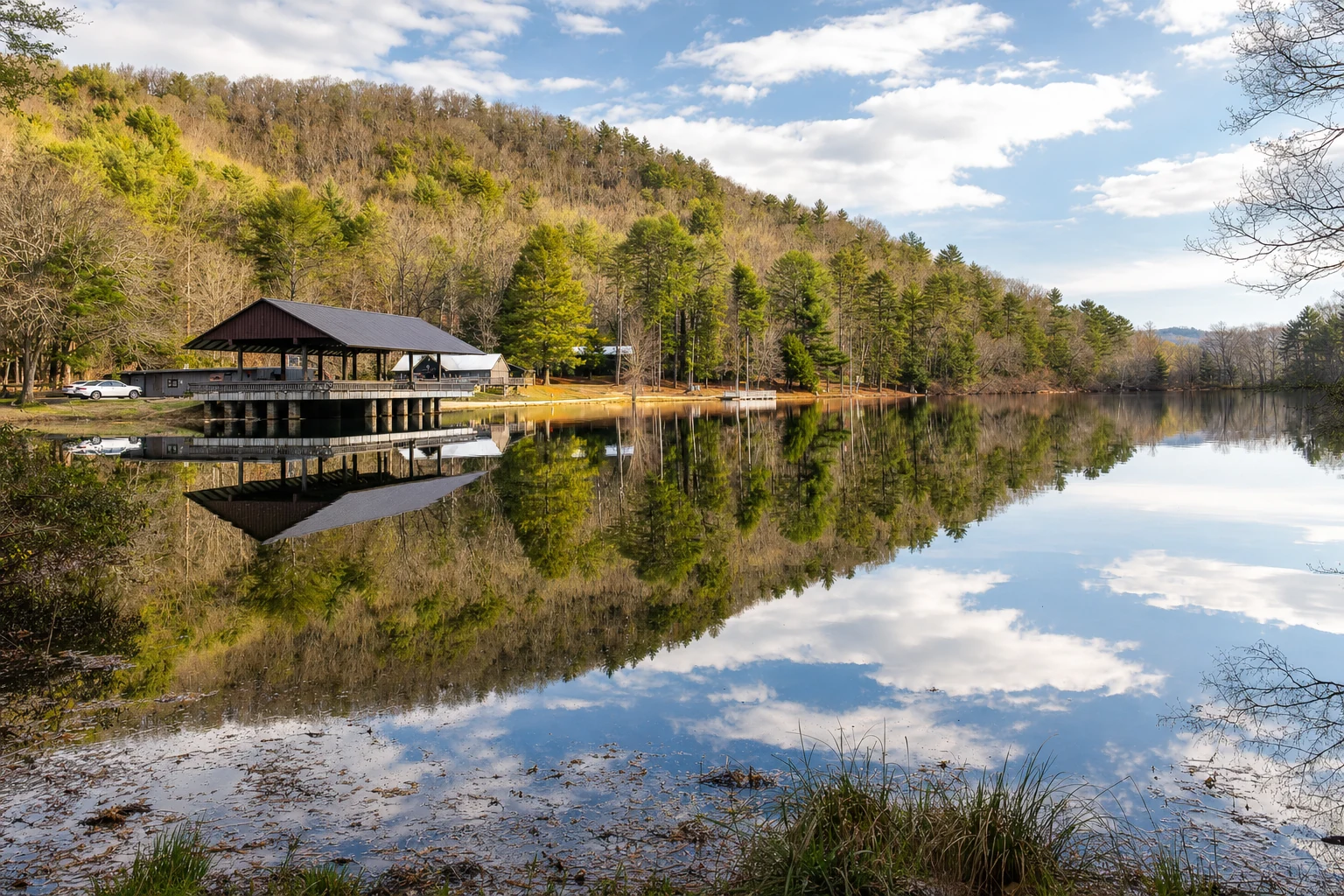
The centerpiece of the park is the 22-acre Lake Trahlyta. Created by the CCC by damming Wolf Creek, the lake sits at 2,500 feet, one of the highest lakes in the state park system.
Activities: The lake is open to non-motorized boats. You can rent pedal boats, aqua cycles, kayaks, and paddleboards seasonally, and there is a swimming beach that feels good on a hot summer day.
Fishing: The lake is stocked with trout, bass, and bream. An ADA-accessible fishing pier is available, and a Georgia fishing license is required for anglers over 16.
Trahlyta Falls (Wolf Creek Falls)
At the dam's spillway you will find Trahlyta Falls, a stepped waterfall that drops about 50 to 60 feet.
Access: The falls are accessible via the Trahlyta Lake Trail (detailed below) or a spur trail from the dam.
Observation Deck: A wooden boardwalk and observation deck let you stand near the base of the falls. The view from the top of the spillway is one of the most photographed in North Georgia, framing the lake against Blood and Slaughter Mountains.
Related Imagery from Around Helen