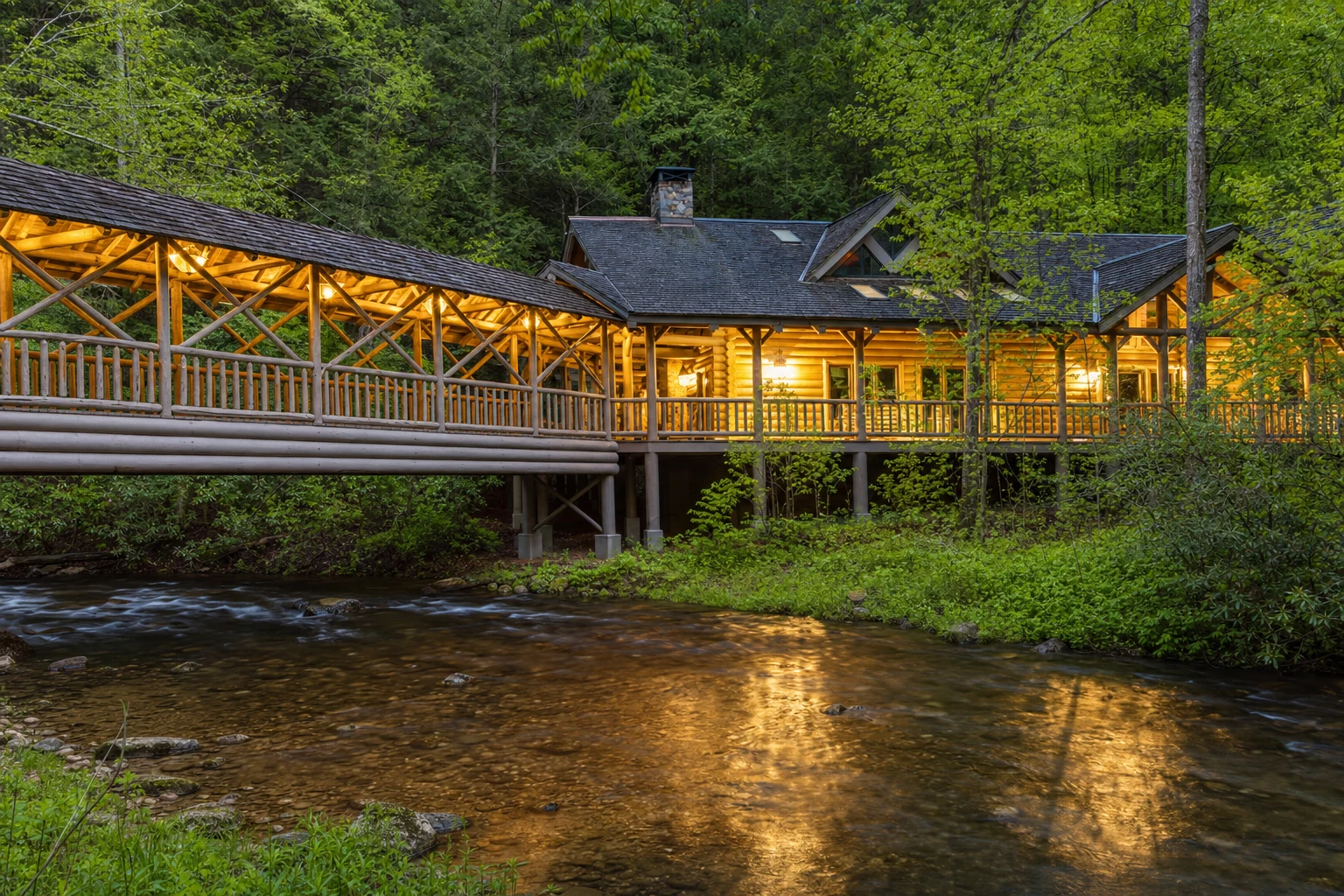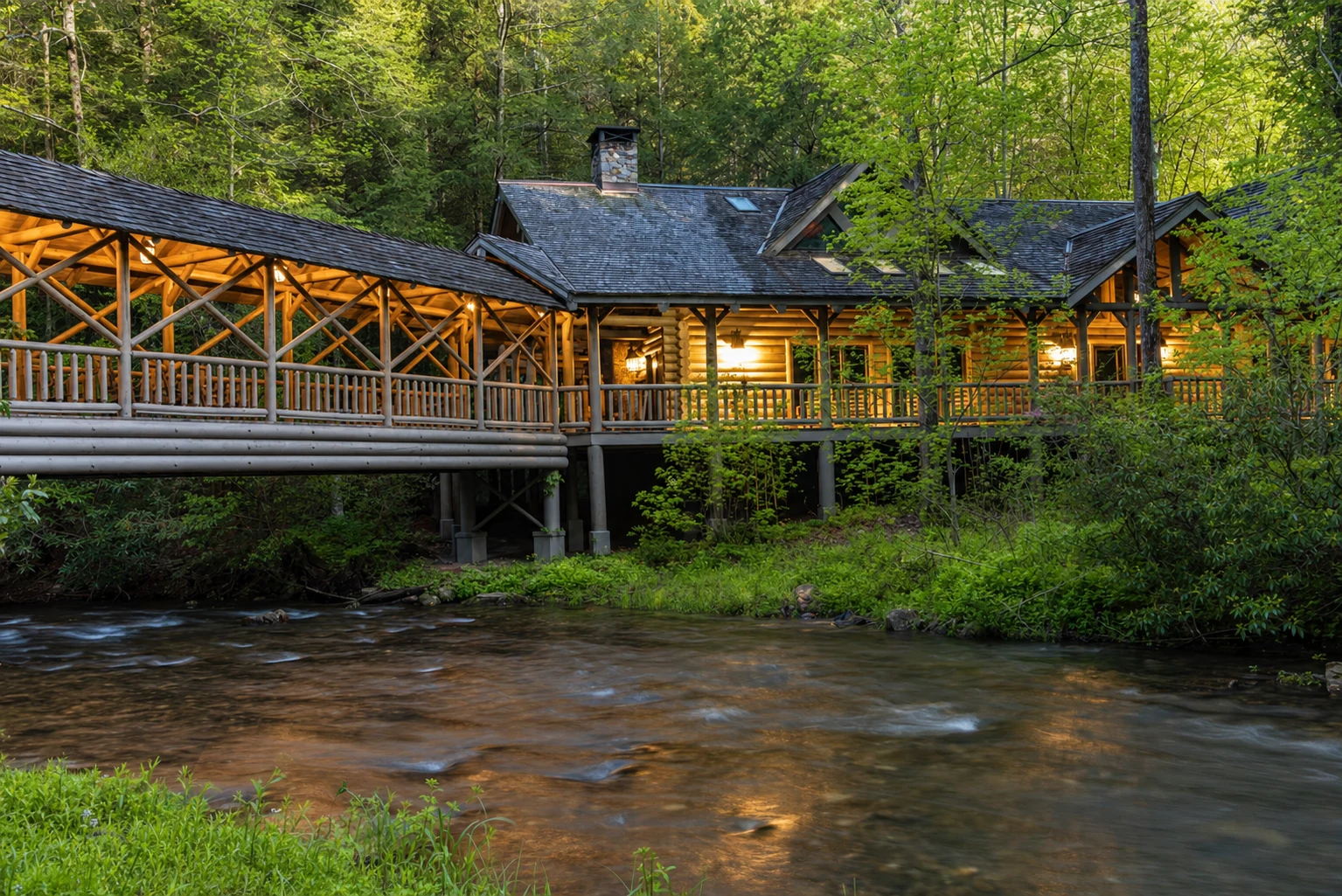
Smithgall Woods State Park
5,600 acres of protected forest, trophy trout streams, and wildlife along Dukes Creek near Helen
Smithgall Woods State Park (officially the Smithgall Woods - Dukes Creek Conservation Area) is one of the most special parks in North Georgia. It covers about 5,600 acres of recovered wilderness near Helen, and it runs differently from most state parks. Instead of trying to pack in as many visitors as possible, Smithgall Woods limits traffic and prioritizes conservation. The park protects the Dukes Creek watershed, some of the best trout water in the state, along with a planting of the critically endangered Florida Torreya tree.
The park's land was devastated by 19th-century hydraulic gold mining. Today it stands as proof that a ruined landscape can be brought back. It is also a safeguarding site for endangered plants.
Dukes Creek is one of the best trout streams in the Southeast. Access is tightly controlled through a reservation system, catch-and-release-only rules, and gear restrictions that keep the fishing quality high.
Why Smithgall Woods is Different
Most state parks try to accommodate as many visitors as possible. Smithgall Woods does the opposite. Cars are not allowed past the Visitor Center (unless you are staying in a cottage), and fishing access is capped at a handful of anglers per session. The result is a park that feels genuinely wild, even though it is only five miles from downtown Helen.
Beyond the fishing, the park has over 28 miles of trails and roads for hiking and biking, from the flat, accessible Wetland Loop to the rugged Ash Creek Trail where you have to wade through the creek. Six cottages are available for overnight stays, and cottage guests get fishing access every day of their visit, not just the limited public days.
The History and Why It Matters
What makes Smithgall Woods remarkable is how far the land has come. A hundred and fifty years ago, hydraulic gold mining had stripped it bare.
The Legacy of Charles Smithgall Jr.
The park exists because of Charles A. Smithgall Jr., a Georgia media magnate and conservationist. In the 1970s, Smithgall began acquiring acreage in White County that had been severely degraded by rampant hydraulic gold mining and logging in the 19th and early 20th centuries. The land, once stripped bare and scarred by erosion, underwent an intensive restoration process funded by Smithgall. He invested millions into cleaning trash, replanting thousands of trees, and restocking the streams.
In 1994, the state of Georgia acquired the land through a gift-purchase arrangement, where Smithgall sold the property for half its appraised value to ensure its perpetual preservation. His philosophy, "At some point, a man has to put something back," underpins the park's management ethos today.
Safeguarding the Florida Torreya
The park also plays a quiet but important role in protecting the Florida Torreya (Torreya taxifolia), one of the most endangered conifers in North America. The species originally grew only along the Apalachicola River in the Florida panhandle, where fungal blight nearly wiped it out.
Smithgall Woods is a designated "safeguarding site" for the Torreya. The Atlanta Botanical Garden and the Georgia Department of Natural Resources have outplanted individuals of T. taxifolia within the park to establish an ex-situ population - essentially a genetic "backup" growing outside its native range to protect the species from extinction. Visitors can observe a planting of these rare trees near the Visitor Center Loop Trail.
Trout Fishing on Dukes Creek
Dukes Creek flows through the center of the park and is the main reason most people visit. It is one of the best trout streams in Georgia, and because access is so limited, fishing here feels like being on private water.
Fishing Rules and Access
To maintain the quality of the fishery and the size of the trout, the park enforces strict regulations that differ significantly from standard state park rules.
Schedule: For day-use visitors, trout fishing is seasonal, typically open only on Wednesdays, Saturdays, and Sundays from October through May.
Reservations: Due to high demand and conservation limits, reservations are mandatory. The number of anglers is strictly capped per session (historically limited to 15 anglers in the morning and 15 in the afternoon) to prevent overcrowding and pressure on the fish.
Gear Restrictions: Anglers must use artificial lures only with single barbless hooks. Live bait is strictly prohibited to ensure the survival of released fish. Possession of barbed hooks on the stream can result in fines.
Catch and Release: All trout caught in Dukes Creek within the conservation area must be released immediately. No harvest is allowed.
Extra Fishing Access for Cottage Guests
One of the primary incentives for staying in the park's cottages is the expanded fishing access. Unlike day-use visitors who are restricted to specific days and reservation slots, overnight cottage guests are permitted to fish any day of the week during their stay. This allows for a solitary fishing experience on days when the stream is closed to the general public.
The Trout
The stream is known for holding trophy-sized rainbow and brown trout, with many fish in the 20-inch range and some exceeding 30 inches. The fish are educated and wary due to the clear water and fishing pressure, requiring stealth and precise presentation.
Hiking Trails and Natural Features
The park's trail system covers roughly 28 miles (including roads and trails) through hardwoods, along streams, and over ridges. Since private vehicles are banned beyond the Visitor Center (cottage guests excepted), you hike in real quiet. No cars, no road noise, just birdsong and creek water.
Martin's Mine Trail
Length: 0.9-mile loop (approx. 2.1 miles from Visitor Center).
Difficulty: Moderate.
Highlights: This interpretive trail takes you through the park's gold mining history. You cross a wooden bridge over Dukes Creek to reach the loop, where you will find remnants of 19th-century mining operations, including a vertical mine shaft that bats have claimed as home.
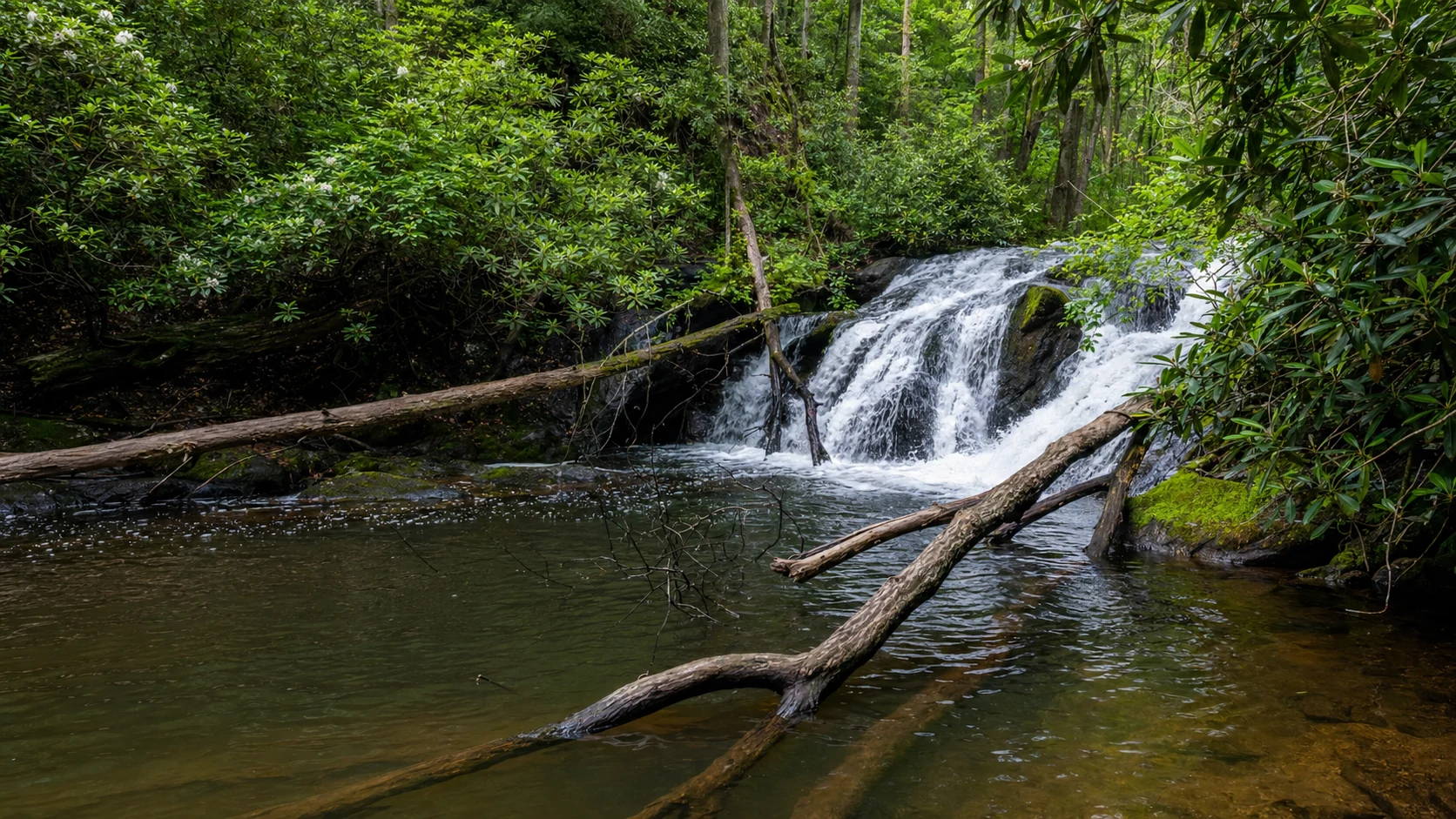
Waterfall: A short extension from the main loop leads to a small, soothing waterfall, often referred to as the Martin's Mine Falls, which cascades over mossy rocks near the mine cuts.
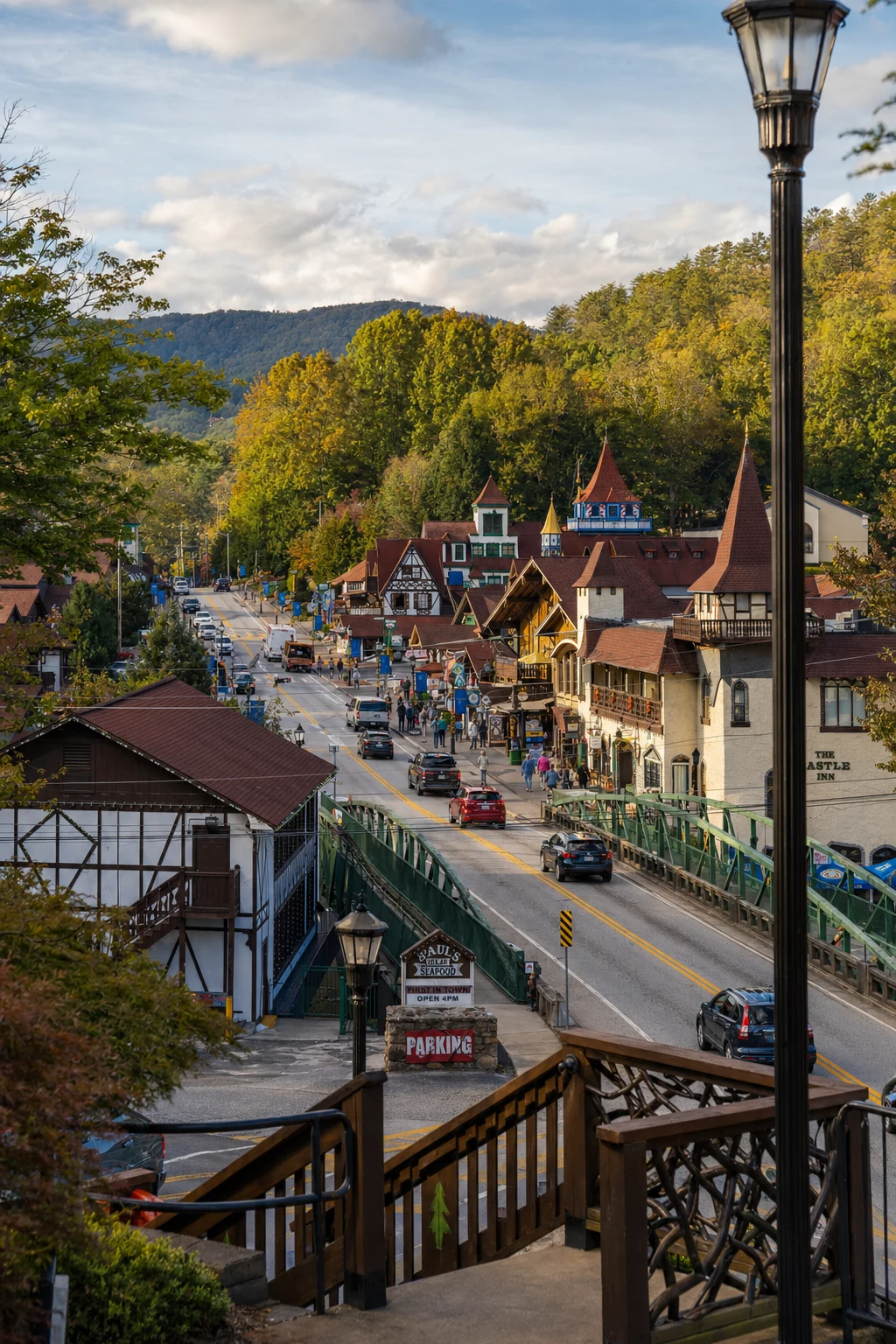
Related Imagery from Around Helen