The Mountain Ecology Around Helen
Cove forests, hemlock streams, high mountain balds, and the richest salamander diversity on Earth, all around Helen
The mountains around Helen, Georgia sit in one of the most biologically rich temperate zones on the planet. Scientists have long recognized the Southern Appalachians for their extraordinary salamander and aquatic diversity, and when you hike here, you are walking through ecosystems that took hundreds of millions of years to develop.
This region holds the global title for salamander diversity. More species live here than anywhere else, including the rare Hellbender and the recently discovered Patch-nosed Salamander. Habitats range from high-elevation heath balds on Brasstown Bald to rare mountain bogs and rich cove hardwood forests in sheltered valleys.
What Makes This Region Special
The Georgia DNR Wildlife Resources Division is actively working to protect species under pressure here, including the Bog Turtle and the Eastern Hemlock. The hemlock faces a particularly urgent threat from the invasive Hemlock Woolly Adelgid, an insect that has already killed millions of these trees across the eastern United States.
Although industrial logging cleared most of the original forest, pockets of old growth and forests showing old-growth characteristics survive at Sosebee Cove and Bear Creek. These remnants give us a glimpse of what these mountains looked like before the sawmills arrived.
A Biological Crossroads
The Blue Ridge mountains around Helen, Georgia, and the surrounding counties of White, Union, Towns, and Rabun, get more rain than almost anywhere in the eastern United States. Some spots receive over 80 inches a year, enough that ecologists sometimes call the area a "temperate rainforest." That rainfall, combined with terrain that ranges from 1,400-foot river valleys to 4,700-foot peaks, creates a patchwork of microclimates where an astonishing number of plants and animals can find the conditions they need.
The Helen region sits right on the Blue Ridge Escarpment, where the mountains drop steeply toward the Piedmont. That geography drives the heavy precipitation and creates distinct zones of plant communities as you climb in elevation. Roughly 10,000 species live here, including over 100 native tree species and 1,400 flowering plants. But this diversity faces real threats: habitat fragmentation, invasive species like the Hemlock Woolly Adelgid, and the lasting effects of more than a century of land use.
Forest Communities: Coves, Hemlocks, and Hardwoods
The forests around Helen are mostly broad-leaved and deciduous, but they also contain major coniferous elements and specialized community types. What makes them unusual is their layered structure and sheer number of species, from towering canopy trees to the ferns and wildflowers carpeting the forest floor.
Cove Hardwood Forests
Cove forests grow in sheltered valleys and ravines where moisture collects and soil runs deep and rich. They are among the most productive ecosystems in these mountains, and walking into one feels like stepping into a greenhouse.
Ecologists split cove forests into two kinds, rich (fertile) and acidic, and the difference comes down to the soil.
Rich Cove Forests: These occur on circumneutral soils with high nutrient availability. They are characterized by a lush herbaceous layer and a canopy dominated by species such as Yellow Buckeye (Aesculus flava), White Basswood (Tilia americana), and Tulip Poplar (Liriodendron tulipifera).
Acidic Cove Forests: These are found on soils with lower pH and are often dominated by Eastern Hemlock (Tsuga canadensis) and Rosebay Rhododendron (Rhododendron maximum), resulting in a dense, shaded understory with lower herbaceous diversity.
Sosebee Cove: A small cove-hardwood preserve near Vogel State Park, Sosebee Cove is known for its towering yellow buckeye and the carpet of spring wildflowers that comes up beneath the trees each year.
Old-Growth Forest Remnants
True old-growth forests - forests that have escaped industrial logging and exhibit uneven-aged stands, large coarse woody debris, and pit-and-mound topography - are rare in the region. Most forests in the Chattahoochee National Forest are second-growth, regenerating after the extensive logging of the late 19th and early 20th centuries.
The Gennett Poplar:
The most significant accessible remnant of old-growth near Helen is located in the Bear Creek area of the Cohutta Wilderness (accessible from the region). Here stands the Gennett Poplar, a Tulip Poplar (Liriodendron tulipifera) with a circumference of nearly 18 feet. This tree was spared by the Gennett Lumber Company and serves as a living monument to the pre-settlement forests. The surrounding stand at Bear Creek retains old-growth characteristics, including biodiversity associated with long-term ecological stability.
Sosebee Cove as "Functional" Old-Growth:
Sosebee Cove is second-growth, but Ranger Arthur Woody fought to protect it starting in the early 20th century, and in the decades since, the forest has developed a structural complexity that looks a lot like old growth. Scientists use it as a reference site for understanding how these forests recover and what the surrounding national forest might look like in another hundred years.
Hemlock Forests and the Woolly Adelgid
The Eastern Hemlock (Tsuga canadensis) and Carolina Hemlock (Tsuga caroliniana) are keystone species around Helen. Sometimes called the "Redwoods of the East," these trees shade the streams and keep water temperatures cool enough for trout and salamanders to survive.
The trouble is the Hemlock Woolly Adelgid (HWA), an invasive aphid-like insect from Asia that has devastated hemlock populations from Maine to Georgia. HWA feeds on the sap at the base of the needles, causing defoliation and tree death within 4 to 10 years.
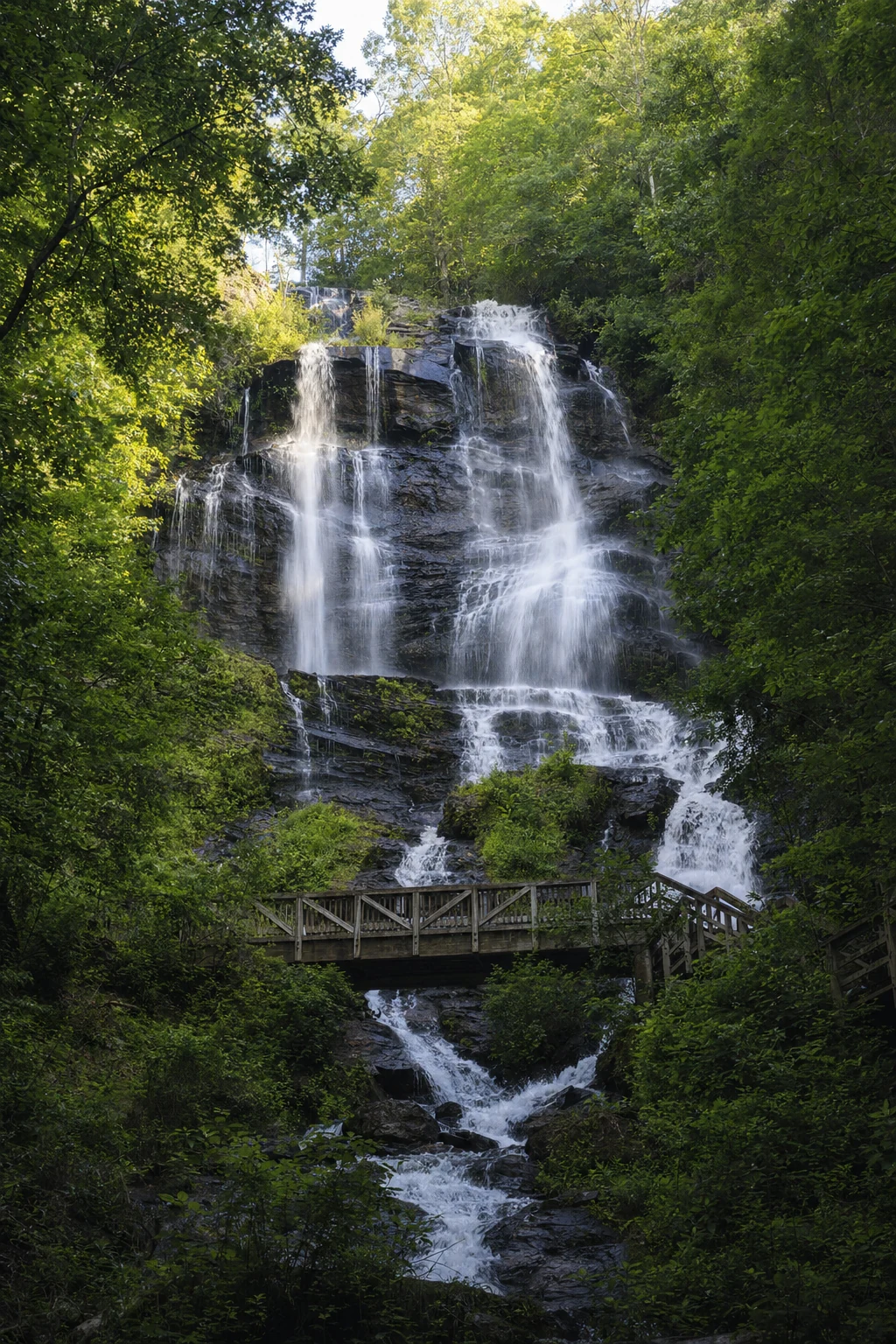
At sites like Anna Ruby Falls and Unicoi State Park, aggressive conservation efforts are underway to save the trees.
Chemical Treatment: Soil drenching and trunk injections with imidacloprid and dinotefuran are used to protect individual high-value trees.
High Country: The Appalachian Balds
Above the cove forests, you will find the Appalachian Balds, treeless or sparsely vegetated areas on high summits, usually above 4,000 feet. Nobody fully agrees on why they exist, which makes them one of the more debated ecological features in the Southern Appalachians.
Heath Balds
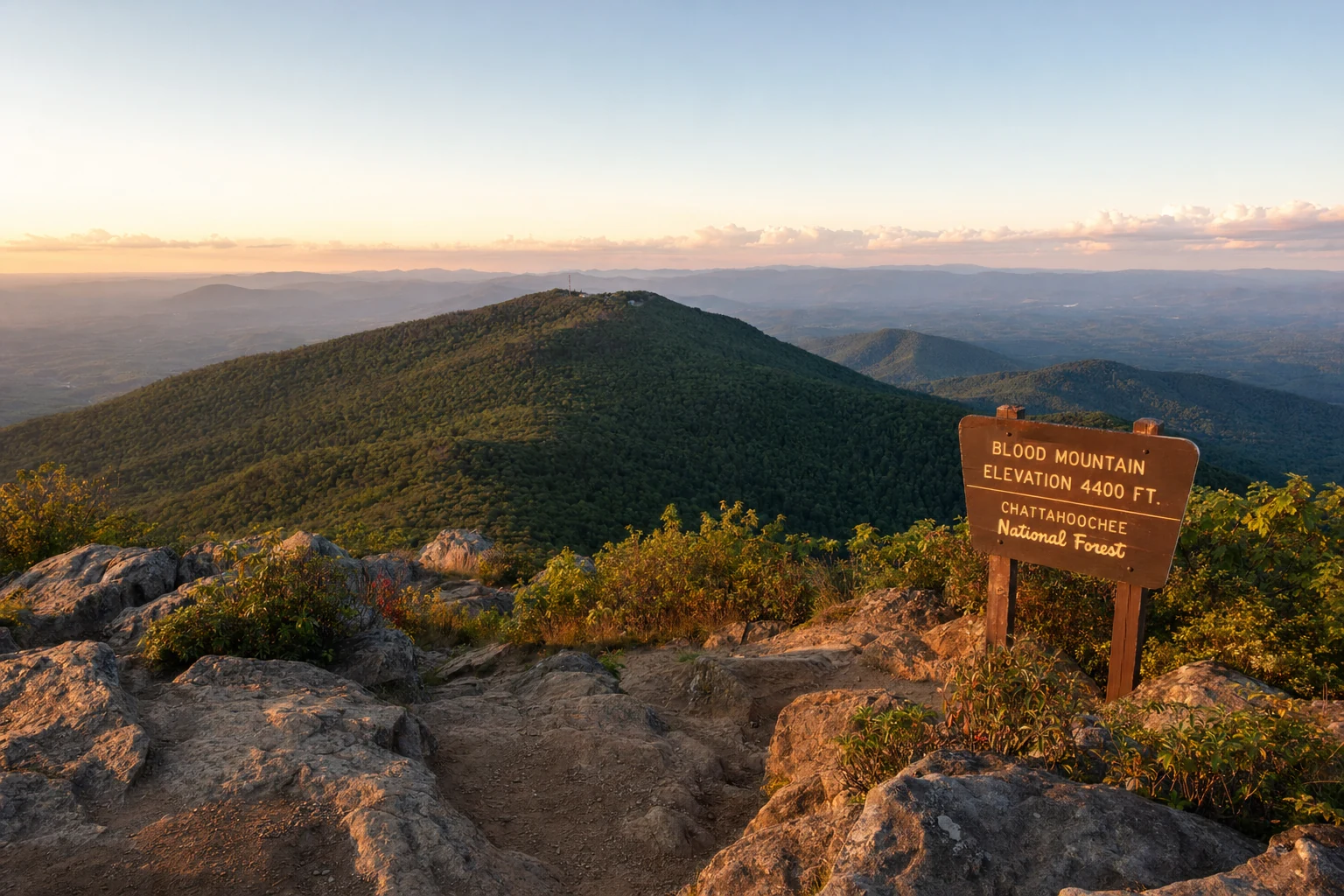
Brasstown Bald, Georgia’s highest peak (4,784 ft) located near Helen, is a classic example of a Heath Bald. Unlike grassy balds, heath balds are dominated by dense thickets of ericaceous shrubs, primarily Catawba Rhododendron (Rhododendron catawbiense), Mountain Laurel (Kalmia latifolia), and blueberries (Vaccinium spp.).
Heath balds hold on for a few reasons that work together.
Soil Conditions: Shallow, acidic, and nutrient-poor soils limit tree establishment.
Microclimate: Exposure to high winds, ice storms, and desiccation creates a harsh environment where shrubs outcompete trees.
Geology: Brasstown Bald is surrounded by a ring of ultramafic rocks (soapstone, dunite), which influences the soil chemistry and vegetation types, supporting unique assemblages.
Grassy Balds
While less prominent immediately around Helen than in the Smokies or Roan Highlands, grassy balds are dominated by herbaceous vegetation like Mountain Oatgrass (Danthonia compressa). The origin of these balds remains debated, with theories ranging from grazing by Pleistocene megafauna (mastodons/mammoths) to Native American land management (burning) and early European livestock grazing. Without active management (burning or grazing), many grassy balds are succumbing to succession, slowly turning into heath balds or forests.
The Salamander Capital of the World
The Southern Appalachians hold more salamander species than anywhere else on Earth, with the lungless salamanders of the family Plethodontidae particularly well represented. The cool, damp, oxygen-rich conditions around Helen have allowed these amphibians to diversify over millions of years into dozens of distinct species, many of them found nowhere else.
Related Imagery from Around Helen