
Ghost Towns of the North Georgia Mountains
Gold-rush towns, mining scars and a community under a lake
The short version
Why North Georgia has ghost towns
Gold, railroads, lumber and later reservoirs made towns in these mountains almost overnight, and the same forces emptied them. Some places boomed for a few years and then lost the county seat or the miners. Others were covered by a lake. A few kept going as quiet crossroads. The closest real traces to Helen are in the gold country, and the rest sit a long way off.
Start with our Nacoochee Valley history for the gold rush that began the cycle in this part of the state.
Where to look
Distances are rough driving times from downtown Helen. Only the first two make sense as a day trip from here.
| Place | What it was | What's there now | From Helen |
|---|---|---|---|
| Smithgall Woods State Park | Land reshaped by nineteenth-century hydraulic gold mining, now a state park. | Hiking, trout water and quiet woods. The New Georgia Encyclopedia says the area holds remnants of some of Georgia's earliest gold mines. | About 15 minutes |
| Auraria | A gold-rush boomtown founded in 1832 that reached about 1,000 people by 1833. | A few buildings and house foundations survive in Lumpkin County. The hotel ruins that older guides mention were removed in the early 2010s. | About 50 minutes |
| Oscarville | A farming community in Forsyth County, home to roughly 1,100 people in 1911. | Its remains lie under Lake Lanier, which was built in the 1950s. There is nothing to visit. | About 1 hour |
| Estelle and Cole City | Mining communities in northwest Georgia: Estelle (Walker County) and Cole City (Dade County, coal). | Both are extinct or unincorporated places on the map today. | 3.5 to 4 hours |
Auraria: the gold town that lost out
According to Wikipedia's history of Auraria, William Dean built a cabin here in June 1832, and within a year the town had about 1,000 people, with roughly one hundred family dwellings, stores, law offices and taverns. The name comes from aurum, the Latin word for gold. Then a legal challenge over land ownership moved county offices and businesses north to Dahlonega, which became the county seat and won the federal mint. Auraria faded as miners left for the California and Colorado gold fields.
Today a few buildings survive, including a former general store that stayed open into the early 1980s and a bank building painted red, along with scattered foundations. Most of what you see is private property, so look from the road and respect any signs. Nothing is staffed here.
For the full gold story, the Dahlonega Gold Museum is about 40 minutes from Helen at 1 Public Square. It's open Monday to Saturday 9 AM to 4:45 PM and Sunday 10 AM to 4:45 PM, and admission is $10 for adults and $7.50 for seniors. The branch mint that struck gold coins from 1838 to 1861 once stood in the same town, as the New Georgia Encyclopedia explains.
Smithgall Woods: where the gold left its mark
Closer to Helen, Smithgall Woods State Park sits on land that hydraulic mining reshaped in the 1800s. Today it is a quiet park on Dukes Creek, with a Georgia ParkPass requirement ($10 per vehicle per day) and a check-in at the visitor center for every visitor. The park's own materials say the land was reclaimed after the mining, so you won't find ruins to walk through, but you can see how much changed.
Read our Smithgall Woods guide for trails and fishing.
Oscarville and the lake
Lake Lanier covers the remains of Oscarville, a Forsyth County community. In September 1912, after violent incidents in the county, white mobs drove most of the county's Black residents out, and about 98 percent of Oscarville's Black population fled or died within a few years, as the Wikipedia article on Oscarville summarizes. Buford Dam was approved in 1947 and the lake was completed in 1956, covering what remained of the town.
It's a painful chapter, and an honest one for a ghost-town guide. There's nothing to see from shore, and the lake itself is a busy recreation area with real hazards. If you want to learn more, local libraries and the Forsyth County history groups are the place to start.
Farther afield
Two other names turn up in ghost-town lists. Estelle, in Walker County, had a post office from 1883 to 1905 and took its name from the Estelle Mining Company. Cole City, in Dade County, was incorporated in 1873 around the Dade Coal Company mine, and its charter was dissolved in 1995, per Wikipedia. Both are roughly 3.5 to 4 hours from Helen, so they're a trip for another day. We haven't verified what you can see at either site, so call the land manager before you go.
A few ground rules
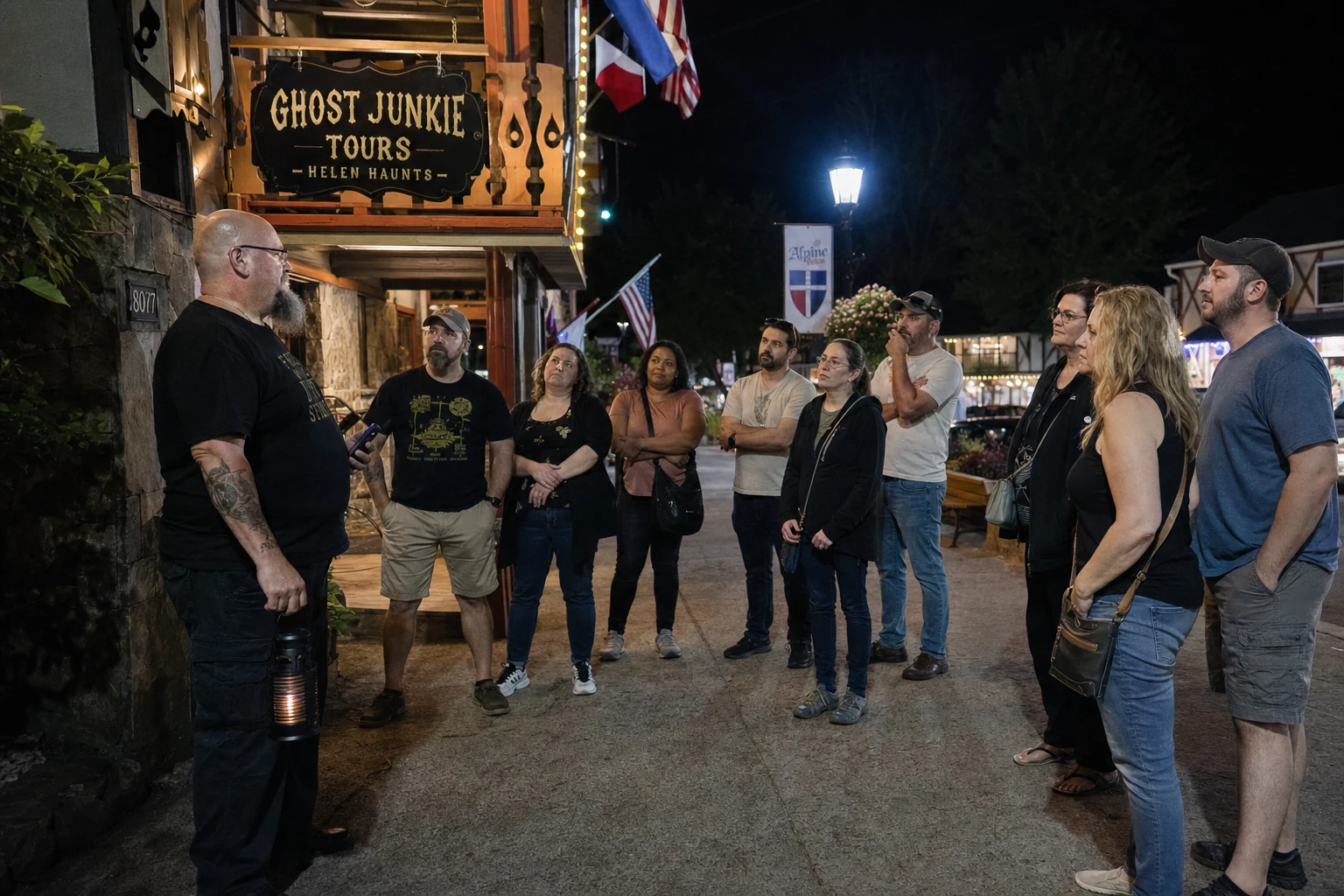
Old mine shafts and stamp-mill sites are dangerous, so stay out of tunnels and off unstable rock. Take nothing from a historic site, and treat cemeteries with respect. Cell service drops in the mountains, so download directions before you leave. For folklore, see our ghost stories guide, and for the harder side of local history, our dark history guide.
Related Imagery from Around Helen