
The Sentinel of the Valley: The Nacoochee Indian Mound
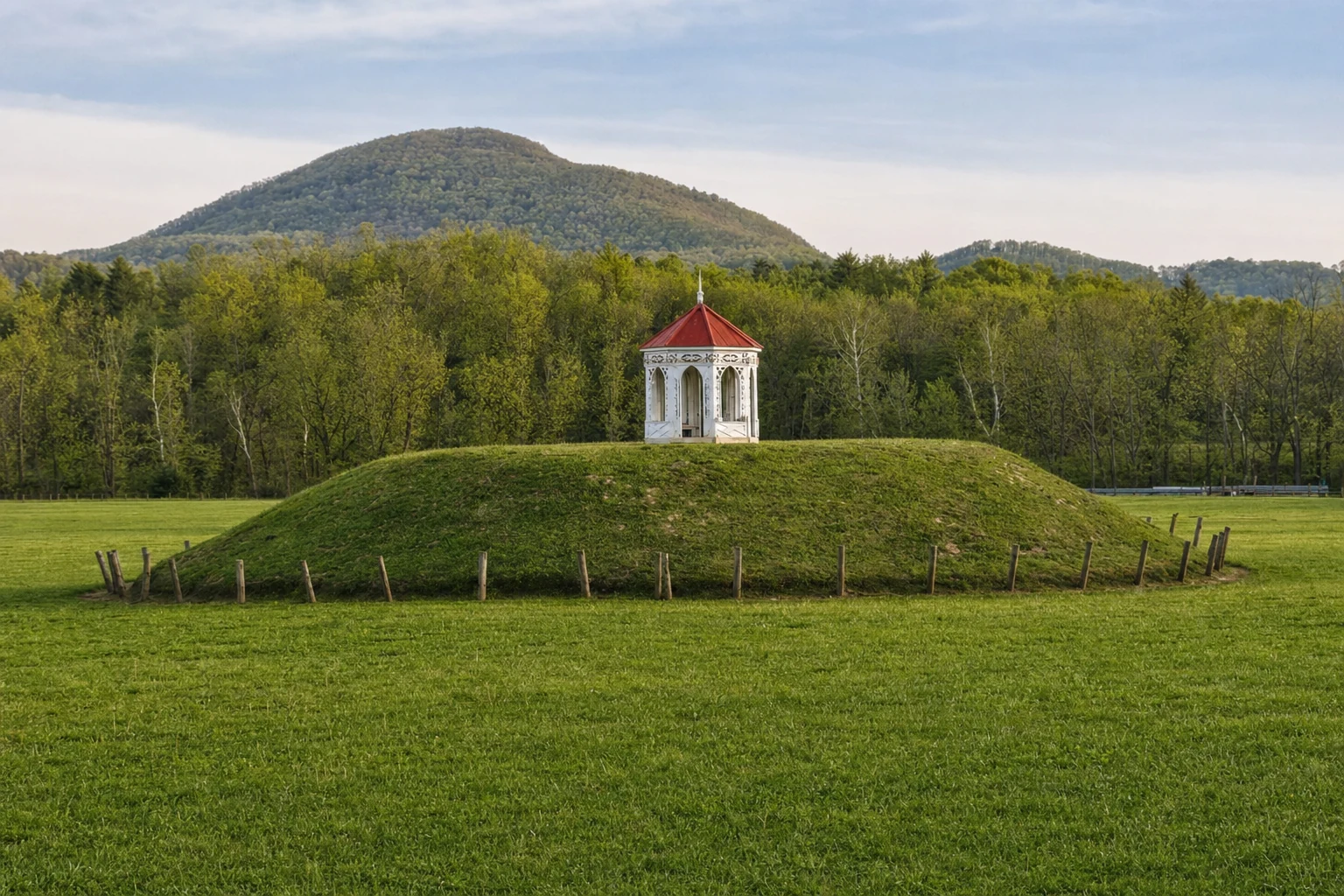
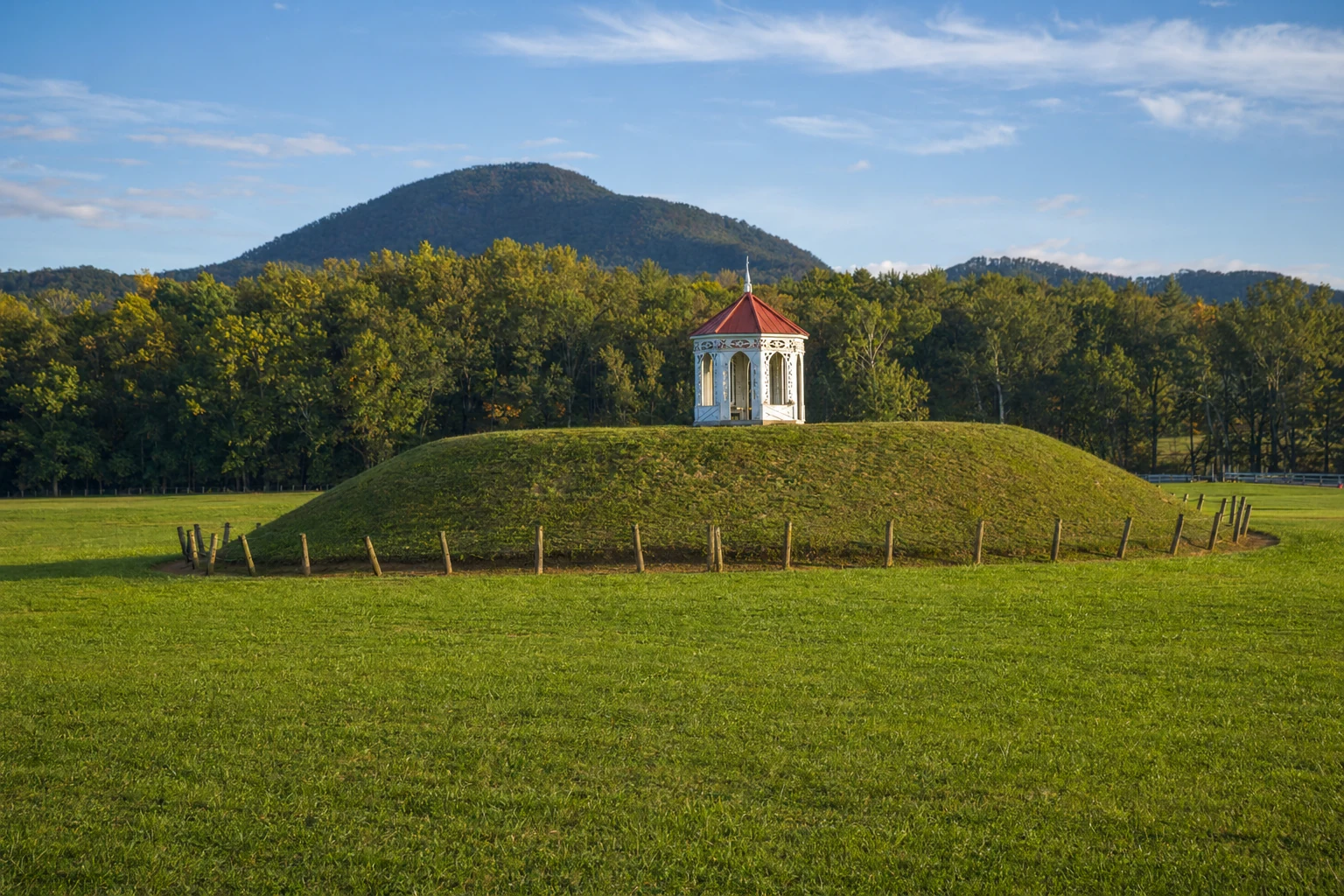
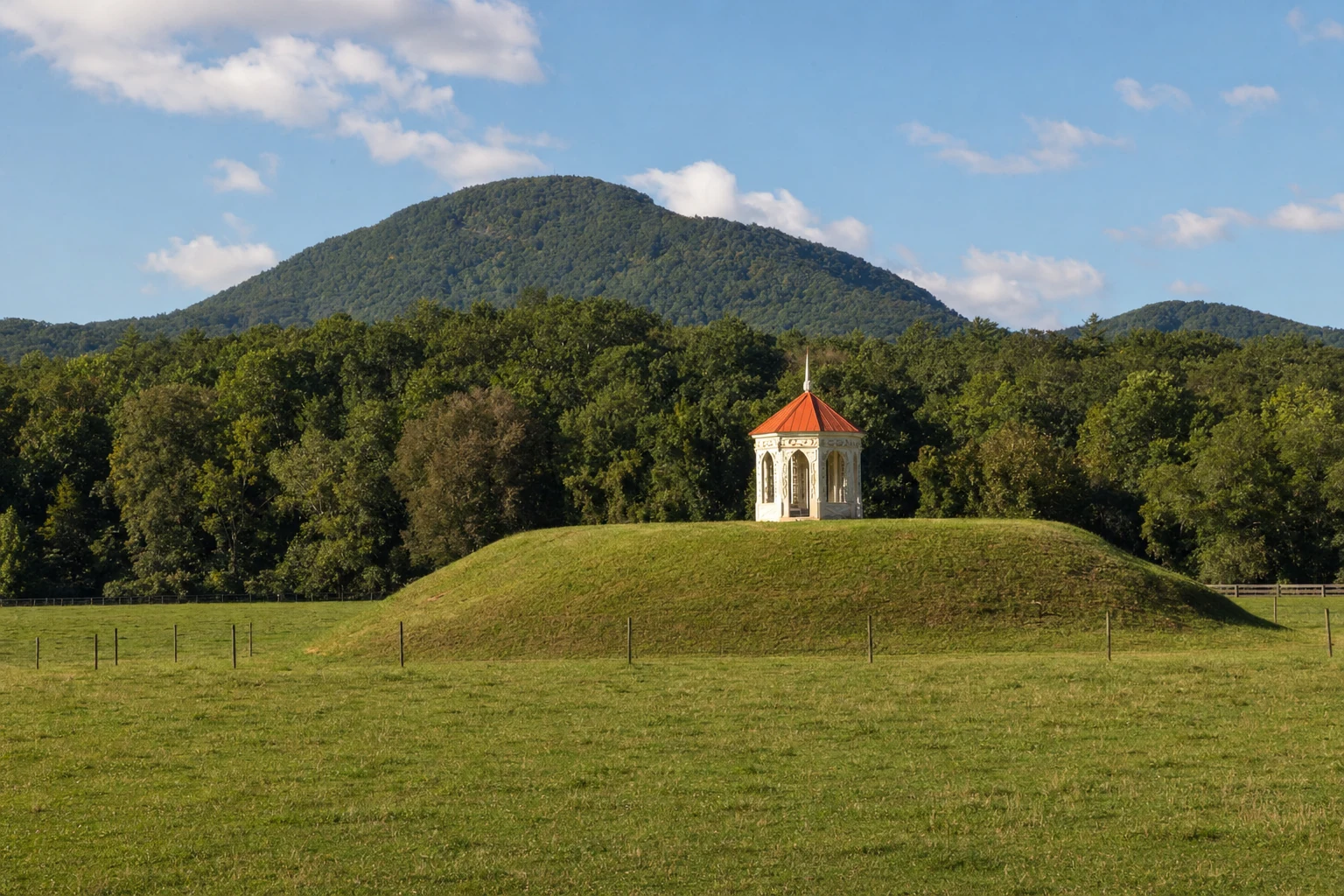
A Mississippian-era platform mound topped by a Victorian gazebo, visible from the road near Helen
The Nacoochee Mound is one of Georgia's most recognizable landmarks, known for the unusual Victorian gazebo that sits atop an ancient Mississippian burial site. It was built between 1350 and 1600 CE by the South Appalachian Mississippian culture, not the Cherokee as local legend often suggests, though the Cherokee did later live in the valley.
The popular tragic romance of Sautee and Nacoochee is largely a 19th-century invention, popularized by George Williams and contradicted by the archaeology, which shows the mound was a communal burial site. A major 1915 excavation by the Smithsonian and Heye Foundation uncovered 75 burials and significant artifacts, and the mound you see today is largely a reconstruction commissioned by Governor L.C. Hardman.
The mound is part of the Hardman Farm State Historic Site. You cannot climb the mound, but it is easy to view from GA-75 or explore along the Helen to Hardman Heritage Trail.
What You're Looking At
If you have driven south from Helen on GA-75, you have seen it: a grassy earthen hill topped with a white-latticed Victorian gazebo, sitting in a broad valley with the ridges of Mount Yonah rising behind it. This is the Nacoochee Indian Mound, a place where pre-Columbian history, colonial ambition, and romantic folklore all come together in one quiet, striking landmark.
For most tourists driving past, the mound is a quick photo stop -- a curious shape rising from a cow pasture with mountains behind it. But for anyone who digs into the history, it opens up layers of Southern heritage: the Mississippian "mound builders" who shaped this land, the Cherokee who were later displaced from it, the antebellum wealth that filled this valley, and the early days of American archaeology.
This guide covers the real archaeology behind the mound, separates the myths from the documented history, and gives you everything you need to plan a visit -- from admission prices to the best spot for photographs.
Practical Visitor Information
Before getting into the history, here is what you need to know for planning a visit. The mound is part of the Hardman Farm State Historic Site, operated by the Georgia Department of Natural Resources.
Location and Contact
Address: 143 Highway 17, Sautee Nacoochee, GA 30571.
GPS Coordinates: N 34° 41.088' | W 083° 42.497'.
Phone: (706) 878-1077.
Website: gastateparks.org/HardmanFarm
Hours of Operation (Current as of 2025)
The site operates seasonally and has specific hours for the grounds versus the guided mansion tours.
March – December: Open 7 days a week, 10:00 a.m. – 4:00 p.m.
January – February: Open Thursday – Saturday only, 10:00 a.m. – 4:00 p.m.
Mansion Tours: Run hourly. Last tour typically departs at 3:00 p.m. (2:00 p.m. in Jan/Feb).
Closures: Thanksgiving Day and Christmas Day.
Admission Pricing
Visitors can choose between a full tour (including the mansion across the street) or a grounds-only pass.
Adults (18–61): $13.00
Seniors (62+): $9.75
Youth (6–17): $8.00
Children (5 and under): Free
Grounds Admittance Only: $7.00 (Allows viewing the mound from the fence line and walking the grounds/outbuildings, but excludes the mansion interior).
Accessibility and Viewing
Roadside Viewing: The mound is highly visible from the intersection of GA-17 and GA-75. There is a designated pull-off area on the shoulder of Highway 75 where tourists often stop for photographs without paying admission. However, this view is across a fence.
On-Site Viewing: Paying the grounds admission allows visitors to park at the Hardman Farm Visitor Center and walk closer to the mound via the interpretive paths, though climbing the mound itself is prohibited to preserve its structure.
The Mississippian History Behind the Mound
Local signage and stories have long associated the mound with the Cherokee, but the site actually dates to a much older culture. The Nacoochee Mound (Smithsonian trinomial 9WH3) was built by the South Appalachian Mississippian culture.
The Builders: 1350–1600 CE
The site was first occupied during the Woodland period (100–500 CE), but the construction of the platform mound occurred much later, during the Lamar Phase of the Mississippian culture, roughly between 1350 and 1600 CE. The people of this era were sophisticated agriculturalists who grew maize, beans, and squash in the fertile alluvial soil of the Chattahoochee River floodplains.
The mound was not a burial site for two tragic lovers, as legend holds, but a platform mound. In Mississippian society, such mounds served as the foundations for civic or ceremonial structures - often the home of a chief or a townhouse for tribal councils. The "sacred fire" would burn within these structures, symbolizing the community's continuity.
The Etowah Connection
Artifacts recovered from Nacoochee bear a striking resemblance to those found at the Etowah Indian Mounds near Cartersville, Georgia. Pottery sherds and artistic motifs suggest that the inhabitants of the Nacoochee Valley were part of a broader regional network of chiefdoms that dominated the Southeast before European contact.
Related Imagery from Around Helen