Black Bears in the Helen Area
Where they live, when they roam, and how to watch them safely in the mountains around Helen.
Black Bears in the Mountains Around Helen
Black bears (Ursus americanus) are very much a part of life in the North Georgia mountains. The state's largest bear population is concentrated right here around Helen and the Chattahoochee National Forest, with several thousand bears making up part of Georgia's total of over 5,000. They are shy, smart animals that roam forested areas close to popular trails and tourist spots. If you spend enough time in the woods near Helen, you will likely spot one eventually. This guide covers where they live, how to watch them safely, and how to share the mountain with them.
A Comeback Story
Black bears used to live across all of Georgia, but by the 1930s, unregulated hunting, market poaching, and widespread logging had nearly wiped them out. In North Georgia, the population crashed so badly that the Georgia Department of Natural Resources (DNR) shut down bear hunting entirely from the early 1920s until 1979 just to give them a chance to recover.
It worked. By 1980, the North Georgia bear count had climbed back to 600-750 animals. By 1999 the number reached 900-1,100, and by the 2010s it was conservatively over 4,000, with the population still growing despite more people moving into the area. That comeback is tied directly to the Chattahoochee-Oconee National Forest, where the U.S. Forest Service manages mature oak forests that produce the acorns and nuts bears depend on. The Georgia DNR's Bear Strategic Management Plan (2019-2028) tracks population growth through bait station surveys and works to keep habitat connected across the Blue Ridge Mountains.
Population and Habitat
Georgia has three separate black bear populations. The biggest by far is in the North Georgia mountains, accounting for over 70% of the state's total. A smaller group lives along the central Ocmulgee River, and another inhabits the Okefenokee Swamp. The North Georgia bears, numbering somewhere between 2,600 and 4,000 in recent counts, live throughout the Chattahoochee National Forest across Union, White, Lumpkin, Rabun, Towns, Fannin, and Habersham counties near Helen.
Bears prefer mature hardwood forests at middle elevations (600-1,200 meters), especially oak-hickory stands, cove forests, and ridgelines. They use creek bottoms as travel corridors. Around Helen, you will find them in laurel thickets, upland hardwoods, and the edges where forest meets berry patches and streams, all of which are plentiful in the 750,000-acre forest. They den in hollow trees or on upper slopes around 891 meters elevation, often in areas where past logging left sparser, younger trees. As people build more homes along the forest edge, sightings keep increasing. In 2024, a mother bear with four cubs wandered right through downtown Helen.
Seasonal Behavior
North Georgia black bears do not fully hibernate the way northern bears do. Our winters are too mild for that. Instead, they go into torpor in their dens from late December through March or April, then come out hungry and looking for easy meals. Spring (March-May) is a busy time. Bears are eating everything they can find, from new greens to insects to early berries, and mothers are teaching their cubs (born in the den during January-February) how to forage.
Summer (June-August) is mating season and peak foraging time, when bears are after high-calorie foods like persimmons along creek bottoms. Come fall (September-November), they go into hyperphagia, which is basically non-stop eating. They are gorging on acorns and whatever else they can find to pack on fat before winter. That is when you are most likely to see them along ridgelines, right during hunting season (early September to early December). Young males roam widely in spring and summer looking for their own territory, which adds to the number of encounters. Bears are most active early morning and late evening year-round, and how much they move around depends heavily on that year's acorn and nut crop, which the DNR tracks annually.
Viewing Opportunities
There are no guaranteed bear sightings, but if you go to the right places at the right times, your odds are good. Dawn and dusk hikes in the Chattahoochee National Forest give you the best chance, especially in spring and fall when bears are actively foraging out in the open. Quick note: The old Black Forest Bear Park at 8160 S Main St in Helen (it was $5 admission) closed years ago. Your best option now is wild encounters, which is how it should be.
Top Trails and Spots
Bear Hair Gap Trail, Vogel State Park (Union County, 10 miles north of Helen via GA-75; 706-745-6928; $5 parking/day): 4.1-mile loop with stream crossings and Blood Mountain views. Recent hiker spotted a mother and cub - prime for spring foraging. Trailhead signs detail bear safety.
Appalachian Trail (AT) sections near Helen, like Jarrard Gap to Neels Gap (Chattahoochee NF): Bear canister required March-June within 1,000 feet for campers. Fewer conflicts here due to regulations.
Anna Ruby Falls (3455 Anna Ruby Falls Rd, Helen, GA 30545; 706-878-3440; $5/person): Short paved trail to waterfalls; events like "Bear Days" (e.g., May 2025) feature experts on sightings.
Brasstown Bald (GA-180, young Harris, GA; 706-745-6928): Highest GA peak; "Bear Days" events educate on local bears.
Community events like Helen's "Bear Days of the Appalachia" at Anna Ruby Falls or Brasstown Bald (check helenga.org/events) offer talks by Gerald Hodge of Appalachia Georgia Friends of the Bears. For Gatlinburg-like odds (adjacent Smokies have 1,500 bears), scan Cades Cove analogs like forest edges from overlooks.
Coexisting with Bears: BearWise Basics
In a tourist town like Helen, bears will wander right into town if they find unsecured trash. The Georgia DNR's BearWise program (georgiawildlife.com/being-bearwise) lays out six basics for living alongside them:
Stay Alert: Hike in groups, make noise (talk, bells - no earbuds), avoid dawn/dusk solo.
No Trash/Food: Pack out everything; double-bag scraps. Use bear-proof bins in campgrounds.
Secure Attractants: Lock vehicles/cabins; electric fences for rural stays. No compost meats/fruits.
If Sighted: Back away slowly; never run. Yell "Hey Bear," wave arms if approaching.
Encounter Response: Fight back if attacked - bears fear humans. Carry bear spray (legal in GA).
Insider Tips from the Trail
Spotting a bear on the trail is one of those moments you do not forget. There is something about catching a dark shape moving through the laurel on Bear Hair Gap at dawn that makes you feel like you are actually in the wild. One hiker near Helen woke up to a mama bear raiding trash outside the cabin and used a drone to shoo her away. The lesson? Secure your cans. Downtown sightings like the 2024 sow with cubs are exciting, but always watch from at least 150 feet away.
If you want to try your luck, scan the ridges from the GA-356 overlooks near Unicoi State Park (1788 GA-356, Helen; 706-878-2201). Bears cross those ridges at twilight. Campers at Vogel regularly report watching cubs play in the streams, and the guided ranger walks are full of good stories. Whatever you do, never feed them. Habituated bears that lose their fear of people end up getting euthanized. One local told me that a single loud clap sent the bear off her porch at a dead run. They really are shy animals.
Seasonal Considerations and Best Times
Spring (Mar-May): Emerging bears forage aggressively - best for cub sightings, but defensive moms. Crowds low post-winter.
Summer (Jun-Aug): Peak tourism; high activity near trails. Hot/humid - early AM best, odds good in berry patches.
Fall (Sep-Nov): Hyperphagia boosts sightings (80% harvest here); colorful leaves frame views. Hunting crowds trails.
Winter (Dec-Feb): Lowest activity; dens hidden. Rare roadside glimpses of foragers. Visit Feb for quiet hikes, low bear movement (as now).
Year-round: Early/late day. Check DNR mast surveys for food abundance (georgiawildlife.com).
Nearby Attractions
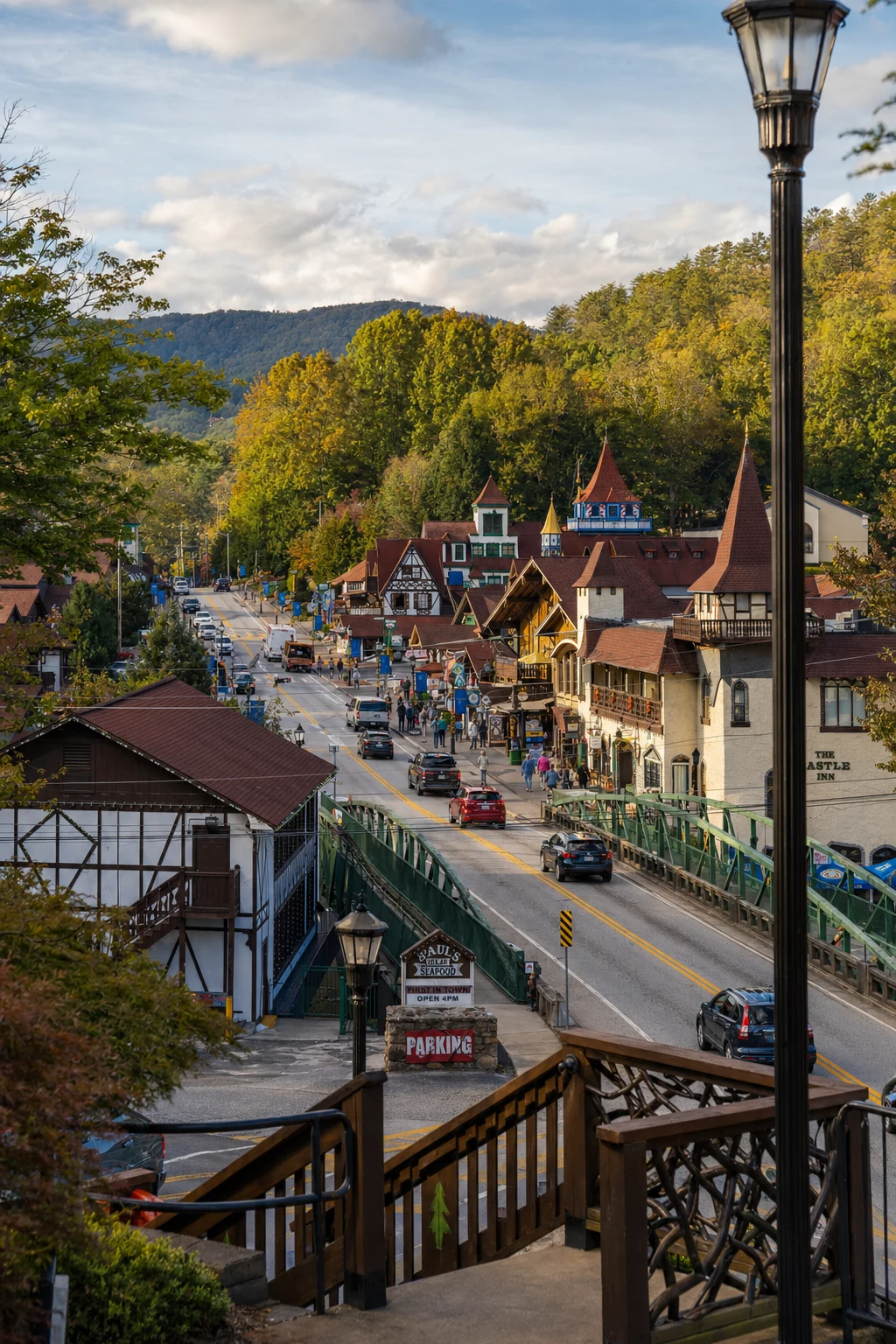
Part of what makes Helen special is that you can be eating bratwurst on Main Street one hour and deep in bear country the next. The Chattahoochee National Forest (fs.usda.gov/chattahoochee; 770-297-3000) surrounds the town. Hike the Appalachian Trail from nearby Hogpen Gap and you are right in the middle of prime bear habitat.
Unicoi State Park (park at Helendorf River Park, steps from downtown Helen): Cabins/trails adjoin bear zones; $35/night cabins.
Smithgall Woods State Park (61 Tsali St, Helen; 706-878-3087; $5 entry): Events like "Living With Bears" talks ($5 + parking).
Yonah Mountain (20 miles; trails): Oak mast hotspots.
From Helen, you can drive to Vogel in about 10 minutes or reach Raven Cliffs Wilderness in 15 minutes. It is easy to pair a morning in bear country with an afternoon of tubing or Oktoberfest back in town.
Related Imagery from Around Helen